Consider habitat, soils, and seed before restoring a fire- or flood-ravaged area
Restoration and revegetation pose unique challenges following a natural disaster compared to a typical post-construction restoration project. Erosion and sediment control professionals may overlook considerations that would benefit from greater attention in predisaster and postdisaster planning. When selecting best management practices (BMPs) for erosion and sediment control after a natural disaster, don’t design for what just happened; design for what comes next.
Start With Soil Testing
Soil testing should be the starting point for any BMP design and selection process following a natural disaster. Most potential challenges to restoration can be mitigated using soil test data to guide planning. Without soil testing, you can’t identify the limitations ESC professionals might face in their efforts to revegetate and restore areas or maintain sustainable, natural vegetation.
Any natural disaster is likely to significantly alter biological activity, salt levels, pH, mineral loads, and contaminant and toxin levels. Flooding can introduce a variety of contaminants and toxins into the areas needing revegetation. Fires can dramatically alter soil chemistry from its preburn state. Landslides and mudslides can churn soil, bringing subgrade from several feet deep to the surface and significantly altering the growing zone intended for restoration. Floods in central Texas in 2025, for example, resulted in some areas churning subgrade to the surface from as deep as 14 ft (4.3 m).
Decision-makers shouldn’t proceed blindly into BMP selection and restoration, given the potential impacts the soil may have experienced. If fill dirt or topsoil is imported as part of the restoration process, it should also be evaluated to understand any hindrances it may pose.
Soil test data can also help fine-tune fertilizer recommendations for pounds per acre (kg per ha), needed micronutrients, and nitrogen, phosphorus, and potassium (NPK) ratios. Being precise with fertilizer use in natural disaster restoration is critical for optimal germination and growth rates, mitigation of potential discharges into waterways, and budgetary considerations. Matching fertilizer types and release curves to seed blends’ needs and installation timing helps achieve success.
Consider the Habitat
As decisions are made about which BMPs to employ for erosion and sediment control, habitat restoration should be an overriding consideration. Natural disasters commonly produce severe and widespread habitat damage and destruction, so ask questions such as:
- Will these BMPs impede animal and plant migration into the restoration zone?
- Will these BMPs present a wildlife entanglement hazard?
- Will these BMPs encourage the desired animal species to choose the restored area as habitat?
- Do these BMPs foster partnerships among plants and animals and promote the species desired in the restoration area?
Think of the selected BMPs as part of an interconnected web: Do the strands of that web provide the strength needed to support the system? If the answer isn’t “yes,” revisit your BMP selections and adjust accordingly.
Vegetation Selection
Consideration of the seed blend(s) or shrub/tree plantings should be part of any BMP planning following a natural disaster. Be open to the idea that what was growing in the area previously may not be the optimum species blend for future challenges.
Locations prone to repeated flooding, fires, and other threats may benefit from a change in species selection. Deeper root depths may be advantageous in flood-prone zones, for example, and native prairie grasses and succulents can provide more fire resistance and regrow more readily after a burn. Simply replanting what was there before may not be the optimal strategy; it’s better to prepare for what might come next.
For example, should you consider a seed blend that can tolerate saturated or inundated subgrade for a flood-prone environment? Is there a need to introduce more salt-tolerant or wind-tolerant species? As coastal areas are damaged by hurricanes, tropical storms, and their associated wind and flooding, dunes may be affected; would different or additional plant species help create the desired habitat and support new dune formation?
Storm surge considerations should be taken into account, since storm intensity is trending upward. Can the intended vegetation blend tolerate increased salinity and a higher shear rate from a storm surge? If the zone becomes saltier due to spray or brackish groundwater intrusion, salt-tolerant species will proliferate. If the subgrade becomes saturated with rising groundwater, a more water-tolerant species will adapt and dominate.
All of these issues are potential blind spots to address. A well-constructed blend of flora may include water-tolerant, wind-tolerant, salt-tolerant, and fire-resilient species to allow the environment to adapt to changing conditions. Planning for contingencies with a selected seed blend helps vegetation adapt to changing environmental and weather conditions naturally.
Coastal Restorations
When addressing coastal BMP applications following a major storm event, conduct an analysis of chronic exposure to wind, salt, water, and sand for the selected BMPs. With climate change impacts growing in intensity and frequency, more regular updates to design standards will be required by all regulatory agencies.
As you select BMPs for erosion and sediment control in coastal restoration zones, overdesign to prepare for the future. Coastal detention basins and drainage channels might be challenged by rising groundwater levels as sea levels rise, so consider this potential risk factor and incorporate BMPs and plant species that can tolerate saturated subgrades alongside the possibility that detention and drainage structures could convert to wetlands or become brackish.
Fires, Mudslides, and Landslides
In the case of a fire, cities, counties, DOTs, and related agencies need to consider access to evacuation routes. Are the evacuation routes stabilized rapidly following a burn event and ready to allow escape from flare-ups or slides? Are the chosen BMPs conducive to rapid, safe installation with minimal disturbance to the soil surface, so as not to contribute to airborne ash and contaminants? Can emergency vehicles and the required restoration equipment—bulldozers, backhoes, and dump trucks—access the area without being impeded by the BMPs?
Runoff management is another aspect to review thoroughly to prevent the contamination of local waterways. Will BMPs offer adequate surface stabilization to retain ash, soil, and possible toxins and contaminants, preventing them from entering sensitive local waterways?
Educate the Public
Public awareness of selected BMPs can be valuable. Educating the public about the appearance and function of applied BMPs and requesting that people don’t remove, adjust, or interfere with them as homeowners return to their properties in the days and weeks after a fire can prevent costly BMP damage.
Ongoing site analysis is also vital, as areas may slough or change due to flare-ups, rainfall, and wind impacts. Take care to mitigate risk in areas such as burns near bridge abutments where scour is at increased risk, or at chokepoints on drainage systems that have become clogged with ash and debris.
Keep a close eye on the weather when working on fire restoration. Upcoming weather events such as a high-wind day or heavy rainfall can negatively impact a current or recent installation, so a brief delay might be sensible.
Installation and Maintenance
Workers must be properly trained to install the specified BMPs safely. All personnel should have personal protective equipment including hard hats, safety vests, safety glasses, suitable footwear, and facemasks when working in unstable, dusty, and/or contaminated environments. Furthermore, all installers should demonstrate their ability to operate the equipment needed to install the selected BMPs.
Maintenance is likely the most overlooked aspect of natural disaster restoration. With the increased frequency and intensity of natural disasters, regular maintenance and inspection of BMPs is more vital than ever. As habitat, vegetation growth, and erosion catalysts change and adapt to climate change, BMPs may not keep pace.
Regular inspection and maintenance will help catch deficiencies and weak points in BMP systems early, allowing for rapid adjustments. New BMP technologies can be implemented if available, or repairs and replacements of failing BMPs can be conducted before they are beset by another natural disaster. Shortcomings in vegetation establishment can be addressed with overseeding, fertilizer, compost, and other appropriate measures.
“An ounce of prevention is worth more than a pound of cure” is an appropriate maxim when it comes to erosion and sediment control on natural disaster restoration projects. Prevention is built on the pillars of soil testing, seed selection, execution, installation, and maintenance. ESC professionals who design for those pillars can build more resilient environments that are better able to handle the threats of climate change and increasingly severe natural disasters in the months and years ahead. n
About the Experts
Matt Skinner, MBA, CPESC, CESCL, is national sales manager for Profile Products. He has more than 25 years of experience in erosion control, soil remediation, and geosynthetics. His consulting designs have been applied successfully at hundreds of Superfund sites, mining reclamations, landfills, and reservoirs. Skinner also develops innovative water management solutions for site runoff and overland flow challenges in high-rain areas.
Danny Reynaga, CPESC, QSD/P, is the market development manager for Profile Products. He has 24 years of experience in erosion and sediment control, geosynthetics, and stormwater. Reynaga has extensive knowledge of erosion control, sediment control, geosynthetic, and stormwater products, and works closely with engineers, landscape architects, contractors, municipal and state agencies, and federal regulators to educate them on solutions for vegetation establishment, erosion control, soil modification, and water quality.
Preparing for Future Floods
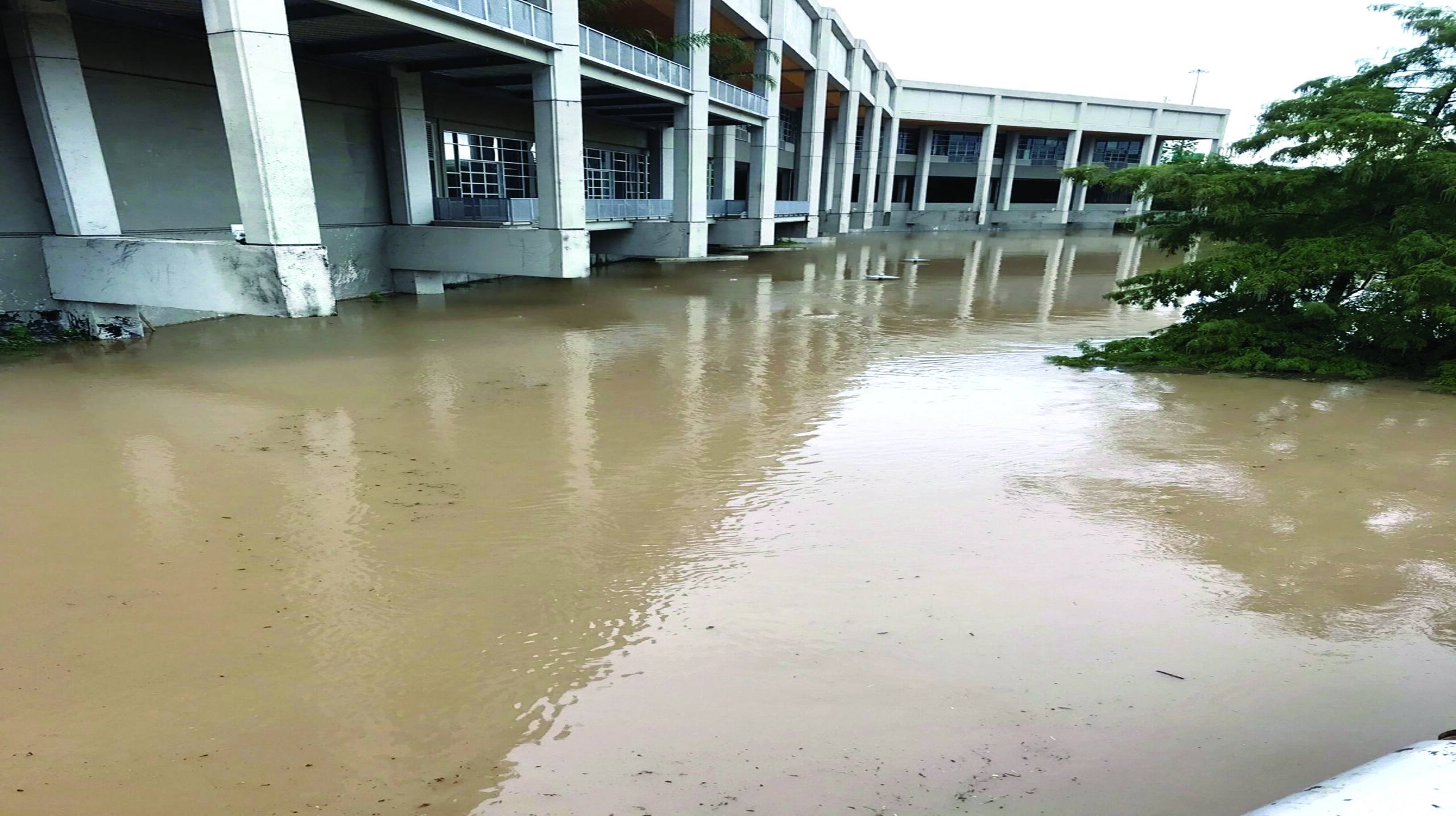
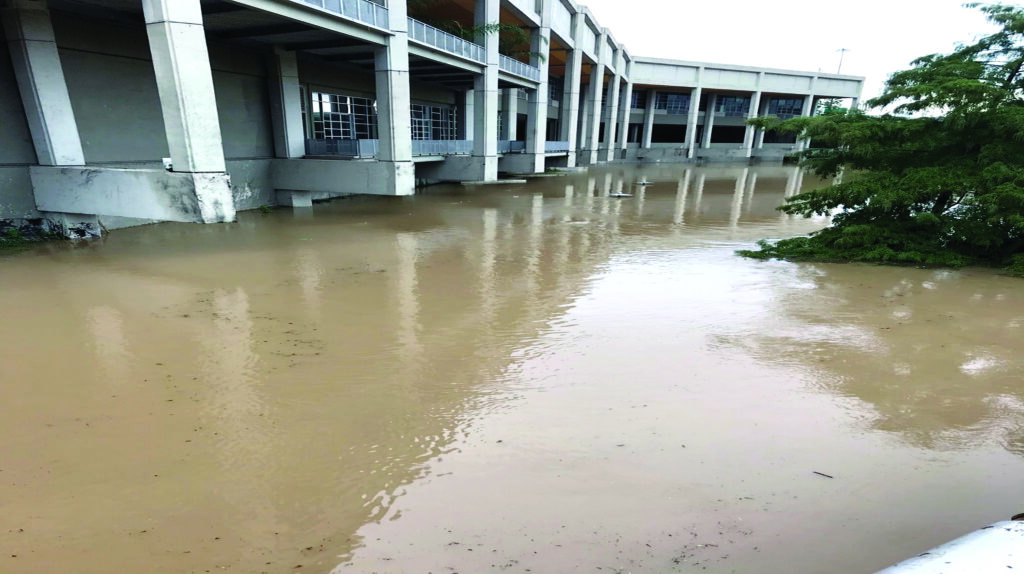
In August 2017, Hurricane Harvey made landfall in Texas. The storm stalled over the greater Houston area, dropping more than 70 inches (178 cm) of rain in some areas. Record flooding occurred, with particular impact in downtown Houston. The Wortham Center and Bayou Place experienced significant inundation (Fig. 1), causing tens of millions of dollars of damage and requiring nearly two years of restoration work.
Restoration planning focused on the future, so a robust system of concrete, articulated block, and natural, reinforced vegetation was used to stabilize the slope along Buffalo Bayou to ensure storm resistance (Fig. 2). Less than 90 days after installation, tropical storm Imelda arrived, and the zone was underwater for two days without soil loss.
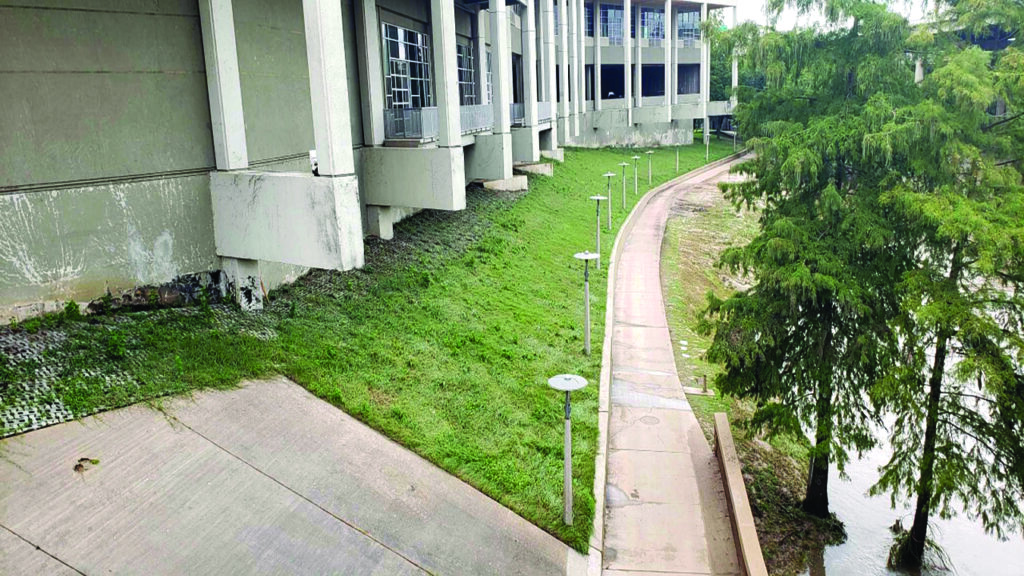
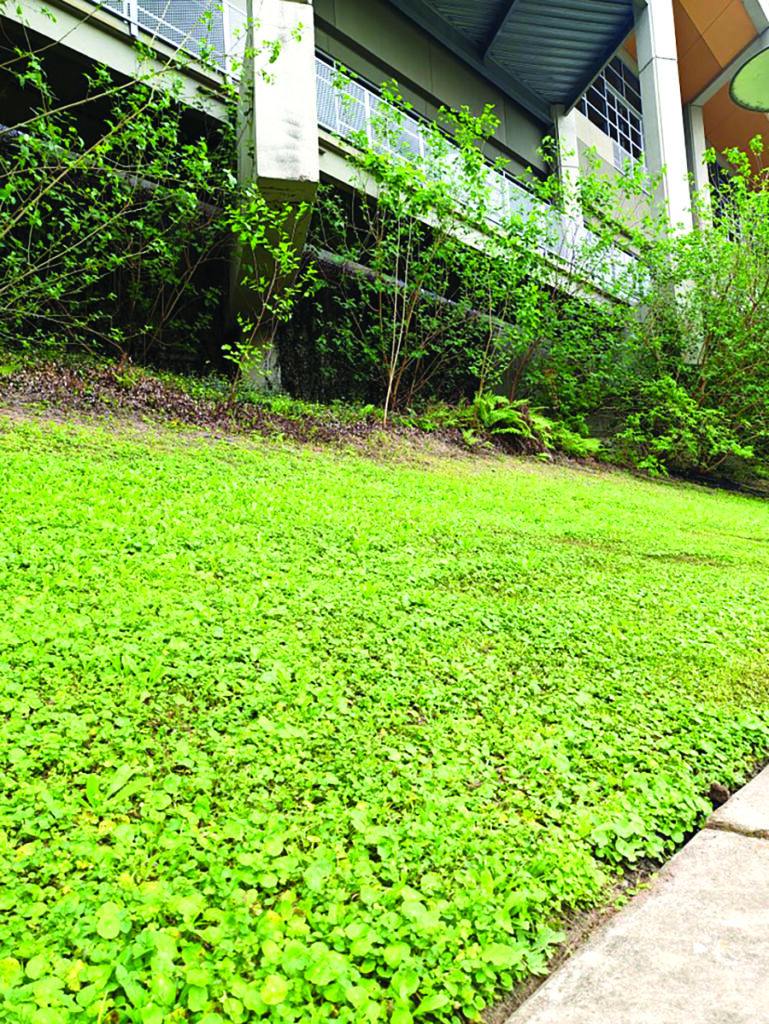
The area has since flooded four more times with continued stabilization. A progression toward complete native vegetation has been observed, primarily due to seed migration during flooding events (Fig 3). It’s a good example of planning ahead for storm intensification and designing a system that can adapt and evolve.