Two sustainable, habitat-friendly solutions are helping protect coastlines
“Mother Nature does it best.” That’s what I have told developers, municipalities, and designers for years when crafting green infrastructure solutions to manage stormwater runoff. Now, solutions that use vegetation and marine habitat to protect coastlines have inspired a pivot away from less effective, “gray” infrastructure methods such as seawalls and rock revetments.
The importance of this shift toward innovative green infrastructure stormwater solutions can’t be overstated. According to the National Oceanic and Atmospheric Administration (NOAA) U.S. Climate Resilience Toolkit, coastal erosion is responsible for roughly $500 million of damage per year in coastal property loss, including harm to structures and loss of land.
Historically, coastal communities have constructed low sills or breakwaters to reduce wave energy before it can impact the shoreline—typically by stacking rocks. Unfortunately, rock structures move over time; they can be difficult to install; they offer little benefit to the marine environment; and transporting them to a project site can have negative environmental impacts. Moreover, rock walls between the shore and larger body of water can fragment the rhythms of the natural ecosystem.
New Solutions
Innovative manufactured solutions can now replace the rock walls used in breakwater applications, however. Newly engineered products mimic natural breakwater designs such as oyster sills and native vegetation, supporting the ecosystem rather than disrupting it. Such products reduce coastal erosion, provide habitat for marine life, and create an opportunity for vegetation to establish itself upland.
Two products can deliver effective protection: Reef Arches® and Natrx ExoForms®. Reef Arches’ 1,200-pound (544 kg) arch-shaped design (Fig. 1) incorporates an open base proven to reduce scour and erosion when compared to solid-based structures, making them an effective option for hard and sandy-bottom aquatic areas. Openings throughout the arch allow water to flow through while simultaneously calming wave energy, promoting sediment accretion. Reef Arches connect into a single heavy structure using fiberglass-reinforced plastic panels, ensuring the strength required to withstand strong storm events.
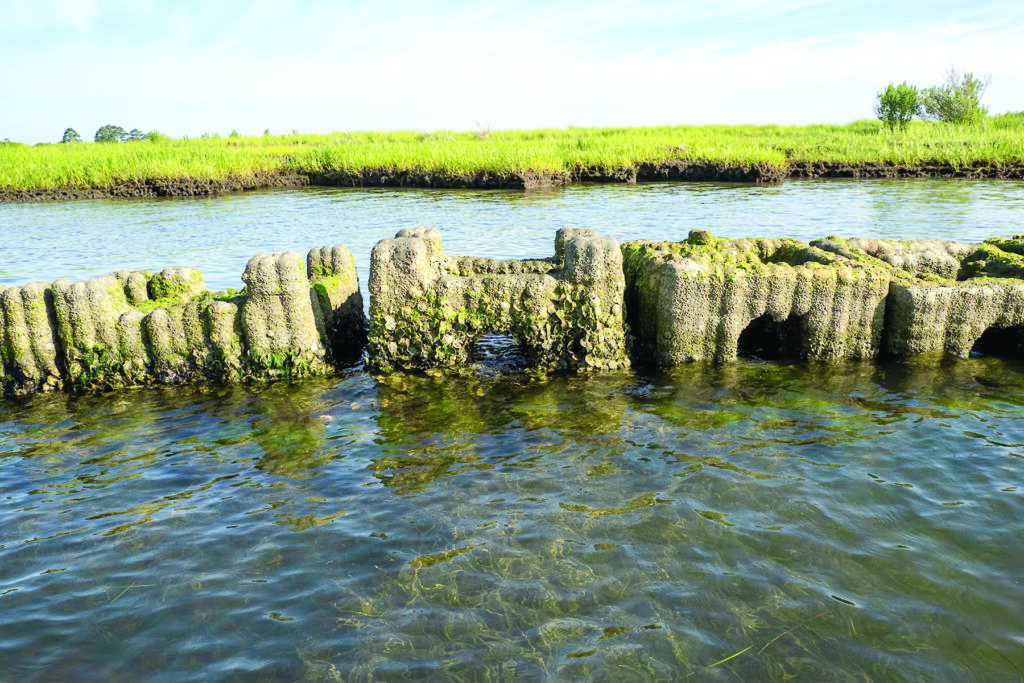
Precast Reef Arches use basalt rebar rather than traditional steel to create an unusual shape that’s built to withstand harsh marine conditions over time. Manufacturing uses a combination of sand and calcium sulfoaluminate (CSA) cement; the neutral pH allows mollusks such as oysters and clams to grow safely on the surface alongside coral.
Each unit offers approximately 120 ft2 (11.1 m2) of surface area for marine habitat while maintaining ample space for fish and other marine life to search for the benthic infauna living in the substrate beneath it. The flourishing habitat also attracts birds eager to feed.
Another Solution
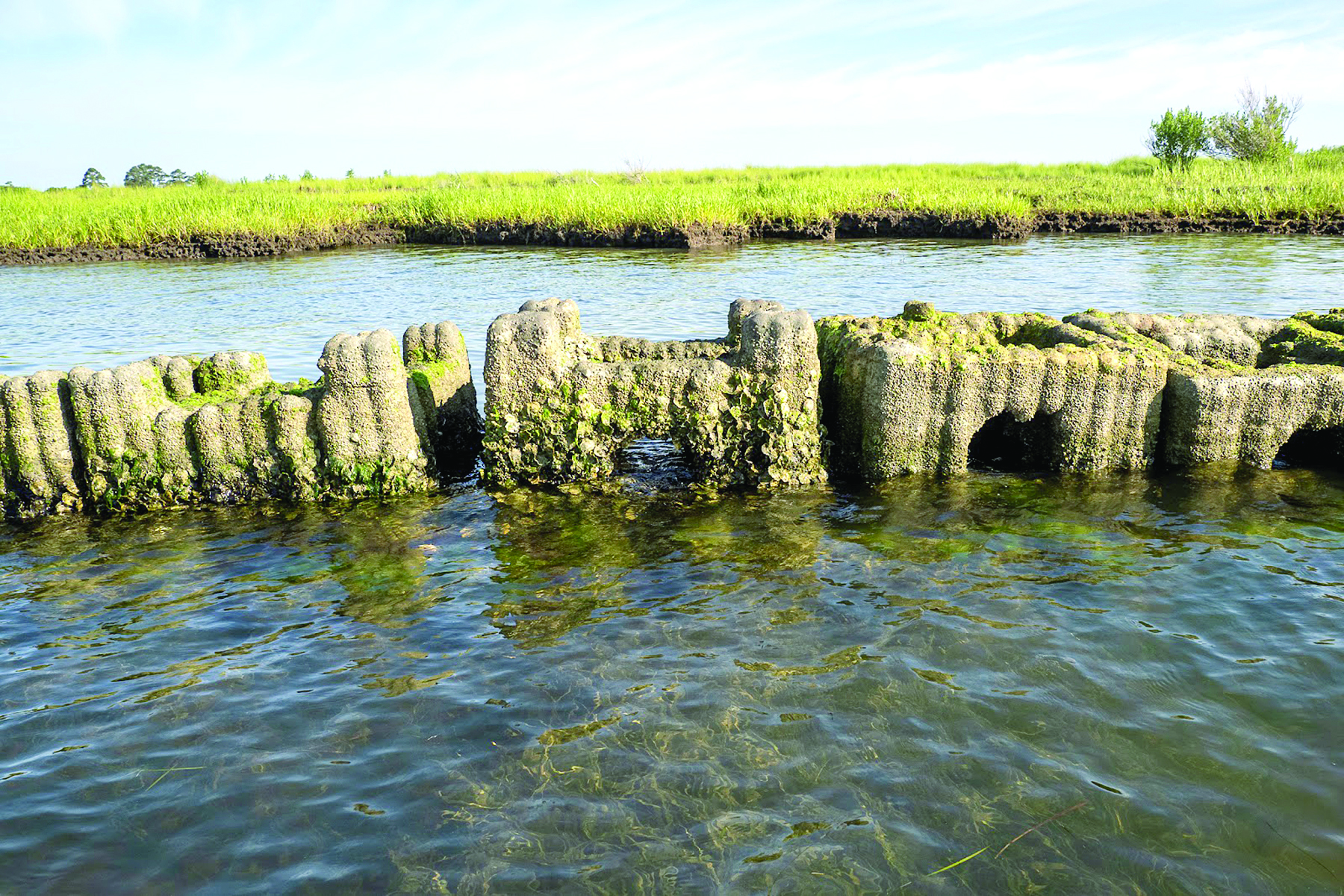
Natrx ExoForms (Fig. 2) are also built to dissipate wave energy and support thriving marine ecosystems. Made of concrete, they are available in weights ranging from 30-lb (13.6-kg), hand-deployable units to 2,000-lb (907-kg) products for high wave-energy applications.
Natrx ExoForms’ designs offer stability on soft soils, making them an excellent choice for marshy areas. The 3D-printed, precision-manufactured modules mimic nature, with naturalistic surfaces that offer voids and textures marine organisms can quickly colonize. The sustainable infrastructure performs better as the habitat gets established, and Natrx ExoForms blend seamlessly into their surroundings.
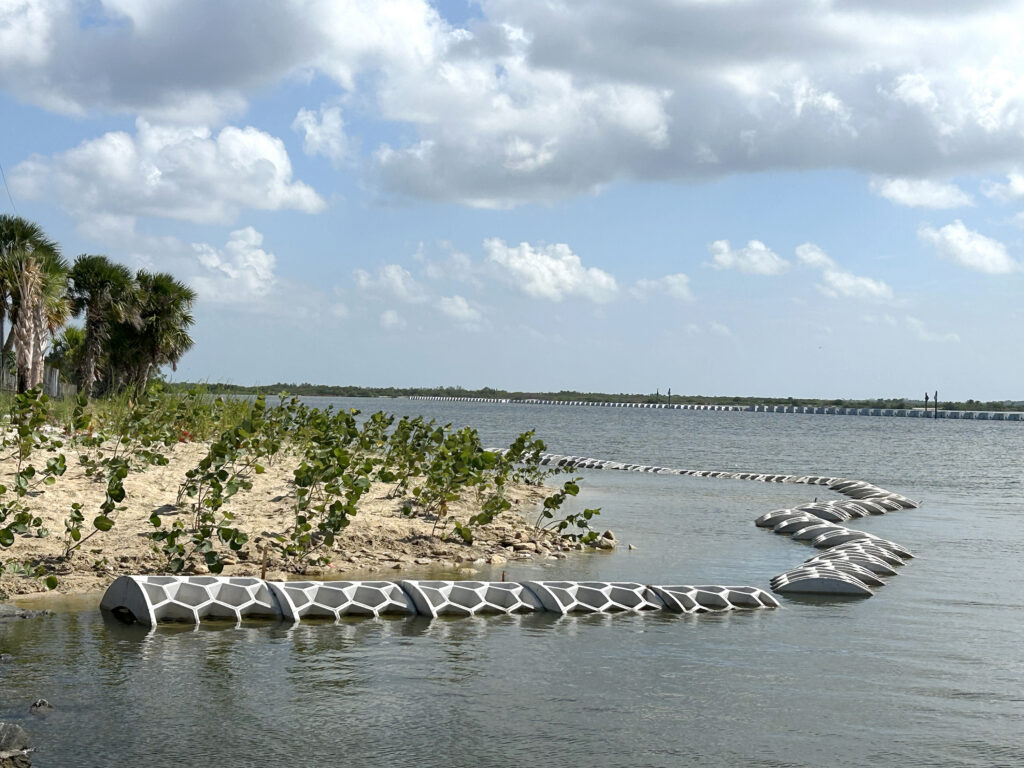
WaveBrush ExoForms function as a low-relief solution for use in shallow, low-wave-energy waters that captures sediment and stabilizes soft banks while giving the appearance of cypress tree knees on the surface. A sloped design for energetic shorelines provides a natural appearance that blends into the landscape.
Habitat ExoForms include the Crabitat, which allows water to flow through, promoting accretion while providing refuge to fish and crustaceans. The pH-neutral materials also enable mollusks and coral to safely make these structures their home.
Easy Installation
Manufactured structures are often easier and faster to install than large rocks, offering modular designs that are easy for contractors to manage. They are typically put in place using a small crane or backhoe from a barge or from land; smaller options can be placed by hand. It is not necessary to anchor a Reef Arch or ExoForm, since their weight is sufficient to keep them in place. This allows for straightforward installation—just lift and place.
Manufactured solutions can offer additional efficiencies over traditional rock walls. Most large rocks come from quarries hundreds of miles from a project site; they are extracted using explosives and loaded onto trucks or barges for delivery. The modular designs of Reef Arches and Natrx ExoForms, on the other hand, allow them to be stacked during transport, reducing fuel use and creating a smaller carbon footprint. They can also speed installation, saving contractors time and often reducing project costs.
Project goals and site conditions will determine which product to use. Ask the following:
- What is the composition of the subsoils?
- What are the expected wave conditions for wind fetch and designed storms?
- What are the hydraulic conditions including tidal patterns, water depth, and future sea levels?
- Is the goal to accrete sediment or retain what’s currently present?
- Is there submerged aquatic vegetation (SAV) in the area?
- How will the shoreline be used? Will there be recreational access?
- Are there specific marine conditions you want to leverage in the area?
Using the appropriate product in the right place is critical to project success. When considering installation areas, ask the manufacturer to provide information about their products or ask your local distributor.
With sea level rise and increased storm frequency and intensity, coastal communities are facing increased threats to their coastlines. Most government agencies recognize the threat and spend billions to repair, replace, and build new coastal infrastructure.
Gray infrastructure’s value peaks on Day One; seawalls start degrading upon installation, and rocks move with wave energy. In contrast, living shorelines get stronger and more resilient over time.
Manufactured structures such as Reef Arches and Natrx Exoforms work with nature, leveraging the benefits of marine habitat and native vegetation. With correct implementation, such products can fade into the landscape and protect shorelines, leaving a legacy for generations.
About the Expert
Chris Bogdan is green stormwater infrastructure manager for Ferguson Waterworks.