
Using soil-filled jute bags to recontour, stabilize, and revegetate Andean slopes
Two cut slopes on a project site in the central highlands of Peru were recently recontoured, stabilized, and revegetated using an innovative strategy involving soil-filled jute bags. The jute-bag technique enabled recontouring with adequate stability despite steep gradients, effectively preventing erosive processes.
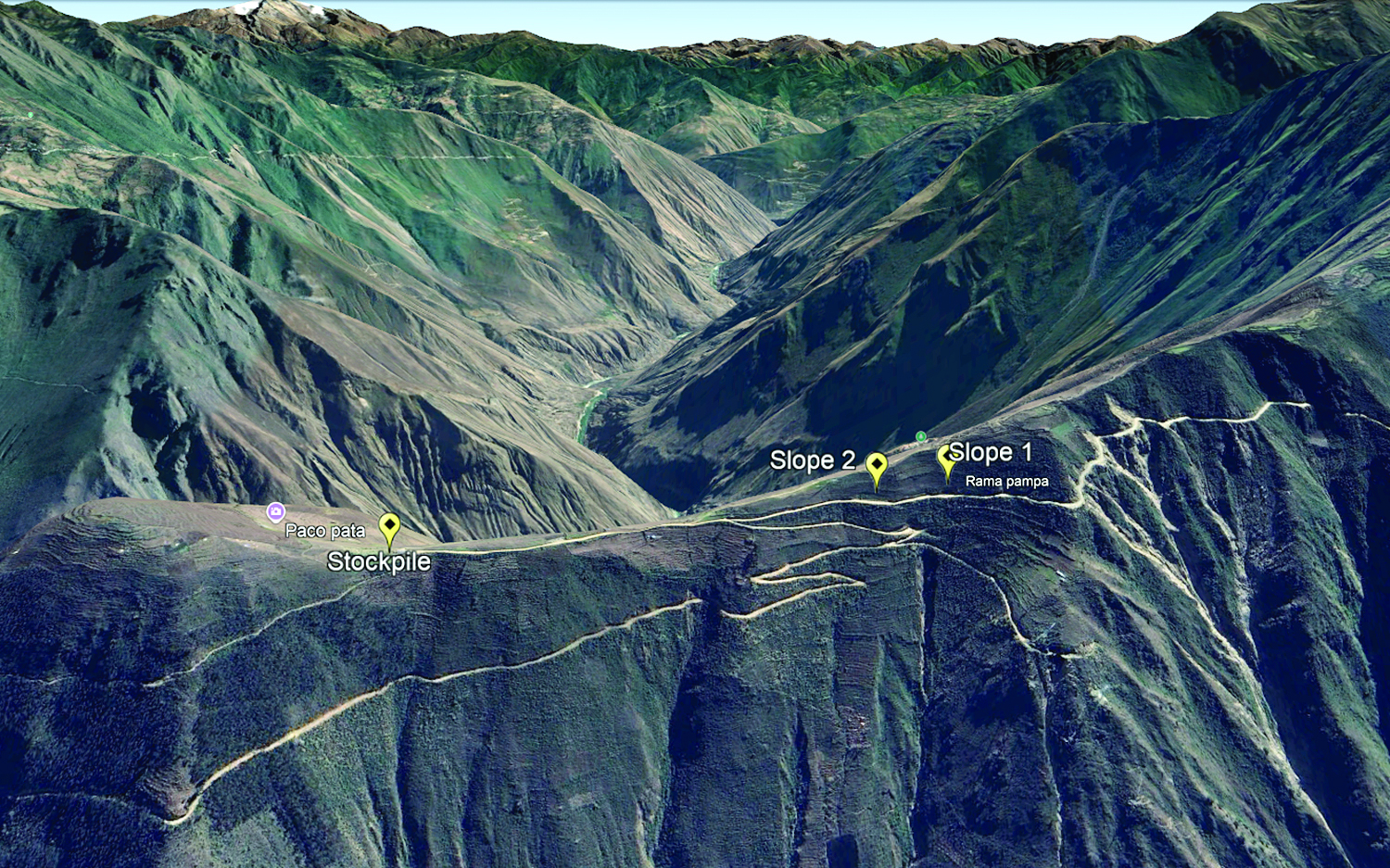
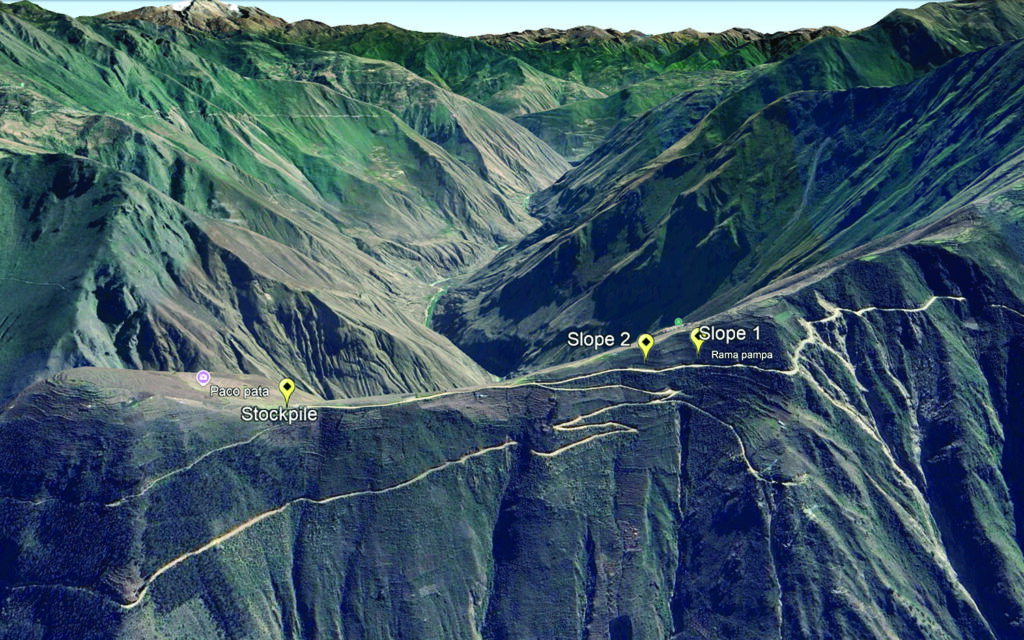
The site is at an elevation of approximately 9,842 ft (3,000 m) in the province of Tayacaja, Department of Huancavelica, alongside an access road to a hydroelectric power plant (Fig. 1). The objective was to recontour the slopes by increasing available soil volume through a filled-bag structure arranged in a stepped configuration and reduce the erosion risk associated with surface runoff from the upper catchment area.
In Peru, this technique has been applied at large scale to stabilize embankment slopes around a petroleum well platform in the Amazon—an area accessible only by helicopter. In that case, erosion affecting three sides of the drilling platform was successfully controlled and revegetated (Fig. 2).
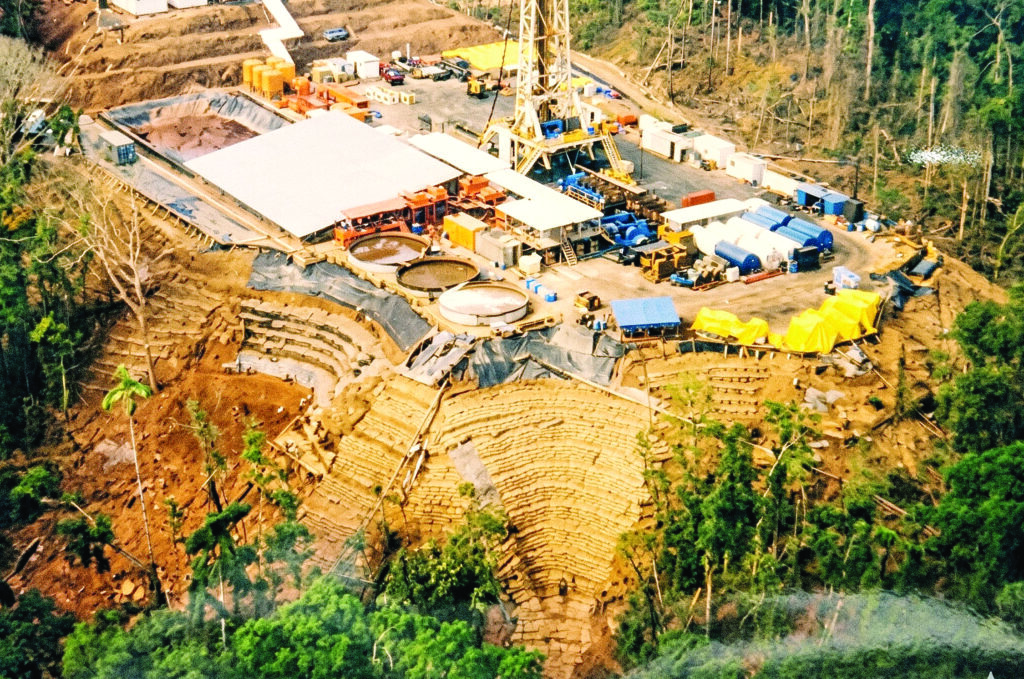
petroleum well.
The Project’s Scope
Wari Engineering SAC performed the work at the Tayacaja site under the technical supervision of Equilibrio Ambiental.
The two slopes selected for stabilization had surface areas of 2,691 ft² (250 m²) and 6,815 ft² (633 m²), respectively. Although neither represents an extensive area, their proximity to the roadway created a significant risk of erosion and potential impact on the access road, making recontouring and revegetation necessary.
To evaluate slope stability under the condition of placing soil directly on the cut face, a limit equilibrium analysis was performed using Slide software, calculating the static Factor of Safety (FS) (Fig. 3). The analysis found the following:
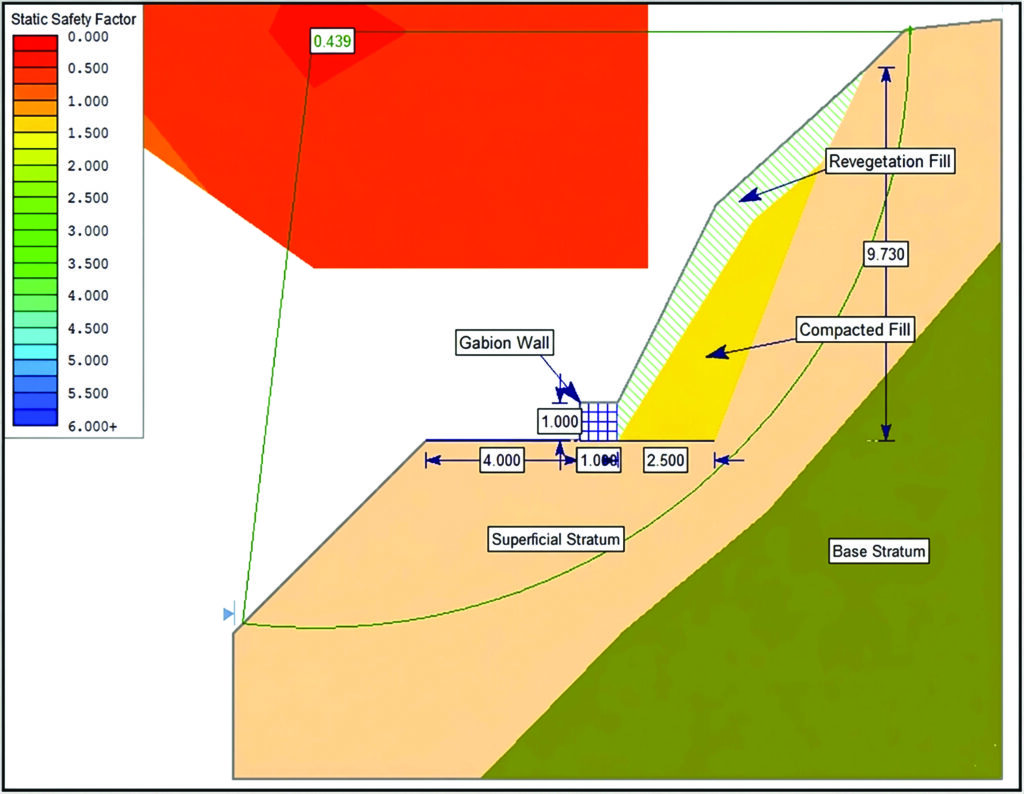
- Critical failure surface. The critical circular slip surface (bold green line) started at the upper berm, passed deeply through all fill layers (revegetation, compacted soil) and the surface stratum, and exited near the toe of the original slope.
- Measured resistance. The analysis’ computed FS of 0.439 was critically low; a value below 1.0 indicates that the driving forces (gravity, fill weight) exceed the resisting forces (shear strength). The slope apparently possessed less than half the resistance required for stability.
- Failure circle centers. The orange-shaded zone represents the cloud of analyzed failure circle centers. The broad extent of the zone exhibiting very low FS values (with a concentrated dark-red core at the minimum) confirmed the geotechnical instability of the slope.
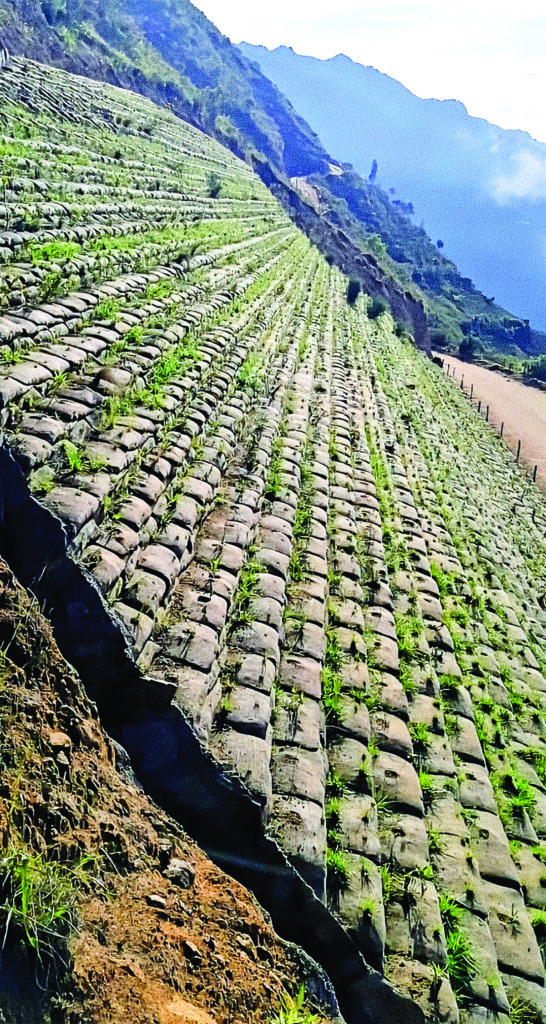
In short, direct soil placement on the slope would result in structural instability and imminent failure because it would exceed bearing capacity. This motivated adoption of jute bags as a soil encapsulation technique, allowing individual units to be stacked in a stepped configuration that interrupts the overall slope gradient (Fig. 4).
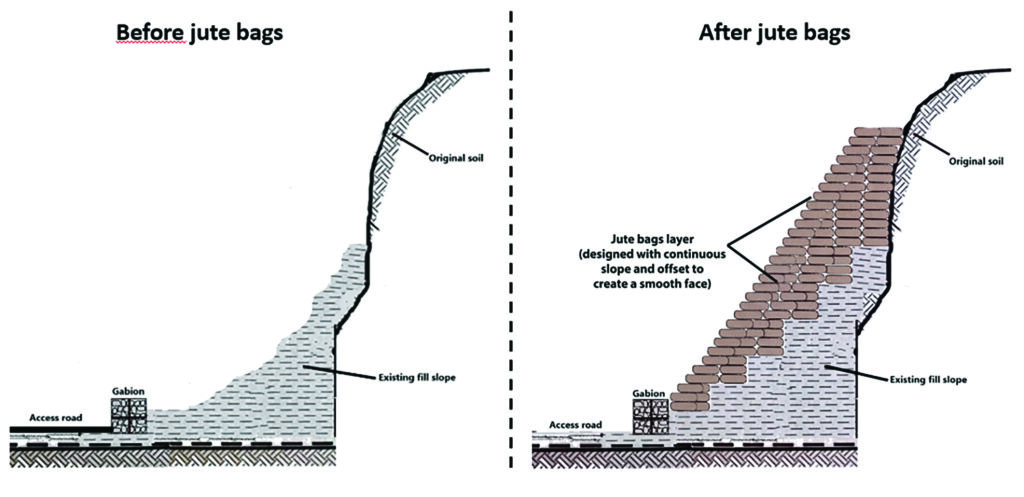
Materials and Equipment
The project used high-density, natural-fiber jute bags. The bags are characterized by high tensile strength, conformability to irregular terrain, and biodegradation within approximately two to three years, depending on climatic conditions. The bag dimensions were 27.5 x 15.7 in (70 x 40 cm).
Although the initial design specified jute bags exclusively, the project also used nonwoven geotextile bags, following a precedent established in a mining project in Panama where geotextile bags performed satisfactorily as structural components in embankment recontouring. Geotextile bags offer greater durability and lower unit cost compared to jute (Fig. 5). Geotextile bags were fabricated to the same dimensions as the jute bags to ensure uniform sizing throughout the structure.
The logistical difficulties of hauling borrowed materials from distant sources prompted the identification of a nearby supply. A stockpile of fine-grained material—derived from cleaning operations on the drainage channels and roadside ditches of the access road—was located approximately 2,300 ft (700 m) from the work site. Reuse of this material constituted a significant contribution to the circular economy of the project.
Prior to filling, the soil was screened to remove aggregates larger than 1 in (2.5 cm), ensuring a uniform density distribution within each bag. Technicians used a 74 hp skid-steer loader to transport material to the screening station. Filled bags were conveyed from the filling area to the work site using a 4-ton truck.
Construction and Placement
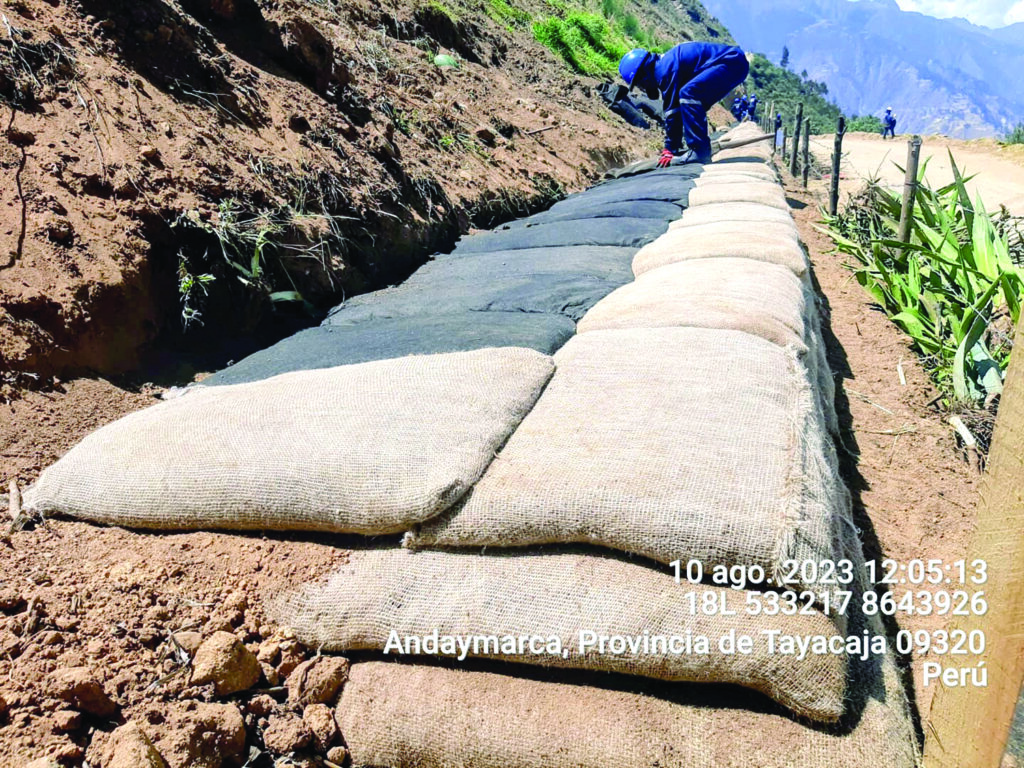
Workers began grading a subgrade surface into contour-following benches (steps), on which bag placement would begin. The bench width was set to equal the width of a single jute bag (Fig. 6).
Each bag was filled with approximately 55–66 lb (25–30 kg) of screened soil. Once filled, the bags were sealed with a hermetic closure using a portable electric sewing machine. The filled bags were then compacted with a tamper to standardize their shape and maximize structural contact between adjacent units.
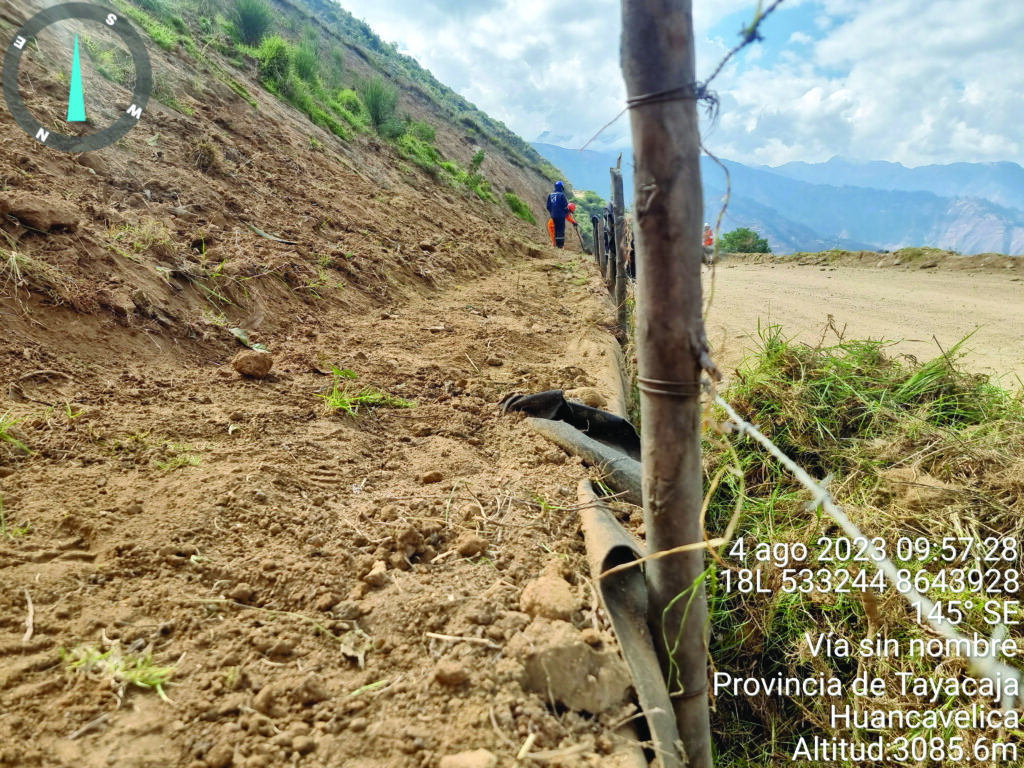
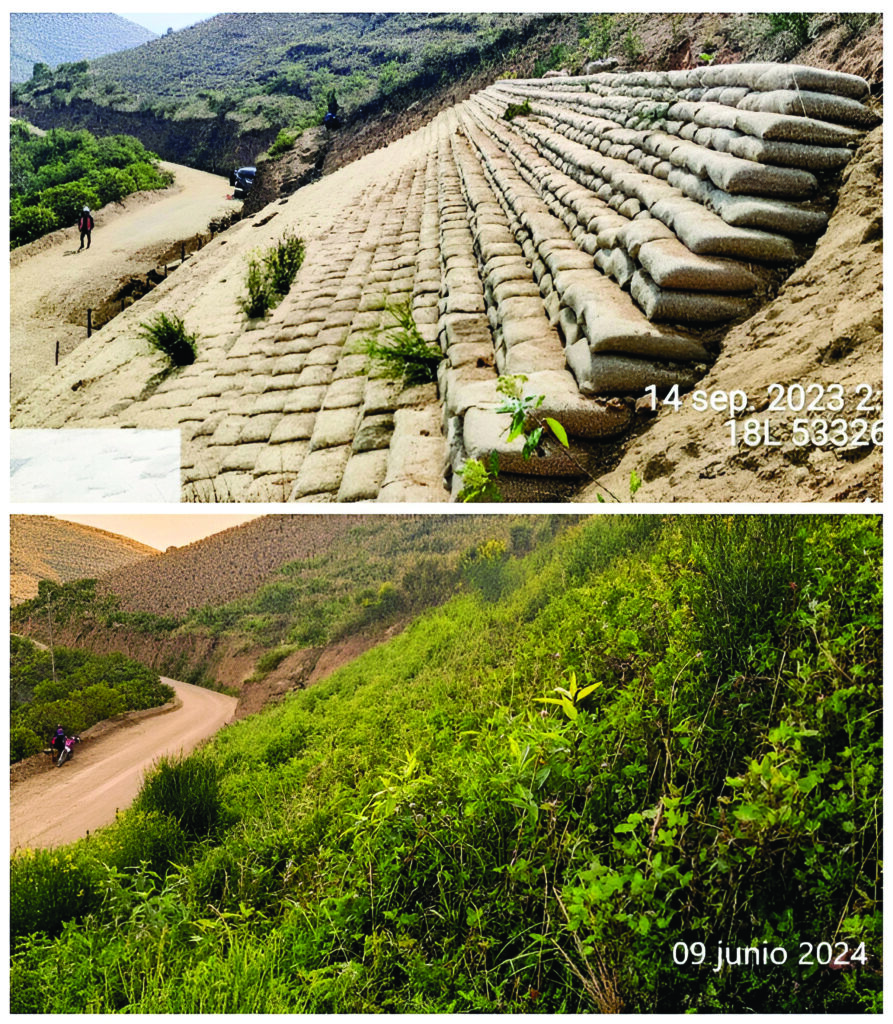
Bag courses varied in height according to the fill requirements at each location. Some courses consisted of a single bag layer, while others stacked up to four bags to achieve the elevation needed for the next step (Fig. 7). Upon completion of bag placement, workers constructed a perimeter drainage system using a soil-cement mixture to capture and divert surface runoff originating from the upper catchment area.
Revegetation of the Slopes
The revegetation phase was implemented in two stages. The first stage consisted of direct seeding with locally adapted forage grasses, including Medicago sativa (alfalfa), Lolium perenne (perennial ryegrass), Dactylis glomerata (orchard grass), and Trifolium repens (white clover). In addition, cuttings of native herbaceous species were transplanted to increase floristic diversity (Fig. 8). A balanced Nitrogen, Phosphorous, Potasium (NPK) fertilizer was applied following seeding.
Slope 1 required 5,127 bags and approximately 179 yd³ (137 m³) of fill; 447 plant cuttings were transplanted and 5,919 seed holes were excavated. Slope 2 required 12,049 bags and approximately 410 yd³ (313 m³) of fill; 1,976 plant cuttings were transplanted and 21,800 seed holes were excavated.
The second stage of revegetation comprised maintenance irrigation of the slopes during October and November, before the typical onset of the rainy season in December. Manual irrigation was critical to sustaining seedling growth until natural precipitation could resume.
Long-Term Performance
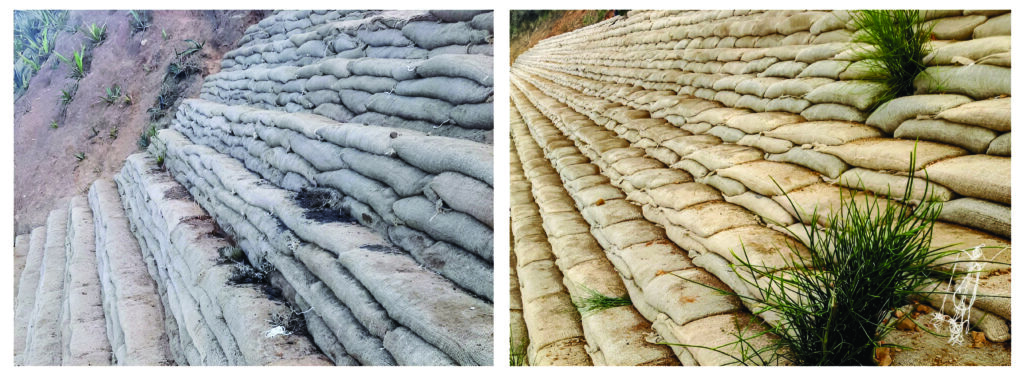
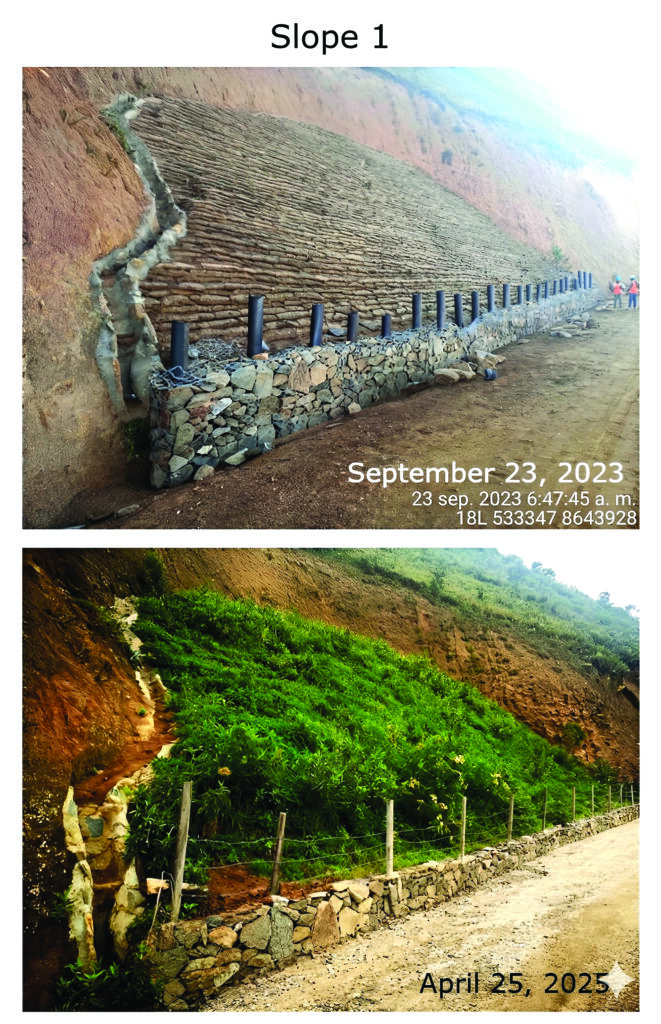
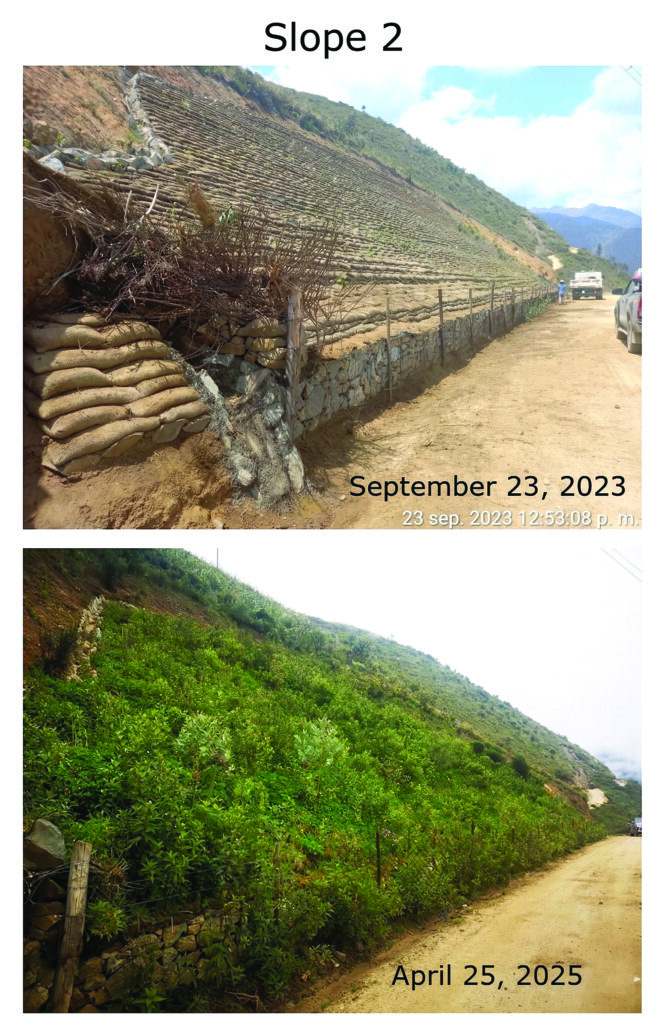
Two years after completion of stabilization and revegetation, the treated slopes have withstood two rainy seasons with no recorded soil settlement, slope failure, or gully formation. Vegetation has developed vigorously, achieving full coverage of the bag surface and forming a dense plant layer that provides continuous surface protection (Figs. 9–11).
The jute and geotextile bag stabilization technique has proven highly effective from a geotechnical stability standpoint and from a bioengineering perspective, achieving vegetation cover exceeding 95%. The reuse of sediment material from a roadside drainage channel reduced operational costs and provided a practical application of circular economy principles.
About the Expert
Moisés A. Cavero Bravo is an environmental expert with over 30 years of experience managing projects for the mining, oil and gas, infrastructure, and energy sectors in six Latin American countries. He specializes in audit, environmental assessments, biorestoration, hydroseeding, erosion control, slope stabilization, and mine closure.
Rodolfo Osorio Torres is an environmental engineer, M.Sc./Environmental Development, MBA. He is an expert in environmental licensing and management and has spearheaded numerous sustainable energy initiatives, gaining national recognition for his leadership in sustainability and environmental performance in the power sector.