How training has changed over the last 30 years
By Dwayne Stenlund, MSc., CPESC, CESSWI
Over my more than 30 years of work with the Minnesota Department of Transportation (MNDOT), much has changed in the erosion and sediment control profession. So much has changed, in fact, that there could be a museum of best management practices (BMPs).
In 1996, my office developed and implemented its first permits for construction discharges of stormwater, issued by the Minnesota Pollution Control Agency (MPCA). After several noncompliance and illicit discharge settlements, it became clear that training for both the private sector and public sector was needed. MNDOT launched a training program in 1999 as a contract requirement for the prime contractor and project engineer alike.
A memorandum of understanding with MPCA included a requirement for MNDOT to provide a trainer to meet the program delivery needs of the linear project sector, and I became a consent decree-required trainer. Most violations and penalties involved administration; negligent violations were rare.
Today, education is the most important BMP for permit compliance and a primary reason that associations like IECA exist. When associations first formed, contractors showed up when they needed knowledge and associations needed financial support.
If education hadn’t become a permit requirement, only the best contractors would attend—and those who need education most are the least likely to attend unless required. Training has to be worth their while. Here are some of the ways that training has evolved over the years:
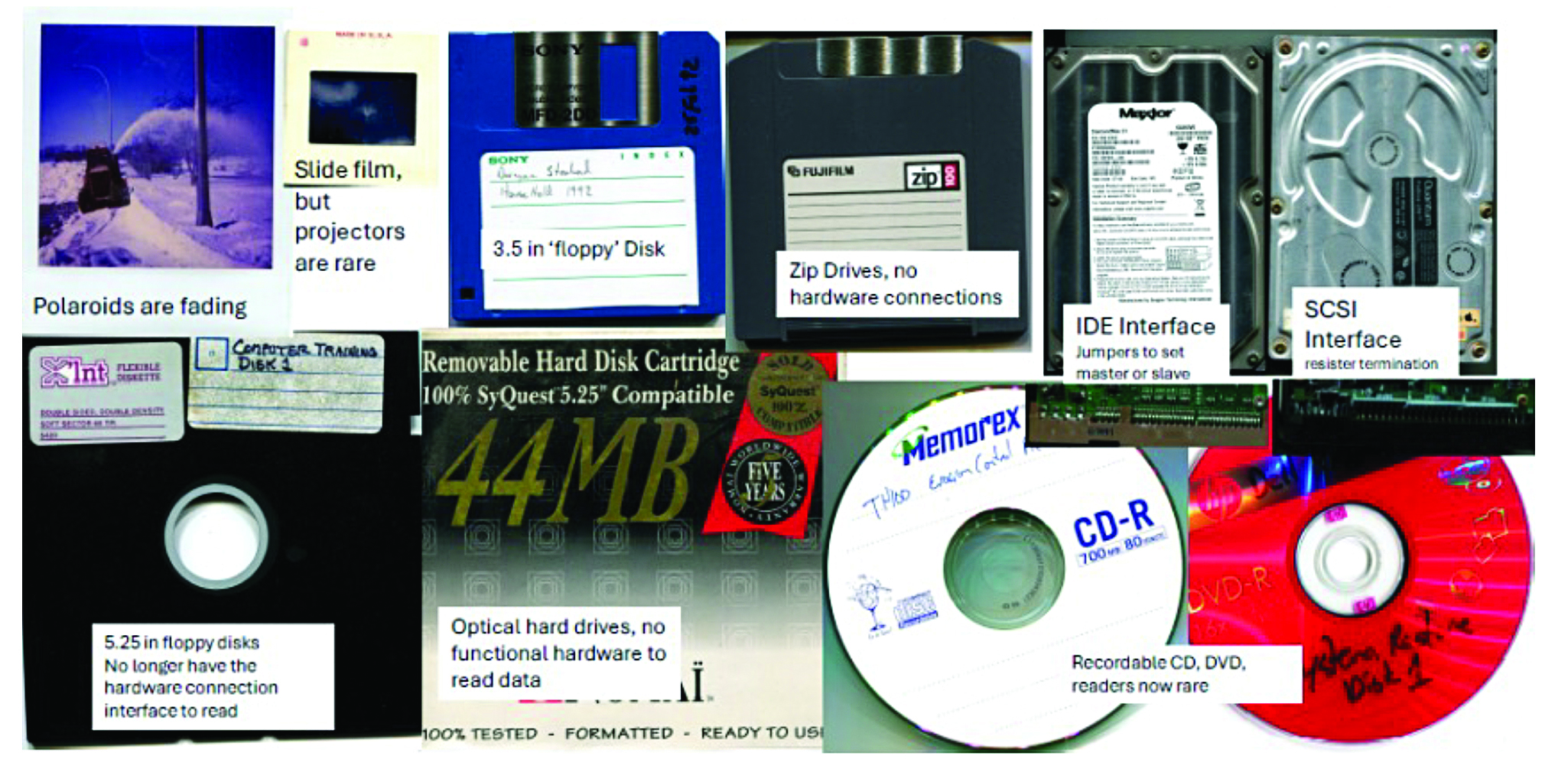
- Changing formats. Remember the Simon & Garfunkel song “Kodachrome”? I always took lots of photographs when inspecting a project to convince engineers and designers that changes were necessary. Those early photos were shot on film; I even have a few Polaroids and used a slide projector in presentations.
Around 2006, we switched to digital cameras—easy to use, but expensive, cumbersome, and low-resolution. We soon converted slides to digital formats, scanning and saving them to various floppy disks, ZIP drives, optical drives, and CD-Rs. I still store the physical media but have no way to access the files since the technology has changed.
- How adults learn. Teaching adults is never easy. Some might have last been in school more than 40 years ago. Early on, many attendees didn’t want to attend trainings, and their minds were elsewhere. If a slide didn’t look like their project, they zoned out. Attendance was poor during construction months.
Training has since evolved to be more experiential, hands-on, and interactive. Contractors ask me for the dates I will be teaching, because I update content every year to discuss new practices. Contractors and engineers like to see how others comply with permits—almost like gossip.
- Multisector project examples. The original focus of training was industrial/commercial, linear, and residential. But today’s training content needs to reflect a broader audience that includes all projects that disturb at least one acre of soil—farm buildings, airports, utilities, and so on. With data centers, disturbance areas are getting even bigger. A slope is a slope; what matters is what it connects to.
- Designing a stormwater pollution prevention plan (SWPPP). Program delivery starts with a good plan—a plan that’s developed by the owner (the one with the money). Even design/build and alternative contracting systems must have the owner develop the concept and initial SWPPP.
Many SWPPP advances have occurred at the design level through training. Improvements direct the contractor to divert storm and groundwater around the work area, isolate work from resource water, and direct stormwater to traps or lift stations; the plan defines limits on the amount of land open at any given time and the means and methods for corrective actions. These are teachable moments that lead to cost-effectiveness; care and speed can be taught.
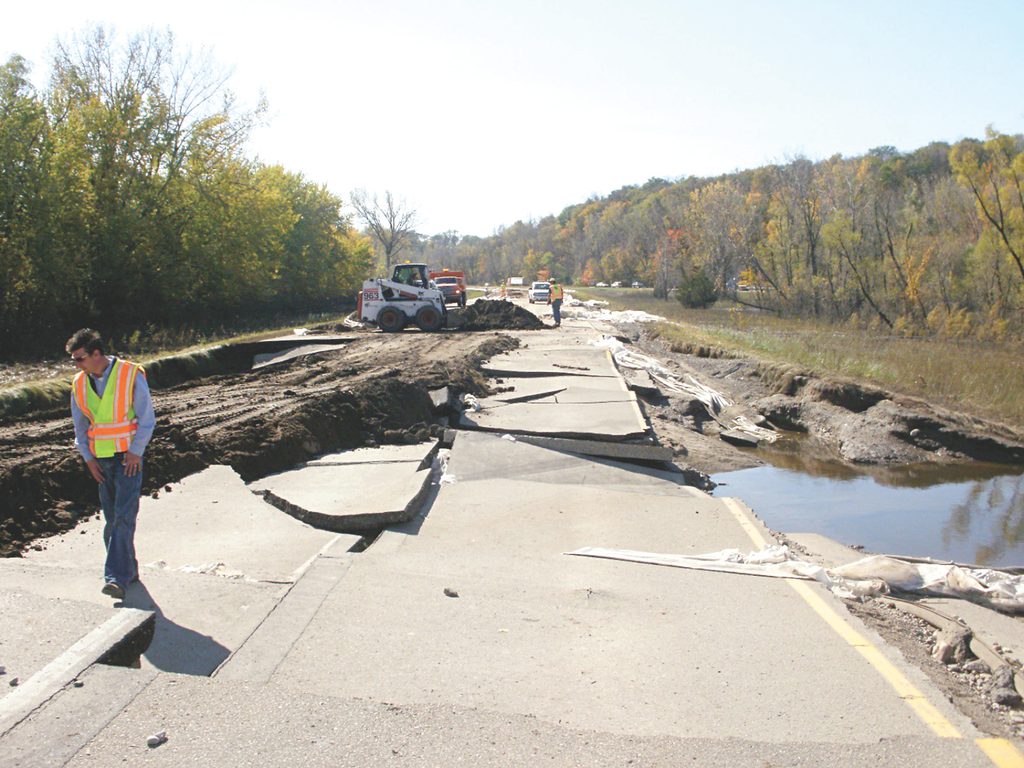
- Resource protection is more than stormwater control. How and where stormwater ends up is more than a BMP. Stormwater and permit requirements impact work in public waters, so education must address the demands of the U.S. Army Corps of Engineers, local departments of natural resources, watersheds, etc. Even fish and wildlife and forest services are impacted by construction-related stormwater discharges.
Studies in Minnesota have compared high-economic-value regions to less-advantaged areas, finding that the latter often have inferior SWPPPs. SWPPPs must be economically blind for consistent program delivery and environmental justice.
- Climate change. Wishful thinking isn’t going to get rid of challenges related to climate change. The low-bid system used in the United States requires resilient, owner-defined SWPPP and resource designs. Resiliency is best taught knowing the performance and functional limits of all BMPs.
A contractor will not apply the most effective, robust, and functional BMP initially unless the owner specifies it and offers evidence of the BMP’s dividends. Such knowledge helps contractors bid for success, taking advantage of site conditions, materials, and creativity.
- Establishing a responsible party. There should be two responsible parties on every project. One of the parties is the one with allocated project money, and the other is under direct contract to the first party and must follow the contract and project specifications. The contractor works for the owner; this relationship is critical. If something happens that was predictable or preventable, both will pay a penalty.
In Minnesota, the owner is ultimately responsible for all terms and conditions of applicable permits, regardless of contractor operations and negligence. Identification of the responsible parties now occurs routinely at preconstruction meetings.
One of the first improvements in implementation over time has been the establishment of three different and distinct training certification programs for SWPPP designers, construction site managers, and BMP installers. There are now many forms of certification and training at the county, province, state, and federal levels.
- Amending the plan. In general, it’s still difficult to educate people about making changes to a plan. Prework amendments are the most cost-effective; after-the-fact corrective actions are easy to train based on hindsight. But document amendment details and narratives are difficult, and this is one thing that hasn’t changed in the last 30 years.
My latest training focuses on pollutant prevention, or what I call “good housekeeping” for continuous compliance. A worker-safe project is also a stormwater discharge-safe project, and I discuss what’s permissible for discharge, work environments, and workplace safety.
Education continues to improve. Guidance documents need to be created and updated to teach everything from the simplest solutions to the most complex. For examples of how that guidance has evolved over time, visit erosion.umn.edu/bmp-guidance-documents. In the next installment of this three-part series, I will take a look at how the equipment in the industry has changed alongside erosion control practices.
About the Expert
Dwayne Stenlund, MSc., CPESC, CESSWI spent 30 years as an erosion control specialist with the Office of Environmental Stewardship at the Minnesota Department of Transportation.