How the 2026 IECA conference turned conversation into action
BY B R A D PAT E R S O N
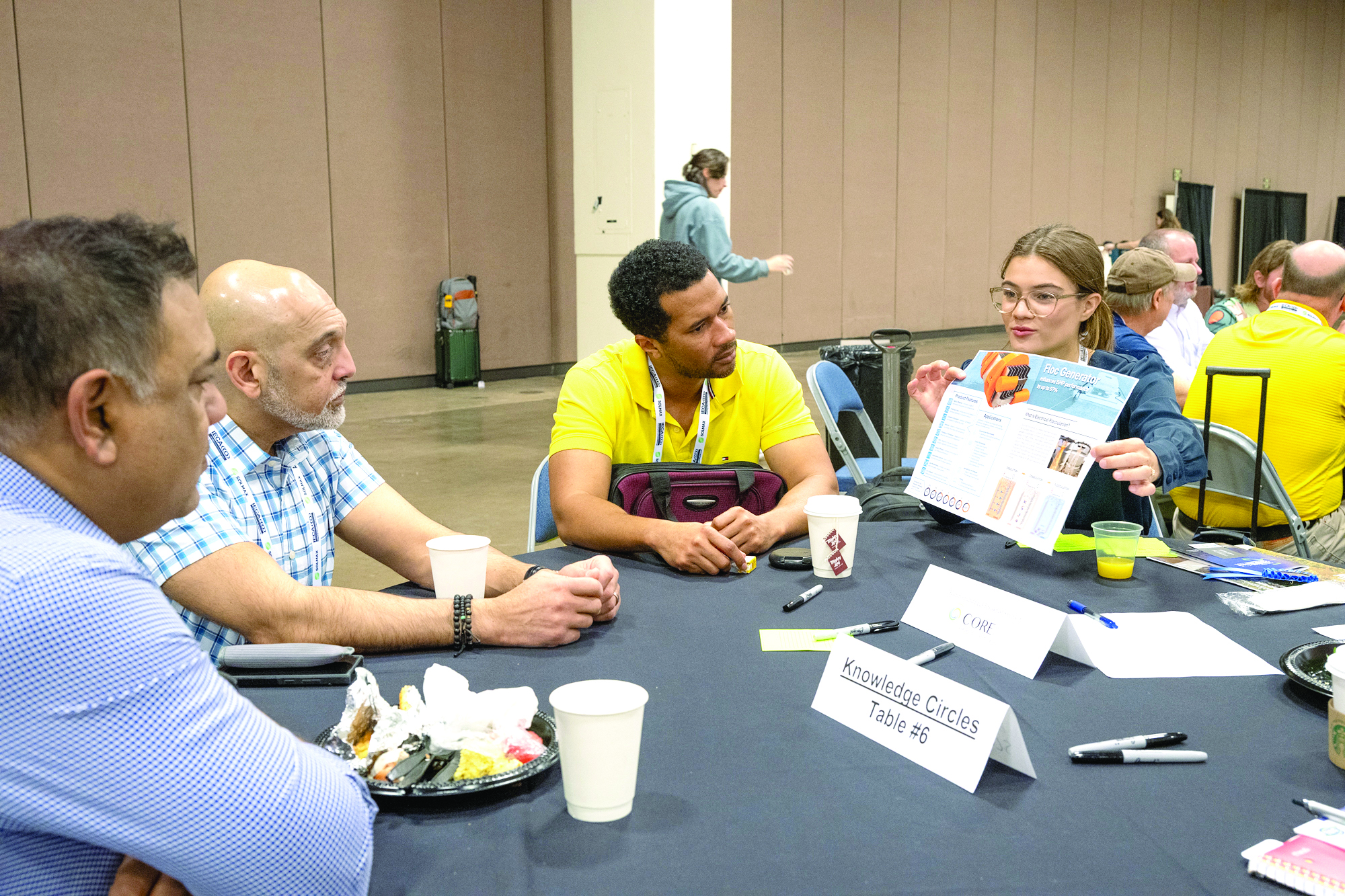
The erosion and sediment control (ESC) and stormwater management industries are evolving rapidly, as new regulations, technologies, climate challenges, and project complexities emerge. Some of the most meaningful learning occurs when professionals come together to exchange experiences, discuss challenges, and explore practical solutions, and at the IECA annual conference in Ft. Worth, attendees had access to a new type of collaborative learning—Knowledge Circles.
The format is simple: Knowledge Circles are facilitated roundtable discussions designed to encourage collaboration among engineers, contractors, regulators, consultants, manufacturers, researchers, and other industry professionals. By sharing diverse perspectives and real-world lessons learned, participants identify emerging trends, spark innovative ideas, and strengthen the collective knowledge of the ESC community. These conversations help transform individual experience into shared expertise, ultimately advancing best practices that improve environmental protection and project outcomes.
In place of traditional, top-down sessions, Knowledge Circles create a dynamic space for engaging conversations. These are dialogue-driven environments that aim to extend engagement beyond the conference, spark new ideas for industry content such as articles and webinars, and identify the topics that matter most to IECA members. Thoughtfully selected facilitators—each a seasoned professional and subject matter expert in their Knowledge Circle topic—hosted participants at each table. Their role was to create an inclusive environment in which participants felt free to share, and where the conversation was free to evolve naturally.
The six Knowledge Circle topics align closely with IECA’s core mission of education, professional development, technical excellence, environmental stewardship, and industry collaboration. In 2026, they included:
- High-Risk Construction Site Management
- Climate Resilience
- Technology & Materials
- Stormwater, Low-Impact Development (LID), and Green Infrastructure
- Regulations & Compliance
- Erosion & Sediment Control
We received a lot of high-quality input, proving the value that Knowledge Circles activities can deliver.
In discussions on high-risk construction, participants emphasized the complexity of working in environmentally and socially sensitive areas. From tailings ponds and flood zones to culturally significant lands, the stakes are high. Beyond technical solutions, there is a human dimension where worker safety, community perception, cultural sensitivity, and downstream impacts play critical roles. A consistent theme emerged: When site conditions are uncertain, planning for worst-case scenarios is not overly cautious; it’s cost-effective.
The climate resilience conversation revealed gaps in awareness, not in technology. While more intense and unpredictable rainfall is increasing erosion risks, public understanding of stormwater systems remains limited. Participants noted that green infrastructure is still underutilized—often sidelined despite evidence that the long-term cost of not implementing it is always higher. The group explored ways to connect better with communities through visuals, targeted messaging, and education, while emphasizing the need for workforce training and sustainable maintenance practices. The message was clear: Resilience is as much about communication and investment as it is about design and maintenance.
In the realm of technology and materials, conversations ranged from practical to experimental. Participants compared active and passive treatment systems, discussed permeable pavements, and examined ongoing specific local challenges. The upshot? Innovation moves fast, but adoption often lags, highlighting the need to bridge the gap between what’s possible and what’s practiced.
Discussions surrounding LID and green infrastructure reinforced that there are no one-size-fits-all solutions. Regional differences shape practices, and natural forces influence outcomes. Success stories from across the country showed the potential of large-scale water quality initiatives and nutrient removal programs, but long-term maintenance remains a persistent challenge. The takeaway: Adaptability is essential, and local context matters.
Perhaps the most complex conversations emerged in the area of policy and regulatory compliance. Participants described a fragmented landscape where enforcement, communication, and expectations vary widely by region. In some cases, fines are effective; in others, they are rarely used or too small to incentivize compliance. Inconsistencies between agencies and jurisdictions create additional challenges, sometimes within the same metropolitan area.
One striking insight was that the cost of noncompliance can be lower in certain situations than the cost of doing things right. To address this, participants called for clearer communication, better coordination, and the development of plain-language guidance that can be understood and applied across the industry.
Finally, in erosion control and slope stability, participants agreed that there is momentum toward more sustainable, nature-based solutions. Plant-based products, natural fertilizers, and innovative flocculation technologies are gaining traction, particularly for slope stabilization and dust control. At the same time, increasing rainfall intensity and emerging pollutants are pushing the industry to adapt quickly. There is also renewed interest in certification frameworks such as LEED (especially in water-scarce regions), signaling a broader shift toward sustainability-driven practices. The value of the Knowledge Circles isn’t just the discussion—it’s what IECA does with the insights afterward. By capturing recurring themes, challenges, and opportunities from each Knowledge Circle, IECA can create a continuous improvement cycle that shapes education, publications, certifications, advocacy, and future programming. This first step is just the beginning; our member-driven committees are now taking these themes and ideas and transforming them into substantive IECA education offerings. Knowledge Circles is the newest innovation pipeline intended to transform member conversations into actual presentations, publications, standards, and research priorities.
These conversations are ongoing, and the next iteration of Knowledge Circles will take place during our annual conference in Reno, NV, Feb. 21–24, 2027, collocated with Geosynthetics (GMA). If you or any colleagues are interested in joining, email education@ieca.org for more information.
About the Expert
Brad Paterson is conference and education manager at the International Erosion Control Association.