Fort Worth’s Central City project channels the flood-prone Trinity River to protect one of the country’s fastest-growing cities
The U.S. Army Corps of Engineers’ warning to Fort Worth was clear: Fix the Trinity River floodway as it flows through downtown or run the risk of being hit with a devastating flood.
That dire warning from the late 1980s ignited communitywide soul-searching about how to protect the city from a sweeping natural disaster while embracing the Trinity River and enhancing the city’s quality of life.
From that debate came the Central City Flood Control project, an ambitious collaborative effort by federal, state, and local governments to provide Fort Worth with improved flood protection by rechanneling the river.
The multifaceted flood control project also inspired a rediscovery of the Trinity River as a community asset. The project is creating an island prime for development. It is reimagining parks and expanding riverside trails. And it is restoring wildlife habitats and removing hazardous wastes.
Local historian, attorney, and probate judge Quentin McGown describes the river’s transformation from a drainage ditch to a thriving asset as nothing less than amazing. “It’s the artery. It’s the reason the community exists,” he says. “It is the one thing that ties the entirety of the city and the region together.”
Protecting a Growing City
Concerns about flooding along the Trinity River go back to the 1930s. A 1942 flood swamped the Fort Worth Stockyards. The big flood came in 1949, when 11 inches of rain fell on the city in nine hours, turning the Trinity River into a 14-block-wide body of water that killed 10 people and left 13,000 homeless.
The U.S. Army Corps of Engineers and the Tarrant Regional Water District (TRWD) eventually responded to that threat by constructing a 27-mile levee system with floodgates and low-water dams to contain flows near the central business district. That system went largely unchanged for 55 years.
The surrounding conditions have changed, however; Fort Worth has experienced significant growth. Its population has soared from 350,000 when the levees were built to more than 1 million today. Rapid growth and increased development have resulted in higher flood levels during major storm events.
If flooding similar to the recent devastating events in central Texas were to occur in Fort Worth today, it could potentially overcome the current levee system, causing widespread damage to one of the nation’s fastest-growing cities.
Designing New Flood Controls
Federal, state, and local agencies and private concerns have studied how to improve conditions along the Trinity River over the years, and about 200 public meetings were held from 2001–2005 to discuss plans for the river.
The Army Corps approved a final design for central Fort Worth in 2008, anticipating population growth and setting the project’s flood control goals. Advancements in hydrologic modeling and meteorology have since been applied to the final design, but the scope of the planned flood protections stayed the same.
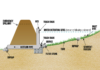
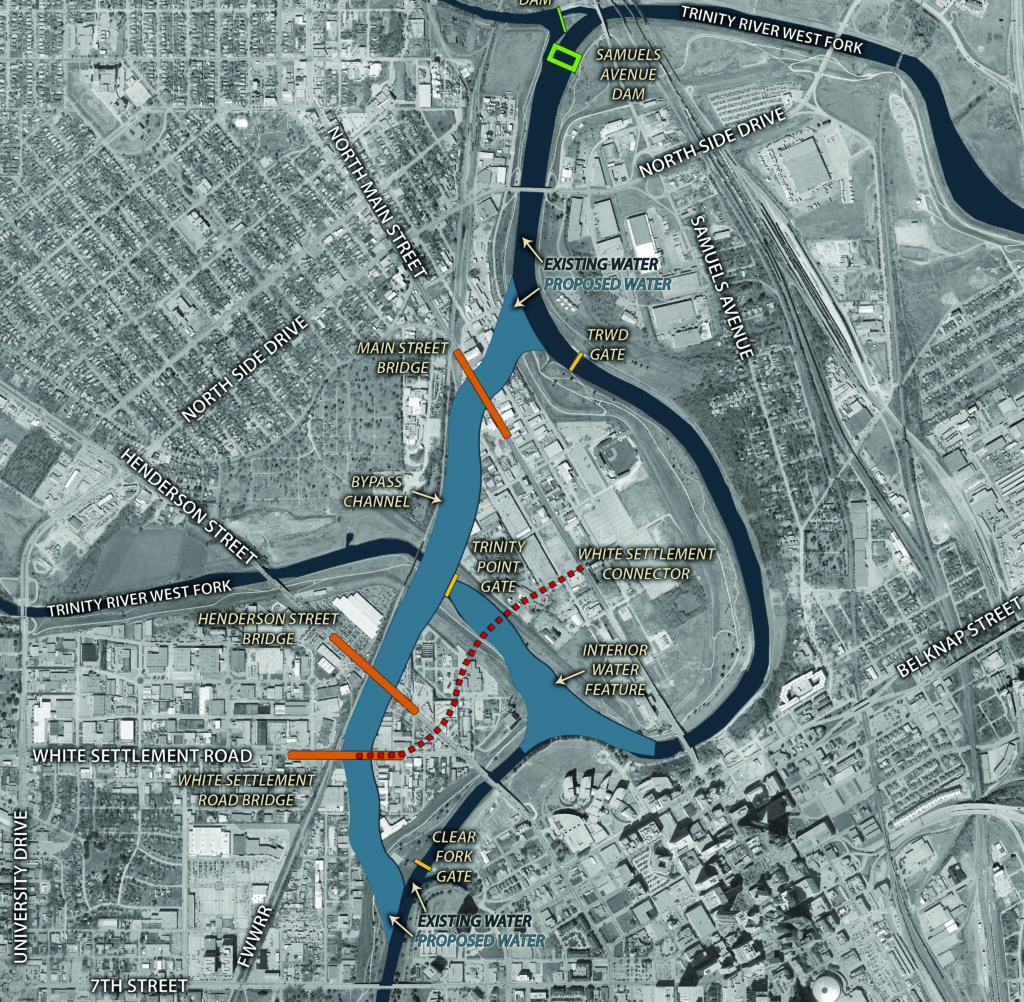
The Central City Flood Control Project involves the construction of a 1.5 mi
(2.4 km) bypass channel that reroutes floodwaters from the Trinity River (Fig. 5). Redirecting the river’s Clear Fork and West Fork through the channel lowers water levels, helping the existing levee system manage the flow more efficiently and providing added flood protection for the community.
The Riverside Oxbow and Gateway Park on the city’s east side were wrapped into the Central City plan as a way to move flood storage from largely privately held land on the city’s west side. The ambitious, innovative design also created Panther Island north of downtown, which is currently under development. Once completed, the project will protect an area that has become significantly more populated since the original levee system was built.
Getting to Shovel-Ready
Requests for bids for the northern section of the bypass channel issued in April, and the contract will be awarded in August. After almost two decades of planning, construction on the key element of the Central City flood control project is expected to begin in the fall.
“We’ve been talking about this for 20 years,” says Tarrant Regional Water District Central City Flood Control Project Manager Kelly Wood. “Now it’s here. Things are moving quickly.”
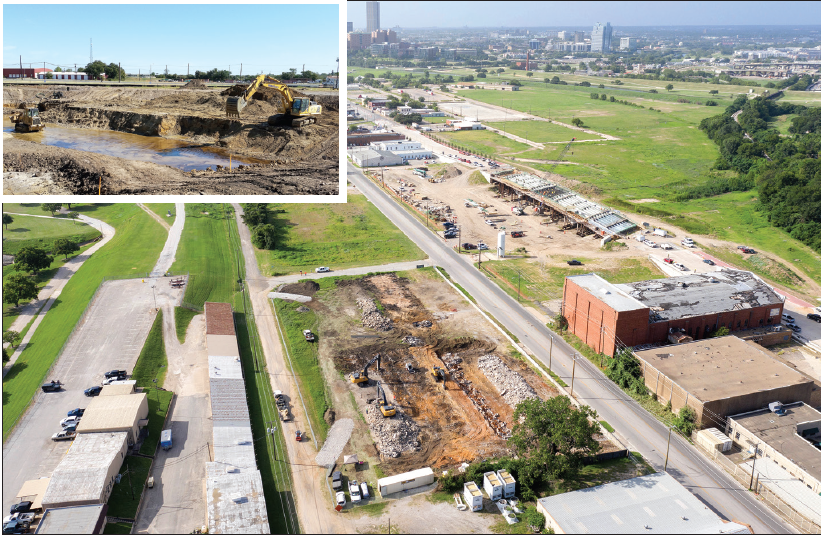
Before work can actually begin on the bypass channel, however, local partners needed to have most of the area in a “shovel-ready” state. TRWD has already removed more than 400,000 tons of contaminated soil and treated more than 44 million gallons of tainted groundwater (Figs. 6-7). The cleanup was required because the work is being done in a part of the city where many structures have been abandoned and forgotten, presenting unique environmental challenges.
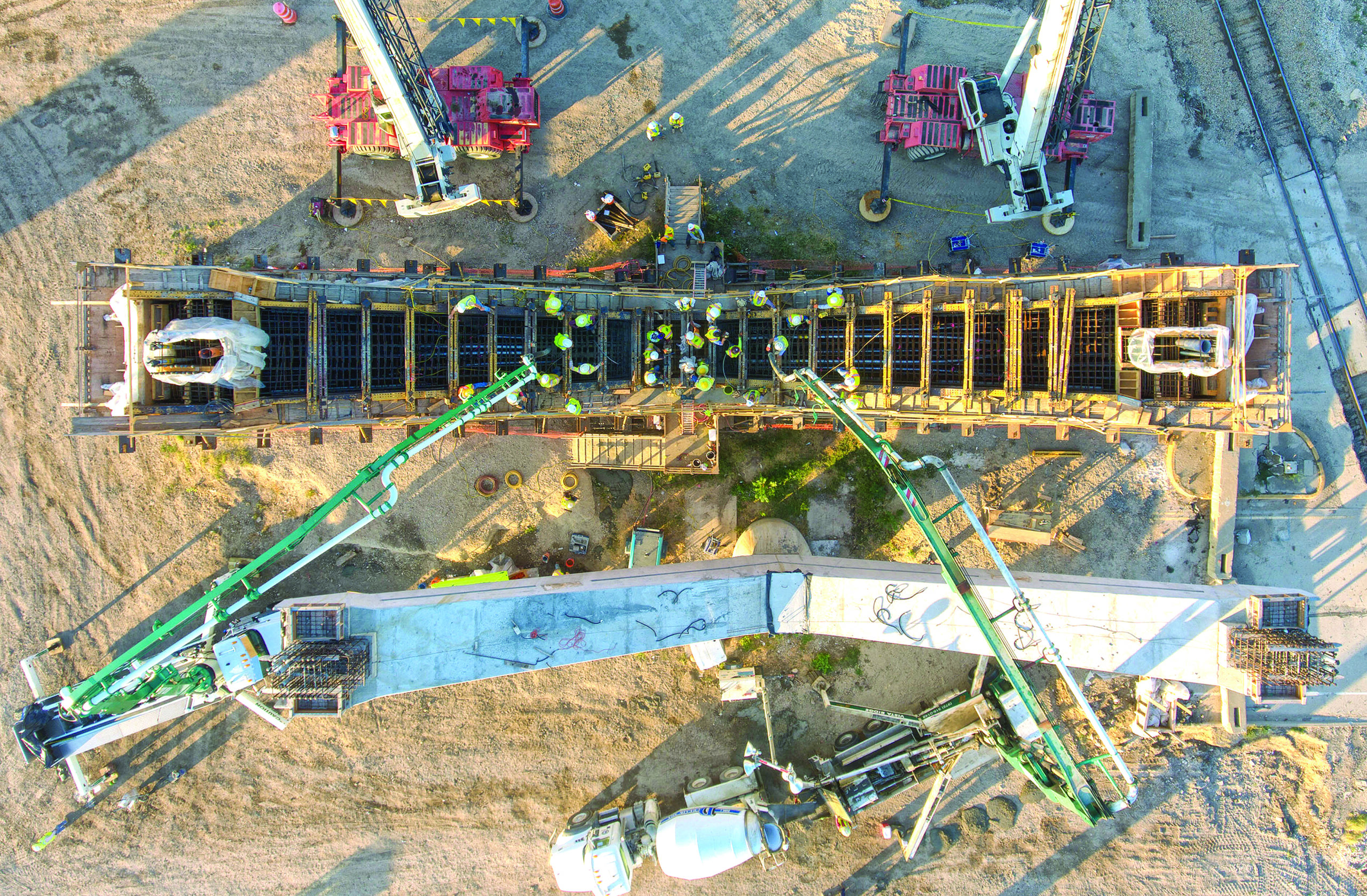
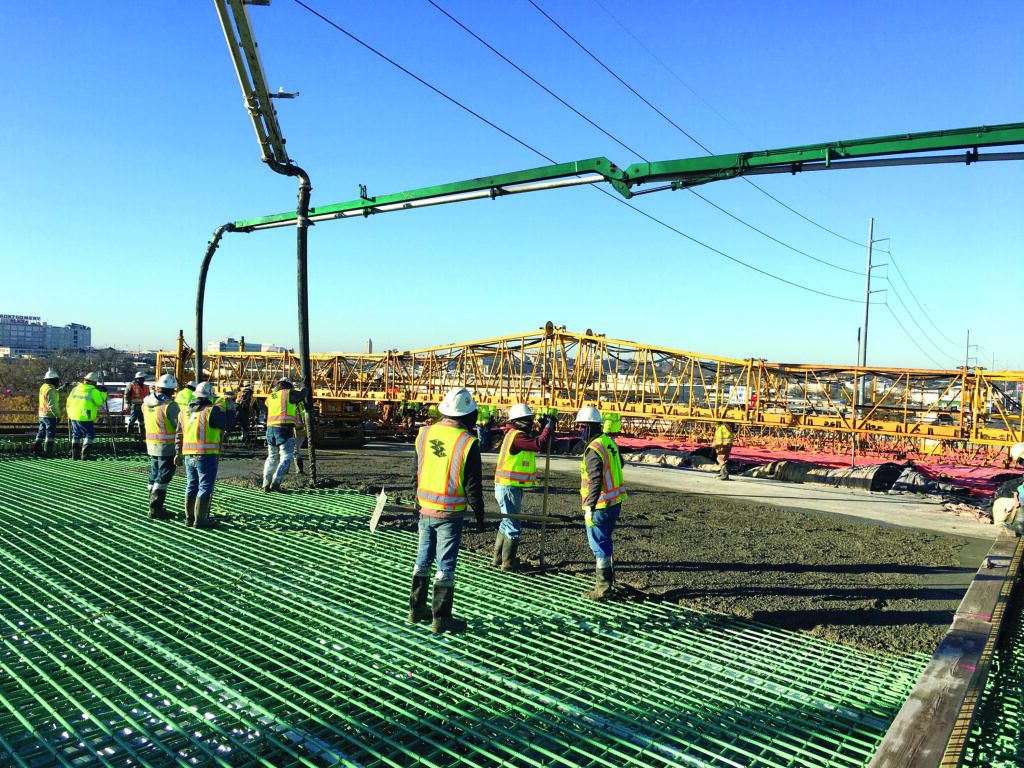
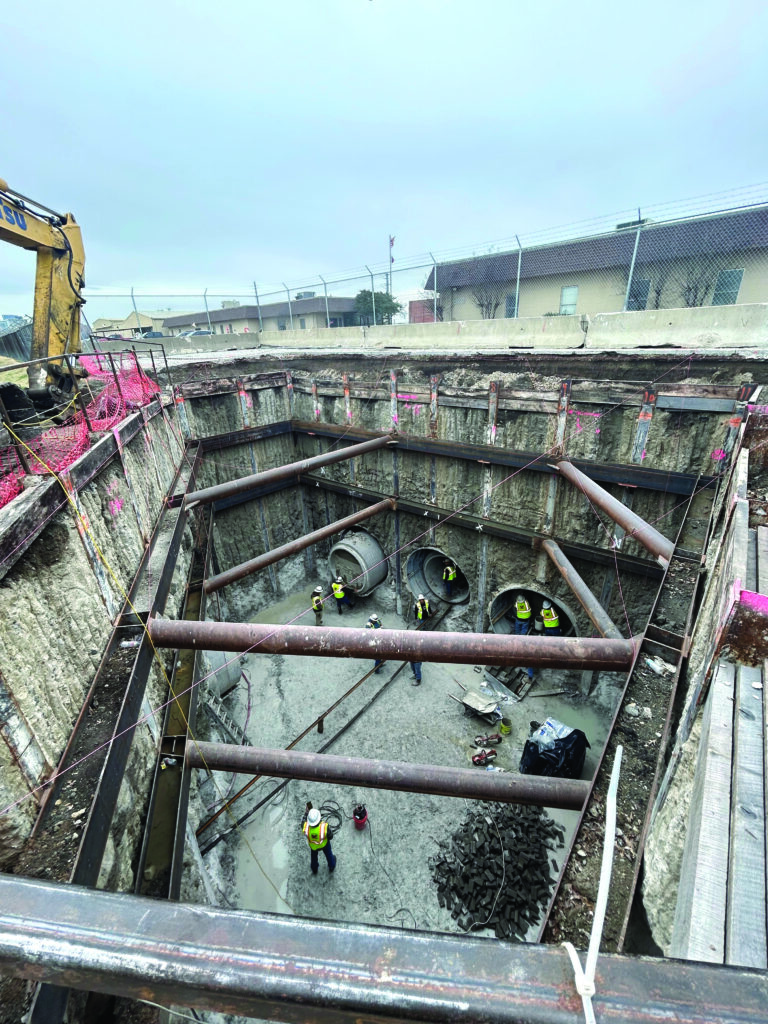
To meet Army Corps requirements, three gleaming new bridges have been built over dry land on Henderson, North Main, and West Side Drive to connect Panther Island to the rest of the city (Figs. 1-2). All existing storm drainage systems and other structures in the path of the bypass channel also had to be removed and relocated. Adding complexity to that task was the creation of 16 tunnels, some of which will run under the proposed bypass channel and the levee system (Fig. 8). Several were installed underneath railroad tracks.
While there was nothing unusual about the tunnel construction methods used, the Army Corps sent a world-class tunnel expert from Boston to inspect the work. Anything that gets too close to the existing levee system and the bypass channel must be completely vetted.
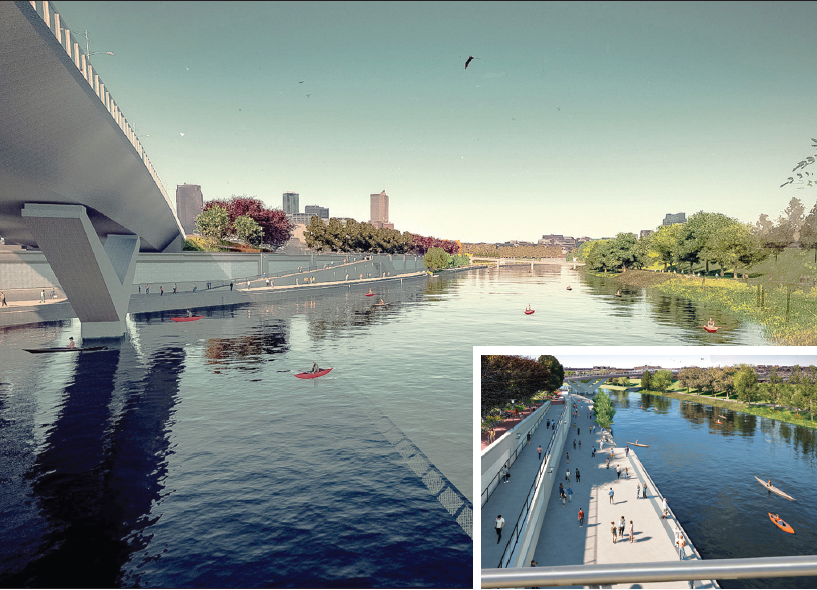
directing floodwaters away from development.
“Anything that passes over, through, and under the levee gets a lot of scrutiny to see if it introduces a problem, to make sure we’re not doing anything with unintended consequences,” Wood says. “Everyone is feeling the pressure, and that’s not a bad thing. Everyone is sensing the urgency of it.”
Better Than a Ditch
McGown and others joke that the TRWD, the Army Corps, and the City of Fort Worth could have just built a drainage ditch. And when the current Fort Worth floodway and levee system was completed in the 1970s, that’s what many people felt they got.
The high levees closed the Trinity River off from citizens. Its banks were covered in litter, and the river was seen as toxic. “When I was growing up, the Trinity River was nasty,” McGown says. “No one wanted to go to the river. It was a flood control project, not a river intended for public pleasure.”
McGown is excited about the ecological mitigation and environmental remediation work that has been performed as a result of the Central City project. TRWD adopted a Water Quality Guidance Manual for enhanced stormwater quality practices in 2018, for example, that introduced landowners and developers to green infrastructure options such as rain gardens and bioswales that keep runoff from simply going down the drain. It also provides examples of structures such as underground sand filters and bioretention basins, which can help deal with oil, trash, and debris in stormwater runoff.
The Ham Branch Habitat Mitigation project on the eastern edge of Central City will turn an urban stream into a thriving wetland ecosystem inside Harmon Park. TRWD is restoring 1,950 linear feet of degraded urban stream channel, reestablishing native trees and vegetation across a 7.4-acre (4.9 ha) riparian corridor and creating a small, emergent wetland.
On the western edge of Central City, TRWD is working in Rockwood Park and golf course to reconnect oxbows that have become disconnected from the river and create better habitats for wildlife and aquatic growth. At the same time, the district is excavating 23 acres of land to control floodwaters and provide crucial valley storage.
The Central City Flood Control Project will provide Fort Worth with the flood protection it needs while giving citizens a river it loves. “It gives the river back—and the public wants the river back,” Wood says.
A lot of work remains to be done, but McGown foresees the river’s rebirth. “As you drive over the dryland bridges, you can squint your eyes and see what it’s going to be like finally,” he says. “It’s a pretty exciting future.” n
About the Experts
Matt Oliver is communication manager at Tarrant Regional Water District.
Max B. Baker is a Fort Worth-based, award-winning journalist who worked for the Tarrant Regional Water District for eight years.
Elements of the Plan
The federal Central City Flood Control Project includes the following:
- A 1.5-mile bypass channel that will reroute floodwaters near the downtown area;
- Floodwater storage sites to slow the water entering the channel and prevent flooding to the east;
- Three floodgates;
- Three vehicular bridges at Main St., Henderson St., and White Settlement Road;
- A pumping station; and
- The Samuels Ave. Dam.