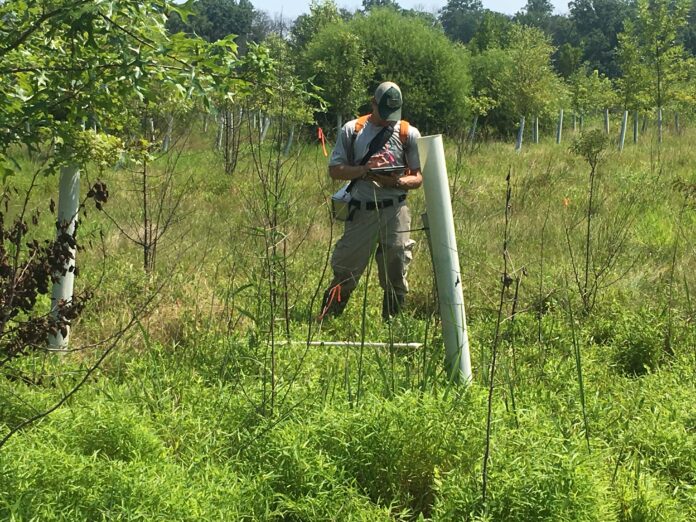
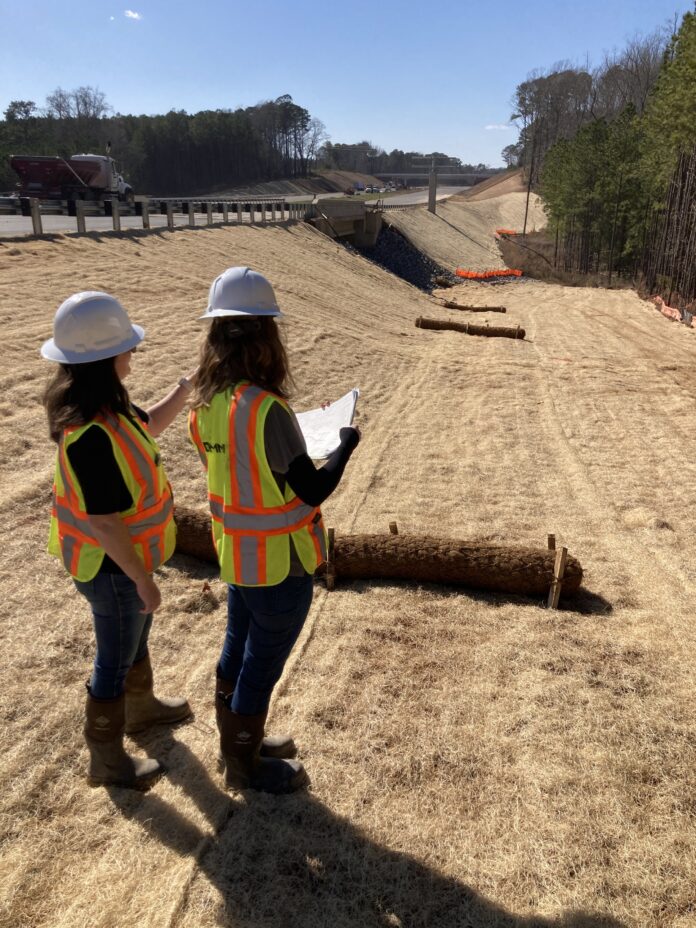
Figure 1. Study co-author Dakota Hunter sampling environmental data along an invasion gradient of Japanese stiltgrass (Microstegium vimineum) at a wetland restoration site. (Photo credit: D. A. DeBerry)
Restoring the ecosystem services and functions of areas that hold or convey water is a widespread practice, often accompanied by evaluations of the success of that effort.
Invasive Species Density One of the common issues in restored areas is the appearance of invasive plant species that may negatively affect the desired outcomes. In an effort to determine a level of invasive species presence that could be tolerated without impacting the overall restoration goals, a study evaluated 21 stream and 23 wetland restoration projects completed in Virginia, USA.1 The sites were evenly distributed across the Coastal Plain and Piedmont regions and ranged from one to 19 years since establishment. All sites fell under state and federal mitigation laws for non-tidal forested wetlands or stream restoration projects (Figure 1). The focus was on two invasive species common in constructed wetlands (Anthraxon hispidus and Typha spp.), two common in stream restoration sites (Lespedez cuneata and Lonicera japonica) and one common in both settings (Microstegium vimineum).
Transects were established from “completely invaded (>20%)” to “uninvaded” areas for each invasive species and plots were surveyed for plant species and cover. From these data, the amount of invasive plant cover that negatively impacted species richness could be estimated for each of the five target invasives. In the wetlands, all three invasive species negatively impacted community properties at the highest level of invasion, but the effects were less clear at lower levels. Often the highest richness occurred on the edge of the most invaded areas. A total of 194 plant species were identified in the wetland areas. The stream sites hosted 286 plant species with results similar to those of the wetlands study: species richness was negatively impacted in the highly invaded area but not in the moderately to uninvaded areas. Plots of invasive cover versus native richness suggested that the maximum values occurred at around 10% invasive cover. The authors suggest that efforts to remove invasive species at levels lower than 10% may be counterproductive given these results. However, they caution that continued monitoring is still important to know when these levels are being exceeded.
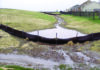
Effects of Flow Controls The semiarid rangelands of the Gunnison Basin in Colorado, USA, were the focus of a study on the effects of erosion control structures on the surrounding vegetation.2 Land use over the years resulted in wagon tracks, stock ponds, roads and grazing that led to erosion in ephemeral and perennial stream channels.
To reduce this erosion, a variety of simple structures known as “Zeedyk structures” (See Resource) were installed to slow flow and to reconnect the channels with the surrounding floodplains. Aside from erosion control, these structures help to create wet meadows that host plants that are critical for wildlife, particularly the Gunnison sage-grouse, which is identified as a threatened species by the U.S. Fish and Wildlife Service. The 202,000-ha area has cold winters and warm summers with a highly variable average annual precipitation of 230 mm. Six of the study’s nine years were considered drought years.
The management objective for installing 900 structures in 11 drainageways was to increase obligate and facultative wetland species, including sedges, rushes and forbes, by 20% within five years. This was evaluated with plant surveys from 2012 to 2020 in 135 permanent transects in treated areas and thirty transects in untreated (no structures) areas of seven of these drainageways.
Overall, the 20% increase in wetland species was met in 75% of the ephemeral and 100% of the perennial stream areas, with a net cover gain of approximately 40% during the monitoring period. Areas with the least wetland plant cover tended to have the greatest increases. Among the 215 plant species present, 13 wetland species were relatively common, particularly Baltic rush (Juncus balticus) and western aster (Symphyotrichum ascendens). Forbs were increased modestly (4%/year) by the treatments, while grasses, mostly Kentucky bluegrass (Poa pratensis) and western wheatgrass (Pascopyrum smithii), increased only in the ephemeral stream areas. The authors conclude that these structures appear to be beneficial in creating wetland meadows, but that additional monitoring is needed to evaluate longer-term effects.
References
DeBerry DA and Hunter, DM. 2024. Impacts of invasive plants on native vegetation communities in wetland and stream mitigation. Biology 13:275. https://doi.org/
10.3390/biology13040275.
Rondeau, RJ, Austin G, Miller, RS, Parker A,
Breibart S,Conner, Neely E, Seward NW, Vasquez MG, Zeedyk WD. 2024. Restoration of wet meadows to enhance Gunnison sage-grouse habitat and drought resilience in arid rangelands. Restoration Ecology 32:2, e14039. doi: 10.1111/rec.14039.
About the Expert Rich McLaughlin, Ph.D., received a B.S. in natural resource management at Virginia Tech and studied soils and soil chemistry at Purdue University for his master’s degree and doctoral degree. He has retired after 30 years as a professor and extension specialist in the Crop and Soil Sciences Department at North Carolina State University, specializing in erosion, sediment and turbidity control. He remains involved with the department as professor emeritus.
Most professionals in our industry think branding is more important for consumer — and retailed-based industries and less so for professional service-based companies. This is not true. Branding matters for lawyers and accountants and for professionals in our industry. When you sell your company, your brand can be as, if not more, valuable than other company assets. Branding is not just about logos and taglines — it’s about getting to the very heart of what your company stands for.
The steps to building an effective brand include:
Understanding Your Brand. The foundation of effective branding is a clear understanding of your company’s values, purpose, culture and mission. Our industry is critical to environmental sustainability and public safety. It’s essential to communicate your expertise and innovative approaches to position your brand as an industry leader.
Connecting with Your Audience. Successful branding connects emotionally with your audience. Highlighting successful projects that demonstrate that you understand the challenges of each of your audiences, showcasing your unique skill sets and sharing client testimonials can resonate with your audience.
Maintaining Consistency. From your website, business cards, proposals and contracts, vehicles, uniforms and social media to your on-site signage and project reports, every touchpoint should reflect your brand’s voice and values. Consistent branding reinforces your message and helps clients recognize and remember your company.
Telling Your Story. Sharing stories about the challenges your team has overcome, and their successes can humanize your brand and make it more relatable. Stories about how your team has prevented flooding, protected natural habitats, saved lives or supported community development can be particularly compelling.
Engaging and Educating. Offering webinars, emails with embedded videos, blogs, vlogs, social media, white papers and case studies about best practices, trends and regulations positions your company as a thought leader. This builds credibility and provides value to your clients, encouraging them to turn to you as their go-to resource.
Leveraging Technology. Artificial intelligence (AI) can play a significant role in enhancing your branding and sales strategies. AI-driven analytics can help identify trends and insights from large sets of data, predictive analytics can forecast future trends and AI-powered chatbots can improve customer service.
Harnessing Social Media. Maintaining an active presence on social media platforms allows you to reach a broader audience and engage with clients directly. Sharing project updates, industry news and educational content can establish your company as an industry authority.
Ultimately, branding is about creating a lasting impression and fostering loyalty. By getting to the heart of what your company stands for and effectively communicating that to your audience, you can build a strong, recognizable brand that drives sales and growth. Successful branding requires a deep understanding of your mission, values and purpose as well as a consistent and engaging presence to connect with your audience on an emotional level. By following these principles, you can ensure that your brand not only stands out but also resonates deeply with those you aim to serve.
“…your brand can be as, if not more, valuable as other assets.”
About the Expert Judith M. Guido is the chairwoman and founder of Guido & Associates, a business management consulting firm in the erosion control and green industry. Guido can be reached at 818.800.0135 or judy@guidoassoc.com.
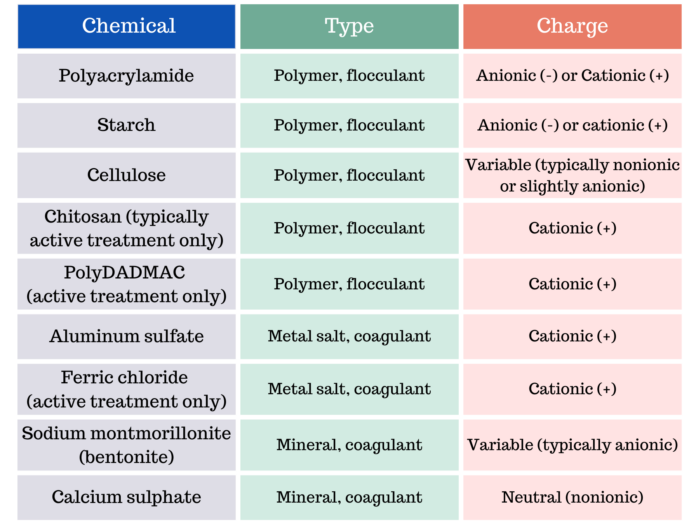
Figure 1. List of common treatment chemicals for E&SC and stormwater treatment. Anionic is negatively charged and cationic is positively charged. Some chemicals listed are only used in active treatment systems due to high aquatic toxicity.
Chemical treatments, as authorized in the 2022 EPA Construction General Permit, have proven to be effective tools in both erosion and sediment control applications. Properly deployed, such treatments have consistently delivered positive results in removing sediment from stormwater runoff and also in making soils less vulnerable to erosion.
Despite many benefits, chemical treatment often carries a negative connotation based on the perception that adding chemicals to our environment is inherently “bad.” Nearly every substance on the planet is a chemical or chemical compound including the building blocks of our bodies, the air we breathe, the food we eat and the materials we use to help clean our water.
The fact that nearly everything is a chemical or chemical compound does not mean that all chemicals are safe. Chemicals are commonly described as toxic versus nontoxic. Despite this “nontoxic” perception, all chemicals eventually reach a toxic amount. Paracelsus, a Renaissance physician, famously stated that everything is a poison and it is the dose, or the concentration of the chemical, that makes it toxic. For this reason, it is important to understand how to safely use chemicals for stormwater management and erosion control. Safety is often determined by comparing the safe and effective amount to the toxic amount. For example, safe chemicals we consume daily include water and caffeine. If we consume or are exposed to a large enough amount, both water and caffeine can reach a harmful, even lethal level. However, the likelihood of reaching a toxic amount is very low which is why we label them as safe. The greater the space between helpful and hurtful, the safer the chemical. We refer to the distance, specifically the ratio, between the effective amount and the toxic amount as the margin of safety (MOS).
Chemicals Treatments There are multiple commonly used chemicals for erosion and sediment control and stormwater treatment (Figure 1). Chemical charge is a primary characteristic that governs use. Anionic, or negatively charged, chemicals are generally considered safe for aquatic organisms by federal regulations in the USA and in almost every state. They have a relatively low toxicity, minimal restrictions and are used for passive environmental applications. In contrast, cationic, or positively charged chemicals have a high toxicity, require additional permits and are typically limited to controlled, active treatment systems.1
Tools for Chemical Treatment The goal of all chemical treatment should be to use the lowest effective amount while being environmentally protective. Using too much treatment chemical is not more effective and can actually result in decreased effectiveness in addition to safety. To achieve the goal of safe and effective use, the application rate (effective amount) must be lower than the toxic amount (below a maximum allowable use rate). The further the application rate is below the safe and allowable use amount, the safer the treatment.
Application Rates Product application rates are set primarily by manufacturers and are determined following testing and use. An application rate is used to ensure the product is applied in an amount that achieves desired results, for example, soil stabilization or water clarification. Application rates for water are typically measured in weight or volume per volume of water treated — lbs./gal or mg/L. Land applications are typically measured in weight or volume per area — lbs./acre or kg/hectare.
Maximum Allowable Use Rates Following application rates does not guarantee safe use. Maximum allowable use rates are safe limits for chemical treatment. The maximum allowable use rate is the highest concentration of a substance that can be discharged without causing toxicity to aquatic organisms.2 Some states provide lists of approved chemical treatments and calculated maximum allowable use rates.3,5,6 Maryland Department of Environmental Quality and Wisconsin Department of Environmental Quality both use secondary and acute and chronic values to calculate maximum allowable safe use levels. North Carolina Department of Water Quality uses the most sensitive chronic values based on aquatic toxicity testing.8 However, calculating these values can be complicated2,6,7 and is not practical for the average user, therefore using available lists is ideal. However, since only three states in the USA currently provide these lists, not all available products are represented. If a product is not represented, there are other avenues to estimate maximum allowable use rates:
Inquire with your local or state regulator.
Contact the product manufacturer.
Use the “no effects value” if available. With a basic understanding of toxicity information, using a no observed effects concentration (NOEC) is a viable option for chemical treatment users to estimate a protective, maximum allowable use rate.7,8
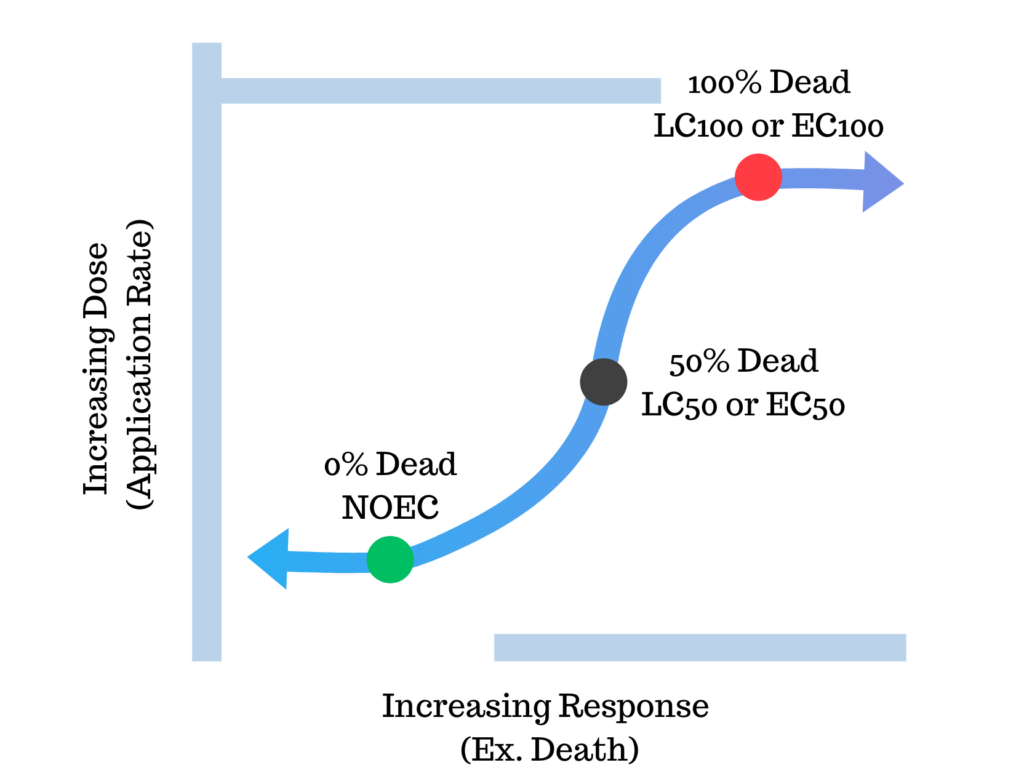
Figure 2. Toxicity curve representing “endpoints” or concentrations of chemical that causes responses in a percentage of exposed organisms.
Toxicity Studies and the NOEC A toxicity study is a controlled, conservative laboratory test where sensitive organisms in their most sensitive life stage are exposed to a range of chemical concentrations. These tests can be done in a short period of time (acute; days) or a longer period (chronic; week(s)). Chronic tests are typically more sensitive. Results of these toxicity studies are calculated toxicity endpoints, or concentrations that negatively affected a percentage of organisms (Figure 2). Common endpoints include the EC50 or LC50 (effective concentration or lethal concentration where 50% of the organisms die or experience negative effects). Other important endpoints include the NOEC or NOAEL (no observed adverse effects level), this is the highest concentration where no effects were measured. Although the EC/LC50 is one of the most referenced toxicity endpoints, it is not a safe value to use as a maximum allowable use rate. The LC50 represents the amount of chemical that results in death of 50% of organisms. The NOEC represents 0% mortality. It is typically acceptable to use the chronic NOEC as a maximum use limit.7,8 Maryland Department of Environment suggests using “significantly lower concentration than the NOEC,”7 presumably to provide additional margin of safety and layers of protection.
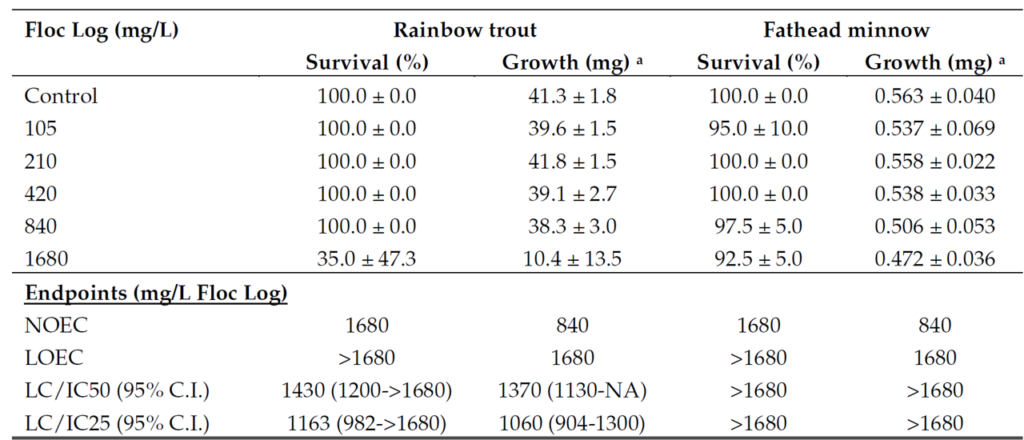
If the NOEC is available, it can be found in toxicity study results (Figure 3) and summarized in Section 12 of safety data sheets (SDS). Manufacturers should be able to provide these documents upon request. When using an SDS, toxicity reports should still be reviewed to vet data accuracy since toxicity reports are written by third parties and SDS are written by manufacturers. State calculated maximum allowed use rates should be used if available. However, if guidance is not available, the NOEC provides a relatively simple means to estimate a safe use limit. Always follow federal, state and local regulations when applying any chemical treatment.
Margin of Safety As previously stated, the MOS is the calculated ratio between the application rate and the maximum allowable use rate. The margin of safety is calculated by dividing the maximum allowable use rate by the application rate. Each individual product should be evaluated separately as even products with the same active ingredient (i.e. anionic polyacrylamide, chitosan acetate, sodium montmorillonite, etc.) may have variable toxicities, maximum allowable use rates and suggested application rates. Chemicals with little or no MOS (~one or less) should be limited to active treatment systems. Anionic chemicals with higher MOS can typically be used in passive, semi-passive and active treatment. Although there is no set MOS value that defines a safe chemical, the larger the margin the better. A product with a MOS of five and application rate of 100 pounds (45.4 kg) could safely use up to 500 pounds (227 kg) and remain below the safe maximum allowable use rate. An important thing to ensure is that the same units are being compared between application rates and maximum allowable use rates. We often see application rates listed as lbs./gallon while toxicity values and maximum allowable use rates are listed in mg/L. If assistance is needed, manufacturers should be able to convert the values, or search engines like Google can perform conversions by typing convert mg/L to lbs./gallons in the search bar.
Figure 3. A summary of results from a chronic toxicity study conducted by Nautilus Environmental Washington Toxicity Laboratory on the Applied Polymer Systems 706b Floc Log with NOEC toxicity values highlighted (Nautilus 2010).
Example 1. Anionic polyacrylamide flocculant log (706b Floc Log) Suggested Application Rate: 2 to 5 mg/L (16.6-41.5 lbs./1 million gallons water). Maximum Allowable Use Rate: 42 mg/L (348.6 lbs./1 million gallons water).3 Margin of Safety (MOS): 42 mg/L ÷ 2 to 5 mg/L = 21 to 8.4.
Example 2. Bentonite based granular (FLOC) Suggested Application Rate: 180 mg/L (1,494 lbs./1 million gallons water).10 Maximum Allowable Use Rate: 650 mg/L (5,395 lbs./1 million gallons water).4 Margin of Safety (MOS): 650 mg/L ÷ 180 mg/L = 3.6.
Example 3. 1% Chitosan acetate liquid (1% Liquifloc)* Suggested Application Rate: 100 to 300 mg/L (834-2,503 lbs./1 million gallons water).10,11 Maximum Allowable Use Rate: 121 mg/L (1,010 lbs./1 million gallons water).9 Margin of Safety (MOS): 121 mg/L ÷ 30 to 300 mg/L = 1.2 to 0.4. *Diluted products need extra care when reviewing and calculating to ensure that application rates and maximum allowable use rates are referring to the same solution and product. Diluted solutions will have different toxicity values and application rates than concentrated active ingredients (i.e. 100% chitosan acetate vs. 1, 2 or 3% liquid solutions).
Steps to Safe Dosing By comparing the application rate, maximum allowable use rate and the margin of safety, we can make informed decisions on which chemicals to apply and in what amount. These three values provide a relatively simple method to wade through hundreds of available products with multiple active ingredients. When used correctly, chemicals can help solve many challenges faced in managing water quality and erosion and sediment control. The use of existing tools combined with the concepts presented in this article should serve to provide conservative guidance for safe and effective chemical treatment applications to control erosion and clarify turbid water while protecting valuable land and water resources.
References
EPA 2022. National Pollutant Discharge Elimination System (NPDES) Construction General Permit (CGP) for Stormwater Discharges from Construction Activities. United States Environmental Protection Agency. February 17, 2022.
Wisconsin Department of Natural Resources. Additives. 2024. https://dnr.wisconsin.gov/topic/Wastewater/Additives.html.
MDE 2024. MDE Flocculant: Chemical Additives Forms and Guidance, Approved List. Maryland Department of Environmental Protection 2024. https://mde.maryland.gov/programs/permits/WaterManagementPermits/Pages/MDFlocs.aspx.
NC 2024. North Carolina DWR List of Approved PAMS/Flocculants. North Carolina Division of Water Resources. April 30, 2024. https://files.nc.gov/ncdeq/Water+Quality/Environmental+Sciences/ATU/PAM8_30_18.pdf.
Wisconsin Department of Natural Resources. 2023. Previously Reviewed Additives List. https://dnr.wisconsin.gov/topic/Wastewater/Additives.html.
EPA 1985. Guidelines for Deriving Numerical National Water Quality Criteria for the Protection Of Aquatic Organisms and Their Uses. Environmental Protection Agency. https://www.epa.gov/sites/default/files/2016-02/documents/guidelines-water-quality-
criteria.pdf.
MDE 2019. Procedures for Review of Chemical Additives for Sediment Control. Maryland Department of Environmental Protection. April 30, 2019.
NCDWR. June and July 2024. Email correspondence with Aquatic Toxicology Branch, Water Quality Division, North Carolina Department of Natural Resources. Topic: How use levels are calculated in published North Carolina DWR List of Approved PAMS/Flocculants. WADOE 2017. Use Designations for Erosion and Sediment Control for Chitosan-Enhanced Sand Filtration using 1% HaloKlear® LiquiFloc™ chitosan acetate solution. https://fortress.wa.gov/
About the Expert Kyla Wood, Ph.D., is a biologist and aquatic toxicologist with a passion for clean water and applying science to find real world solutions. She is chief science officer for Applied Polymer Systems, Inc. and leads APS’s research and development, training and regulatory operations.
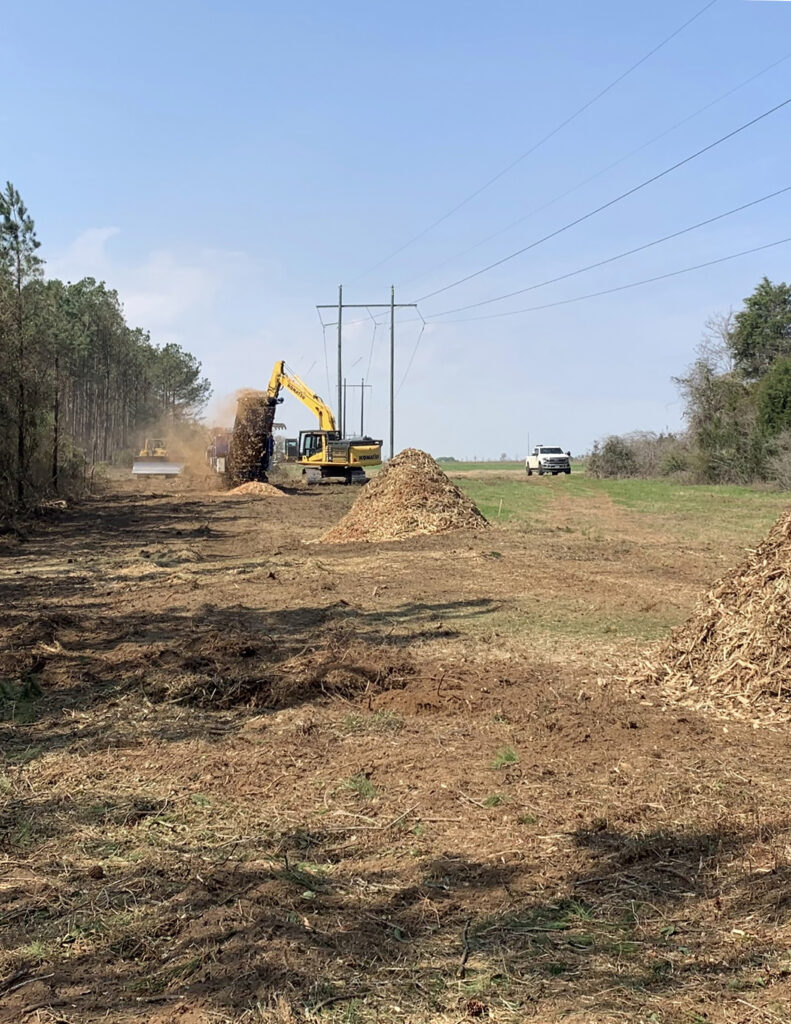
Figure 1. Construction of mulch berm on Alabama Power rights of way.
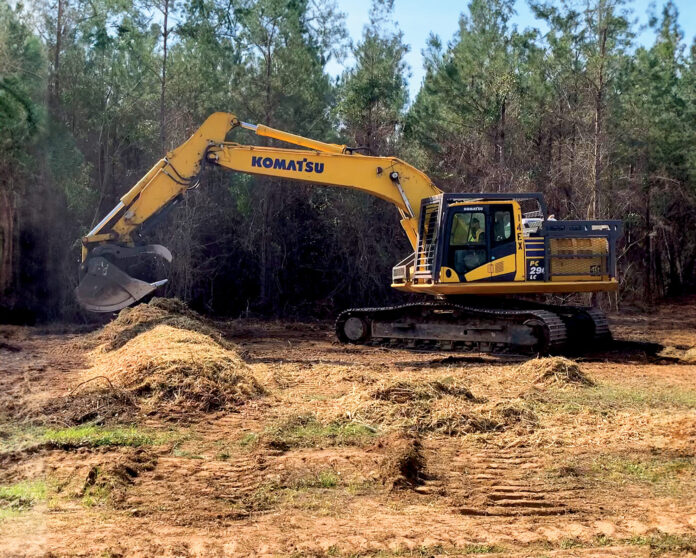
Alabama Power Company in Birmingham, Alabama, USA, is taking the use of vegetative debris from land clearing — trees, bushes and other woody refuse — to new heights by using natural mulch berms instead of plastic silt fencing (Figure 1).
The company has a newly approved best management practice (BMP): Repurposing leftover mulch from land-clearing activities during construction to create natural berms on rights of way (ROW) to remove sediment from stormwater. This approach was used to help prevent sedimentation along a 5-mile path (8.05-km) of rights of way construction in Baldwin County, Alabama.
Alternative to Silt Fence Buying and installing geotextile fabric silt fencing for large construction projects is a significant expense. Taking silt fences out of the construction equation and eliminating the need for regular maintenance and proper disposal, reduces waste, protects air and water quality and saves on costs.
Research conducted by Alabama Power in partnerships with Auburn University included tests to determine if berms created with natural, vegetative material gathered at construction sites could effectively reduce sediment loss.
In addition to evaluating the stormwater filtering benefits, the environmental benefits identified included the reduction or elimination of the need to move material to landfills, which reduces traffic and vehicle emissions while decreasing landfill waste.
The potential to save money and reduce environmental impact by using mulch on-site for erosion and sediment control was a viable option to study because one mile (1.61 km) of transmission line construction can produce about two million pounds (907 mt) of vegetative material.
From March 2023 through the first quarter 2024, Alabama Power enjoyed savings of approximately $78,000 USD per mile of construction by using natural mulch berms during the building of transmission line ROW at the industrial site in Baldwin County.
The company enjoyed a cost savings by using a natural mulch berm instead of silt fencing. The Environmental Affairs team estimated the cost of installing mulch berm at $3 USD per square foot, compared to $5 USD per square foot for silt fencing. While there is little to no maintenance costs for maintaining mulch berm, plastic fencing is fragile and easily damaged and requires maintenance at $15 USD per square foot.
Alabama Power estimates that use of silt fencing creates three pounds per square foot of waste compared to zero landfill waste from natural berms. An additional cost savings is the elimination of transportation site debris to a landfill.
The Auburn University research showed that natural berms, when installed correctly, were better at filtering stormwater and retaining sediment on-site than the silt fencing, so that any runoff was significantly cleaner compared to what passed through traditional fencing. The Auburn University study found 98% sediment capture by the berms. There was an 83.9% average total suspended solids reduction downstream. Turbidity downstream was reduced by an average of 78.5%. Silt fences have an average discharge turbidity of approximately 1000 NTU; the slash mulch berms resulted in an effluent turbidity of 631 NTU.
Berms also produced less impact to the natural landscape, and fewer employees were needed on-site for installation, maintenance and removal of silt fence.
After research proved the concept, approval for broader use of berms was sought. Approval by the Alabama Department of Environmental Management was received in March 2023.
Figure 1. Construction of mulch berm on Alabama Power rights of way.
Site Work Proves Effectiveness The need to clear the Baldwin County site was a perfect proving ground. It is not unusual to burn tree stumps and vegetation when land is cleared. If burning is not allowed, trucks must haul the vegetation to a landfill for disposal, which can be costly. Natural mulch berms are a mix of trees and vegetation removed during “clearing and grubbing” operations. Bulldozers and other equipment was used to push up woody debris from the ROW, approximately 300 feet wide (91.4 m), 7,400 meters long (7.4 km). Afterward, the company built two transmission lines to serve the site.
Wood chipping and mulching was done on-site (Figure 2). With berms left in place, sediment will fill them in over time. The berms eventually break down and become part of the landscape.
Because trucks weren’t required to go to a landfill for mulch disposal, Alabama Power also reduced CO2 emissions. At a typical transmission construction site, as many as 100 truckloads of material may be removed daily and transported about 30 miles (48.3 km) to a landfill. Eliminating transportation of material translates to more than 291 metric tons of avoided CO2 emissions, not to mention emissions avoided because material was not burned.
An additional benefit is that mulch berms are more aesthetically pleasing during and after construction. The ROW construction — time-consuming and expensive work — was Alabama Power’s first step in helping to develop a future plant site. To prepare for the use of mulch berms, several employees within the company’s Environmental Affairs group performed behind-the-scenes research for nearly three years. The findings cleared the way for Alabama Power to implement this best management practice of substituting mulch berms for silt fencing during construction projects.
Looking to the Future Alabama Power’s construction activities at the Baldwin County site are complete. The company expects to use mulch berms on multiple projects throughout the state and foresees many potential uses.
About the Expert Donna Cope is a communications specialist at Alabama Power, where she has worked for 33 years.
Figure 2. A drone is used to identify the source of an illicit discharge.
Sioux Falls, South Dakota, USA, is a designated Phase I Municipal Separate Storm Sewer Systems (MS4) with a population of approximately 200,000 residents. The city has experienced unprecedented growth in recent years. Since 2020, the city’s MS4 service area has increased by over five miles2 (13 km2) with annexations and infill development. Completing day-to-day responsibilities of the MS4 program, while overseeing 300-plus construction projects for erosion and sediment control compliance, became an overwhelming task. For this reason, the city’s MS4 team began looking for ways to manage the program more efficiently.
Around this same time, a large 50-acre (20-ha) city construction project broke ground. While this project was under construction, the city’s communication department would regularly use a drone to capture aerial photos of the site to document progress. After viewing a series of these photos, the MS4 team realized that a drone would be a practical tool to streamline erosion and sediment control inspections of larger construction sites. While using drones for site surveys and inspections is not a new concept, the advancement of drone technology and reduced cost has made their use more feasible for many different industries including the public sector.
Figure 1. A drone is used to survey perimeter sediment controls where accessibility is difficult.
Benefits Aerial imaging via drone allows for easier inspections of remote areas of a site where perimeter and other erosion and sediment controls are not easily accessible by vehicle or on foot (Figure 1). Drones allow for timely and effective inspections of sites following spring thaw or rain. Initial surveys of larger sites via drone significantly reduce total inspection time, and drones can be used for other MS4 management tasks including illicit discharge investigations (Figure 2), infrastructure assessments (Figure 3) and general photography (Figure 4).
Today’s drones have out-of-the-box features and functionality that make them exceptionally safe and easy to operate. High-resolution cameras are standard on most drones to provide exceptional image quality. All commercial-grade drones have GPS technology built in which, in addition to general flight safety, allows for geotagging photos and waypoint missions. The MS4 team recently began adding waypoints to some construction sites. Once a site has waypoints and areas of interest identified, the drone will fly the same path each time and capture pictures of selected areas. The pictures can then be uploaded to a geographic information system map to monitor site best management practices throughout the construction project.
Challenges While drones may provide numerous benefits, there remain several challenges to consider when deciding if a drone is feasible for their MS4 program. The first is cost. Drone acquisition, licensing, insurance and maintenance are all costs that must be budgeted. A second important consideration is what type of airspace the program will operate in. Most urban areas have airspace with some level of Federal Aviation Administration (FAA) control where drone activity may be limited, if not restricted completely. Modern drones incorporate advanced geofencing functionality which prevents them from entering controlled airspace unless properly authorized. While requesting authorization to work in certain areas of controlled airspace is possible through Low Altitude Authorization and Notification Capability (LAANC), the process adds time to each mission. LAANC approvals can be requested up to 90 days in advance and in many cases are eligible for auto approval in near-real time.1 Depending on how often authorization is required for the local airspace, this may present a challenge to certain drone programs.
Weather and environmental conditions regularly present challenges to drone missions. Winds greater than 20 mph (17.4 knots), low clouds and fog greatly impact the ability to safely perform flights. Temperature and humidity extremes will reduce drone performance and efficiency and reduce battery life. Environmental conditions such as topography or the presence of dust or smoke can also impact drone performance and safe operation.
Organizational policies are the final challenge to consider. With drone use increasing rapidly, organizations may have specific policies. For example, invasion of privacy is and will continue to be an important consideration for any drone program. Drone usage in urbanized areas should follow organizational policies regarding public privacy. Another organizational policy worth reviewing is whether the approval authority of the MS4 program considers remote imaging via drone a valid inspection procedure. While rare, this is a valid concern that an MS4 program must discuss and clarify with their approval authority before initiating a drone inspection program.
Acquisition and Maintenance The Sioux Falls MS4 team was granted a budget of $3,000 to cover the cost of the unit and accessories. The drone itself was approximately $1,800. An additional $800 was spent on accessories including batteries, a charging dock, replacement propellers and a hard-sided storage case. Part 107 certification costs $175 per licensee plus staff time for training. Insurance for drone work is highly variable depending on the number of units and operators ranging from individual hourly rates to annual group policies.2 The City of Sioux Falls already had a group policy in place to cover the MS4 team’s drone use.
For maintenance, the team uses a free online logging application to track drone usage. The application allows the team to track total flight hours for the drone itself, a certain pilot, a specific site or even an individual battery. Flight information can be manually entered or uploaded directly from the drone. Using this data, the application records total flight time and can generate reminders for routine maintenance needs as advised by the drone manufacturer.
FAA Part 107 Certification and Compliance Part 107 Certification took the MS4 staff approximately 40 to 60 hours to complete. Most of that time was spent learning the FAA regulations for Small Unmanned Aircraft Systems (sUAS). Hands-on training with certified staff provided valuable experience on the remote controller interface, drone operations and safety procedures should an emergency occur during flight. After the acquisition, our drone was registered with the FAA, and the geofencing was removed through our drone manufacturer’s Qualified Entities Program. Our pilots submitted Declarations of Compliance (DOC) to Operate Over People (OOP) and to verify that our drone has remote identification. These DOCs are required for any pilot conducting drone inspections in an active construction site where individuals not involved with the flight operation are present. Specifics on final rulings regarding these DOCs and other FAA Part 107 regulations can be found on the FAA website and should be consulted often as regulations for sUAS are subject to change.
Figure 3. A drone is used to inspect city drainage properties and associated stormwater infrastructure to identify maintenance needs.
Looking to the Future The city recently acquired a larger drone capable of carrying more specialized survey equipment such as Light Detection and Ranging (LiDAR) and multispectral cameras. While there are no immediate plans to use this technology in the MS4 program, additional research is warranted. For example, LiDAR may be beneficial to measure sediment accumulation in entrapment devices overgrown with vegetation, or multispectral cameras, like near-infrared, may help monitor vegetation cover of a site and determine where deficiencies exist. Drone technology will continue to advance, bringing with it more capabilities and practical applications.
References
Federal Aviation Administration, UAS Data Exchange (LAANC), 1 February 2024. https://www.faa.gov/uas/getting_started/laanc (accessed 08 April 2024).
Luthi B. What is Drone Insurance? USA Today, 13 November 2023. https://www.usatoday.com/money/blueprint/insurance/what-is-drone-insurance/ (accessed 08 April 2024).
Resources
Learn more about Small Unmanned Aircraft Systems regulations by visiting the FAA’s website: https://www.faa.gov/uas.
Sioux Falls drone construction site monitoring: https://storymaps.arcgis.com/stories/15049771c04449d8b81d6e6b67fbbb11.
Sioux Falls storm inlet art project: https://storymaps.arcgis.com/stories/3895c14e2816420ebfbae64ff0f7cb61.
About the Experts
Troy Lambert is an environmental analyst with the City of Sioux Falls, South Dakota. He graduated with a bachelor’s in environmental science from South Dakota State University. He has worked for the City of Sioux Falls since graduating in 2015 and currently oversees the city’s MS4 program.
Jose Alvarez, CISEC-IT, ENV SP, is an environmental analyst with the City of Sioux Falls, South Dakota. He graduated with a Bachelor of Arts in Science from Augustana University. He has worked for the City of Sioux Falls since graduating in 2017 and currently oversees the city’s MS4 program.
Figure 4. A drone was used to capture an overhead photo of a storm drain painting to promote the education program.
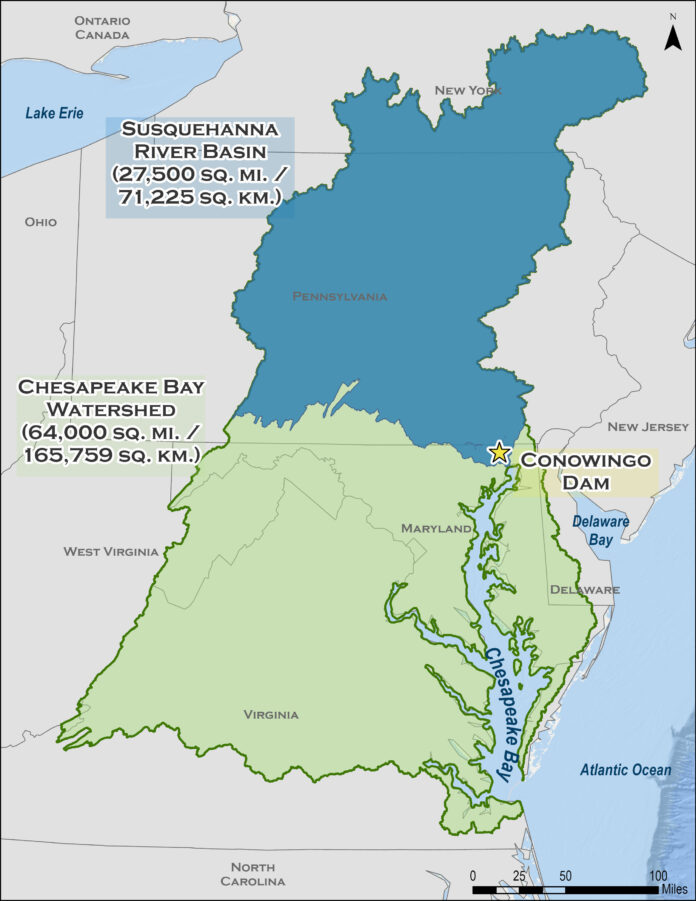
Maryland’s Conowingo Dam was constructed in 1928 and is the most downstream of the four hydroelectric dams located on the lower Susquehanna River. The Susquehanna River basin has a 27,500 square mile (71,225 sq. km.) drainage area (Figure 1) that consists of three states in the United States: Pennsylvania (77% of the area), New York (22%) and Maryland (1%)1 and represents 43% of the land area draining into the Chesapeake Bay, which is the largest of over 100 estuaries in the United States. The Chesapeake Bay receives approximately half of its water volume as freshwater from the 64,000 mile2 (165,759 km2) watershed and the other half as saltwater from the Atlantic Ocean.2 Although all of the dams historically trapped and stored sediment and nutrients in their reservoirs, recent information shows that the Conowingo Dam has reached dynamic equilibrium, meaning sediment behind the dam has built up to the extent that it can no longer trap additional sediment or other pollutants.
The Center for Watershed Protection developed the Conowingo Watershed Implementation Plan (CWIP) to address the additional nutrient and sediment reduction needed to restore the Chesapeake Bay, given this loss of storage capacity. The CWIP is based on the premise that, to successfully reduce the Conowingo nutrient loads, jurisdictions in the Susquehanna River basin must work collectively by pooling resources and reducing implementation costs through targeting pollution reduction practices to the most effective locations.
The United States Environmental Protection Agency (EPA) initiated this effort and continues to administer the cooperative agreements driving the CWIP, which is supported by the Chesapeake Bay Program Principals’ Staff Committee (PSC). The CWIP cooperative agreements are comprised of three activities implemented by third-party grantees, which include:
Facilitating the development and implementation of the CWIP and associated two-year milestones.
Developing and proposing a comprehensive CWIP financing strategy and associated implementation plan.
Tracking, verifying, and reporting the implementation of the CWIP and two-year milestones.
The CWIP was adopted on July 31, 2021, and EPA funded these activities through 2025.
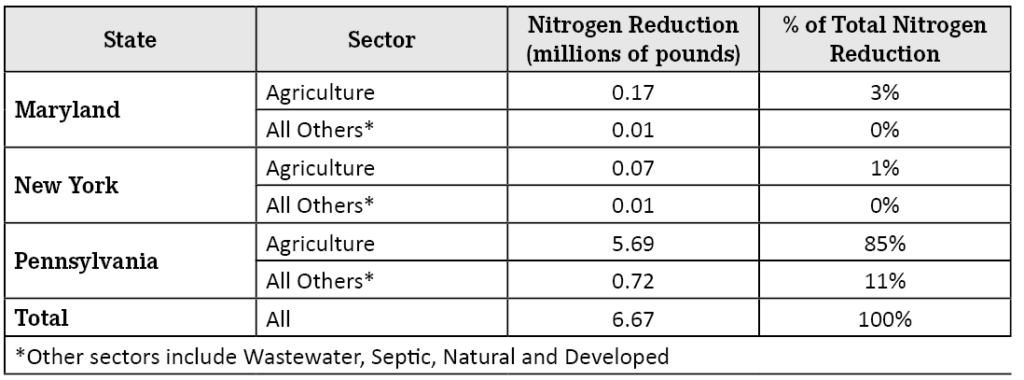
The CWIP provides a strategy to prevent over six million pounds of nitrogen from entering the Chesapeake Bay annually with an estimated cost of $53.3 million per year (Figure 2).
In July 2022, the PSC reached consensus that the Susquehanna jurisdictions can implement the CWIP using a phased approach that extends beyond 2025 to allow time to build the organizational infrastructure needed for implementation. The CWIP Steering Committee — which includes representatives from each Chesapeake Bay jurisdiction (Delaware, the District of Columbia, Maryland, New York, Pennsylvania, Virginia, and West Virginia) and the Chesapeake Bay Commission — meets quarterly to oversee progress and support CWIP implementation. The implementation milestones developed by the CWIP Steering Committee set specific, measurable goals for the CWIP that include:
Building capacity.
Financing and securing funding.
Fostering innovation.
Identifying and building partnerships.
Developing and implementing pilot projects.
Conducting outreach and engagement.
Monitoring nutrient reduction targets.
To achieve these goals, the CWIP Steering Committee outlined a uniquely tailored approach for the Conowingo WIP of a two-tiered implementation framework that includes smaller-scale, watershed-specific and broader-scale, state-wide strategies. The best management practices (BMPs) implemented as part of these programs will assist with meeting the numeric load reduction goals for the first phase of implementation that extends through 2025.
The CWIP’s BMP implementation strategy is designed to target landscape-scale restoration strategies using BMPs that integrate into existing agricultural land management practices (such as nutrient application management) and avoid BMPs that remove farmland from production. Approximately 90% of the nitrogen load reduction in the CWIP is from agricultural BMPs, which include natural filters like wetland restoration and riparian forest buffers, sustainable farm practices like prescribed grazing and conservation tillage, and nutrient reduction practices like nutrient management and manure incorporation.
The CWIP also aims to minimize the cost per pound for nitrogen reduction. To achieve this goal, BMP implementation is targeted to the portions of the Susquehanna River basin that are most effective at delivering nitrogen to the Chesapeake Bay and, therefore, offer the best opportunity to reduce nitrogen loads and improve conditions in the Bay. These areas are referred to as “Most Effective Basins.” Additionally, the CWIP recommends performing evaluations of innovative practices that are not already approved Chesapeake Bay Program BMPs, such as dredging the dam reservoirs, to determine if the pollution reduction benefits from these practices could contribute to CWIP goals.
This BMP implementation strategy is being executed within the context of the Steering Committee’s two-tiered implementation framework that supports smaller watershed and broader state-wide efforts. Smaller-scale outreach has been targeted to specific multi-state watersheds in Most Effective Basins identified in the CWIP, such as the Octoraro watershed that spans portions of Pennsylvania’s Chester and Lancaster Counties into Maryland’s Cecil County. The CWIP implementation team meets with the Octoraro Watershed Association, Octoraro Source Water Collaborative, soil conservation districts from each state and other interested parties in the watershed to form partnerships and discuss projects and funding opportunities. The Susquehanna River Basin Commission (SRBC) developed a “State of the Octoraro Creek Watershed” StoryMap (see Resource) with comprehensive information on water quality and restoration efforts in the watershed. Smaller-scale projects are funded through traditional financing approaches, such as state or federal grants, loans, cost-sharing or other cooperative funding.
Broader, state-wide implementation efforts use a pay-for-performance financing approach in Maryland and Pennsylvania. For both state programs, criteria for awarding pay-for-performance contracts emphasize innovative financing and greatest return on investment in terms of nitrogen reductions. Projects with co-benefits are incentivized to foster new public-private partnerships. Some examples of state-wide funding allocations to achieve CWIP goals are listed below:
Maryland allocated $25 million for a Verified Nutrient Reductions program that is administered by the SRBC. The first solicitation for projects was issued in 2023 and projects will be awarded in the second quarter of 2024. Maryland’s funds can be used anywhere in the Susquehanna River basin with priority given to projects in Maryland.
Pennsylvania allocated $22 million to the Clean Water Procurement Program administered by the Pennsylvania Infrastructure Investment Authority for pay for performance projects. The first project solicitation was issued in 2023 with projects awarded in the first quarter of 2024. A second project solicitation was issued in March 2024. Additionally, Pennsylvania awarded the Local Government Impact grant to the Chester County Soil Conservation District for $1.19 million to fund CWIP implementation in the Octoraro watershed.
New York’s approach to broader state-wide implementation is to fund the Upper Susquehanna Coalition (USC) to administer and manage projects implemented in the Most Effective Basins. New York allocated $1 million over two years that is administered by the USC. The USC is also responsible for verification of BMP performance.
While the implementation strategy for the CWIP targets the Most Effective Basins, it is not site-specific. The strategy recommends certain BMP types based on nutrient removal efficiency and cost-effectiveness and relies upon a cooperative multi-jurisdictional effort. Success will be achieved through close collaboration and coordination across the region, which can be replicated elsewhere by adopting the CWIP’s guiding principles. These include striving for fairness and equity, establishing tracking and accountability with transparency, and implementing efficiently without creating duplicative bureaucracies.
The CWIP development was accelerated by the EPA’s funding of cooperative agreements, which enabled multiple jurisdictions to work together with support from the facilitating agencies minus the burden of going through a procurement process. The EPA cooperative agreements allow the time and resources for the Susquehanna jurisdictions to build new organizational capacity to continue cross-jurisdictional implementation efforts beyond 2025. The collaborative multi-state approach establishes a realistic and achievable framework to be successful in reducing nutrients to and improving the health of the Chesapeake Bay.
Figure 2. Nitrogen load reduction for the Conowingo Watershed Implementation Strategy.1
References
Center for Watershed Protection. July 2021 (revised November 2023). Conowingo Watershed Implementation Plan. Prepared as part of U.S. EPA Cooperative Agreement 96366901.
Chesapeake Bay Commission. June 2020. The Chesapeake Bay and Its Watershed. Retrieved from: https://www.chesbay.us/library/public/documents/Fact-Sheets/Bay-Factoids-FINAL.pdf.
Resource State of the Octoraro Creek Watershed” StoryMap. Susquehanna River Basin Commission. https://storymaps.arcgis.com/stories/5c006 f55d58945a5a89b37283bb9a581.
About the Expert Amanda H. Pollack, PE, is a senior water resources engineer at the Center for Watershed Protection and has over 28 years of engineering experience. She holds a bachelor’s degree in civil engineering from Lehigh University and is a licensed professional engineer in Maryland.
Figure 1. Shallow pond formed in decommissioned sand and gravel borrow pit.
Henrico County, part of Virginia’s Capital Region and the Chesapeake Bay watershed, is home to more than 330,000 residents and an active economy. Henrico County managers strive to encourage responsible growth and development in the region while balancing environmental protection considerations. One of those considerations is acquisition of compensatory mitigation credits for authorized impacts to stream and non-tidal wetlands for Henrico County transportation projects, as required by Clean Water Act Sections 404 and 401 and Virginia state regulations.
Mitigation credits are typically generated from wetland and stream restoration and creation projects on private land and made available for sale publicly through mitigation banks. Mitigation credits must be purchased withing the same Hydrologic Unit Code (HUC) 8-digit watershed the impact is occurring in or from an adjacent HUC-8 watershed. With the rapid increase of growth experienced in this region, mitigation credits have been scarce.
To address the need for mitigation credits that have not been available in the marketplace, Wetland Studies and Solutions, Inc. (WSSI) has been working with the Henrico County Department of Public Works to develop a Single-User Umbrella Mitigation Banking Instrument (UMBI) to offset wetland and stream impacts incurred in county projects. With an UMBI structure, Henrico County will be positioned to incorporate additional sites that would benefit from stream and/or wetland restoration to expand the county’s own capacity to address ever-changing mitigation needs. The jointly-developed UMBI currently awaits approval from the Interagency Review Team (IRT), led by the U.S. Army Corps of Engineers and the Virginia Department of Environmental Quality.
A Pilot Site New Market Park in eastern Henrico County, a ±219-acre (±88.6-ha) parcel, was identified as the pilot mitigation bank site. If approved by the IRT, it would be the first site for this UMBI.
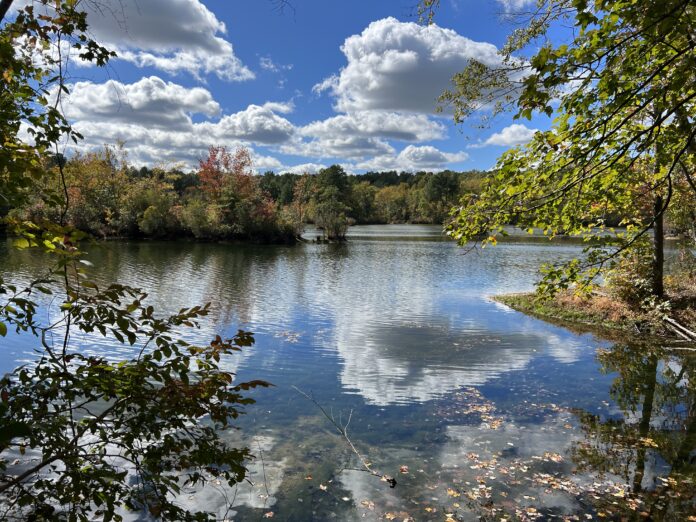
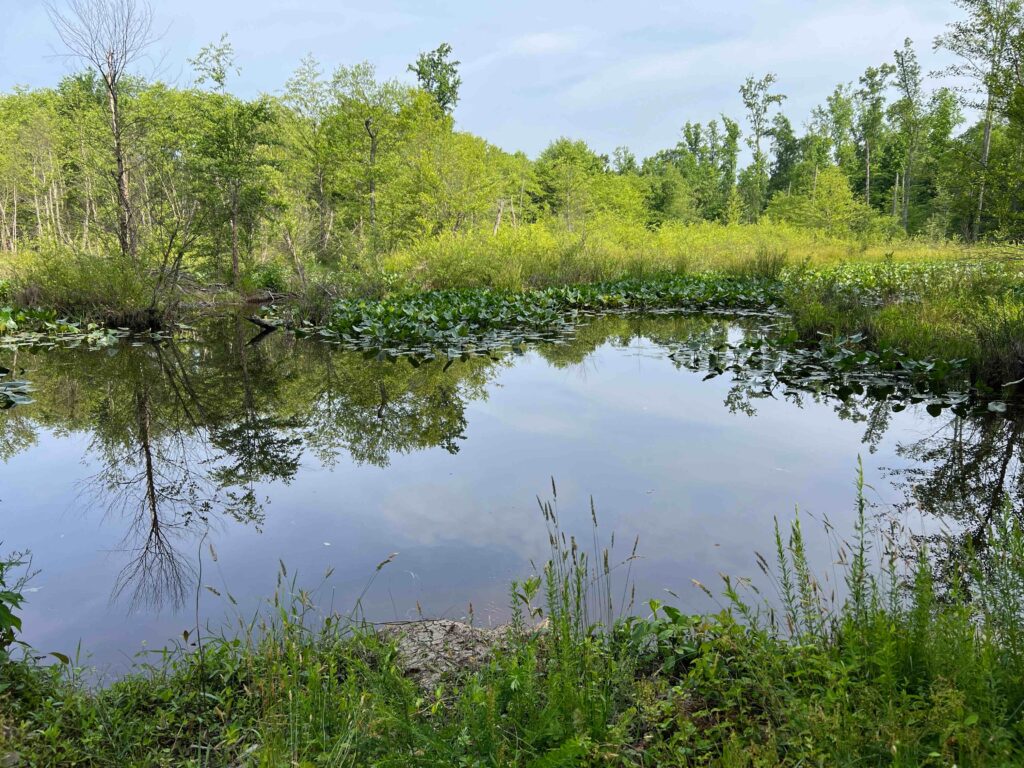
The site is surrounded by land in conservation and is bisected by Four Mile Creek, a tributary of the James River. At its heart, the site has a decommissioned sand and gravel borrow pit, which is now a shallow pond supported by groundwater (Figure 1). Beaver activity within Four Mile Creek has created extensive wetlands and split the main channel into multiple tributaries, or branches, that reconnect to the main channel downstream of the wetland system, all of which could be compromised if the beavers leave or if their structures fail (Figure 2). The proposed site work includes stabilizing beaver-impounded areas, as well as the streams affected by the impoundment, and altering the hydrology of the shallow pond to create wetlands. More than 29 wetland mitigation credits will be developed through wetland creation, wetland enhancement and upland buffer restoration and preservation. An additional 1,400+ stream mitigation credits will be developed through stream restoration and preservation.
The project development is in full swing and has included a full range of natural and cultural resources investigations as well as preliminary design for the site.
Environmental Investigations WSSI scientists and surveyors have delineated wetlands and other Waters of the U.S. and Commonwealth of Virginia, and survey-located those features so any impacts and enhancements can be accurately accounted for. Because the site contains potential habitat for the state-endangered swamp pink (Hellonias bullata), WSSI completed a search to ensure survival throughout construction if communities were present on the site; no individuals were present.
A Phase I Environmental Site Assessment was conducted to uncover any potential site contaminants, because it is critical to understand the negative impacts previously experienced in the landscape and waterways. While this site did not require further study or remediation, some sites do.
WSSI also completed an invasive plant species survey because invasive species can wreak havoc on ecosystem balance for plants, animals and the soil. The survey allows for responsible site planning, including removal of plants that can damage the proposed mitigation site’s ecological integrity. The survey identified Japanese stiltgrass (Microstegium vimineum), marsh dewflower (Murdannia keisak), sericea lespedeza (Lespedeza cuneata), golden bamboo (Phyllostachys aurea) and Chinese privet (Ligustrum sinese). These species are common in disturbed areas in the region and often outcompete native species that better support ecological diversity. Fortunately, most of these species can be managed through repeated herbicide treatments and mechanical removal.
Cultural Resources WSSI’s cultural resource specialists conducted a Phase I archeological and architectural field investigation of the project area, which is entirely within the boundaries of the New Market Heights Battlefield, First Deep Bottom Battlefield; and Bailey’s Creek/Second Deep Bottom Battlefield theatres of the Civil War. The Phase I investigation augmented shovel test pits with systematic metal detection, following Virginia Department of Historic Resources battlefield guidelines.
Building upon previous studies performed on portions of the site, field archaeologists spent several months expanding the surveyed limits of known prehistoric sites and Civil War earthworks, identifying similar new sites, and recovering hundreds of artifacts ranging from prehistoric Early Woodland stone tools/fragments (1100 B.C.E. – 500 B.C.E.) to lead Minié balls fired amongst brethren during the Civil War. The curation of these artifacts and documentation of field efforts was performed in accordance with the Virginia Department of Historic Resources (DHR) guidelines. Knowing the boundaries of these historic sites allows designers to avoid critical areas and provides opportunities to connect the public to these significant places through careful placement of trails and interpretative signage. The mitigation plan for New Market Park avoids critical cultural resources. If impacts were proposed, mitigation, often consisting of additional fieldwork and expanded investigative reporting on similar features in the region to place the features in a broader historical context, would need to be agreed upon through coordination with the DHR, IRT and the design team.
Stream Channel Survey for Engineering Investigators also evaluated stream channel conditions and surveyed representative stream channel cross sections to support design processes. The data obtained informs design engineers as to the erosion, sediment transport and water velocity in the stream and if the stream has a connection to its floodplain. With that information WSSI can identify how site hydrology is influencing the stream channel and which features can be engineered to ensure that the stream restoration design is robust and accounts for site-specific issues.
Existing Conditions Survey WSSI performed an existing conditions survey to accurately document the locations of existing infrastructure such as existing fences, trails, upstream and downstream bridge dimensions, visible utilities, and culvert and storm structures, as well as stream and riparian features. This survey effort also established site control using Real-Time Network GPS and conventional survey techniques for use throughout the duration of the project. Bathymetric survey data was collected within the site limits of the pond occupying the decommissioned sand and gravel borrow pit (±17 acres or ±69,000 square meters) and included spot shots and 1 foot (±30 cm) contour interval topography. Additionally, elevation data was collected within the site limits of the four tributaries that are being considered for inclusion in the restoration effort (the stream and 25 feet (7.62 m) landward of top of bank) and included 0.5 foot (±15 cm) contour interval topography within these areas.
Engineering and Permitting The prospectus and initial results of the due diligence efforts (environmental and cultural resource assessments) were used to develop a site development plan and a preliminary mitigation work plan for this project, which will be incorporated as a site in the proposed UMBI.
At the conclusion of site investigations and with feedback from the county and the IRT, WSSI will prepare a final mitigation work plan and prepare and submit a pre-construction notification and supporting documentation to the U.S. Army Corps of Engineers requesting authorization of the stream restoration project under Nationwide Permit #27.
It is WSSI’s hope that New Market Park will be the first of many sites to be included in the Single-User UMBI for Henrico County. This approach to generating compensatory mitigation credits creates a reserve of credits exclusively for Henrico County projects in a high-demand market while ecologically uplifting sites in the immediate vicinity of the inevitable impacts associated with responsible development.
Figure 2. Four Mile Creek beaver impoundment at New Market Park in summer 2023.
About the Experts
Beth Silverman, PWS, is the marketing manager for Wetland Studies and Solutions, Inc., a Davey company. Her background in ecology and policy informs her approach to sharing information with a range of audiences.
Stephen Stone, PG, PWS, is a hydrogeologist with Wetland Studies and Solutions, Inc., a Davey company. He contributed to the development of Wetbud, a wetland water budget modeling software package funded by the non-profit Resource Protection Group, Inc., and he works to identify and develop stream and wetland mitigation sites.
Figure 1. Training, mentorship and ongoing education is essential to equip upcoming erosion and sediment control professionals to serve as qualified individuals who can meet the challenges of the future.
Significant time, money and energy is spent sharing ideas and experiences on the various structural best management practices (BMPs) in our industry, from new geotextiles, the use of polyacrylamides, equipment advancements and the incorporation of organic products as stabilization enhancements, to highlight just a few.
It is time to include and elevate the qualified individual as a critical BMP. Given the toolbox of practices that exist for managing construction stormwater amidst the ever-changing challenges of land development, construction and natural resource management, an emphasis must be placed on the importance of the individuals that are involved in the day-to-day operations of each project.
Erosion and sediment control professionals touch every aspect of active projects in each area of our industry, from early planning, site and plan design, field inspections, assessments and review, plan and BMP implementation, to the structure of regulatory oversight and technical guidance (Figure 1). Experienced and qualified personnel are critical to ensuring success to each project, no matter how big or small, but there’s no one-size-fits-all solution to creating qualified personnel, and sadly, no quick online store of these individuals to fill your needs. As such, we as an industry must collaborate to define what we consider to be the approved standard detail or spec sheet for this vital BMP: the qualified individual.
For more than 50 years, the erosion and sediment control industry has grown and evolved on the foundation of many passionate pioneers in erosion and sediment control and stormwater management across North America, Australia and beyond. These pioneers have been and are mentors and educators for countless professionals, with an urgent need to continue and broaden the mentorship aspect. Each qualified individual has a unique set of skills and insights that contributes to the advancement of the environmental compliance and stewardship field. To advance the growth and ensure the maturing of the industry, experienced industry professionals have a responsibility to educate, mentor and value the rising class of inspectors and young professionals. The industry’s reliance on experienced personnel is akin to the need for precision in a complex machine. Each component, or in this case, individual, must function optimally to ensure success. How these roles and qualifications are developed and defined must also factor in the changing faces and challenges of the industry. These challenges include staying relevant and demonstrating to other stakeholders that our professionals are invaluable to ensuring project success and compliance and to advancing environmental stewardship.
New employees entering the field bring fresh perspectives and new energy, which are essential for innovation. They are faced with a multitude of challenges that likely are not covered in any coursework. Providing a framework of training and continuing education for new professionals ensures that they are equipped to grow within the industry and become contributors from their own unique experiences. Mentorship and wisdom sharing may be the difference for each upcoming individual between success and retention or leaving the industry. With all of this in mind, the IECA Erosion and Sediment Control Education Subcommittee would like to gather input to help us begin to better understand where industry professionals perceive our industry’s current standing in the development of the industry individual. Complete a brief survey (See “Take the Survey”) to help initiate this conversation. Over the next year or more, the committee will provide a summary of the initial results and will seek further feedback from public and private organizations to learn how the industry recruits, supports, mentors and empowers new professionals. This information will form the foundation to advance the collaboration needed to develop an industry-accepted definition of the qualified individual, as well as helping to refine the framework in which professionals can earn this type of designation through combinations of work experience, education, mentorship and certification.
We all must ask ourselves, if our industry doesn’t perceive individuals as the most critical and valuable BMP, how do we expect other established industries to see our value overall? Efforts to develop better BMPs continues to be an important, focused need to combat erosion, collect sediment and obtain stabilization on our projects. Imagine the positive gains to our industry if we invest as much time in mentoring, training and adding value to the next generation of qualified individuals as we currently do in the realm of the development of structural BMPs and new technologies.
The erosion and sediment control industry is only as strong as the individuals who comprise it. By valuing each person’s contribution and investing in their growth, the industry can continue to evolve and meet the challenges of managing construction stormwater. The IECA’s initiative to gather input and share it across the community is a commendable step towards recognizing and enhancing the role of the individual in this vital field. Through articles, webinars and conference presentations, the shared experiences and strategies will enrich the collective knowledge and practice of erosion and sediment control.
About the Experts
Donald Pearson, EI, CPESC, CESSWI, is an assistant resident engineer on the Complete 540 Project for Summit Design and Engineering Services. He is a member of the IECA Erosion and Sediment Control Education Subcommittee.
Kristi Anspach, CPESC, CESSWI is the Stormwater Planning and Compliance department manager for Summit Design and Engineering Services. She serves as chair of the IECA Erosion and Sediment Control Education Subcommittee.
Take the Survey Go to bit.ly/3y1ShLF to access The Individual as a BMP survey.
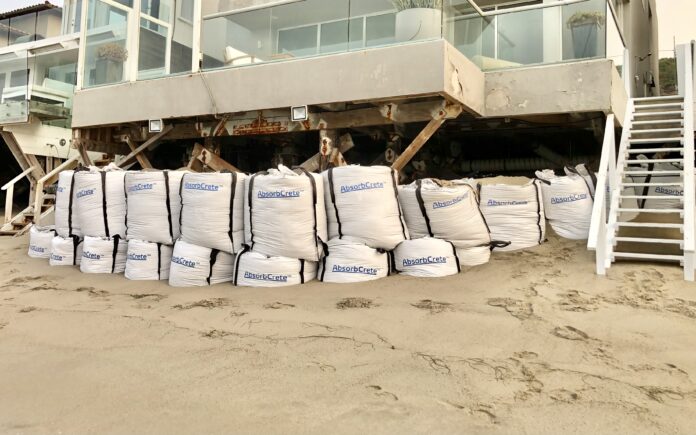
Figure 1. Absorbcrete® FIB bags used for ocean tidal site protection – foundation repair, Malibu, California.
Innovations result from solving problems big and small, and some work, others don’t. However, all ideas can lead to more and better innovations. In the flood and erosion control industry, there are many new ideas that incorporate the concepts of sustainability, durability, resilience and of course economy.
Professionals in the construction industry are regularly challenged to solve or improve the solution for problems. How those problems are addressed helps contractors work more efficiently, provide higher quality services and, hopefully, make a profit.
Hygroscopic flood and debris-resistant material was conceptualized and created to solve construction-related challenges. When building a new concrete seawall under an existing building on a beach in California, Warstone Innovations preemptively tried to protect the site from tidal flooding, so that a deep large mass concrete footing could be installed. There was limited use of heavy equipment to excavate beach sand for the seawall. It was decided to install a perimeter sandbag wall on the site, parallel to the ocean. The sandbags were manually filled and placed 6 feet (2 m) in depth and 6 feet (2 m) high, tying into existing seawalls adjacent to the project. There were 3,000 sandbags in total. It took a full crew of workmen five days to fill and stack the sandbag wall. Work was performed in mid-August with normal summer weather and normal tidal conditions.
Since the new concrete footing was large and workspace limited, the concrete was placed in slots, with a total of four slots for the project. The concrete pour for the two end slots was complete when the weather began to change, and an unusual small summer storm formed and quickly approached the location. This storm caused some beach erosion allowing the tide to reach the sandbag wall. The sandbag wall held fast at first, and concrete for the third slot was poured. The storm intensified in the afternoon and the rain and tide brought flotsam from damaged structures and tree branches. Upon arrival the next morning to pour the last concrete slot, workers found virtually all of the 3,000 sandbags had been washed away. Workmen scoured the beach collecting empty sandbags and found many that had been impaled by the flotsam debris. The consensus was that if the sandbags had not been punctured by the debris, which allowed sand to leach out and dislodge the remaining bags, the sandbag wall would have held and protected the site. Needless to say, completing the last concrete footing slot took many days of hand excavating and became very costly. This experience proved that a different, better, more resilient protective device was needed.
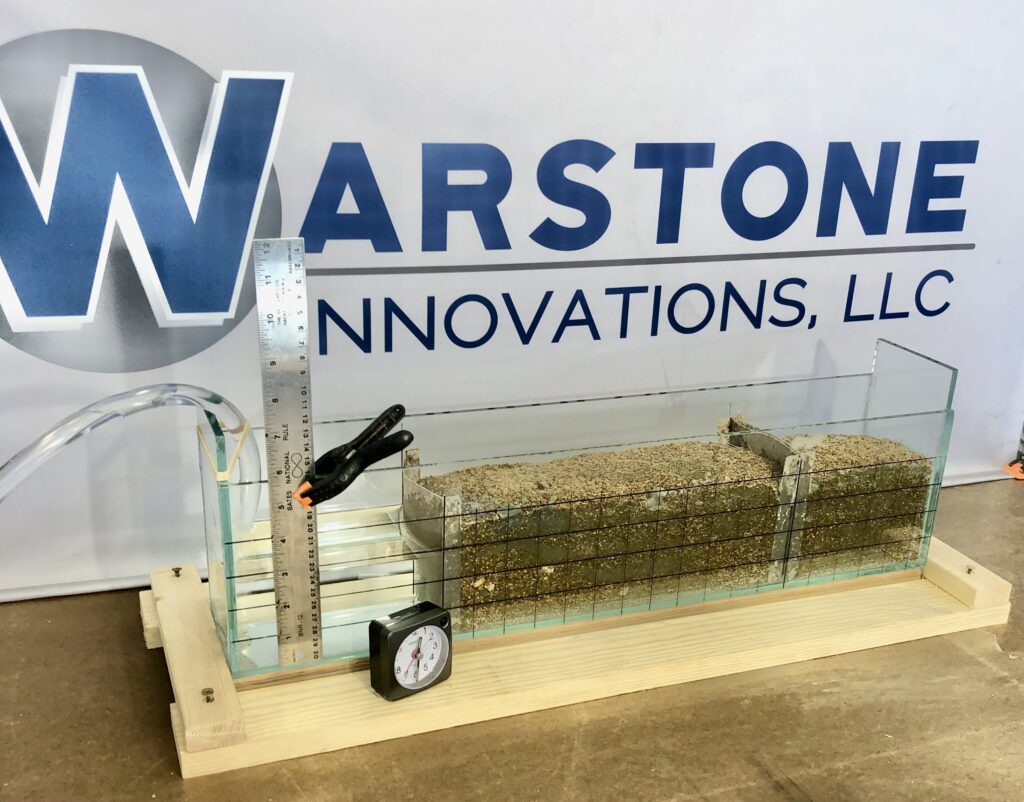
Figure 2. Aquarium test of hygroscopic fiber/cement material recorded the absorption speed of water that correlated to the increase in hybrid material weight.
Innovations are almost never just a single idea. They are concepts that require maturation, running mental scenarios and asking the “what if” and “what about.” Eventually, a solid idea becomes an innovation. In this case, the theory was that the sandbag wall would have remained in place to protect the project site if the bags were filled with a solidified material that would not leach out when breached.
The resulting product is a hybrid material that is a reusable, lighter dry weight, sand-filled bag alternative (Figure 1). The hygroscopic material is composed of proportionately mixed natural hollow fibers with cement, sand and aggregate to provide an extended service life and durable matrix for an array of purposes. This innovation brings resiliency and efficiency as a new tool to economically manage the dynamics of the evolving climate-changing world.
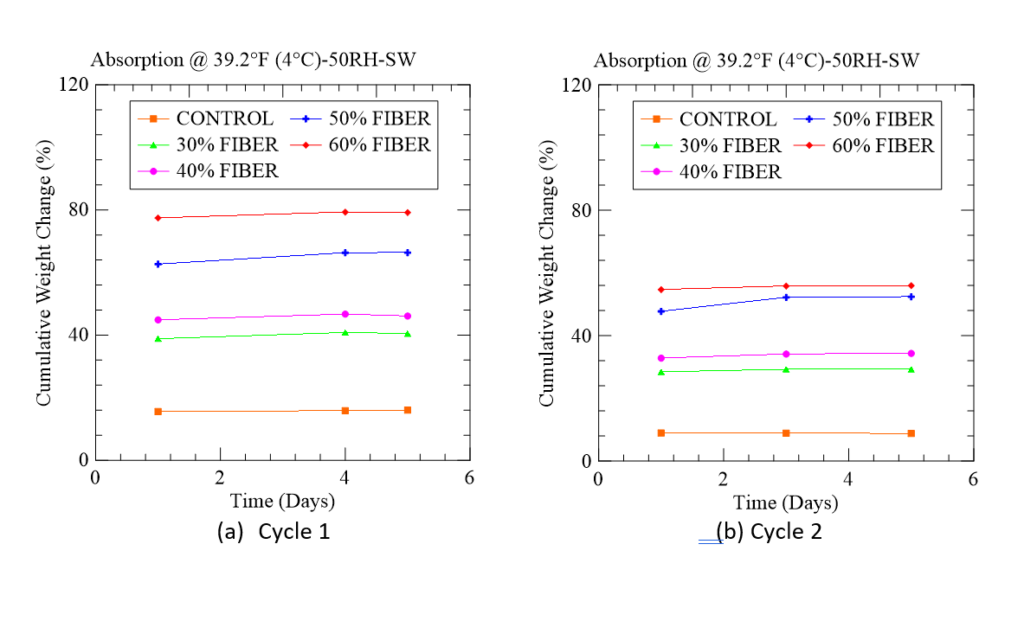
There are several sandbag alternatives currently available, however, most are used for larger flood control scenarios, while the Warstone innovation dramatically improves the use of sand for protection. Studies have been performed comparing costs of sandbags versus sandbag alternatives, with the overall conclusion that sandbags are cost effective for a single use, but sandbag alternatives are more economical and more sustainable for multiple uses.1 The natural fiber and cementitious material mix is super absorbent and retains a volumetric weight gain when exposed to water. The dry mix will increase in weight by approximately 60% per volume. When the flooding waters recede, the retained water in the bag will slowly evaporate back to almost its original dry weight, and when exposed to water again, it will re-absorb the water and return to its hydrated weight. Initially, the hydrated mix will harden and become somewhat fixed, thereby becoming cohesive and greatly resistant to impact forces that generally debilitate traditional sand-filled bags.
This lighter dry material is sustainable, reducing overall transportation costs per coverage area of protection. The hybrid material uses less equipment and labor for deployment and removal and can be reused at least five times, including in extreme temperature conditions. This material can be used in a wide variety of containers from sandbags, interlocking bags and bulk geotextile containers. The natural fibers are from coir, a byproduct of coconut production. Coir is naturally more resilient to saltwater than other natural fibers, making this mix universal for flood protection in fresh and saltwater conditions. When the protection use for this material has been exhausted it can be repurposed as a filter layer of a rock revetment or scour blanket among other uses.
The hygroscopic natural fiber and cementitious material mix has been extensively tested at Texas A & M University, Zachry Department of Civil and Environmental Engineering, through the Center for the Integration of Composites in Infrastructure, a National Science Foundation program.2 Laboratory testing included the proportionality of the fibers with respect to absorption and dehydration results at various temperatures for potable and saltwater (Figures 2 and 3). Strength characteristics have been studied and an academic research paper with final results will be presented in September 2024.
Figure 3. Graphs indicating volumetric weight change vs time of hygroscopic fiber/cement materials at various percentages of fiber.2 Performed using saltwater during two hydration cycles.
References:
Lankenau L, Massolle C, Koppe B, et al. Sandbag replacement systems – a nonsensical and costly alternative to sandbagging? Natural Hazards and Earth System Sciences 2020, 20(1), 197–220. https://doi.org/10.5194/nhess-20-197-2020.
Ramineni K, Congress SSC, Biswas N, Puppala AJ, & Kriegstein S (Accepted). “An Experimental Study to Evaluate the Performance of Fiber-Based Cement Mixture Bags as Alternative Flood and Erosion Barriers.” ASCE GeoEnvironMeet 2024, Portland, OR.
About the Expert Stewart Kriegstein is founder and inventor at Warstone Innovations LLC. A retired, seasoned general engineering contractor with 40 years of expertise in coastal engineering construction, he provides consulting services and is actively involved in entrepreneurial ventures related to multiple patents.
Figure 1. Environmental Intern Laiken Cash holds a stormwater sample collected from one of four sites included in the research.
Micro-plastics are everywhere. They’ve been discovered in the deepest ocean trench, the most remote arctic ice and, perhaps the most frightening place of all, inside the human body.
Traditionally, microplastic research has centered around the marine environment. Almost everyone is familiar with the Great Pacific Garbage Patch, a collection of marine debris in the North Pacific Ocean that has produced images of straws in the noses of sea turtles and plastic accumulations in the stomachs of seabirds. However, limited research on the presence of microplastics in freshwater ecosystems has been conducted and even less research is available about the impact of microplastics on stormwater runoff.
What is clear is that urban streams are suffering from an onslaught of plastic waste, and the City of Springfield, Missouri, USA, is no exception. A series of rapid trash assessments conducted by city staff found an average of 139 pieces of individual trash per 100 linear feet of stream. Trash was divided into categories that included plastic, metal, glass and paper and ranged in size from small cigarette butts to large items like furniture and tires. Plastic made up 60% of all trash surveyed and of this plastic material, the majority was single-use food-related plastics which was followed in second place by plastic bags.
While the volume of visible plastic was interesting, city staff was primarily interested in plastics that could not be seen.
Figure 2. Fibrous microplastics found in low-intensity parking lot as photographed by fluorescent microscope.Figure 3. Globular microplastics found in low-intensity parking lot as photographed by fluorescent microscope.
To better understand the scope of microplastic pollution in stormwater runoff, the city hired an environmental intern who spent six months reading literature, experimenting with testing methods and analyzing samples. A pre-med student whose academic research focused on the inflammation response of mammalian cells to eco-coronated microplastics was selected for the position. Quantifying microplastics in stormwater runoff was a perfect complement to her academic research and her connection to Drury University provided the city with unique access to laboratory equipment and the oversight and expertise of university professors.
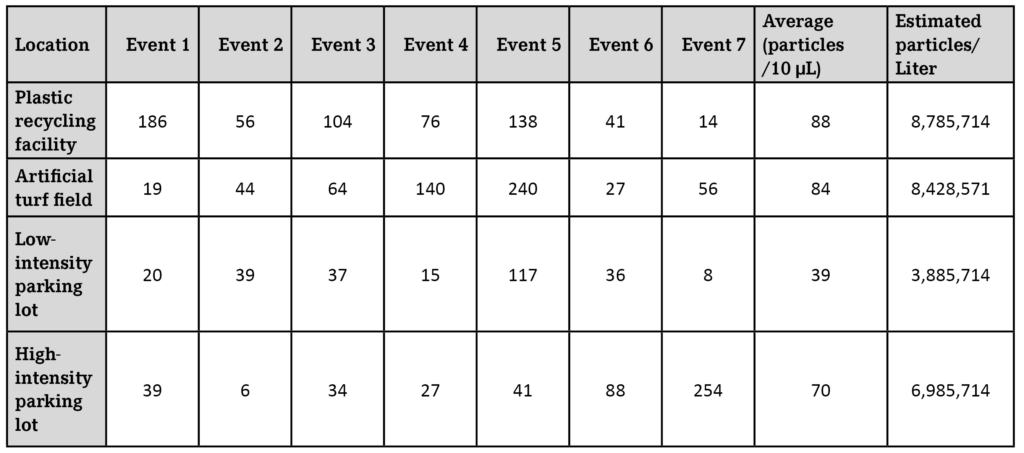
City and university staff collaborated to establish a research plan. Sample locations were selected based on their potential to contain plastic pollution. A total of four locations were selected: a plastic recycling facility, an artificial turf field, a low-intensity parking lot and a high-intensity parking lot. Samples were collected in glass jars (Figure 1) using common best practices such as allowing for 72 hours from any previous storm events and collection during the “first flush.” Over the 6-month period, a total of seven storm events were sampled. In the lab, samples were filtered through a series of sieve stacks down to a size of 45 microns. The 45-micron sieve was backwashed with deionized water and collected for analysis. From there, 10-microliter samples were dyed with Rhodamine B dye and heat-fixed to microscope slides for observation under a fluorescent microscope.
A series of images were taken of 10-microliter stormwater samples using the fluorescent microscope. Because we observed that exposure affected the number of particles visible, a series of three photos were taken of each sample, at exposures of 200, 500 and 1,000. Therefore, final estimates are representative of the average of these three exposures. Of the observed microplastics, there were two distinct morphologies: fibrous (Figure 2) and globular (Figure 3). It appeared that globular particles were indicative of rubber material and tire wear, whereas fibers were associated with the breakdown of larger materials, such as textiles and cigarette butts. However, we did not perform Raman spectroscopy testing to determine the makeup of the plastic material due to lack of access to this technology. Instead, our study focused on quantification, and this was accomplished with an image processing software called Fiji. The images in Figures 2 and 3 are the same 10-microliter samples viewed through Fiji software.
Figure 4. Summary of microplastic particles by sampling location and storm event.
Fiji software uses artificial intelligence to count the number of particles in each image and generates the results in a spreadsheet. From there, it’s just a matter of math to estimate the total particles per liter of stormwater runoff. The study determined that, on average, one liter of urban stormwater runoff contains millions of microplastic particles. The high-intensity parking lot, plastic recycling facility and artificial turf field averaged approximately eight million particles per liter, while the low-intensity parking lot averaged roughly half that value (Figure 4).
An important part of the study was to also evaluate the effectiveness of green infrastructure in removing microplastics from stormwater runoff. Using a density separation methodology, sediment samples from a detention basin were evaluated and found to contain microplastic particles. This indicated that some quantity of plastic is removed from stormwater runoff and captured within the stormwater feature. An ex-situ study utilizing a series of five-gallon buckets was performed to estimate the efficiency of removal. They were filled with bioretention media and planted with native vegetation, and holes were drilled on the bottom to allow them to drain (Figure 5). After a period of establishment, water with a known microplastic concentration was run through the buckets. The effluent was analyzed and compared to the influent to estimate removal efficiency, which was found to be approximately 85%. This supported existing research that found bioretention cells to have a median microparticle percent reduction of 84%.1
The good news is potential solutions to help address the macro-problem of microplastic pollution already exist. While bioretention is not going to solve the plastic pollution crisis any time soon, it is certainly one tool in the toolkit, and one that more communities will adopt as they implement green infrastructure to treat stormwater runoff.
Figure 5. Bioretention buckets were used to estimate microplastic removal.
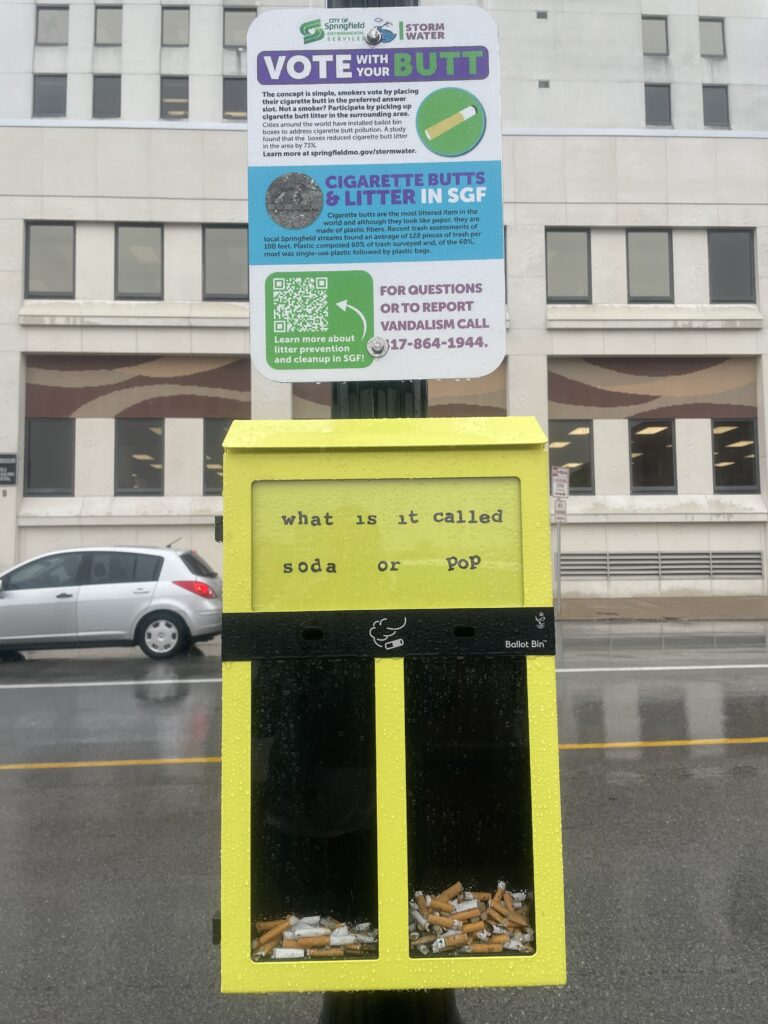
The City of Springfield has also installed several trash nets, increased its volunteer stream and road cleanup efforts and focused more on educational efforts related to littering and plastic pollution. An example of this targeted education is the new ballot bin device (Figure 6) installed in downtown Springfield, which educates pedestrians about the connection of cigarette butts to plastic pollution and encourages them to “vote” for an answer with their used butts.
As more pollutants emerge, education is everything. As Maya Angelou said, “Do the best you can until you know better. Then, when you know better, do better.”
Reference
Smyth K, Drake J, Li Y, et al. Bioretention cells remove microplastics from urban stormwater. Water Research. Vol. 191, 2021. 116785, ISSN 0043-1354.
Note The City of Springfield thanks Environmental Intern Laiken Cash and her academic advisor, Rachael Day, Ph.D. for their work on the project. Cash was supported by the City of Springfield and Drury University through the Research Experience in the Natural Sciences program, and Day was supported by Drury University.
About the Expert Sarah Wilkerson, CESSWI is a senior stormwater specialist at the City of Springfield, Missouri. She has over 10 years of experience in the stormwater industry and holds undergraduate and graduate degrees in biology and environmental science.