By Angel Menéndez
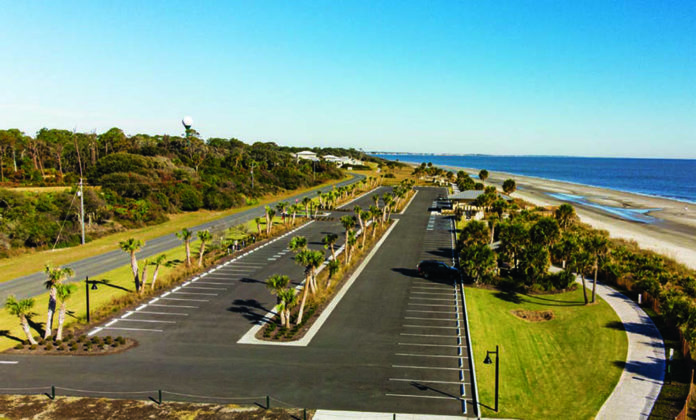
In coastal Georgia, the use of green stormwater infrastructure (GSI) is becoming more widely accepted. Yet Georgia’s municipalities, not unlike municipalities across the United States, continue to discuss proper operations and maintenance of the practices and seek available resources to inspect and maintain them. Maintenance is critical for long-term performance and while GSI is no exception, inspection and maintenance of these practices is different than that of our more traditional solutions for stormwater management.
GSI practices are specifically designed to improve water quality and mimic the location’s predevelopment hydrology through infiltration and evapotranspiration, therefore demanding that certain features be routinely inspected and maintained to optimize performance. Despite more than 20 years of guidance for managing stormwater using these practices, coastal Georgia municipalities continue to document challenges associated with GSI maintenance. In 2018, the University of Georgia (UGA) Marine Extension and Georgia Sea Grant Stormwater Program received a Federal Water Pollution Control Act grant from the U.S. Environmental Protection Agency (EPA), administered by the Georgia Department of Natural Resources’ Environmental Protection Division, to support the development of a suite of photo-based tools and training for the inspection, operation and maintenance of GSI. While a fully functioning stormwater infrastructure system is essential to public health and safety, communities often lack the resources to determine maintenance needs and requirements for GSI practices. The tools and resources were created to ensure proper maintenance is occurring to address the range of pollutants
associated with coastal nonpoint sources.
Site Assessment and Training
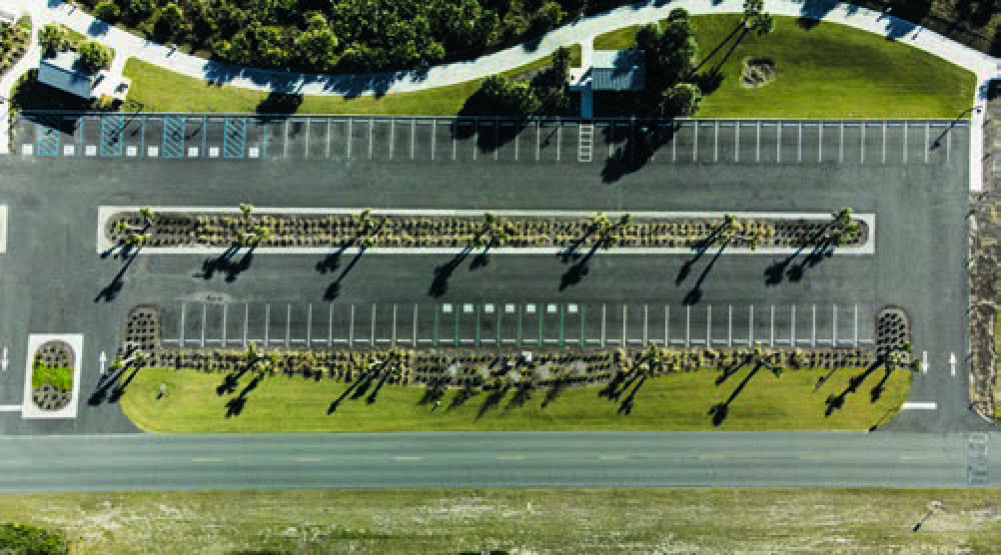
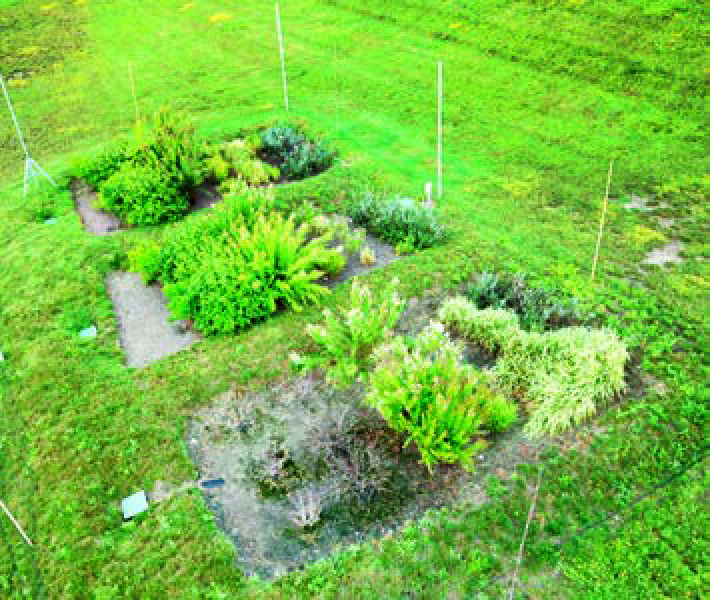
In 2017, two summary reports were published that identified the specific practices to target and the audience that could most benefit from GSI maintenance, operations and inspection resources and guidance. The 2017 “Coastal Low Impact Development Best Management Practices Inventory” confirmed the location of 220 green infrastructure/low impact development (GI/LID) practices that manage approximately 90 million gallons of stormwater annually. This study noted that the most common GSI practices in the 11 coastal counties adjacent to the Atlantic Ocean are: permeable pavement (62 percent), bioretention (20 percent) and bioswales (9 percent). The visual assessments conducted along with this inventory also noted that approximately half of the sites needed some type of specifi c maintenance; however, three-quarters of the sites were considered to have “good” or “excellent” perceived effectiveness based on the visual assessment. Additionally, the study found that a minimum of 15 percent of the permeable pavement and bioretention sites are located on municipally-owned properties and maintained by city and county staff. This further confirmed the need for the post-construction inspection and maintenance training recommendations outlined in the 2017 “Coastal Stormwater Supplement Focus Group Recommendations Summary Document.” Recommendations in this study were also made to “target inspectors completing regular inspections and public works employees and contractors conducting maintenance.” A follow-up study conducted in 2019 found that 21 percent of survey respondents cited private landscapers and public works staff as the “audience in most need of stormwater training.”
The UGA Marine Extension and Georgia Sea Grant set out to learn more about ways to support municipal employees with resources and training. The project team, UGA Marine Extension and Georgia Sea Grant and local engineering consultant, Goodwyn Mills Cawood Inc. (GMC), began with regular meetings with a group that would become known as the Inspections and
Maintenance Professionals Group (IMPFG). The IMPFG consists of three smaller subgroups based on geographic location, made up of over 40 municipal stormwater, engineering and public works professionals, as well as private industry. It was through meeting with the IMPFG that four themes regarding the developed tools emerged, including the need for resources that were representative of GSI practices in the coastal region, the connection of maintenance actions and level of service, the need for inspection and maintenance schedules, and the importance of the adaptability of the tools and their use as a mechanism for documenting the need for future maintenance action.
The IMPFG, along with recommendations from the noted studies, observed that the turnover rate within this field of municipal staff is high, particularly within public works and maintenance professionals. Many of these municipal employees have little to no prior knowledge of GSI or the importance of its function and lack the experience with inspecting and maintaining these practices properly before employment with the municipality. While maintenance and operations guidance for GSI is provided in Appendix E of the Georgia Stormwater Management Manual, Volume 2, the document is text-heavy and the condition ratings for various maintenance items are not well-defined, making the resource difficult to be used for new or inexperienced staff.
Photo-Based Tools
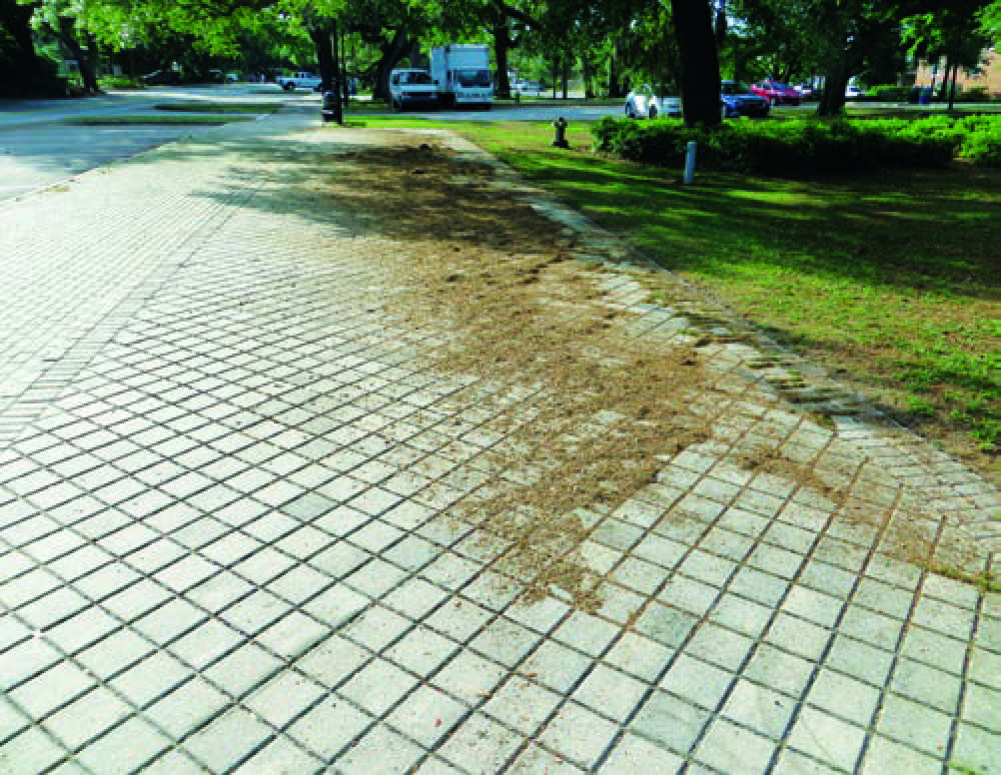
The project team focused on the creation of photo-based tools using photos collected from various projects throughout coastal Georgia. The tools developed include four one-page, GSI practice specific fact sheets, three field inspection checklists, a six-minute informational video and a half-day training highlighting the resources developed and their use in the field. All the resources can be viewed and downloaded at https://gacoast.uga.edu/stormwater-management/. Each fact sheet includes basic context for the specified GSI practice (bioretention, permeable interlocking pavers, pervious concrete/porous asphalt and bioswales), highlights key maintenance activities and critical features to inspect, and provides references for maintenance costs. Each fact sheet visually corresponds with its field inspection checklist. At the top of each field inspection checklist are examples of the specific GSI practice in “good” condition, not requiring maintenance. The photo examples also correspond with a “good condition” rating in the Appendix E checklists. Following these examples is a series of inspection questions organized by specific practice features, such as drainage area and main treatment. These GSI practice features have characteristics that are indicative of their function and corresponding maintenance. The second page of each field inspection checklist includes a shortlist of qualitative questions and a series of photographic examples of potential issues. Each potential issue photo example also notes the corresponding inspection questions pertaining to the highlighted issue of concern. The checklist questions are designed such so that a “yes” to any inspection question indicates a future maintenance action.
The Marine Extension and Georgia Sea Grant also worked with Motion House Media to create a six-minute video highlighting permeable pavement maintenance, as well as the role of GSI in coastal Georgia. The city of Brunswick, Georgia, worked closely with the team to provide examples for the maintenance portions of the video, using the demonstrations as opportunities to discuss a variety of permeable pavement maintenance techniques.
After developing the resources, Marine Extension and Georgia Sea Grant and Goodwyn Mills Cawood offered two half-day training workshops, sharing the new GSI tools with representatives of two state agencies, five private-industry consulting firms and seven coastal National Pollutant Discharge Elimination System-permitted communities. A post-workshop survey showed 68 percent of workshop participants stated the Green Infrastructure Inspection and Maintenance Training “exceeded expectations” and 95 percent “agreed” or “strongly agreed” that within 12 months they planned to put into practice something they learned from the training. Additionally, as a result of these training events, two municipalities have included the tools as recommended resources for inspection, operations and maintenance in their GI/LID plan updates as part of their Municipal Separate Storm Sewer System (MS4) permit and two additional cities have indicated that they would be updating their GI/LID plans to reference the tools as well.
The Marine Extension and Georgia Sea Grant will continue to work with state agencies, local municipalities and private industry to improve green stormwater infrastructure literacy and provide workforce development opportunities to stormwater and maintenance professionals in the hopes that more municipalities implement GSI practices, regularly inspect them and perform the proper maintenance to maintain their function.
About the Expert
Jessica T. R. Brown, P.E., is a stormwater specialist with the Marine Extension and Georgia Sea Grant in Brunswick, Ga.