Home Blog Page 7

Integrating UAS Technologies into Stormwater Control Inspections: Insights from State DOT Programs

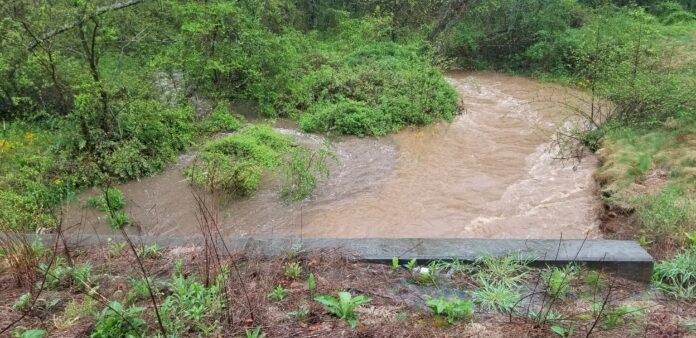
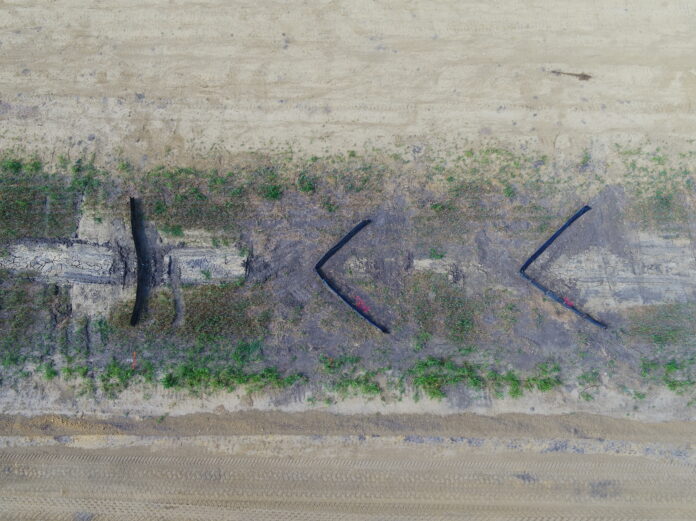
Figure 1. Aerial image of silt fence ditch check before rain event.

Stormwater management is a critical component of environmental protection, especially in areas affected by construction and infrastructure development. U.S. state departments of transportation (DOTs) have implemented best management practices (BMPs) and post-construction stormwater control measures (SCMs) to minimize the environmental impact of stormwater runoff. Inspecting these practices requires a large amount of manual labor; however, unmanned aerial systems (UAS) are increasingly being used to enhance inspections, and they offer efficient, cost-effective and comprehensive data collection.

The Clean Water Act of 1972 set water quality standards and limits on pollutant discharges, which made stormwater management an essential responsibility for state DOTs. Construction BMPs and post-construction SCMs are designed to manage stormwater runoff and reduce pollutants. Inspections ensure these practices function effectively.
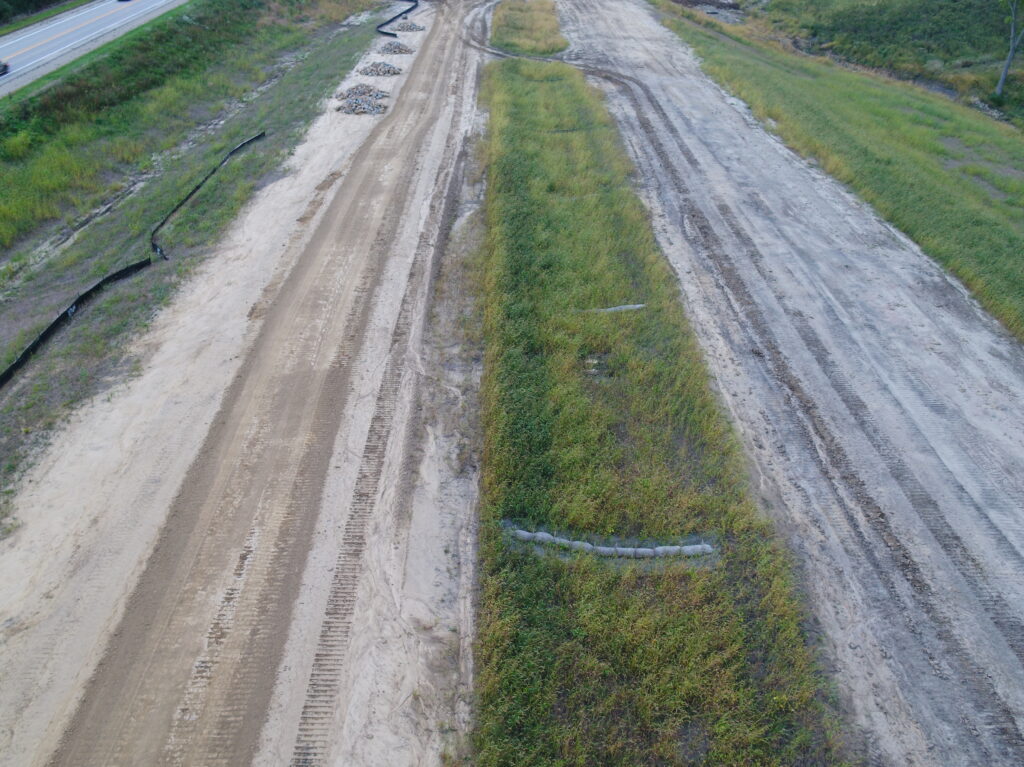
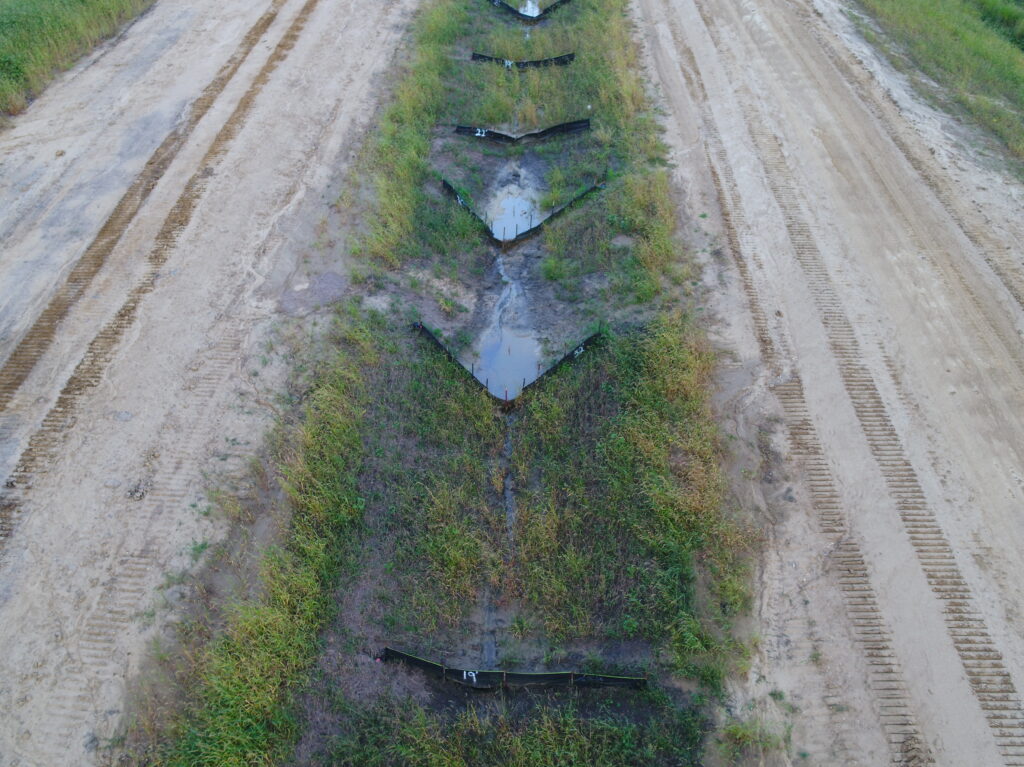
UAS technologies have been adopted by some state DOTs to inspect BMPs and SCMs more efficiently. These drones can capture aerial imagery and detailed data, even in difficult-to-reach areas, which reduces on-foot inspections (Figures 1, 2 and 3). UAS can be equipped with sensors, such as optical cameras and Light Detection and Ranging (LiDAR) cameras, which enable comprehensive assessments of stormwater practices.
UAS in environmental compliance monitoring
Figure 2. Aerial image of silt fence ditch checks post-rain event.


Current Use of UAS Technologies by State DOTS
A survey conducted of state DOTs by the authors revealed that UAS technologies are increasingly being used for environmental assessments and stormwater inspections. Forty-six percent of the responding state DOTs use UAS for environmental site assessments or permitting, while 29% specifically use them for stormwater inspections.

Challenges remain in implementing UAS programs for stormwater inspections. Regulatory requirements, including those set by the Federal Aviation Administration (FAA), impose restrictions on UAS operations, such as maintaining a visual line of sight and avoiding flights over people and vehicles. Also, the lack of trained personnel and guidance on effectively implementing UAS technology hinders widespread adoption.

Applying UAS Technologies to Stormwater Inspections
State DOTs that have established UAS stormwater inspection programs use the technology primarily to verify the installation of BMPs and to assess factors such as vegetation establishment, soil erosion and sediment deposition. These inspections are typically conducted shortly after the installation of stormwater BMPs to ensure proper functioning and compliance with environmental standards.

The frequency of UAS use varies among state DOTs. While some, like the Alabama (USA) DOT, utilize UAS technology extensively for USA BMP inspections, others use it less frequently due to staffing limitations and regulatory requirements. UAS technologies are often deployed in combination with traditional on-foot inspections, particularly at sites with restricted access or environmental sensitivity.

Staffing and Equipping a UAS Inspection Program
Establishing a UAS stormwater inspection program requires staffing and equipment. The survey found that state DOTs rely on a mix of in-house personnel and third-party contractors to conduct UAS inspections. However, the lack of trained personnel poses a major challenge. Training programs are crucial to ensure that staff can operate UAS and analyze the collected data effectively.

Most state DOTs use rotary-wing UAS platforms, such as quadcopters, that are equipped primarily with optical cameras. Other sensor types, including LiDAR, thermal/infrared and multispectral sensors, are used, although less commonly. When selecting UAS equipment, state DOTs consider factors such as cost and regulatory compliance, and they balance the need for advanced capabilities with financial and legal constraints.

Data Management and Applications
UAS inspections generate large volumes of data, which requires effective processing, analysis and storage. The primary use of UAS data by state DOTs is to monitor maintenance needs for stormwater BMPs and SCMs, and state DOTs incorporate aerial imagery into inspection reports for clearer communication with maintenance personnel and contractors. However, managing UAS datasets poses a challenge due to their size and complexity.

Some state DOTs have integrated UAS inspection datasets into their existing asset management systems, which allows for more streamlined tracking and prioritization of maintenance activities. Also, artificial intelligence (AI) algorithms are being explored to automate data analysis, which potentially will improve the efficiency of stormwater inspections by identifying deficiencies and assessing overall condition status.

DOT Case Studies: Implementing
Several U.S. state DOTs have successfully implemented UAS technology into their stormwater inspection programs.

  • Alabama DOT. The Alabama DOT has a dedicated UAS section in its Maintenance Bureau that conducts UAS-based stormwater inspections. They use fixed-wing and rotary-style UAVs to gather pre- and post-construction video datasets, which document conditions and deficiencies. UAS inspections are conducted at least once every six weeks, with imagery stored in a cloud-based platform. The Alabama DOT plans to increase the frequency of UAS inspections and is developing UAS technologies to identify vegetation density and health.
  • Colorado DOT. The Colorado DOT uses UAS technologies for less than 10% of their stormwater inspections. They began exploring AI applications to analyze UAS-acquired photographs for identifying damaged sediment fences and other BMP deficiencies. The goal was to reduce the need for on-foot inspections by using UAS to capture imagery and process data on-site, which identifies deficiencies and maps their locations. However, challenges emerged, and the Colorado DOT decided not to pursue the development of AI applications.
  • Delaware DOT. The Delaware DOT primarily outsources UAS inspections to consulting firms due to a lack of trained in-house personnel. They use UAS technology for large linear highway projects, and they capture aerial imagery and videos to supplement traditional inspection reports. The DOT uses a smart device application for on-foot inspections, but it doesn’t integrate UAS imagery into the software.
  • Kansas DOT. The Kansas DOT uses rotary-wing UAS technologies for stormwater BMP inspections during construction on large projects. Due to limited staff to conduct UAS operations, flights are not pre-planned, and data processing is manually performed. Aerial images are uploaded to a cloud-based platform and used to create orthomosaic maps for comparing on-foot inspection notes, particularly for evaluating erosion and sedimentation.
UAS in environmental compliance monitoring
Figure 3. Aerial image of wattle ditch check with established vegetation.

Challenges and Future Directions
While UAS offer numerous benefits for stormwater inspections, challenges remain in implementation, data management and regulatory compliance. Staffing shortages and the need for trained personnel are major obstacles, along with the complexity of managing large UAS datasets. State DOTs must also navigate FAA regulations that limit UAS operations, particularly in urban environments.
State DOTs can explore strategies such as offering certification incentives, enhancing recruiting efforts and developing training programs with educational institutions. Cloud-based software solutions can assist in managing UAS data, while AI algorithms can automate data processing and analysis. Advocating for regulatory flexibility and demonstrating the effectiveness of UAS-based inspections can help gain acceptance from environmental agencies.

Conclusion
The integration of UAS technologies into stormwater BMP inspections represents a sizable advancement in environmental management practices. By providing efficient and comprehensive data collection, UAS enables state DOTs to enhance the effectiveness of stormwater management and compliance with environmental regulations. Despite challenges related to staffing, data management and regulatory compliance, the benefits of UAS, such as cost savings, improved inspection quality and enhanced documentation, are driving their adoption.
As technology and regulatory frameworks evolve, UAS are poised to become an indispensable tool for stormwater management and to contribute to the sustainable development of infrastructure and protection of the environment.  

Acknowledgments
This paper is based on a study sponsored by the National Cooperative Highway Research Program. (See bit.ly/4jfPh1k.) The authors gratefully acknowledge this financial support. The findings, opinions and conclusions expressed are those of the authors and do not necessarily reflect the view of the sponsor.

About the Experts

  • J. Blake Whitman, Ph.D., PE, CPESC, is an assistant professor in the Department of Biosystems Engineering and Soil Science at The University of Tennessee – Knoxville.
  • Michael A. Perez, Ph.D., PE, CPESC, is an associate professor in the Department of Civil and Environmental Engineering at Auburn University.
Challies Island Bridge: A Win-Win for the Environment and River Access

Figure 1. Challies Island bridge location.

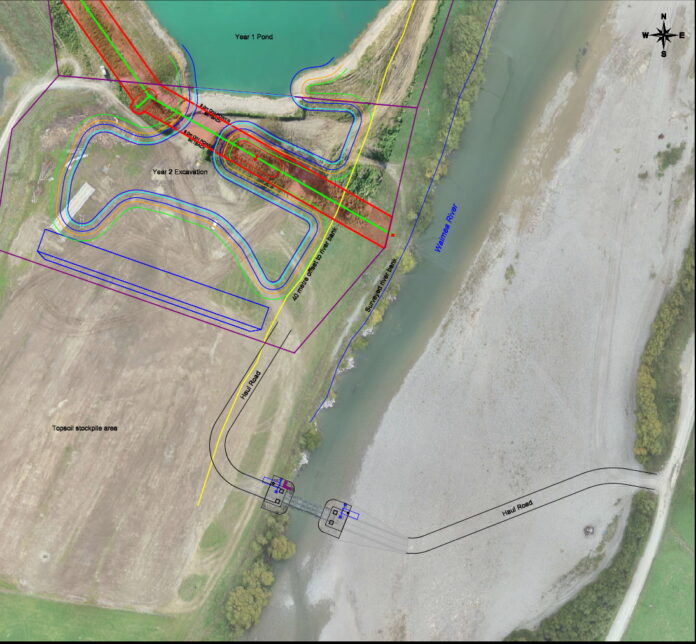
The Challies Island Bridge project by Matt Taylor, Operations Manager at Taylors Contracting in Nelson, New Zealand, involved the construction of a 30 m (98.5 foot) moveable bridge across the Waimea River at Challies Island in the Tasman District near Nelson (Figure 1).

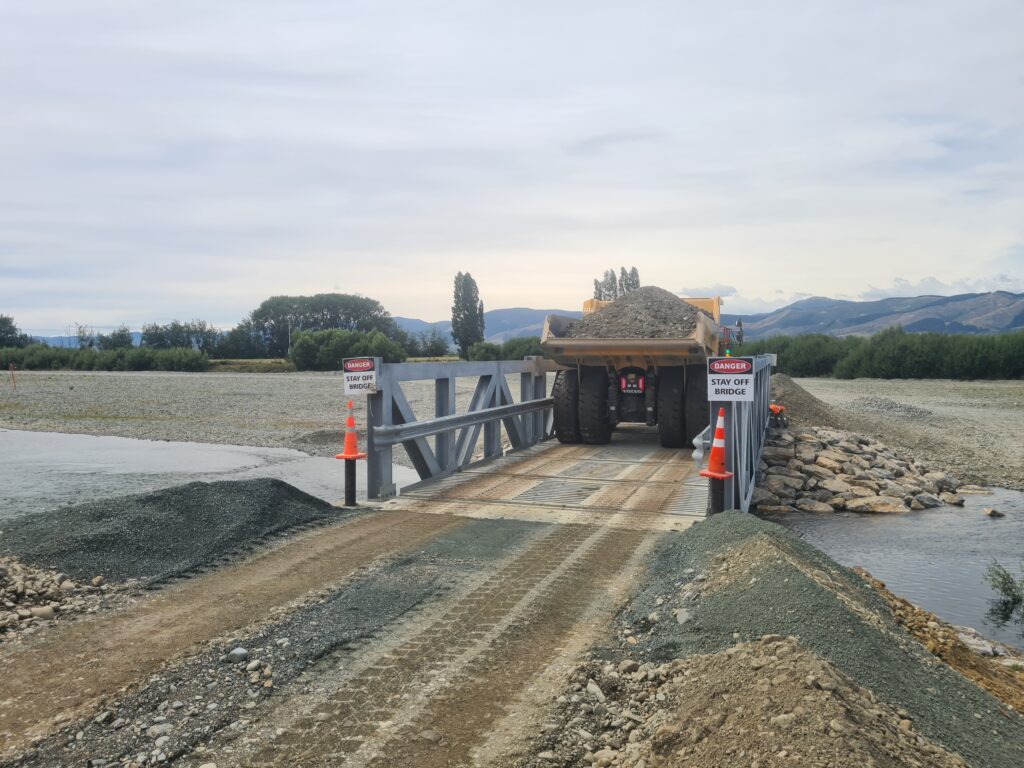
The bridge allows 80 t (88.1 ton) laden, rigid dump trucks to cross the river and transport gravel from a nearby extraction site for processing without vehicles having contact with the water, thus eliminating sediment discharge. The bridge can be removed in 48 hours if a major flood is predicted. It was manufactured by the engineering company Eastbridge.


Gravel extraction commenced at the Challies Island site in the early 2000s. Originally, this effort consisted of articulated dump trucks (ADTs) crossing the river using truck wheel washes to minimize sediment movement. This effort progressed to ADTs crossing the river via culverts installed for them. Neither approach was ideal, as sediment was generated to varying degrees. Taylors did not consider this approach environmentally sustainable or a best management practice (BMP), and it was not how it wanted to operate as a business. At this stage, a removeable bridge was proposed.


Like many regions around New Zealand, the Tasman region has a list of infrastructure projects that require aggregate. As demand for development increases, there will be increasing pressure to acquire aggregate.


Designing and building the bridge enabled the client to process material into aggregate. It also provided access to alluvial aggregate, which is better suited to concrete and asphalt production as it has been weathered and any soft rind removed. The resulting hardness produces structurally sound concrete. Adverse effects on the environment were minimal, if any existed, creating a win-win for all stakeholders.


Reverse Engineering the Solution
Importantly, the Challies Island project was “reverse engineered” starting at the river and working back.
The bridge design and construction required high-level problem-solving and creativity. The bridge itself was supplied in sections and assembled on-site. This work was undertaken under a high level of public scrutiny and within view of a large volume of commuters using a major road nearby.


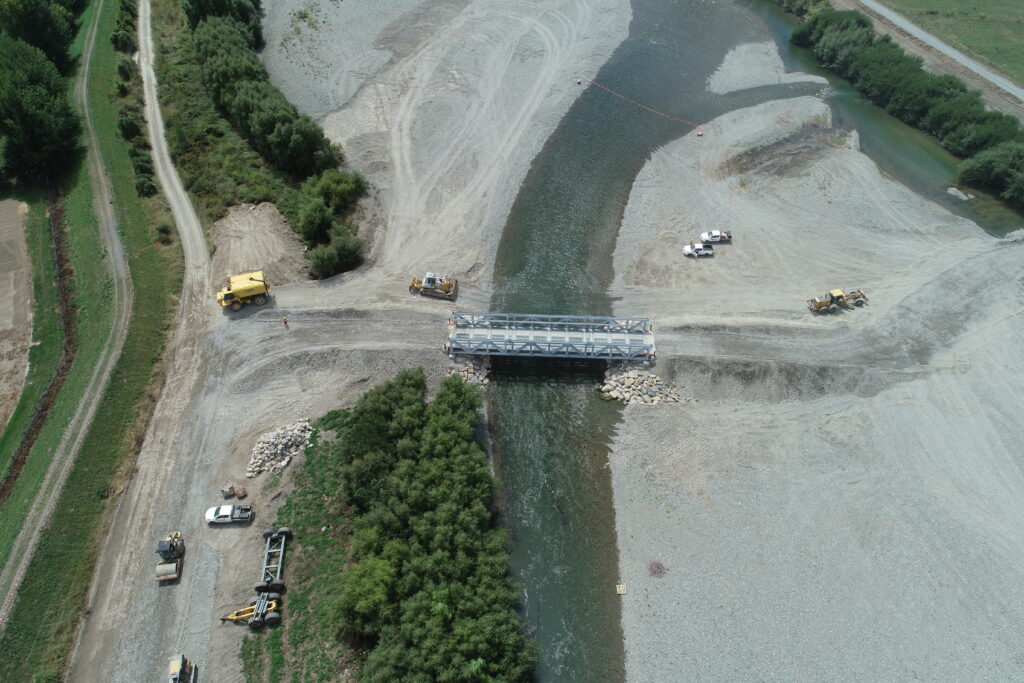
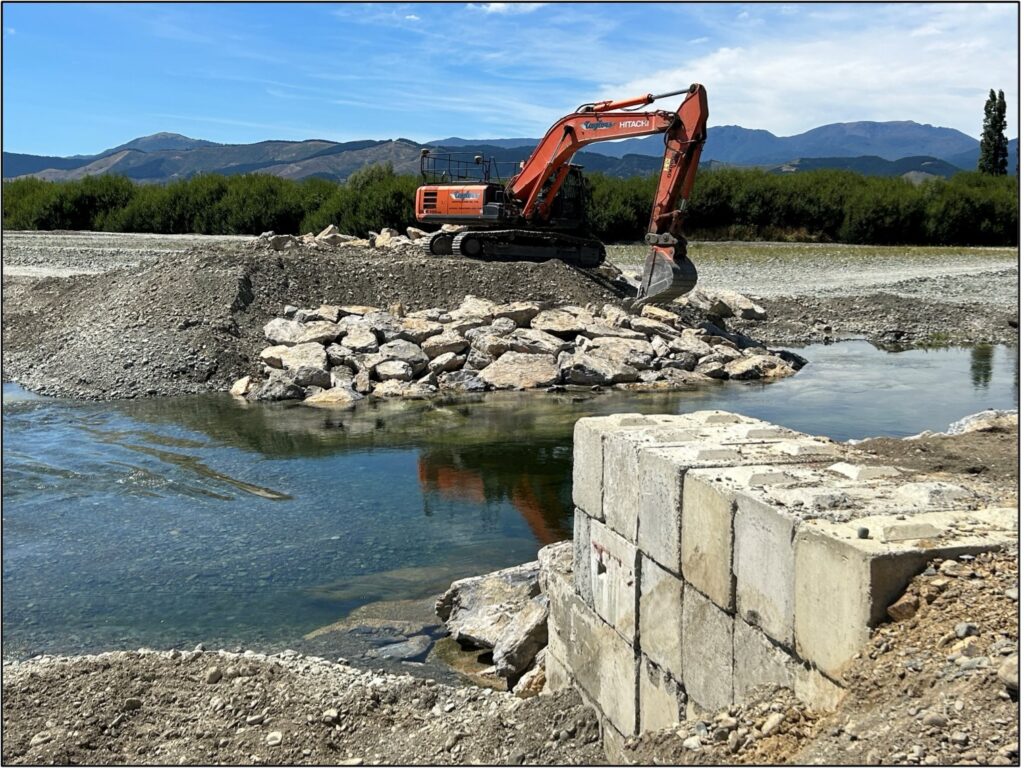
The team was presented with four large truckloads of modular components at a total of 70 t (77.1 tons). The drawings, consents and the challenge began. Abutments were constructed from both sides, which removed the need for crossing flowing water, thus eliminating disturbance of the river (Figure 2).


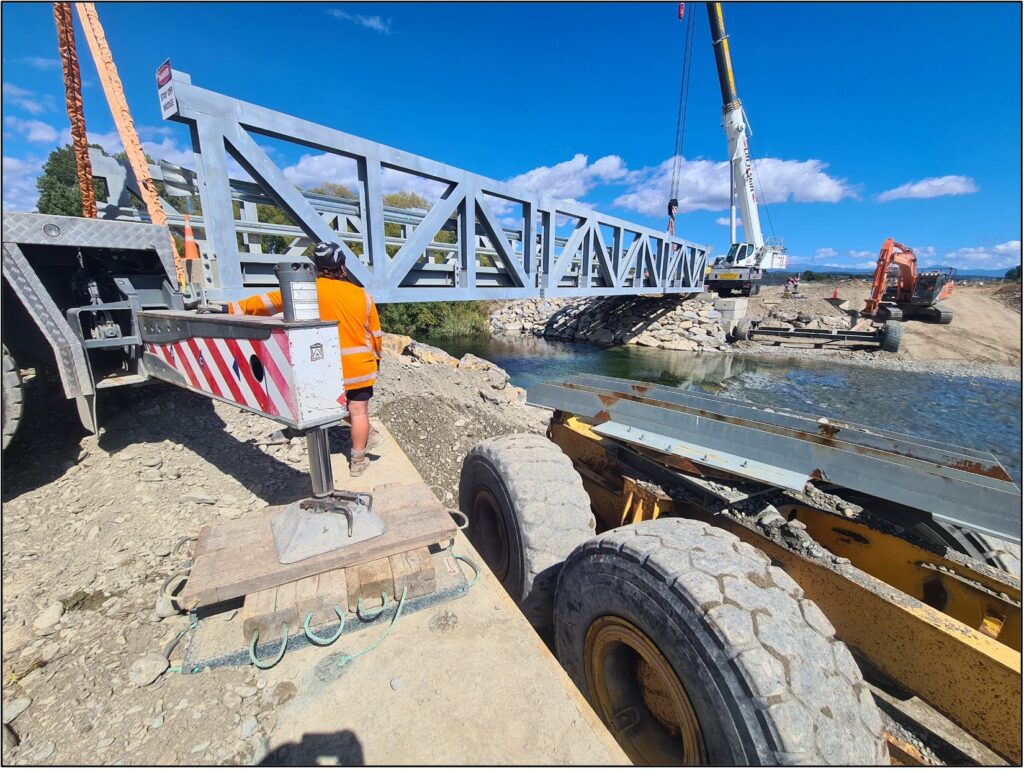
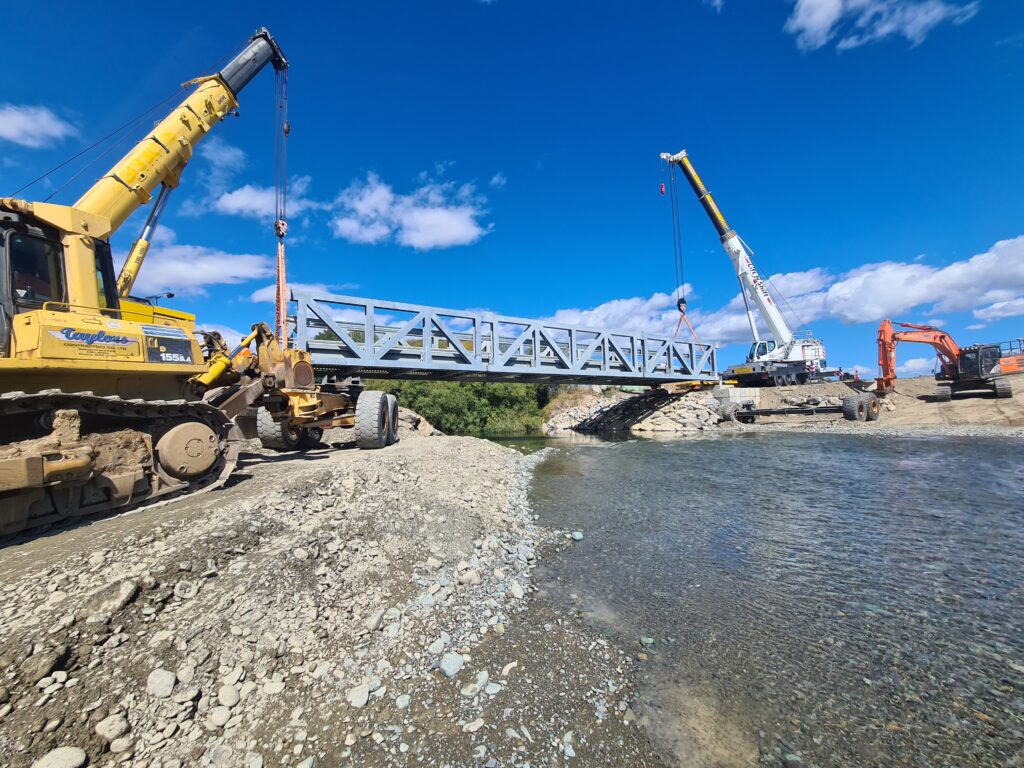
Once the abutments were constructed and compaction testing completed, the next challenge was lifting and placing 70 t (77.1 tons) of steel across a flowing river. A set of wheels was constructed for both ends. By working from both sides, an access ramp was constructed beside the abutments. A crane was positioned on each side to lift. The bridge was transported across the river in one move, which created minimal disturbance (Figure 3).

Figure 4. Teamwork and heavy equipment were required to install bridge.


Designed With the River and Other Users in Mind
The bridge is designed and installed with the dynamic river flows and resource consent requirements in mind so as to not create erosion of the riverbed. During design and installation, attention was also given to other river users so as not to create a navigational hazard (Figure 4).


The contractor is responsible for resource consent compliance during a forecast flood event, which stipulates the bridge must
be removed if the temporary foundations become compromised. A construction emergency action plan was developed and refined after each large rainfall event and elevated river flow.


How Do You Put This Together?
Assembling the bridge on-site meant there was no level concrete floor to work on and all the equipment had to be mobile. The contractor had to prepare a working site, which involved levelling and compacting the gravel area within the Waimea River Park berm land.
Once assembly commenced, it was difficult to get the holes lined up to connect the sections. The workshop team needed to be innovative and developed pins to mock up the sections and then fit the bolts. There are about 1,000 bolts that are 30 mm (1.18 inch) diameter holding the bridge together. The bridge took approximately six weeks to assemble.


Once it was assembled, the bridge needed to be moved. This need provided an additional quandary, as it was too big and heavy to put on a truck. Trucks would also sink in the river gravel under the weight. The workshop team suggested fabricating dollies that would sit under each end of the bridge. These were made using old dump truck chassis, with one having an old excavator ring so the bridge could be turned and manoeuvred more easily.


The bridge allowed for the transportation of excavated gravels across the river while leaving the water flowing clear. There was no requirement to introduce fish passage systems as would have been required with the temporary use of pipes.


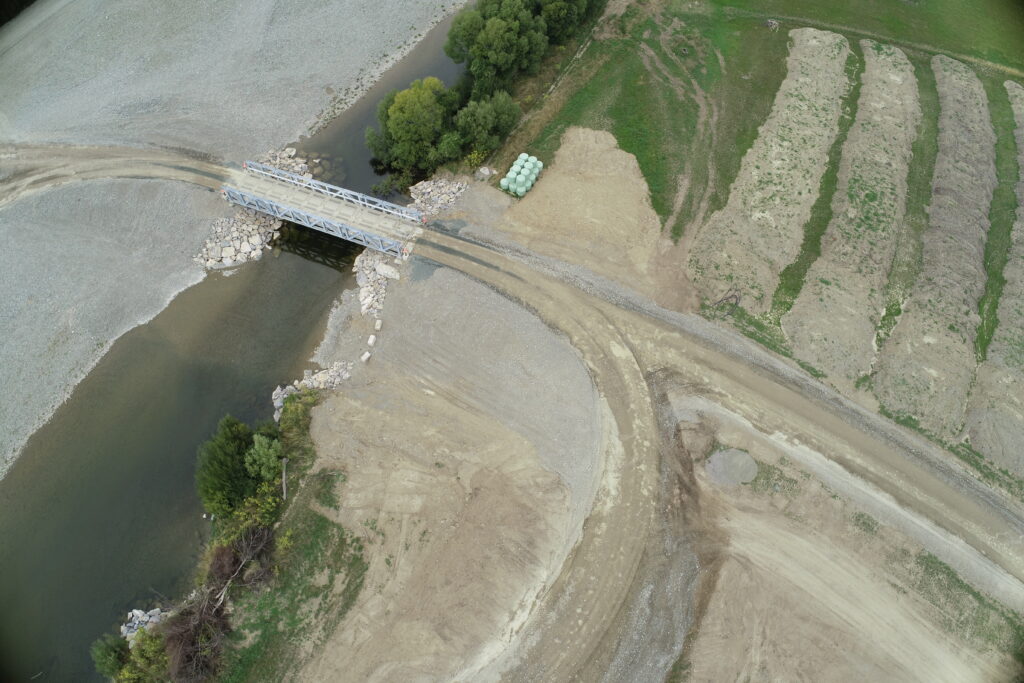
During a couple of raised river flow events, the dry secondary overflow channel was activated. This step allowed the bridge to remain in place due to the flow being split between the bridge and the secondary overflow channel. Removal could have introduced environmental risk by generating sediment and placing machinery in a vulnerable position during rising river levels. This outcome has been good as it created minimal disturbance and discharges to the receiving environment (Figure 5).


Meeting Community Expectations
There is ongoing community sensitivity about gravel extraction. Diligent communication was needed with the community about the methodology being used. Noise and dust needed to be proactively managed to stay within required consent limits. Full compliance has been achieved to date, and a robust relationship has been maintained with the regulators.


To help achieve compliance, an automatic monitoring system was installed at the site. This system monitored noise, dust and weather (wind speed, temperature and direction), which enabled prompt decisions to be made when unfavourable conditions were detected. Mitigation measures were put into action to prevent any adverse effects on the environment, neighbours or the community in general.

Regular communications were made with compliance staff, and site visits were encouraged to monitor the progress of the project.
Upon completion and once cartage was completed, the bridge was removed in reverse to the installation. The river gravel abutments were spread and large rock was removed, which left no footprint. Full regulatory compliance was achieved.


Setting the Benchmark
Gravel extraction can be managed so that it is compatible with, and even beneficial for, river control. It can also assist with the restoration of wildlife habitat.


The removeable bridge is seen as a solution to the issues presented by historic gravel extraction because it minimises the footprint of gravel extraction and its effects on the environment. The key to the ongoing success of the project is this minimal environmental impact combined with a willingness by the civil construction industry, landowners and the Tasman District Council compliance team to work together and find a resolution to any percieved or actual issues (Figure 6).


This project exemplifies the thinking and innovation that goes into designing solutions that meet the needs of communities and our environment while enabling access to the resources we need to keep vital infrastructure projects moving forward (Figure 7). 

Figure 7. The bridge conveying an articulating dump truck across Waimea River.


About the Expert
Matt Taylor is Operations Manager for Taylors Contracting, established by his parents in 1971. Matt’s ability to design fit-for-purpose equipment and processes has been the hallmark of the business for 53 years.

Monitoring to Get the Picture

Figure 1. Confluence of two branches of the main lake tributary showing relatively cleaner water from an undisturbed forest area (left) and muddy water from a developed area (right). (Photo credit: Jeffrey D. Wilcox.)

It often takes a long time and a lot of data to begin to understand what is affecting water quality on a site or in a watershed. A recent study in the mountains of North Carolina, USA, used volunteers to obtain water samples over several years to estimate sediment loading to a 6,200 ac (2,509 ha) reservoir.1 The two main streams feeding the reservoir and the dam outlet were instrumented with water level gauges to estimate flows. Volunteers obtained close to 500 stream samples during and after storm events, including at the stream gauges. In addition, there were three high-frequency sampling events in which hourly samples were taken before, during and after storm events. Samples were measured for turbidity (in nephelometric turbidity units, or NTUs) and a subset for total suspended solids (TSS). A regression equation was calculated between turbidity and TSS to estimate TSS on samples that had only turbidity measured. Under base flow conditions, the water was relatively clear (1–20 NTUs), but it often exceeded 1,000 NTUs during storm events (Figure 1). The highest turbidity and TSS were usually just before and at the peak flow, with water clarity returning as flow subsided. Peak flows in the larger stream were in the 176–211 ft3/s (5–6 m3/s) range for three storms and 35 ft3/s (>1 m3/s) for 35 storms, with the highest flow in the other tributary at 78 ft3/s (2.2 m3/s). Estimated sediment loads to the reservoir from the two tributaries were 654–916 yd3/yr (500–700 m3/yr), with about 13% coming from the three largest storms. Coarse sediment could be seen deposited at the mouth of the streams (Figure 2), although much of the sediment was deposited throughout the lake. The homeowner’s association that owns the lake had recently had 920 m3/yr (1,200 yd3/yr) dredged from the lake, which the authors point out is less than two years of sediment accumulation. As a result of the study, they are considering installing forebays to help retain the sediment near the shore, where it would be easier to remove without lowering the lake level.

Figure 2. Sediment deposited in the lake at the stream inlet. (Photo credit: Jeffrey D. Wilcox.)


On a very different scale, runoff into road stormwater drains was monitored in Ohio, USA, to determine the particle sizes and sediment loads2 (Figure 3). Watersheds ranged from 0.025–0.45 ac (0.01–0.18 ha), and road types ranged from small state roads to high-speed interstates carrying 7,000–131,000 vehicles per day. The sites were monitored for 26–52 events, for a total of 490 events, and particle size distribution (PSD) and TSS were determined for a subset of these. The PSD was of interest in determining how well various stormwater control measures might work to remove sediment from road runoff. Rainfall durations were greater in fall and spring compared to summer, but intensities were greater in the summer. TSS concentrations averaged 35 mg/L over all sites, which was relatively low compared to data from other studies. Concentrations were not related to traffic volume or rainfall characteristics, which suggests other factors were involved. Sediment loads averaged 0.9–12 lb/ac (1–13 kg/ha) per storm event for the 11 sites, with annual loads ranging from 95–508 lb/ac/yr (107–569 kg/ha/yr). The PSD varied across sites but averaged around 4% clay, and the remainder was evenly divided between sand- and silt-size particles. The median particle size ranged from 24–72 µm (<400–200 mesh) and was influenced by nearby land use, with low-density residential areas having the largest particles. The two roads with the most traffic also had the smallest PSD, which suggests that particles were being pulverized during dry periods. Using published sediment capture rates for different stormwater control measures, the authors suggested that dry detention basins and wet pond/wetland devices could achieve an 80% reduction in sediment loads based on the PSDs in the study. Filter strips and swales may need to be paired with other measures to achieve similar removal rates. 

Figure 2. Sediment deposited in the lake at the stream inlet. (Photo credit: Jeffrey D. Wilcox.)


References

  1. Wilcox JD, Stark KA, Svetlov R. 2024. Estimating Stream Sediment Loads to Assess Management Options for a Southern Appalachian Mountain Lake. Environmental Earth Sciences 83:387.
  2. Winston RJ, Witter JD, Tirpak RA. 2023. Measuring Sediment Loads and Particle Size Distribution in Road Runoff: Implications for Sediment Removal by Stormwater Control Measures. Science of the Total Environment 902:166071.

About the Expert
Rich McLaughlin, Ph.D., received a B.S. in natural resource management at Virginia Tech and studied soils and soil chemistry at Purdue University for his master’s degree and doctoral degree. He has retired after 30 years as a professor and extension specializes in the Crop and Soil Sciences Department at North Carolina State University, specializing in erosion, sediment and turbidity control. He remains involved with the Department as professor emeritus.

Fireproof Your Future: Grow Your Business by Turning Challenges into Opportunities

I am writing this on the ninth day of the extreme fire events in Southern California, USA. We are in the bulls-eye of the wind and fire zone with our bags and cars packed, in case we are told to evacuate. The wind is howling, and we are all as prepared as we
can be.


Natural disasters like wildfires, storms and unexpected challenges highlight vulnerabilities, but they also create opportunities to focus on priorities and efficiencies within and outside your company. For erosion control and stormwater professionals, challenges present a chance to refocus, rebuild, enhance core business practices and strengthen relationships in the industry and the communities we serve. These moments force us to examine our priorities and improve our high-yield activities. These steps ensure that our best practices truly are best practices and not outdated systems we haven’t changed in years due to complacency. It’s a chance to create and strengthen partnerships that make us more resilient.


The key is to stay calm and focused on what you can control during demanding times. Overcoming challenges begins by building proactive strategies, just as fire disaster preparedness starts with having solid infrastructures and maintaining reservoirs, irrigation systems and firebreaks that are essential to readiness when it counts.


You should continually be developing smart partnerships and making best practices better. Situations like fires, mudslides or flooding offer the opportunity to strengthen your team by forging partnerships with arborists, landscapers, irrigators and heavy equipment operators. These partnerships amplify efforts by addressing vegetation risks, enhancing soil and bank stability and promoting fire-resistant landscapes.
Working collaboratively is vital. Alliances with local and state municipalities and utility leaders can help you with the necessary permits and protocols to assist in the efforts to maintain water flow to fire-ridden or drought-prone areas. These partnerships not only reduce vulnerability but also showcase the collective strength of the erosion control and stormwater industry.


Help educate the public. Offer your subject matter expertise and resources to help your customers and the community solve immediate problems and prevent future ones. Simple, actionable outreach ­— such as workshops on defensible spaces and guides on bank stabilization, stormwater management and fire-resistant planting — empowers communities to take preventative action. By positioning yourselves as educators, you enhance trust and strengthen the connection between our industry and the people we serve.


Recovery during challenges depends on fast actions, collaboration and communication. With fires, for example, deploying erosion control measures like hydromulching, sediment barriers and silt fences prevent secondary disasters such as mudslides and flooding. Partnerships with suppliers ensure rapid access to materials, while government agencies and recovery teams provide additional resources and support.
Collaboration becomes even more important during recovery. Tree companies assist with debris removal, while irrigation specialists repair damaged systems to ensure future resilience. Landscapers and restoration experts can help revegetate fire-damaged areas with native species, which stabilizes soil and aids recovery. These alliances transform overwhelming challenges into manageable, impactful solutions.
Disasters remind us of what truly matters, so focus on priorities: protecting people, land and livelihoods. They provide clarity on where to focus on maintaining infrastructure, strengthening partnerships and engaging communities. By aligning our goals and priorities, we emerge stronger as individuals, businesses and industry.


Tough times aren’t just challenges. They’re opportunities to lead, innovate and build a future that’s sustainable and resilient while protecting our communities and ensuring they thrive in adversity. 


About the Expert
Judith M. Guido is the chairwoman and founder of Guido & Associates, a business management consulting firm in the erosion control and green industry. Guido can be reached at 818.800.0135 or judy@guidoassoc.com.

Green Upgrades for a Downstream Neighborhood

Richmond, Virginia, USA, is a city with a rich and checkered history, from being the capital of the Confederacy during the American Civil War to being a frequent choice in lists of the best American cities in which to live. Richmond has worked hard in recent years to overcome its darker chapters. That effort is particularly evident in overcoming the history of the city’s combined sewer system, which for years polluted the city’s downstream neighborhoods, including the Fulton Hill neighborhood, during combined sewer overflow events.

What is a Combined Sewer?
Richmond’s combined sewer system dates back more than 150 years to when urban storm drains were connected to the sanitary sewer system, a standard practice in older cities throughout Virginia and the rest of the United States. As the city grew, impervious areas that shed rainwater increased, and runoff from heavy rains flowing into the water treatment plants occasionally exceeded capacity. With nowhere to go, the excess slurry of rainwater and sewage passed untreated into the James River winding through downstream neighborhoods
in a process called a combined sewer overflow (CSO).

Mitigation work to prevent CSOs started early in the 1980s, using a variety of techniques. More recently, these techniques have evolved to include green infrastructure. Green infrastructure seeks to disconnect urban runoff from the combined sewer using strategies like permeable technologies to infiltrate water into the soils and using trees and vegetation to consume water as part of the evapotranspiration process.

A Green Idea for Fulton
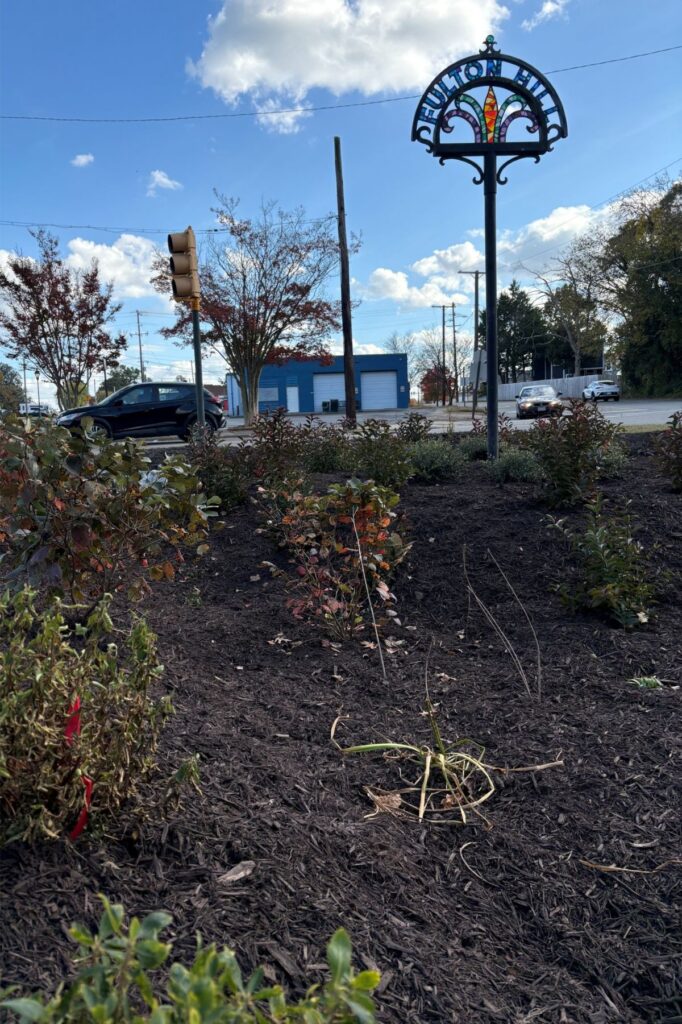
The Greening Greater Fulton project was conceived by Innovate Fulton’s founder, Chuck D’Aprix, when he learned that Richmond’s Department of Public Utilities was working with the Alliance for the Chesapeake Bay to find a reliable partner to create a green street in the city. Green streets use green infrastructure within the public right-of-way to blend CSO mitigation and neighborhood beautification. Innovate Fulton’s mission is to revitalize the primary business corridor in Greater Fulton, so the organization was a natural fit for the project that would address the CSO issue as well as create “a sense of place and improve the aesthetics of a neighborhood that has long waited for such an opportunity,” according to D’Aprix.


The project team included the Alliance for the Chesapeake Bay, Innovate Fulton, Groundwork RVA, the City of Richmond’s Department of Public Utilities, design firm VHB, local artists and Exact Stormwater Management. A robust community engagement effort resulted in a concept that would not only reduce pollution entering the James River and Chesapeake Bay, but also beautify the neighborhood, mitigate urban heat island impacts, increase native wildlife habitat and create safer pedestrian access to the businesses in the neighborhood.
After resident feedback was obtained, engineers began making plans for a green street project that spanned two city blocks and included hundreds of native plants and trees, multiple rain gardens, permeable pavement and public art.


Budgets and COVID
With the design nearly completed and the project fully funded in 2020 by grants from the National Fish and Wildlife Foundation, Altria Group, Luck Foundation, City of Richmond Department of Public Utilities and Wetlands Watch, the COVID pandemic delayed the start of the project.


When the pandemic ended late in 2022, after many months of rampant inflation, building a project with an outdated budget proved nearly impossible. The project contractor worked with the design team to find ways to reduce costs while keeping the project goals intact. With support — and price concessions — from material suppliers, a final plan was nailed down and construction began in June 2024.


The Project Centerpiece
Richmond’s Confederate-era statues were removed during civil unrest in the early 2020s, leaving many empty public spaces. The Fulton Green Street project continued the city’s efforts to replace them with a new kind of art that leverages the shared history of the city. A stormwater plaza located in the center of the green street project was designed to showcase art from Richmond’s local talent.


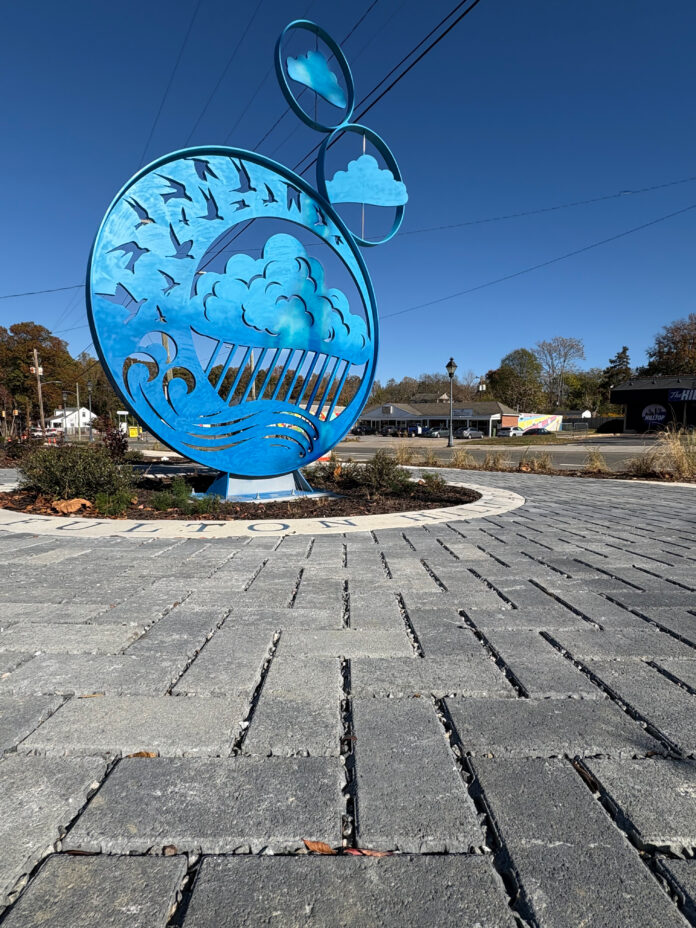
Artists worked with the neighborhood to create a sculpture to sit in the center of the plaza as a focal point for the project (Top photo). The nearly 12-foot (3.66-m) tall, 2,800- pound (1,270-kg) sculpture illustrates the water cycle, highlighting the importance of the stormwater management improvements implemented along and below the street. The artists used birds depicted in the sculpture to symbolize a healthy environment and tie the watershed improvements to the idea of neighborhood unity. The sculpture sits on a pedestal surrounded by 400 feet2 (36 m2) of decorative permeable pavers bound together by a central ring that includes the names of all the local neighborhoods, including Fulton.

Figure 1. The permeable pavers help retain water from the parking lots and rooftops and prevent it from entering the combined sewer system.


A Permeable Streetscape
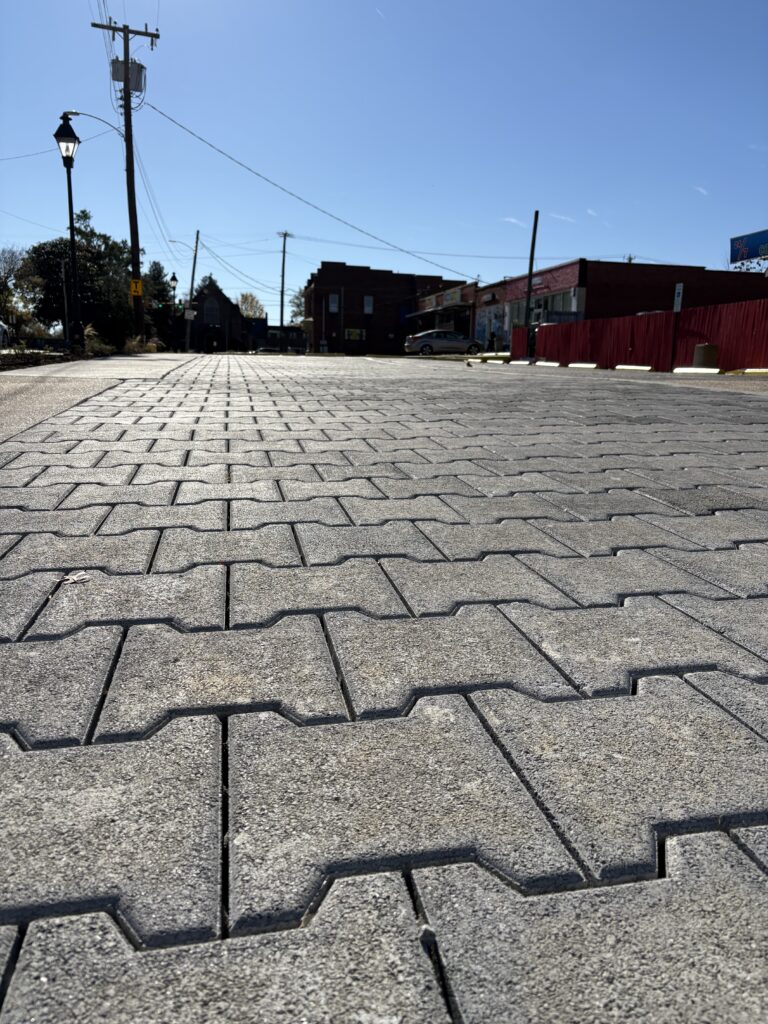
On the upper block above the plaza, a patched network of asphalt and concrete was removed to make way for permeable pavement (Figure 1). Placed adjacent to a new sidewalk in a long, straight stretch spanning nearly the entire block, the pavers collect runoff from rooftops and parking lots before it can get to the street’s combined sewer inlets.


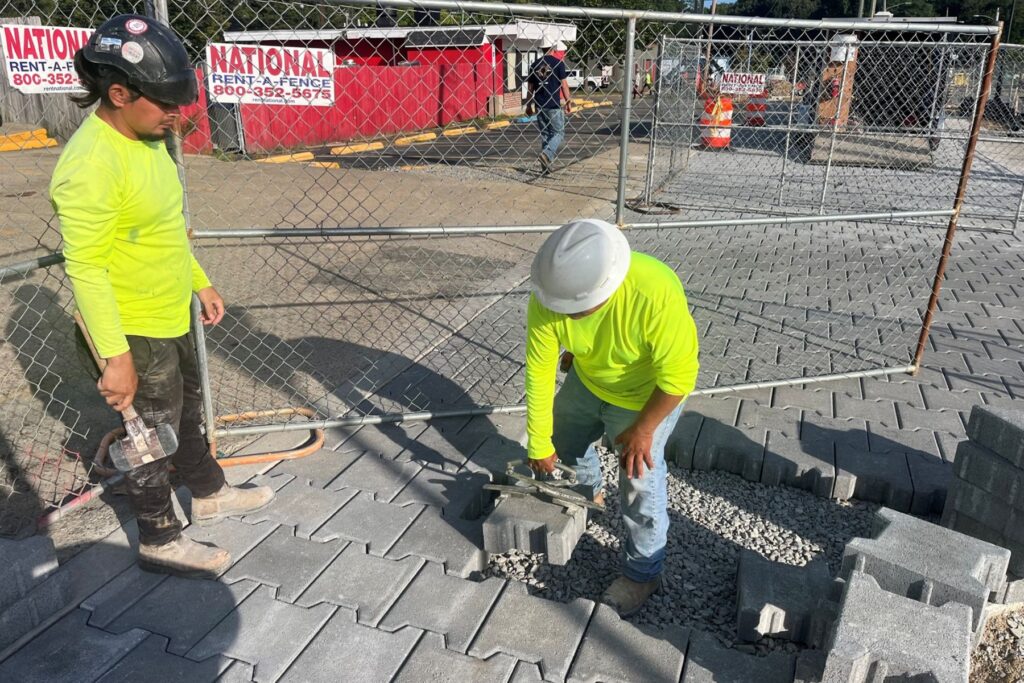
Coordination with the existing businesses was critical. Between the foot traffic and the cars passing through to multiple storefronts, the pavement was done in sections to maintain access so businesses could stay operational. An open-joint permeable paver was selected to handle the high volume of traffic and facilitate future maintenance (Figure 2). Because open-joint pavers can be cleaned with vacuum trucks and don’t require joint filler to be reinstalled afterwards, concerns about future conflicts between maintenance workers and vehicular traffic were easily overcome.

Figure 2. The permeable paving blocks don’t require joint filler, which will lengthen the maintenance intervals and keep maintenance workers out of traffic.


Pavers, rain gardens and bioretention areas work independently to absorb and infiltrate the maximum amount of runoff possible, passing only the overflow volumes from larger storms back into the combined sewer. A small, elevated underdrain beneath the pavers collects excess runoff and carries it under the city street in a new 15-inch (0.38-m) concrete pipe installed as part of the project. This pipe continues down through the lower block, picking up the overflow volumes from other BMPs along the way, before connecting back into the city’s combined sewer.


At 9 feet (2.7 m) below finished grade, installing the new pipe proved to be the hardest part of the project (Figure 3). Working in a narrow corridor meant using a trench box to safely lay the pipe, and while most of the utility conflicts were in the street, there were a lot of smaller shallow connections to the businesses that had to be worked around.


Bioretention
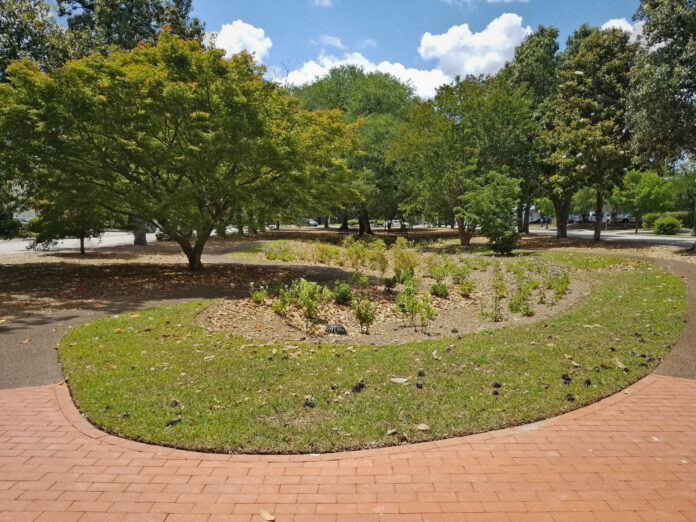
Prior to the project, the lower block contained only a few, small, dying street trees and more patchwork of asphalt and concrete — a typical picture of urban decay. Demolition proved challenging when some of the pavement was found to be more than a foot thick, but larger saw blades and bigger excavators were brought in to build three large bioretention areas that totaled nearly 600 feet2 (55 m2) to help retain runoff and create wildlife habitat (Figure 4). Runoff flows into the bioretention systems through curb cuts along the street, preventing it from reaching the combined sewer inlet.


The three rain gardens include over 500 plants, including several magnolia and fringe trees and numerous plant species such as physostegia, sweetspire, summersweet, inkberry and iris.


Fourteen distinct planting beds surround the bioretention areas, permeable pavement and the stormwater plaza to add majestic street trees and more than 600 plants. Between the two blocks, more than 1,100 plants were installed, creating an exciting new place to reignite neighborhood pride and bring new interest from potential residents and investors interested in commercial properties.


Conclusion
The improvements to neighborhood aesthetics are matched by performance improvements, reducing flows to the combined sewer from the 10-year storm to 5.85 feet3 per second (cfs) (0.166 m3/s) from 8.85 cfs (0.25 m3/s), a reduction of nearly 35%. While the environmental improvements in one underserved community may pale in comparison to darker portions of the city’s history, it is another link in the chains of the past, broken and reforged into a brighter future. Innovate Fulton has noted that potential business owners and developers are looking at the business district and there is a renewed sense of hope thanks to a project rooted in environmental justice. Perhaps the project’s sculptor said it best, “We believe community improvement is best accomplished when we all do our own small part to lift up the community together.” 


About the Expert

  • Corey Simonpietri is vice president of business development for EXACT Stormwater Management.

View the Project in Person

  • The Greening Greater Fulton project is one stop on an educational field tour offered at the 2025 IECA Annual Conference and Expo. Go to //ieca2025.eventscribe.net for information about all of the educational and networking opportunities at the conference.

Long-term Use of Post-construction Stormwater Designs

Figure 1. Rain garden located in a high visibility area requires regular watering, mulching and maintenance to ensure growth of vegetation for aesthetics and for effective stormwater management.

Imagine walking onto a completed construction site. The grass is green; the structures are installed and fencing is in place around the stormwater basins. The contractor’s work is complete, and the Notice of Termination has been filed. Now what?


Stormwater management responsibilities do not end when construction ends, but it does change. Knowing how the site was designed and installed can have a significant impact on the success of the post-construction stormwater quality and the ongoing costs and timelines for the operation and maintenance of the post-construction best management practices (BMPs). Forward-thinking designs and a transition plan to move between construction and post-construction stormwater management ensure long-term success.


Planning for the Future
After the grass grows, stormwater from a regulated site will be subject to ongoing inspections, analytical monitoring and permit-driven water quality criteria, such as being free of debris, odor and floating or settled solids. Post-construction BMPs may reduce discharge volumes, increase infiltration, filter out pollutants and/or direct flow to specific locations on-site, but only if they work as designed. Anticipated post-construction outcomes, operating requirements and maintenance needs should be incorporated into the design during construction planning. While there are initial costs and logistics to be considered during design and construction, there are also long-term considerations.

There are many questions to answer to ensure successful post-construction stormwater management. An owner may
focus on how the site looks, but compliance and operations professionals need to also understand how post-construction controls work.


Transition to Post-construction
During construction, the site changes daily. Exposed sediments may erode and be deposited in basins, inlets and outfalls. Construction materials such as packaging, paints, maintenance fluids and even erosion and sediment control BMPs such as silt fences and containment boxes can leave pollutant residue that have a lasting effect on post-construction stormwater quality. Once construction is complete, the post-construction controls should be clean, new and ready to handle the post-construction land uses.


To reduce cost and improve efficiency, select BMPs that can transition from construction to post-construction applications. For example, avoid swapping out structures such as using corrugated metal pipe (CMP) during construction and CMP during operations. Install the final product, then protect and maintain it during construction. Use temporary controls such as sediment traps and seeding to maintain design flow conditions with minimal transitional maintenance between construction to post-construction activities.


To aid in a smooth transition from construction to post-construction, focus on protecting post-construction BMPs during construction. Block orifices that are not needed during construction and stabilize drainage areas to post-construction inlets. Construction activities should also be sequenced so that a stabilized and completed area is avoided and thereby protected from damage by ongoing construction traffic and storage activities.


The long-term stabilization of a project is affected by proper seeding techniques, correct fertilizers/biotics incorporated in the soil, seed type, seed quality, armoring of the soils and irrigation. Review stabilization criteria in post-construction design plans to ensure the application of the correct materials to get a permanent stand of vegetation. For long-term maintenance, consider an irrigation system as part of the post-construction BMPs for the maintenance of permanent vegetation (Figure 1).


As part of the construction closeout, focus on more than just final stabilization. Removing sediment and other pollutants from the construction site is a key success factor for a good start to post-construction stormwater management. Post-construction controls are designed for anticipated final elevations, flow conditions and pollutant loads. During construction closeout, review as-built conditions to be sure they match design requirements, such as ensuring that the emergency spillway is in the correct location and is sized appropriately.


Longevity, Operation and Maintenance
No material is invincible, so the life cycle of post-construction BMPs must be considered in the design phase. Creating a replacement schedule and critical path items for operation and maintenance can prolong the life and efficacy of post-construction BMPs.
Remember that capital planning is required to replace critical infrastructure. Pavement and basins can become part of the landscape, literally, and are often overlooked in the planning process until something fails to function. Bringing stormwater infrastructure into the business planning cycle helps ensure that there is sufficient budget and lead time to perform updates and replacements.


Designed post-construction BMPs are intended to manage a specific volume of stormwater and pollutant load, so components, including pipe sizes, drainage areas, discharge features, depth, side slopes and filtration media are each calculated to meet the design criteria.
Plant expansions, land use changes, changes in chemical use or manufacturing areas, plus variations in climate patterns may affect the operation of post-construction stormwater BMPs so continual monitoring of operational conditions is necessary to identify the need for updates or adjustments to the design.


Inspection and Maintenance
A comprehensive inspection and corrective action process, along with a schedule for ongoing preventive maintenance will go a long way towards achieving effective stormwater management and extending the life of BMPs. Continual maintenance should include cleaning out accumulated sediments, repairing leaking valves, replacing filtration media and repairing broken elements of the treatment train.
However, design plays a critical part in the maintenance plan. The original design should consider the following items to ensure a successful post-construction maintenance program:

  • Access
    Fences placed on the top of an embankment structure as a safety measure for pedestrians or mobile equipment can make it difficult for equipment to enter the area to maintain the inside of the pond if the fence is too close to the slope. Overly steep side slopes or unstable slopes in wet weather can further compromise access. Plan to provide a 10-foot to 15-foot (3.1-m to 4.60-m) buffer between fencing and infrastructure, especially along the corners of basins and pipe cleanouts. Provide a shallow side slope to allow equipment access. Provide ladders, steps and handrails to provide safe pedestrian access. Consider the placement and sizing of gates to provide enough room for the equipment to enter.

    Access to the outfall is critical and commonly overlooked. The outfall is the point of compliance where monitoring of water quality is measured against permitted limits. Outfalls should be accessible and well maintained. Consider signage, armored walkways and sample structures that allow for safe and easy access for collecting water samples.
  • Durability
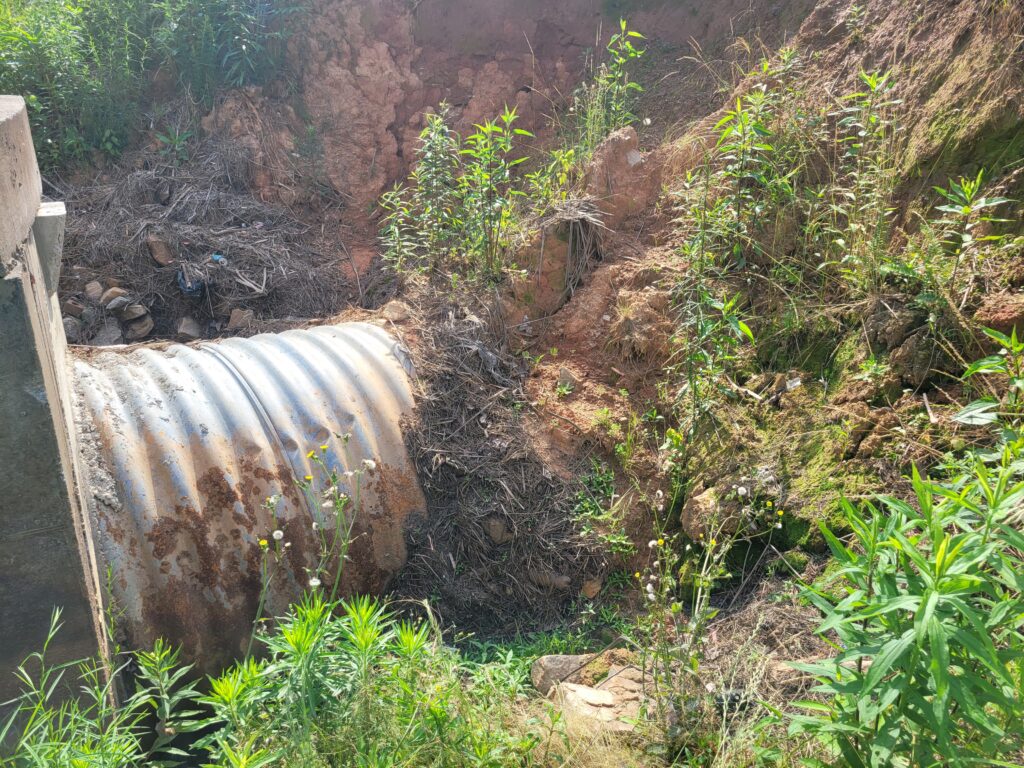
    Selecting the cheapest materials can turn into a long-term expense. Corrugated metal pipe corrodes in wet conditions leading to the need to be replaced or lined. Not only does the pipe need to be addressed, but typically the soils surrounding the pipe have eroded, causing voids and potential soil failures that affect other nearby structures, such as roads and fences (Figure 2).
  • Clogging and Cleaning
    When choosing a dewatering structure consider the cleanout methods necessary to maintain the structure. A single-wall corrugated plastic pipe under gravel used as an underdrain in a detention structure for dewatering can easily become clogged, crushed or damaged. Because they are embedded in the bottom of the basin, they are difficult to access and expensive and time consuming to replace or clean. Consider adding cleanout ports or finding an alternative dewatering method to avoid costly repairs.
  • Aesthetics
    Maintenance of items that are both functional and beautiful are often prioritized. Vegetative filters near the front entrance tend to get watered, mowed and maintained, while the outfall at the back end of the pond is overgrown and forgotten. Creative designs that enhance the aesthetics of all BMPs make access to all stormwater features practical and beautiful to encourage ongoing management.
  • Maintenance Frequency
    Selecting BMPs that can be easily and infrequently maintained will lead to better overall management. A good rule of thumb is to seek BMPs that require no more than quarterly to semi-annually (once every six months) can become too expensive to maintain and too easy to strike from a budget. Maintenance measures should be less expensive than a replacement during an enforcement action resulting from a failed post-construction BMP.
Figure 2. The bottom of a CMP barrel of a riser structure designed for post-construction use rusted, causing voids that allowed soils to enter the system and erode along the pipe.


Design criteria, performance and long-term operation and maintenance considerations go hand in hand in making the successful transition from construction stormwater management to post-construction management. A stormwater professional’s knowledge and understanding of how to protect and maintain the hard-won construction project to achieve post-construction stormwater objectives is critical to the success of the site.  


About the Experts

  • Julie Morelli, PG, REM, CPESC, CESSWI, ENV SP, environmental compliance and regulatory manager at H-E-B, has been a stormwater professional for 25 years in the consulting industry. She has worked with stormwater and water quality issues in construction, industrial and municipal settings.
  • Susan Yates, CPESC, CESSWI, environmental compliance manager, Real Estate Department, Southeastern Freight Lines. She has been a stormwater professional for 25 years and has worked in regulatory, consulting and the private sector as an environmental and stormwater manager.

Harnessing AI-Powered Tools for Compliance

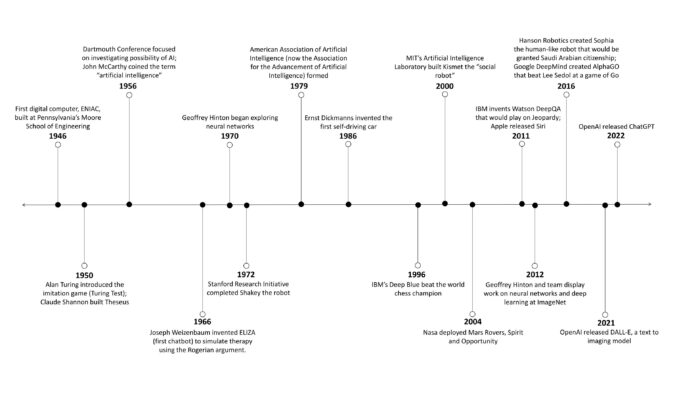
Figure 1. A timeline of the progression of artificial intelligence.

With the rapid proliferation and growth in the capability of artificial intelligence (AI)-based applications, many industries have begun to explore their use to streamline processes, increase production and simply ease the workload burden. It’s no surprise that the use of AI applications for environmental compliance tasks and documentation is also being explored. While the myriad of possibilities and benefits intrigues many of us, the use of AI for regulatory compliance work has the potential to expose the user to unforeseen risks.
The rapid pace of AI development is not just a trend, but a transformative force that is reshaping industries, enhancing capabilities, and redefining the way we work. With advancements in AI, our industry is witnessing an era where developments occur in months rather than years.1 This is a momentous shift, akin to the early 1990s when the internet revolutionized the world.
To fully appreciate the potential of incorporating AI into the development and implementation of stormwater and other environmental compliance documents, we first need to grasp the fundamentals of AI and its historical advancements. AI is a technology that encompasses the development of software and hardware designed to simulate human functions such as completing tasks, learning and comprehension, problem-solving, decision-making and more.


The Evolution of AI
The early history of AI began in 1946 with the introduction of the first digital computer, ENIAC. Shortly after, Alan Turing, who is often considered as the father of modern computer science, appeared well beyond his time when he began exploring the future possibilities of computer science with his creation of the imitation test, or what is known today as the Turing Test. The Turing Test was a pivotal concept in AI because the purpose of the test is to identify whether a machine, or AI, is capable of exhibiting human-like intelligence. Progress in the field continued into the early 1970s, marked by new innovations and the Dartmouth AI Conference, which helped establish what is now the Association for the Advancement of Artificial Intelligence. However, between 1974 and 1980, a period known as the “AI Winter” occurred. During this time advancements stalled due to the limitations of existing technology. Claims that the AI industry was overpromising and underdelivering and not living up to the hype led to a decreased interest in the subject and lack of funding necessary to continue the advancements in computer technology needed to further progress AI research and developments.


Since the 1980s, the landscape of AI has not only thawed but accelerated rapidly, driven largely by significant increases in computational power, leading us into the current AI revolution2 (Figure 1).


One of the most impactful forces behind the AI revolution is the ability to continuously miniaturize computer chips while simultaneously packing more power and efficiency into each tiny chip. This progress has dramatically increased computational power while simultaneously reducing the size of devices.


As a result, the available format of computers has transitioned from room-sized computers to the small device currently residing in your pocket, all while lowering costs of such devices. These hardware advancements, combined with cutting-edge software developments and machine learning algorithms, have made the creation of today’s AI systems possible. Take the convergence of powerful, affordable computer technology, add the currently available more sophisticated algorithms, and, in the fashion of Diablo II, put those in your Horadric Cube and transmute them. Or for those readers not familiar with retro video game terminology: When combined it is greater than the sum of its parts. The resulting product is today’s transformative AI applications.


Today, AI exists in three main forms: narrow AI, general AI and super AI. Narrow AI performs specific tasks like virtual assistants, spell checkers and recommendation algorithms. General AI, which aims to replicate human cognitive abilities, and super AI, which would exceed human intelligence, are both theoretical. Each type has distinct implications for integration into stormwater and environmental compliance documentation.

Figure 2. Use of deep learning for image identification in imagery captured by UAVs can enhance site analysis.


AI for Documentation Today
While general AI and super AI remain theoretical concepts, how can narrow AI be practically applied to our industry and job functions today? Generally, AI has already been quietly integrated into daily tasks. Many people use search engines to research stormwater and environmental compliance regulations in unfamiliar jurisdictions or states. These search engines are leveraging AI to deliver relevant results by processing billions of searches per day and learning from those previous searches. AI also powers the review functions in word processing programs that check for grammar, clarity and vocabulary and suggest improvements through synonyms and concise language choices. These functions already help professionals in the industry prepare stormwater pollution prevention plans, environmental management plans and other compliance reports.


But what about more complex applications of narrow AI? AI-powered tools that incorporate machine learning and generative AI present advantages in simplifying and expediting the development and review of environmental compliance documents. By leveraging sophisticated algorithms, these tools can analyze large volumes of data, including site characteristics, regulatory requirements and historical compliance records. This analysis enables the automated generation of a comprehensive and customized list that accounts for applicable regulations and codes.


Recent advancements in vegetation management feature the use of deep learning for image identification, which is a type of machine learning, in imagery captured from unmanned aerial vehicles (Figure 2). This technology enhances our ability to assess environmental characteristics during site analysis,3 enables monitoring of sensitive resources4 and supports informed decision-making for final stabilization determination. AI image recognition tools must be trained not only to recognize vegetation but also to recognize best management practices such as mulch, silt fence and aggregates. This enables users to capture accurate stormwater inspection data, identify corrective actions and produce redline drawings much more quickly and safely than traditional methods with minimal post-processing of data.5


Three-dimensional civil design programs integrated with AI are helping engineers optimize grading designs and determine stormwater management designs with more precision. Weather prediction modeling that goes beyond “next week’s forecast” by using AI to facilitate faster data processing increases the feasibility of risk analysis based on the siting and timing of a project as well as the probability of extreme weather events such as droughts and hurricanes. This in turn can also allow projects to better plan erosion control designs and dedicate resources in preparation for such events, which reduces the risk of environmental noncompliance.


Custom generative AI models allow users to build, fine-tune or deploy their own models for specific use cases. A user can use existing pre-trained models such as large language models or image generation models and customize them for a task by training them on a specific data set. When it comes to developing environmental compliance documents, customized generative AI platforms enable the user to make quick determinations of applicable compliance regulations and rules. While accounts of private companies within the environmental compliance and construction industry indicate that developments of environmental compliance — focused AI applications are on the horizon, these currently remain experimental and proprietary.


By training a model on a specific data set, not only can users drastically decrease the amount of time spent researching, but can also reduce erroneous errors that may be present when using a broad-spectrum generative AI platform that pulls from non-specified data sets. Imagine the benefits of having an AI model that is trained in all the current state-specific construction general permits. With the right prompts, which is any form of text, question, information or coding that communicates to AI what response the user is looking for, producing stormwater design and compliance documents — saving time and ensuring accuracy. 


Editor’s Note: This is the first of a two-part series. The second part of this series will appear in a future issue and will dive deeper into ongoing developments, future applications, challenges and risks of AI.


References:

  1. Roser M. (2024) The brief history of artificial intelligence: The world has changed fast — what might be next?, Our World in Data. Available at: https://ourworldindata.org/brief-history-of-ai (Accessed: 2024).
  2. The history of AI: A Timeline of Artificial Intelligence (2024) Coursera. Available at: https://www.coursera.org/articles/history-of-ai (Accessed: 2024).
  3. James K, Bradshaw K. (2020) Detecting plant species in the field with deep learning and drone technology, Brittish Ecological Society. Available at: https://besjournals.onlinelibrary.wiley.com/doi/10.1111/2041-210X.13473 (Accessed: 2024).
  4. Buchelt A, Adrowitzer A, Kieseberg P, Gollob C, Nothdurft A, Eresheim S, Tschiatschek S, Stampfer K, Holzinger A. (2023) Exploring artificial intelligence for applications of drones in forest ecology and management, Forest Ecology and Management, Science Direct. Available at: https://www.sciencedirect.com/science/article/pii/S0378112723007648?via%3Dihub (Accessed: 2024).
  5. Kazaz B, Poddar S, Arabi S, Perez MA, Sharma A, Whitman JB. (2021) Deep Learning-Based Object Detection for Unmanned Aerial Systems (UASs)-Based Inspections of Construction Stormwater Practices. Available at: https://doi.org/10.3390/s21082834 (Accessed: 2024).

About the Experts

  • John England is a lead environmental scientist for Black & Veatch’s Construction Stormwater and Environmental Compliance practice. He provides environmental support and input during proposal and project development, including implementing and managing overall environmental compliance efforts during construction.
  • Kayla Cottingham leads the Construction Stormwater and Environmental Compliance practice at Black & Veatch. She leads the team’s environmental support and input during proposal and project development, including implementing and managing overall environmental compliance efforts during construction.

P-ACB Pavement for Better Performance and Less Maintenance

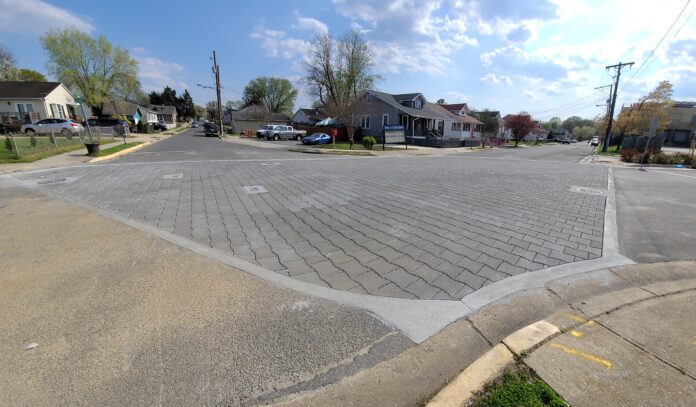
Figure 1. Colman Manor, Maryland, USA intersection with P-ACB.

Communities across the nation are faced with growing pressures to better address the persistent challenge of urban stormwater. Permeable pavement was developed to overcome this fundamental challenge by mimicking natural infiltration processes. However, rapid clogging of first-generation permeable pavements limited performance by preventing water from reaching the stone bases. In response to the clogging challenge, regulatory agencies have limited applications, imposed engineering redundancies and restricted crediting for permeable pavement.


Permeable articulating concrete block (P-ACB) pavements are next-generation permeable surfaces, developed by adapting an erosion control system into the pavement. P-ACB systems differ from traditional permeable pavers because they have open joints and use their large, interlocking pattern to handle heavy traffic loads. The open joints of this system allow it to handle more rainwater and make it easier to maintain because the cleaning process is required less frequently and is easier to perform. The suitability to handle heavy traffic loads enables P-ACBs to be used in all applications like roadways, traffic aisles and truck stops.
Case Studies

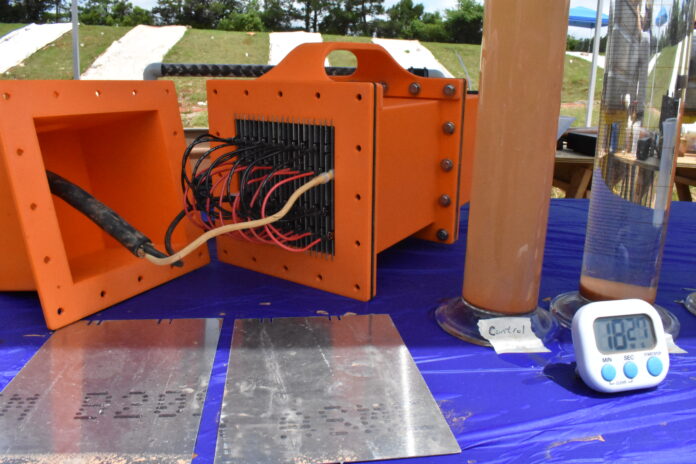
Figure 2. Second generation floc generator in-line mixer embedded in a 12-inch PVC pipe. Electric current passes across metal plates as water flows through causing pollutants to drop out of suspension.


The use of P-ACBs in two locations has proven to effectively handle stormwater and reduce the maintenance needs of the pavement.
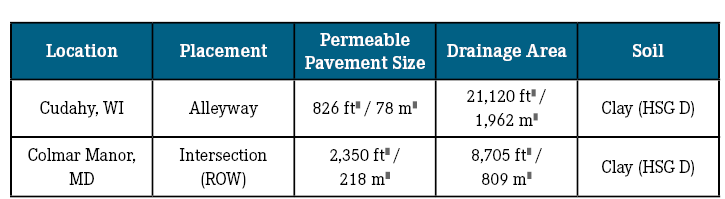
Colmar Manor, Maryland, USA is located in a low-lying area with a high degree of impervious cover, poor drainage and pluvial flooding. The Maryland Department of Transportation approved using the PaveDrain P-ACB system in the public right-of-way for an asphalt traffic intersection that faced frequent stormwater challenges (Figure 1).


The State of Maryland’s guidance manual does not permit run-on or the use of permeable pavement on D (clay) soil. Because the town was familiar with the P-ACB product, the municipality accepted responsibility for the performance and maintenance of the site to allow for its construction. The as-designed drainage area was expected to be 8,705 feet2 (809 m2) but was found to be 10% larger: 9,400 feet2 (873 m2). Third-party soil testing was conducted during construction showing the presence of A (high infiltrating soil), B and D soils.
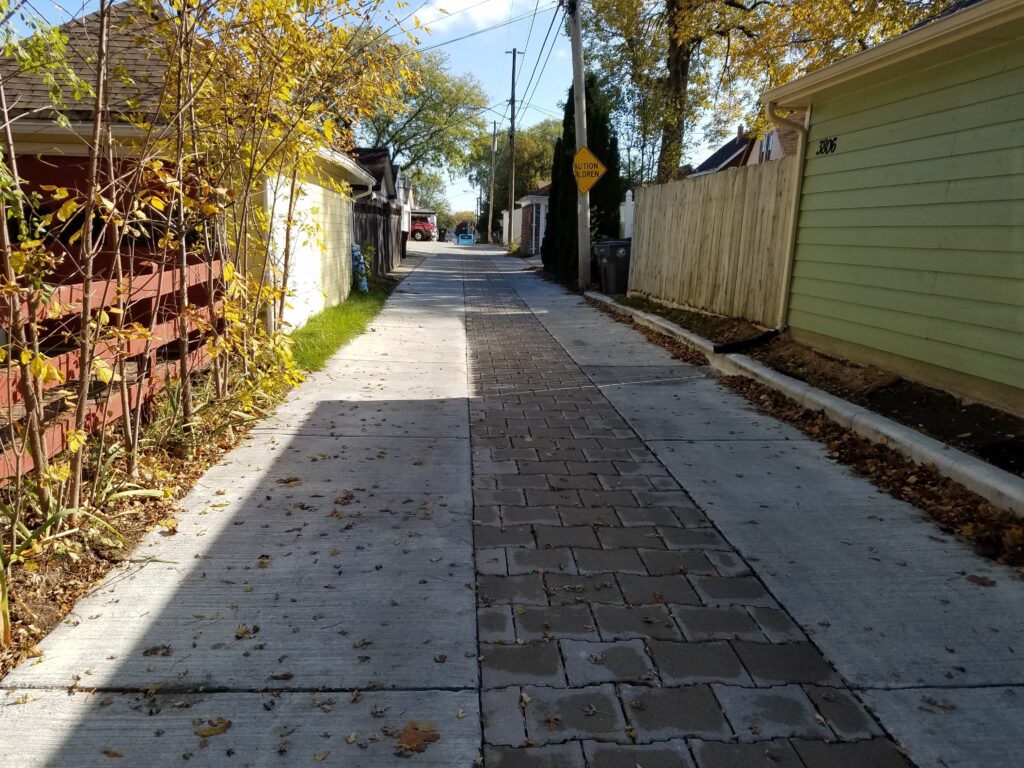
In Cudahy, Wisconsin, USA, the PaveDrain P-ACB product is installed in a shared alleyway. The system is sized to fit inside the wheel path of traditional garbage collection vehicles to minimize truck traffic loading (Figure 3). The city requested this design although it is not necessary for systems rated to HS-25.

Wisconsin Department of Natural Resources (WDNR) limits run-on to 5:1 (permeable pavements may not drain more than five times their surface area). The actual run-on area was approximately 25 times the permeable surface constructed in the alley. The extreme run-on area was a perfect opportunity to use a P-ACB system given its very high surface infiltration rates. At this site, clay (D) soil was found during preliminary site investigations and the system design assumed very poor exfiltration characteristics. This resulted in the system using a relatively deep, 3-feet (91-cm) storage gallery and a 6-inch (15-cm) diameter underdrain kept just off the bottom of the gallery, open and draining to the downstream inlet structure.

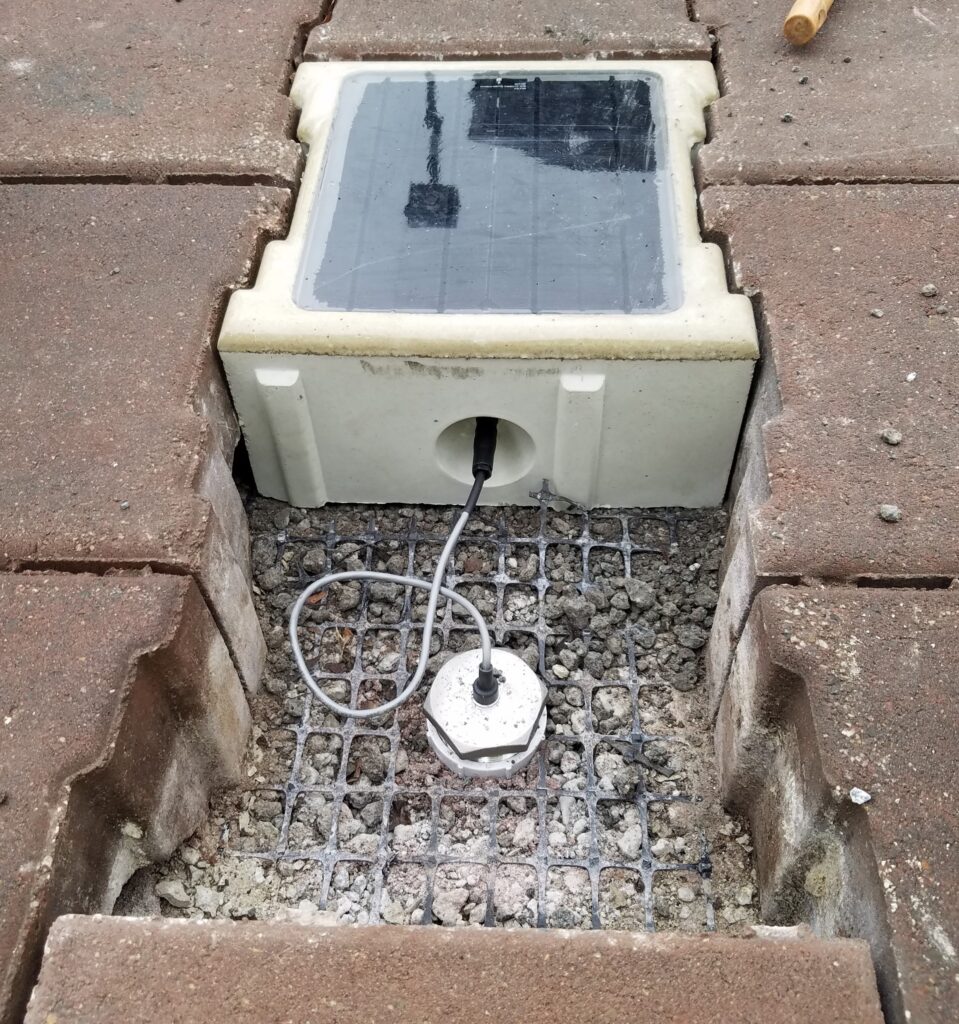
Both locations use in-situ real-time sensors (Figure 4). The sensors were installed in the aggregate storage galleries to measure water levels. At each location, the water level sensor is accompanied by a nearby weather station (Figure 5) monitoring rainfall, temperature, barometric pressure and relative humidity. During a storm, water enters the base quickly and exfiltrates from the stone base into the subgrade over time. Sensors document the movement of water to verify the system’s performance. All underdrains were converted hydraulically to overdrains by adding vertical standpipes at discharge locations thereby raising discharge elevations. No overflow events were observed during the measurement periods.

Figure 3. Description of PaveDrain P-ACB sites.

Observed Performance

At both sites, the systems captured all run-on and infiltrated almost all of the rainfall events within 48 hours. Fully capturing and infiltrating rainfall removes all nitrogen, phosphorous and total suspended solids that are mobilized over the drainage area.

Data from the Cudahy site was analyzed by P4 Infrastructure staff and presented to WDNR who accepted their findings.1,2 The Colmar Manor site was studied by the University of Maryland as an independent third party.3

The median exfiltration rates over 48 hours exceeded expected rates by 5x–10x (Figure 6). The peak exfiltration rates with high hydrostatic head pressure exceeded 5 inches per hour, which exceeded expectations. The average exfiltration rate over the first 48 hours is 0.99 inches (2.51 cm) per hour. For most jurisdictions, stormwater designs would expect clay soil to infiltrate at 0.18 inches (0.46 cm) per hour or less, nearly a full order of magnitude less than the rates measured in the field.


The discrepancy between observed and expected values is attributable to the heterogeneous nature of the soil and hydrostatic head. While clay soil is present, so are more permeable soils that form three-dimensional networks and paths for water to exit the stone base, which leads to elevated performance. Academically-determined data with a homogenous soil does not reflect real conditions over large surface areas. The peak infiltration rates are provided to help elucidate the effect of hydrostatic head.


In the three years since it was installed in Colmar Manor, the system has been functioning as a roadway and stormwater BMP without maintenance, which represents a commitment to environmental justice in this economically disadvantaged neighborhood.


Crediting and Use of Verified Data

Figure 4. P4 INFIL-Tracker in-situ, real-time sensor installed in P-ACB surface.


Because of the additional credit provided by these single BMPs and verified by the sensors, both jurisdictions sought and were provided real credit for their site above their relevant design manual. The Wisconsin site showed that BMP area footprints can be reduced by up to 88% when using P-ACB systems with instrumentation.

Prince George’s County took credit for the sensor-verified environmental site design value of 1504 feet3 (42.6 m3) versus the guidance manual value of 376 ft3 (10.6 m3).
Conclusion

Figure 6. Expected, median and peak exfiltration rates for each P-ACB site.

Designing BMPs that have substantially delayed clogging cycles allows the infiltration process to proceed. In some cases, design manuals have applied overly conservative engineering design factors to permeable pavements that have failed to account for the development of innovative systems. Sensor systems have shown a clear difference between desktop-modeled design and field-measured performance in the next generation of permeable pavement, and they should be incorporated until regulations are able to reflect real performance.  

References

  1. Weik T. 2021. Green Infrastructure Planning and Implementation Recommendations within the Total Daily Maximum Load Watershed. CBC Engineers.
  2. Diekfuss J, Foley C. 2022. Permeable Pavement Systems Clean Water Faster and for Less Money. P4 Infrastructure.
  3. Butters S, Davis AP. 2023. Evaluating Performance of PaveDrain Permeable Pavements in Colmar Manor, MD. University of Maryland.

About the Experts

  • Aaron Fisher, Ph.D., PMP, receive his doctorate in chemical engineering from the University of Maryland and a bachelor’s degree in chemistry from Duke University. He is the vice president of business development at Ernest Maier.
  • Joseph Diekfuss, Ph.D., PE, is a civil engineer with 15 years of experience. He is co-founder and vice president of P4 Infrastructure. He is a licensed Professional Engineer in Wisconsin, USA, a National Highway Institute Certified Bridge Inspector and first-named inventor on three United States patents in the area of civil engineering.

Innovation Recharges Stormwater Treatment through Electrical Flocculation Research

Figure 1. First generation full-scale self-contained portable floc generator used for full-scale testing.

Stormwater runoff is a leading source of water quality impairment in the United States. The most common pollutants carried by stormwater include sediment, pathogens, nutrients and metals. These pollutants are often found in runoff from construction sites and urban and agricultural lands. The goals of the Clean Water Act, established 52 years ago, remain unmet as current best management practices struggle to keep pace.


Phase I
In July 2023, Fagan Consulting LLC and Auburn University received a Phase I contract with the U.S. Department of Transportation (DOT) through the DOT’s Small Business Innovation Research (SBIR) program to develop a self-contained portable stormwater treatment device. Over the following six months, the Fagan-Auburn team worked to demonstrate the innovation’s technical merit, feasibility and commercial potential. The project later received a non-dilutive supplemental grant from Innovate Alabama that deemed the team’s proposed approach “viable, valuable and scalable.” Innovate Alabama, a public-private partnership, promotes entrepreneurship, technology and innovation across the state.


By early 2024, the team had developed and tested a working lab-scale prototype, secured provisional patent protection and developed an initial commercialization and marketing plan. Supplemental funding from Innovate Alabama enabled the team to develop a full-scale working prototype and continue research and development beyond the goals of the SBIR contract.


The innovative device uses electrical flocculation, or electroflocculation, to bind up pollutant particles suspended in stormwater runoff. This method is based on the established application of electrocoagulation techniques used in water and wastewater treatment. Electrical flocculation works by passing electric current across metal plates as water flows between. The current causes positively and negatively charged ions to be released into the polluted water. The ions bind with pollutant particles with opposite charges to form larger particles. Accelerated settling and removal of these electrically neutral bound particles, or flocs, takes place as their size and density increases. This process is similar to chemical flocculation but eliminates the need for chemical polymers or other reagents.


The treatment device, called an electric floc generator, operates using a 12-volt solar-powered renewable energy source. It functions as self-contained and portable or as installed at a fixed location with an external power source. While direct current is the primary operating current type, alternating current can be accommodated using a power converter.


In terms of size and portability, the original full-scale prototype has a rectangular shape with a replaceable electrode cartridge in the center of the device. The housing for the initial floc generator (Figure 1) prototype was 3D-printed and is approximately 8 inches x 8 inches x 19 inches (20.3 cm x 20.3 cm x 48.3 cm). It weighs less than 15 pounds (6.8 kg). This model was designed to be connected to a sediment basin surface outlet structure with in-line mixing and floc settling downgradient. The device is easily transported using the built in handle.
The team has initially focused on addressing TSS and turbidity with the floc generator. Construction stormwater runoff was the first target due to sediment being one of the more difficult stormwater pollutants to treat, and because of the Fagan-Auburn team’s extensive past work and expertise in managing construction stormwater. Initial testing showed that the turbidity of “treated” construction stormwater (after pretreatment using a sediment basin and surface outlet structure) was reduced by over 70%.


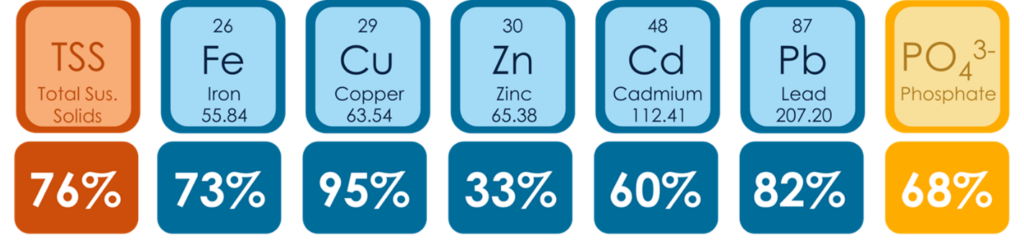
The floc generator can be easily adjusted to remove a range of pollutants from stormwater runoff in both construction and post-construction environments. It can also be scaled to treat larger flows or pollutant loads. Preliminary large-scale testing has shown effective reductions in total suspended solids, metals and nutrients (Figure 2). Preliminary spectrophotometry tests revealed that, even under worst-case scenarios, dissolved aluminum concentrations in water treated with the floc generator were below drinking water standards. As the device reaches the final stages of prototyping, additional toxicity tests, including bioassays, will be performed to ensure all toxicity concerns are thoroughly addressed.

Figure 2. Preliminary electrical flocculation treatment results for typical pollutants found in stormwater runoff.


Phase II
The Fagan-Auburn team recently received a two-year Phase II contract from the U.S. DOT and secured another round of supplemental funding from Innovate Alabama. The objectives of Phase II include continued research and development, product demonstration and delivery to the commercial market.


Future research and development will be driven by established product specification goals. Goal areas include safety, portability, installation, operation and maintenance, modularity and expandability, ruggedness, automation and remote monitoring, pollutant types and loading, and flow rate accommodation.


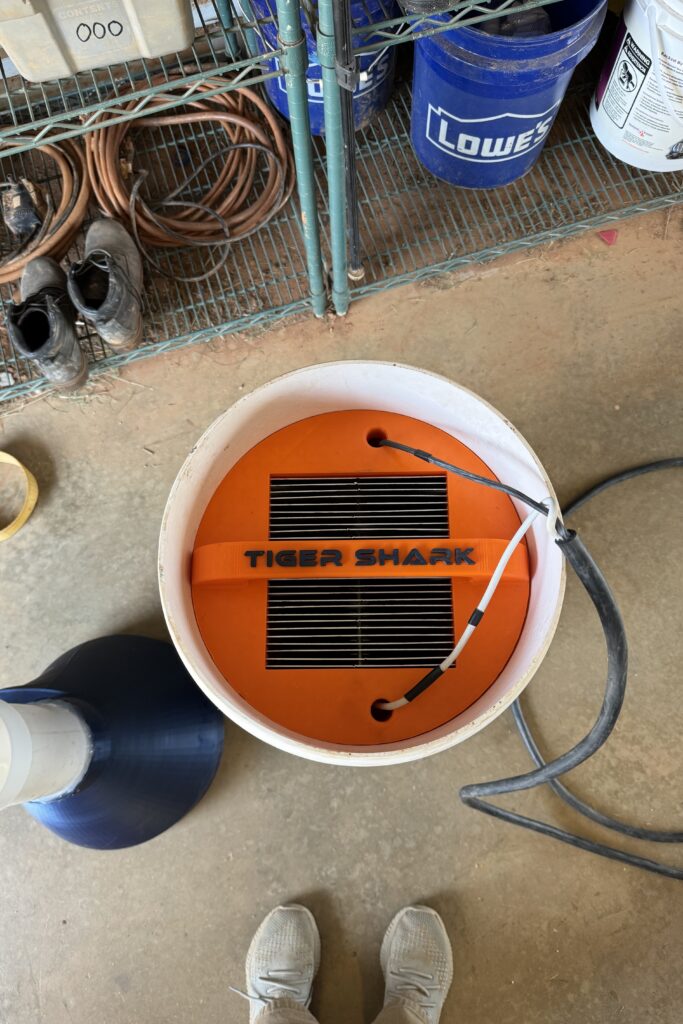
The next generation of the floc generator will have the ability to float inside a sediment basin or detention pond and pull water through itself for treatment. Mixing will take place inside the device, and settling will take place in the basin or pond. This model is nicknamed “Tiger Shark” and will optimize the space, shape and availability of a PVC pipe as the housing (Figure 3). In-line prototypes will be further optimized and evaluated for discharge occurring into a vegetated buffer or swale. Additional configurations will be developed in Phase II to adapt to various construction and post-construction applications.

Figure 3. Second generation floc generator in-line mixer embedded in a 12-inch PVC pipe. Electric current passes across metal plates as water flows through causing pollutants to drop out of suspension.


Crowdsourcing
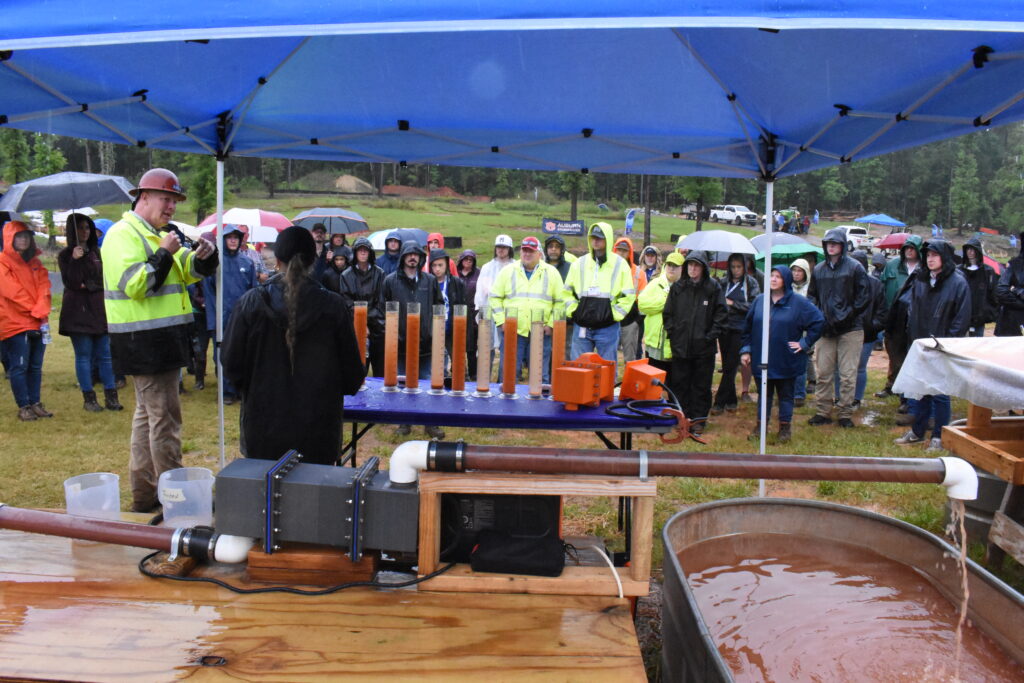
Members of the Fagan-Auburn team have developed a network of stormwater professionals and contacts as they have demonstrated the floc generator to a variety of audiences including Clear Water Alabama Conference and Installer Training and Field Day Events at Auburn University (Figure 4). The team is hoping to leverage ideas presented by the stormwater community to discover new application possibilities and for assistance with demonstration and field-testing sites. The team is also interested in learning about general concerns related to the concept of electrical flocculation in stormwater treatment and encourages people to reach out to the authors to learn more or offer suggestions. 

Figure 4. Demonstration of the floc generator to stormwater regulators, designers, inspectors and contractors from across the southeast U.S. at the Auburn University Stormwater Research Facility’s annual Installer Training and Field Day events in May 2024.


About the Experts

  • Barry Fagan, PE/PLS, ENV SP, CPESC, CPMSM, is the principal investigator for the floc generator development project and co-owner of Fagan Consulting LLC.
  • Megan Armstrong, EI, is an engineering intern with Fagan Consulting LLC and a Ph.D. student at Auburn University. Her research on the project will serve as her Ph.D. thesis.
  • Michael A. Perez, Ph.D., CPESC, is an associate professor in the Department of Civil and Environmental Engineering at Auburn University.
Demonstrating the Beauty of Wetlands and Stormwater Treatment

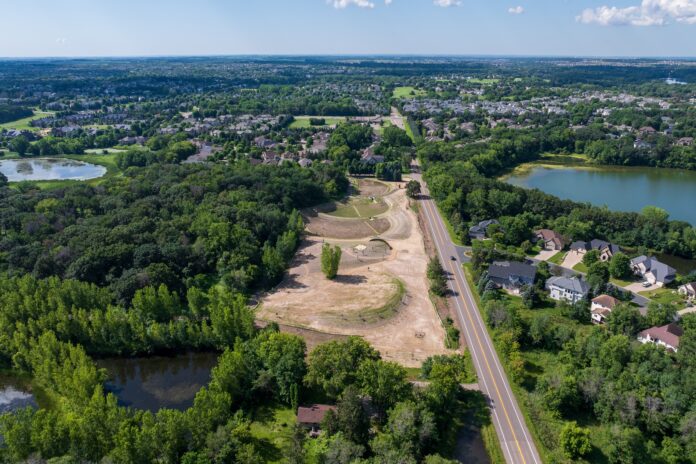
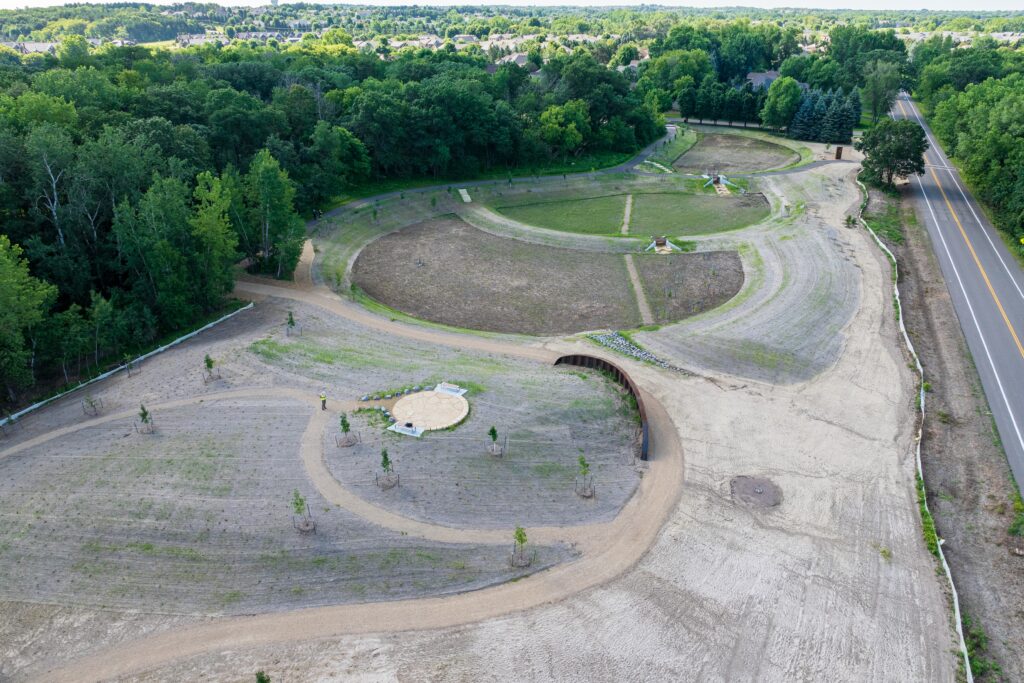
Figure 1. Overview of Hasenbank Park and lakes with Fish Lake on the left and Powers Lake on the right of the park.

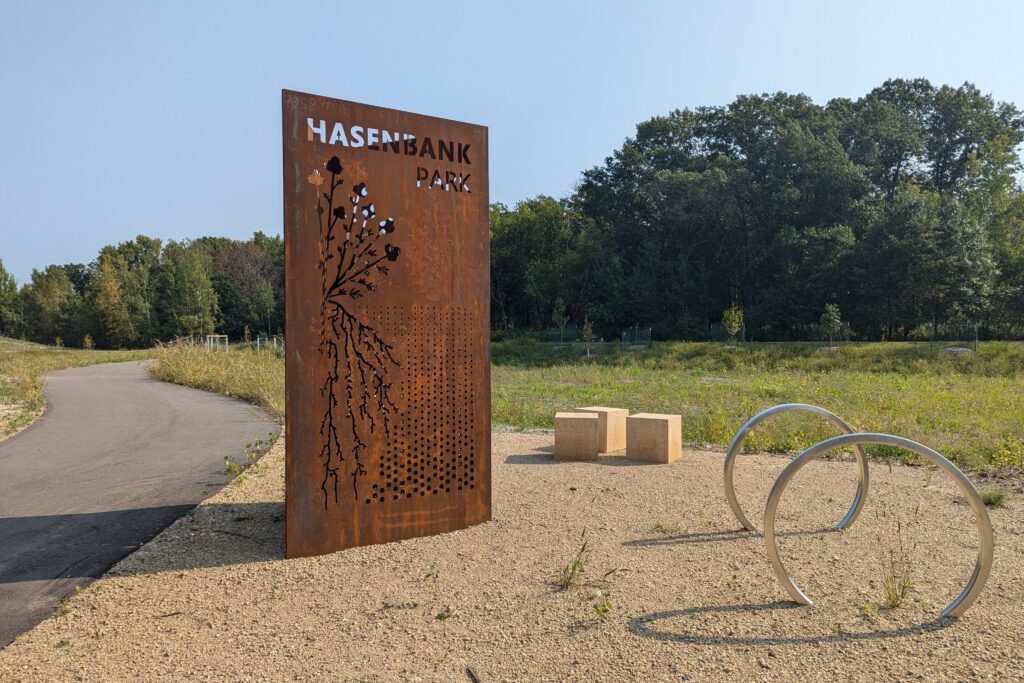
When a suburban wetland complex threatened the water quality of a nearby lake and an undeveloped area between the two bodies of water, a team of engineers, landscape architects and the watershed district worked together to create a solution. The result is a beautiful park that cleans the water using soil infiltration and native plants and educates visitors with public art that explains the importance of stormwater treatment.


Fish Lake sits 20 feet (6.1 m) higher than Powers Lake in the City of Woodbury, an eastern suburb in the Minneapolis–Saint Paul metropolitan area of Minnesota, USA. During residential development between 2000 and 2006, the two lakes were connected by a pipe buried next to a 61-acre, city-owned undeveloped park space between the lakes (Figure 1).


The Challenge
Fish Lake, a wetland complex, receives nutrient-rich runoff from nearby developments, which then flows into Powers Lake. Powers Lake has historically been quite clean and clear for an urban lake, but since its connection with Fish Lake, the addition of runoff high in phosphorus threatens water quality and increases the likelihood of nuisance algal blooms. In 2021, the South Washington Watershed District (SWWD) commissioned Barr Engineering Co. to conduct a feasibility study to determine best management practices that could preserve the high water quality in Powers Lake. Following a series of design phases, Hasenbank Park was constructed in 2023–2024, and habitat restoration will continue through 2026.


The Objectives
The feasibility study resulted in a decision to create a park centered around water quality treatment and pump runoff from Fish Lake into a series of three rain gardens before it flows into Powers Lake. The rain gardens filter pollutants from the surrounding residential developments before they reach Powers Lake.


Several factors contributed to the ultimate project design. The project team, along with the SWWD and the city, wanted to determine the most cost-effective solution. They considered what pumps and storage would be needed for various storm events and how to integrate native plants and artwork to make the park appealing to the public.


The team focused on a central theme: Make the engineered elements (pipes and structures) visible to invite public curiosity and create opportunities for stormwater education. The goals of the new park were to protect lake water quality, nurture restored native habitat and use native plantings to control erosion and reduce nutrient loads to Powers Lake. To accomplish these objectives, the space needed to be beautiful, interesting, functional and environmentally sustainable.

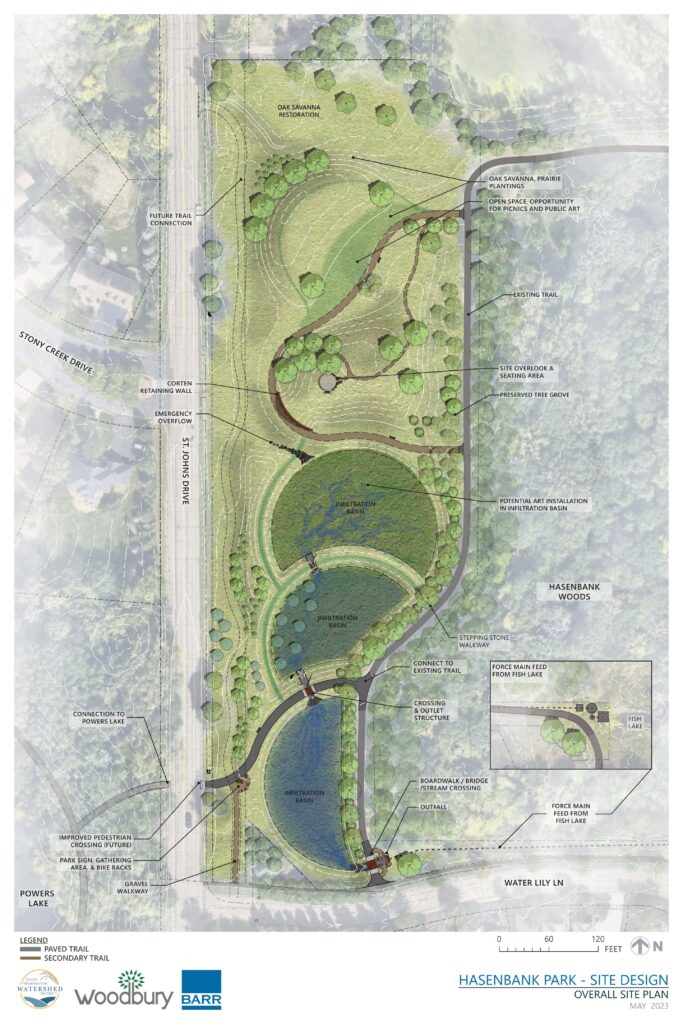
Figure 2. Hasenbank Park site design.


The Solution
The first step in design (Figure 2) was to determine the most efficient way to get water to the park. Engineers developed stormwater models to determine appropriate pipe sizes and scale of the site and selected adjustable pumps that could be optimized after construction. Two pumps capture both low and high flows from the wetland. A stone spillway provides a view of the pumped water, giving visitors the first glimpse of the water treatment process.


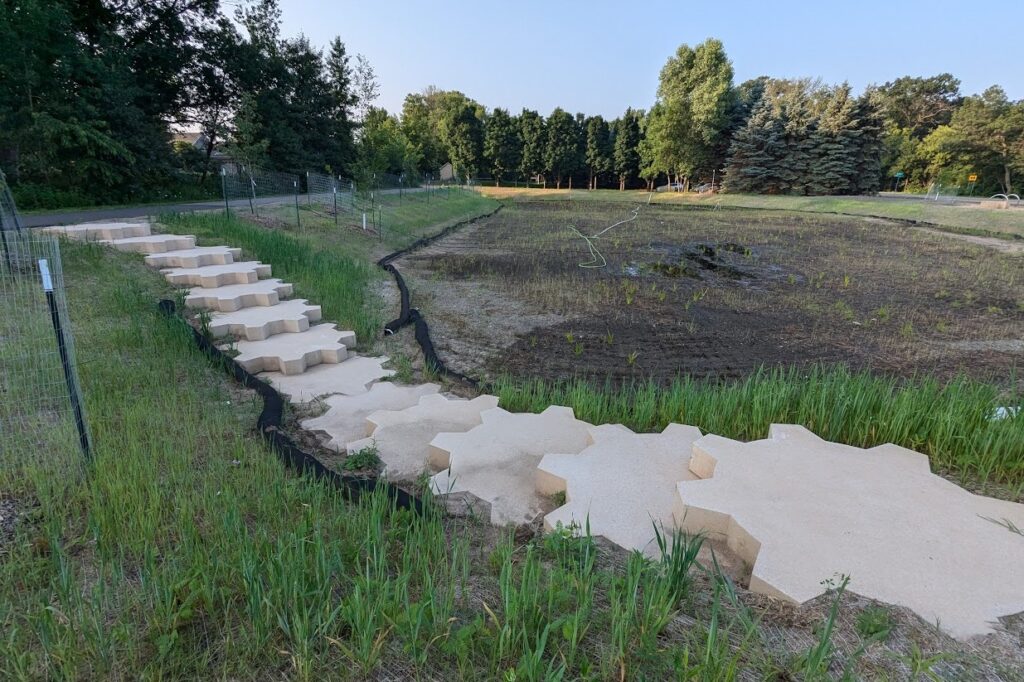
The water flows into a series of three rain gardens designed to hold nearly 550,000 gallons (2,082,000 L) of overflow from Fish Lake. The soil and native plants in the rain gardens clean the water by filtering out pollutants before it flows into Powers Lake. Weir structures separate each rain garden, filling water to a certain level and then spilling into the next basin. Once the third rain garden is full, the pump turns off automatically. Each rain garden also has its own underdrain with structures that allow the city to optimize water levels depending on soil infiltration rates.

Figure 3. Hasenbank Park with the three rain gardens at the top and the hill with a retaining wall and overlook at the bottom of the photo.


Engineers and landscape architects worked together to design the project. The landscape architecture team selected native plants for the rain gardens, suggesting those that could survive based on the amount of water each rain garden was likely to get. The landscape architects also planned the park with public use and sustainability in mind. For example, the grading was designed to create a hill within the park constructed from the soil excavated from the rain gardens rather than hauling the soil away. The hill has a retaining wall on one side with an interpretive installation demonstrating the depth of the root system of the site’s restored oak savanna. The hill also serves as an overlook for park visitors (Figure 3).


Interpretive elements extend throughout the site, from the entry sign depicting native plants (Figure 4) to multi-level spillways that add the intermittent sound of moving water — all reminders of the function of the park. The team provided space for other interpretive artwork, including a set of steps made to look like gears (Figure 5), which represent the “work” that natural systems do to clean stormwater. The steps create a trail from which visitors can observe various water levels while the system is actively working. By early 2025, two sculptures will be installed depicting the importance of trees in the water cycle and the role plants play in water quality improvement.


The park also incorporates adjacent Hasenbank Woods, which is owned by the city and protected by a conservation easement that prohibits development. Recently, the SWWD brought in teams of goats (Figure 6) to eat the buckthorn, a non-native, invasive species that was overrunning the woods. Once the ground was cleared, local volunteers helped seed native plants.


Design Challenges and Outcomes
The Hasenbank Park design team had to address several challenges during the design process, as they worked to:

  • Create accurate simulation models to inform designs.
  • Design rain gardens that can accommodate water from Fish Lake while also providing a favorable growing environment for plants.
  • Optimize the amount of water entering the rain gardens from Fish Lake during storm events.
  • Select native plants that can tolerate both wet and dry conditions in the rain gardens.
  • Design a resilient system that can adapt to climate change.

Early in the design process, the team ran numerous model scenarios to create a flexible design that achieves the goal of infiltrating the water from Fish Lake without complete knowledge of the rate at which the soils are capable of infiltrating water over time. The team designed an overflow system for the rain gardens to route excess runoff into a nearby ditch if necessary. This increased flexibility gave the city and the watershed more confidence as construction began, because they knew that they could accommodate a range of different infiltration rates.


The system was also designed with a goal of future resilience. The pumps can be operated at varying rates and can be toggled on or off if more or less water is desired in the basins. This flexibility enables the SWWD to more easily adapt to future changes in the climate.
The team approached plant selection for the site with similar care. Because the plants were key to controlling erosion, cleaning water, providing habitat and enhancing the aesthetics of the park, it was important to select plants that could tolerate both wet and dry conditions. Restoring Hasenbank Woods has resulted in an increase in biodiversity, and local wildlife have an additional 15 acres (16 ha) in which to live and find food.


The new park connects two heavily used walking trails, and the goal to foster curiosity from visitors is already being achieved. When team members come to check on the site wearing their safety vests, park users often stop them to ask questions.

The Future
Hasenbank Park was designed with maintenance in mind. Early in the design process, the team discussed with city maintenance staff what it would take to easily maintain the finished product. For example, one of the few maintenance duties will be clearing the grate on the bypass pipe to prevent the pumps from clogging. The grate was designed to make this process easy. In addition, city employees will be able to check on the pumps from their computers. The team is creating an operations and maintenance manual to guide the city in maintaining this beautiful, functional park for years to come. 

Figure 6. South Washington Watershed District regularly uses goats to clear Hasenbank Woods of buckthorn, an invasive, non-native species.


About the Experts

  • Marcy Bean, PLA, is Barr Engineering Co.’s project manager and landscape architect for Hasenbank Park. She has two decades of experience in innovative stormwater management in urban environments.
  • Heather Lau, PE, is a water resource engineer at Barr’s Minneapolis, Minnesota, USA office and was the project engineer for the Hasenbank Park project. She has 10 years of experience in stormwater modeling and water quality management.
  • John Loomis is the district administrator for the South Washington Watershed District in Woodbury, Minnesota, USA. He is an aquatic ecologist with over 20 years of experience.

MOST POPULAR