It is no secret that our population is increasingly located in urban areas in and around cities, which in turn were often established adjacent to streams and rivers as a source of fresh water. This has not been a good thing for the fresh water source in most cases. Wastewater, polluted runoff, and industrial discharges, coupled with water withdrawals, combined to greatly degrade the surface waters passing through the cities. This can be particularly acute in semi-arid areas with seasonal low flows.
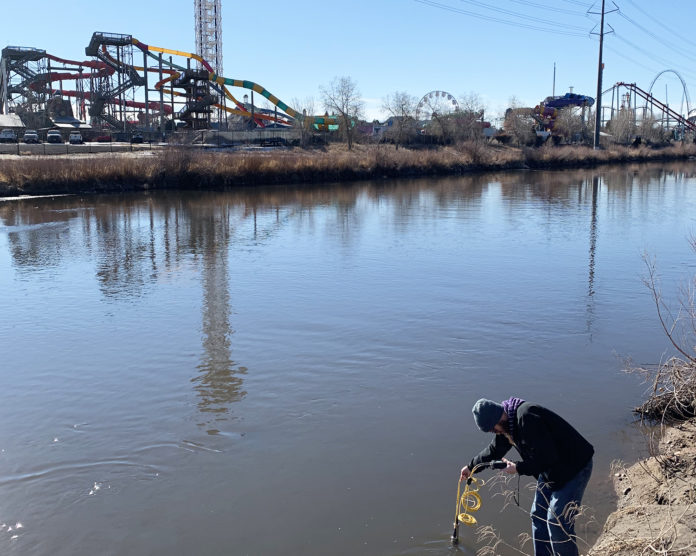
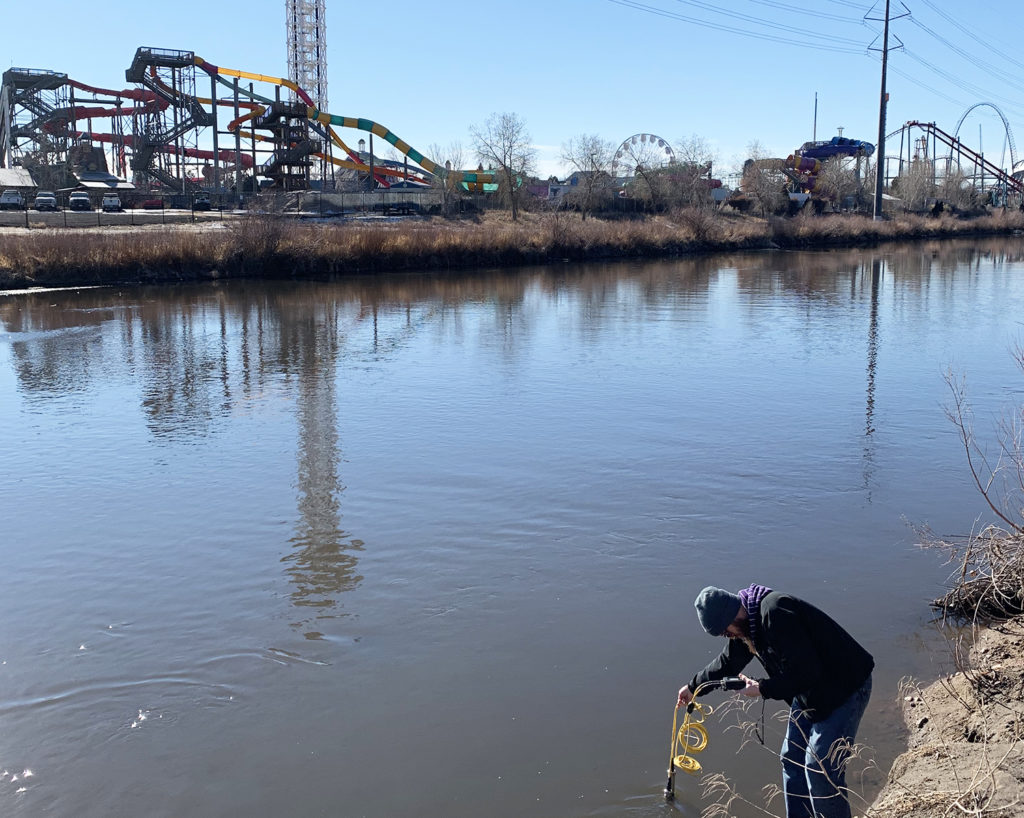
The sources of pollution in an urban river were studied for three years in Denver, Colorado, USA.1 The South Platte River passes through the city and flows are lowest during the fall and winter months, when up to 90% of the flow is made up of discharges from several wastewater treatment plants. Sampling points were established upstream of a reservoir where the river emerges from the mountains, considered the non-urban control point, and at 13 additional locations in the city up to 63 km downstream. In addition, all outfalls to the river were identified, including streams, storm drains and other discharges. Samples were analyzed for nutrients, biological oxygen demand, dissolved oxygen, coliform bacteria, pH, and temperature.
There are two wastewater treatment plants discharging to the South Platte via tributaries, and it was assumed they would be the major source of pollutants during the dry periods. While they were contributors, there were other “hot spots” detected. One was an area of concentrated storm drains, roughly 11 per km, and the other was an area with concentrated industries. Peaks of 25.8 mg L-1 nitrate-N and 14.3 mg L-1 orthophosphate-P were found in the winter. Overall, a significant amount of pollution was coming from non-point sources rather than being mostly from the water treatment plants. Water quality declined with flow in the fall and winter and did not meet any of the state guidelines for total N or orthophosphate in 76% and 85% of the samples, respectively.
One solution to non-point pollution is to reduce the amount of water running off urban land. A system to achieve this goal was tested in a city in southeast Spain.2 Most of the ceramic tile produced in Spain is produced in Benicàssim, so permeable pavers were constructed from tile by turning seven tile strips on their sides and bonding them together into “bricks” with spaces between the tiles. These were installed on drainage aggregate to create 200 m of sidewalks and a bike path which varied in width from 10 to 21 m. For a year after their installation, flow measurements and runoff samples were obtained before and after the permeable pavement section as well as before and after a section containing a 10m3 buried storage tank. During the monitoring period, there were 35 rainfall events ranging from 1.2–48.8 mm, with a total of 367 mm, which is about 80 mm below average. The system completely absorbed all but six events, with only 14% of the total rainfall volume being discharged, mostly during the most intense rainfall events.
Water quality was measured for three events with discharges and biological oxygen demand, coliform bacteria, and nutrients were all reduced. Heavy metal concentrations were below detection levels.
Water quality measurements being taken in the South Platte River in Denver. Photo credit S. A. Schliemann.
An innocuous looking structure to most people, low-head dams have claimed the lives of more than 1,400 recreationists, rescue personnel, dam owners and maintenance personnel.1 More commonly known as weirs or diversion ditches, low-head dams are defined by the Federal Register as underwater structures typically 5- to 15-feet high that are designed and built to span a waterway such that water continuously flows over the crest from bank to bank.
Although originally used for milling and hydropower, today they are used for irrigation, municipal water supply, channel grade control, stormwater management and aesthetics. These “attractive nuisances” appeal to water recreationists engaged in activities such as rafting, tubing or fishing along rivers and urban drainage corridors.
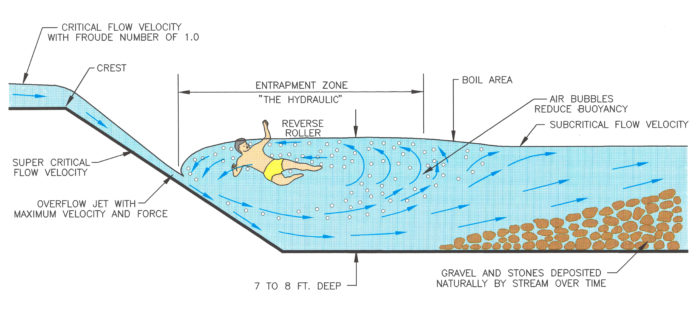
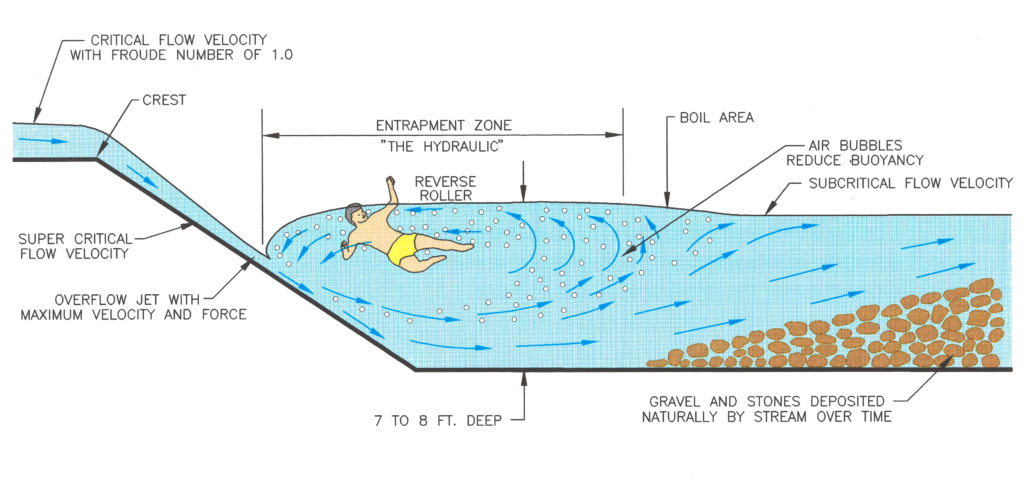
At certain flow levels, many low-head dams develop a dangerous hydraulic “boil” at the toe that can trap people and watercraft. Watercraft often capsize in the churning water, and a person can be circulated through the water so quickly and in such a confusion of bubbles that they do not know which way is up. These dangers are hard to anticipate because the boils are not present under all flow conditions and often the pooled water above the dams appears placid. People going down the river in a watercraft do not see the churning water at the toe of the dam until they are in it. Without immediate and experienced help, even strong swimmers can become exhausted and drown.
The fastest path to low-head dam hazard mitigation is through public safety awareness. Many states have initiated efforts to identify the locations of low-head dams and educate the public through the placement of warning signs and buoys, as well as conducting publicity campaigns to educate the public about these hidden dangers.
There are non-governmental organizations working to remove or retrofit existing low-head dams through engineered structures to eliminate the dangerous reverse roller effect of the recirculating water by dissipating energy as the water spills over the dam. In Colorado, Urban Drainage Engineer Kenneth Wright, P.E., is conducting safety lectures to water rescue and fire department personnel as an outreach of the Association of State Dam Safety Officials. Recently, a collaborative effort between Wright Water Engineers; Ruth Wright, a water resources attorney and former Colorado state legislator; and professors Robert Houghtalen and Rollin Hotchkiss distributed an educational package to engineering faculties throughout the country to be used as lecture material with the goal of raising awareness among future engineers.
One of the greatest challenges that remains is locating and verifying the tens of thousands of low-head dams throughout the U.S. Recently, a group of professionals representing the civil engineering profession from academia, government and consulting formed the National Low Head Dam Inventory Task Force. The group is developing a web-based app and a Survey123 app to collect field data on these dams which will populate a database to serve as a living tool for government entities, non-governmental organizations, engineers and the public.
All of these efforts require support. For more information, or to get involved, please contact Beth Knudsen, Low-head Dam Liaison, at bknudsen@wrightwater.com.
Reverse roller illustration. Provided by Kenneth Wright of Wright Water Engineers, Inc.
About the Expert Kenneth R. Wright, P.E., is founder and principal engineer of Wright Water Engineers, Inc., a civil engineering consulting firm in Denver. He has served as a dam safety expert in lawsuits on drownings at low-head dams in Colorado, Oregon, New Jersey and West Virginia. He currently serves on the Public Safety at Dams committee for the Association of State Dam Safety Officials (ASDSO) and received the Bruce Tschantz Public Safety at Dams award from ASDSO in 2019.
Reference 1) Israel, Benjamin. 2020. Personal Communication re: Association of State Dam Safety Officials Fatalities Database. July 22.
We are excited to introduce IECA Connect, our new online community networking tool for members to collaborate, ask questions, share ideas, seek recommendations and more!
IECA Connect allows you to tap into the expansive knowledge and experience of our member community, and the more we all join in the discussions, the more we all benefit. With the reunification with Region Two, there has never been a better time to connect with peers from around the world any time, from any location. The opportunities to connect, communicate and collaborate with IECA Connect are endless.
Do you have a question or problem with a project that a fellow member can help out with? Start a discussion on IECA Connect. Is the BMP you’re using for your project the right one? Ask for recommendations on IECA Connect. Do you want to connect with a member directly, but don’t have their contact information? Look the person up in the IECA Connect Member Directory and connect!
Please review your profile to update your contact information, update your community preferences and set preferences for communication.
Attend the IECA Great Lakes Virtual Connection: Coastal Erosion Management webinar series to explore the factors contributing to elevated water levels, the challenges they create, and mitigation techniques used to build resilience and address the issues. This series will examine areas impacted by coastal erosion; from the water line to the bluffs above and finally long-term revegetation and maintenance. The first two webinars are available on demand.
The Water Management and Soil Protection in Mining webinar series will explore environmental challenges of mining. This three-part series will examine how we can invest in environmental management in mining. The series will close with a panel discussion between industry leaders with the first two sessions available on-demand.
The Practical Side of Implementing Stormwater Management sessions will focus on the role of the contractor in the implementation of stormwater management. The series will examine the why in stormwater management, what to look for in the field to stay in compliance while protecting soil and water resources, alternatives to the basics and achieving stabilization early on a project site.
The panel will demonstrate how to incorporate the different perspectives into an agency friendly, stormwater management program that is easy to implement and maintain; ensuring the stormwater management program runs smoothly throughout the life of a project.
In case you missed the IECA Virtual Annual Conference, you can register and access sessions that are available on demand until May 1. Education features content presented by knowledgeable experts that provides real world solutions to industry problems including plenary sessions, roundtables, fireside chats, technical papers, poster sessions and short courses.
Call for Abstracts Open for the Following Events
MAC-IECA Regional Conference 2021, Sept 14-16 Dulles, Virginia Abstracts Due June 1
IECA Texas Regional Conference 2021, Oct 11-13 San Antonio, Texas Abstracts Due June 1
IECA Australasia Conference 2021, Oct NSW, Australia Abstracts Due June 1
IECA Mountain States Regional Conference 2021, Nov 15-16 Denver, Colorado Abstracts Due July 1
The National Pollutant Discharge Elimination System (NPDES) program provides a regulatory framework to authorize the discharge of stormwater from regulated activities such as construction, industry and urban environments. Industrial sites identified by standard industrial classification (SIC) codes or industrial activity (IA) codes listed in the NPDES Multi-Sector General Permit (MSGP) are subject to permit and compliance obligations associated with industry specific pollutant sources located outside at an industrial site.
The MSGP is a different permit than the construction stormwater general permit, and typically will not authorize stormwater from construction sites. The purpose of the MSGP is to target the elimination of pollution in stormwater runoff associated with industrial site activities occurring outdoors. Best management practices (BMPs) are established and captured within a stormwater pollution prevention plan (SWPPP) which becomes the guide for required actions to maintain permit compliance and minimize pollutants in stormwater runoff.
There are many important factors that must be included in the development of an effective industrial SWPPP. However, the best written SWPPP in the world will not manage stormwater runoff if it is left on the shelf. Permits and planning documents provide the foundation for implementation. Every great stormwater program includes five key elements: inspections, monitoring, recordkeeping, reporting and training. By adhering to these components, an industrial facility can achieve improved NPDES compliance and runoff water quality.
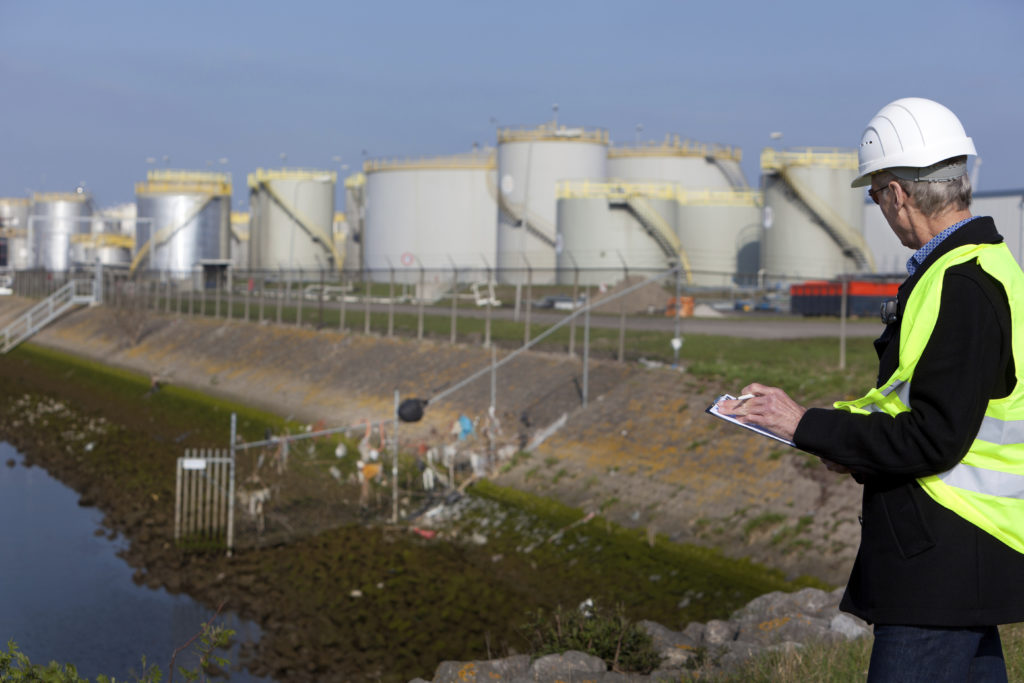
(1) Inspections Inspections, both routine and periodic, are mandated by the NPDES MSGP and corresponding state permits. The frequency and content of inspections and associated records are dictated by permit conditions. Typically, inspections must be performed monthly or quarterly and once per year when a comprehensive site compliance evaluation is stipulated. Inspections should be performed by “qualified” personnel who are familiar with the site and knowledgeable of the SWPPP and applicable stormwater regulations. Some jurisdictions mandate a “certified” inspector. Facilities should use inspection reports to document good-faith efforts to manage operations in accordance with the SWPPP and address common issues. The inspection is the beginning of a continuous improvement process. Then, if a problem is identified, a corrective action is requested.
A follow-up inspection verifies the completion of the assigned corrective action and assesses the effectiveness of the solution. Recording observations and requesting corrective actions on an inspection report is required, but that is not enough to affect change. The corrective actions and expected results need to be assigned to an accountable person to improve site conditions.
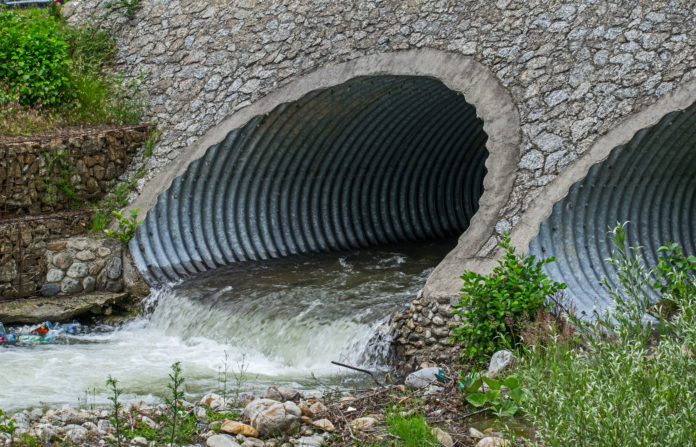
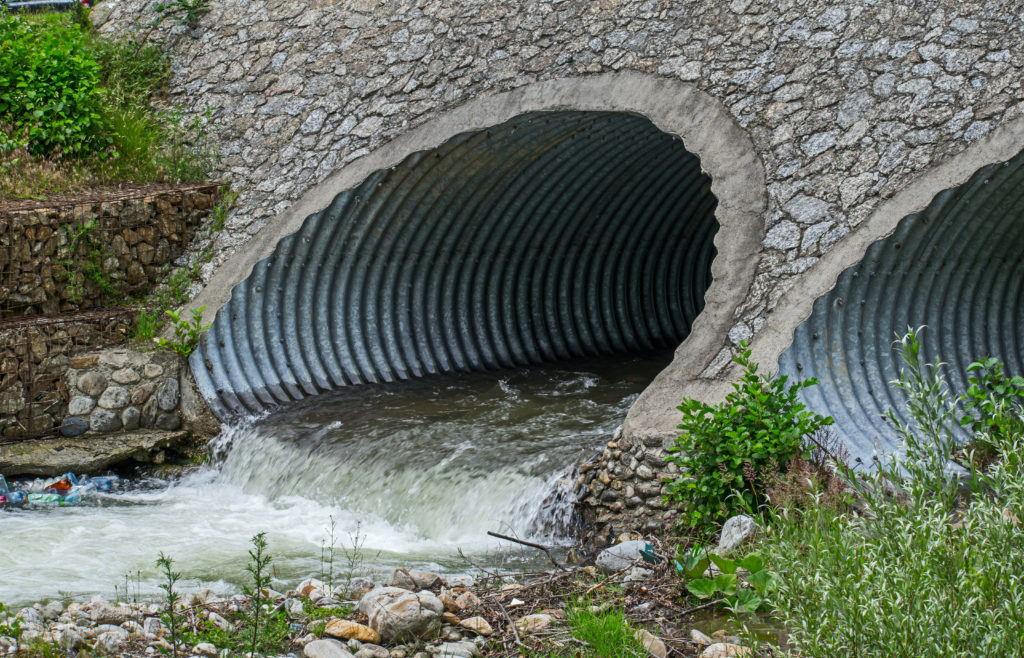
Inspections of drainage areas and outfalls are critical at industrial sites.Water drains through pipes, under a bridge.
(2) Monitoring Monitoring defines the qualitative and quantitative observations of stormwater runoff from the discharge points at an industrial facility. Stormwater monitoring should capture the “first-flush” of runoff, meaning runoff that occurs within the first 30 minutes of discharge from a qualifying rain event. The frequency, methods and reporting of monitoring data are dictated by permit conditions. Additional monitoring criteria may apply due to local ordinances, discharges into impaired or exceptional waters, or a result of a stream’s Total Maximum Daily Load (TMDL) Implementation Plan (I-Plan).
Basic monitoring requirements established by the MSGP include:
Quarterly Visual Monitoring
A qualitative analysis of stormwater quality. As implied by the name, visual monitoring must be completed quarterly each calendar year during the permit term. Monitoring must be conducted during the normal hours of operation for the facility and samples must be collected in a clean, clear, glass or plastic container and examined in a well-lit area. Recorded observations should comply with the criteria listed in the permit and typically include aspects such as color, odor, foam, sheen, and floating, settled or suspended objects.
Benchmark Monitoring
A quantitative analysis of stormwater quality. Parameters are driven by the industrial sector applicable to the facility and are representative of typical pollutants associated with industrial activities. Benchmark parameters may vary within a sector by the listed standard industrial classification (SIC) code or industrial activity (IA) code that describes facility operations. Monitoring frequency is permit-driven and is typically semi-annual or quarterly. An exceedance of a benchmark value is not a violation of the permit. However, the facility must investigate and take corrective actions taken to reduce the concentration of the pollutant during the next discharge event.
Monitoring is required of specific SIC or IA codes within certain industry sectors. CNELs are quantitative in nature and reflect national water quality standards for specific industry types as codified in federal regulations and listed in the NPDES permit. Similar outfalls may not be used to reduce CNEL monitoring. A violation of a CNEL threshold is considered a violation of the permit and must be self-reported.
(3) Recordkeeping Recordkeeping is documentation that is maintained onsite and used to demonstrate compliance with permit requirements. Records should be kept with the SWPPP or readily accessible to regulators with jurisdiction over stormwater discharges from the facility. Successful recordkeeping requires that facilities know what activities must be recorded, the content required by the permit and the record retention policies associated with the permit.
The EPA MSGP provides the basis for recordkeeping, though some variations occur between states. The list below provides a basic guide to which records are likely to be required as inclusions for the SWPPP:
Management certification of the SWPPP
Delegation of signatory authority
Agency permits, correspondences, etc.
Rain gauge
Inspection records
Training records
Preventive maintenance logs
Logs of spills and leaks
Qualitative and quantitative
monitoring records
Training and education materials
Electronic systems are commonly used to manage stormwater records. Make sure the records contain information required by the permit and are readily available during a regulatory inspection.
Stormwater flows to streams with no treatment following discharge from industrial sites.
(4) Training EPA and state MSGPs require training programs be prepared and implemented annually for all employees who are responsible for implementing and maintaining activities in the SWPPP and/or those who work in areas where industrial materials are exposed to stormwater. Training generally requires tasks such as proper material management and good housekeeping, spill prevention and response, spill reporting and familiarization with both BMPs and the goals of the SWPPP. Facilities must also provide basic education to all employees, even if they are not directly responsible for the SWPPP. This should include the stormwater pollution prevention goals, who is on the SWPPP team, and how to contact them if a stormwater issue arises.
(5) Reporting Reporting is the documentation that must be submitted to the regulatory agency for compliance with a permit condition. Not all records must be reported. Each permit defines the reporting requirements and there are a number of reporting variations among the NPDES MSGP state permits. Generally, reporting will include the following minimum reports:
Delegation of signatory authority
Benchmark monitoring report form
Annual reports
Customize Your Industrial Stormwater Program Stormwater management is a program that must be designed for site-specific conditions, permit compliance and industrial activities. A SWPPP provides a basis for actions, but it can be overwhelming to implement. Breaking up SWPPP implementation into its five basic elements provides a key to successful stormwater compliance. Assignment of action items to accountable members on site will improve compliance and provide measurable benefits to stormwater quality
About the Expert Julie Morelli, P.G., REM, CPESC, has deep and diverse experience in both public and private environmental compliance with expertise in water quality, erosion and sediment controls, solid waste management, spill delineation, Phase I/II/III environmental site assessments and corrective action programs. She develops integrated compliance programs encompassing requirements from U.S. Environmental Protection Agency, the U.S. Coast Guard, the U.S. Army Corps of Engineers and the U.S. Fish and Wildlife Service.
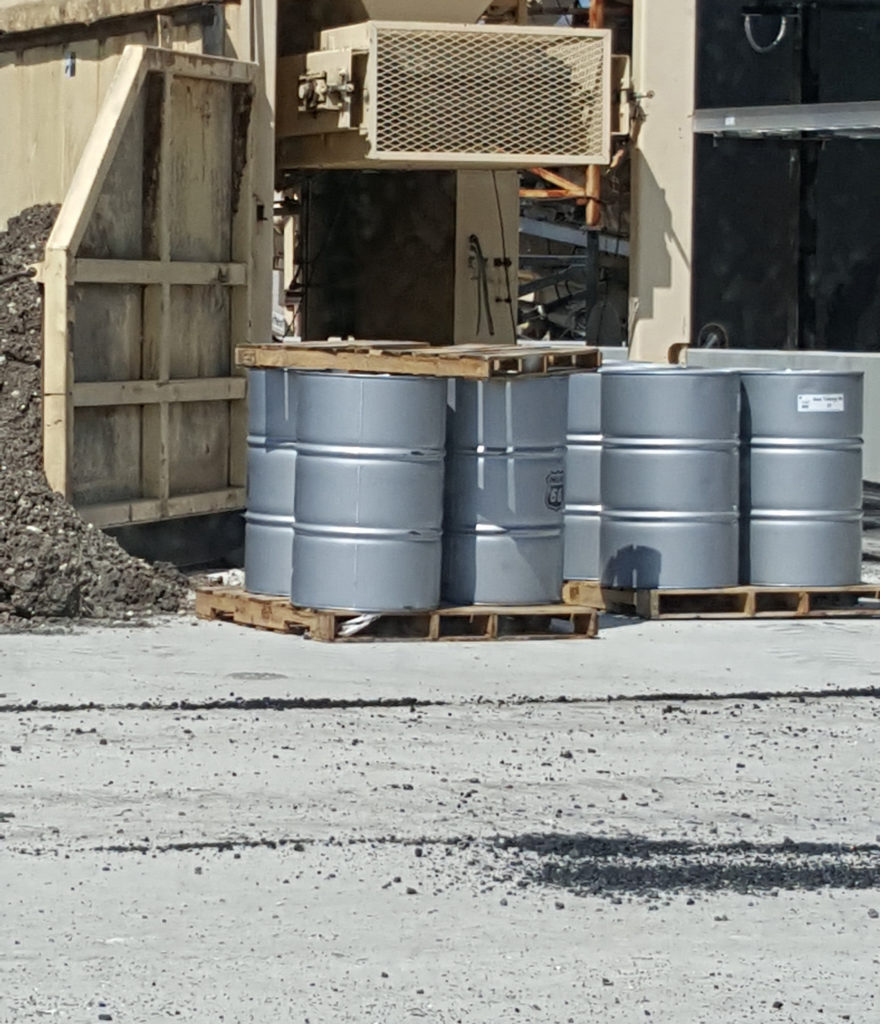
Watch for improper material storage practices that can lead to releases.
Keeping a project on schedule, under budget and safe are some of the most important goals a contractor or site superintendent should achieve every day. Staying compliant with local, state or federal erosion and sediment control (ESC) regulations can sometimes feel like a daunting task. However, there are a few things that can be done to keep your project, company and stakeholders in compliance and ultimately to ensure the goals just mentioned are met as well.
(1) Communicate clearly and often The number one problem that I have encountered on projects is lack of communication between the contractor and regulator. From day one of the project, I offer every avenue of communication to the contractor to allow them to choose what works best for them—phone, video call, text or email. Many problems can be avoided if the contractor simply communicates their plan or approach to their inspector. Minor approvable field changes, such as modifying silt fence location, when done without inspectors’ knowledge can become a larger compliance issue if the contractor fails to communicate this field change to the inspector. Always keep your inspector up to date on changing site conditions, requested field modifications and any requested/approved sequence changes from the proper authorities.
(2) Be proactive Take the time every day to walk your project and check that onsite sediment control devices are functional, installed per plan and undamaged. Many permitted projects are required to perform self-inspections and log them onsite for inspectors to review upon request. This is a great tool to have accountability on projects for the upkeep of the sediment control devices as well as ensuring they are routinely inspected.
Do not wait for the inspector to arrive onsite and discover compliance issues as this will only lead to a poor relationship with your regulator. A common issue I hear about is ESC devices damaged onsite by a subcontractor, and the subcontractor is often not held accountable. One approach that I have found works well is back-charging the subcontractor’s company for repairs and replacement of these devices that they damaged. This should be conveyed to all subcontractors and their agents prior to beginning the project and possibly even included in the contract agreements. The damage usually seems to be curbed by this approach rather swiftly.
Make sure that the project is bid appropriately with maintenance and even full replacement of onsite sediment BMP’s included.
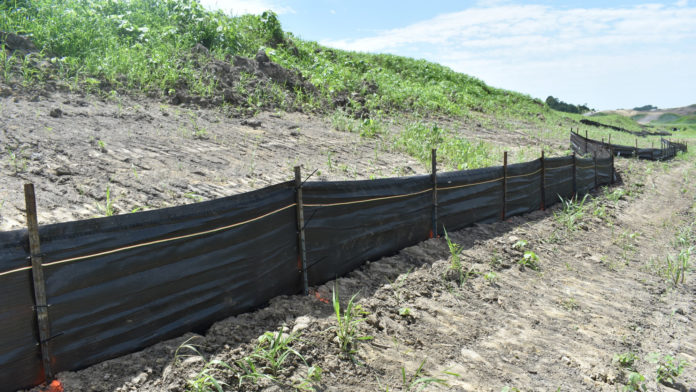
(3) Install properly This seems like a no brainer but all too often erosion control best management practices are incorrectly installed. Silt fence installed opposite the direction of flow, not trenched into the ground, incorrect post size or geotextile, inlet protection devices not being installed per specification or not spanning an entire inlet are just a few of the ways devices are improperly installed. Often, all ESC devices that are due to be installed have a specification and detail included in the approved plan. Follow the specification for guidance on proper installation and maintenance. Your inspector will be using the same plan during your inspections so if everything reflects the plan, there should be no compliance issues.
(4) Bid the project appropriately Most project bids include initial ESC installation; however, more often than not, there are no line items for maintenance and even overall replacement on longer duration projects. Make sure to include these costs in the initial bid. When it comes time for maintenance and replacement the money is there and there is no reason for delays or noncompliance as a result. Not allocating for inevitable maintenance is setting yourself up for failure so make sure to include it to save you a headache further into the project.
(5) Collaborate with your inspector Whether you are the contractor or the inspector, one common goal is substantial completion of the project while complying with regulations and keeping sediment onsite. Make your inspector part of the project, the process, and the goals you want to achieve from day one of project kickoff. Even during the design phase request that the engineers reach out for comments on the plan to ensure that common field issues are identified and addressed. Collaborate with your inspector to see what they suggest to reach project deadlines while remaining in compliance. The inspector often wants to be involved and offer advice and guidance. Leverage your inspector’s knowledge and guidance to help you meet your project’s goals. Don’t be afraid to ask for advice from your inspector. It’s better to ask for permission than beg for forgiveness when it comes to regulatory agencies. At the end of the day everyone has the same goal of getting the job done and done right.
(6)Be involved during the design phase If inspectors, contractors and engineers all work together during the plan design/review stage of the project then many common issues can be mitigated early, even before the project breaks ground. Engineers are often office bound and do not have the time or ability to assess real field conditions in person to develop a plan that will work for the contractor. Having contractors and inspectors involved early adds a fresh perspective on the constructability of the project and alleviates issues before the project is constructed in the field. Plans often look good on paper but once reviewed in the field have some fatal issues that need to be addressed. Make all stakeholders part of the plan design now to save time and headaches later.
About the Expert Dylan Drudul, CPESC, is the senior sediment and erosion control inspector for the City of Rockville, Maryland. He currently works in the Environmental Management Division of the Public Works Department. Concurrently he sits on the IECA Board of Directors as the membership vice president for the association as well as the Mid-Atlantic Chapter of IECA’s first vice president.
Routine self inspections daily or even weekly can identify and address issues such as this in real time before the inspector does. Being proactive is key in maintaining compliance on the jobsite.
The Ara Tūhono–Pūhoi to Warkworth Project is an 18.5-km motorway extension currently being built north of Auckland, New Zealand. The motorway is designed to offer a safer and more reliable travel route than the existing state highway and connect the Northland Region with the upper North Island freight network.
The Waka Kotahi NZ Transport Agency project is being delivered by the Northern Express Group (NX2) under a Public-Private Partnership (PPP) delivery model. Fletcher Construction and Acciona Infrastructure have been contracted in a construction joint venture to construct the motorway on behalf of NX2.
Enabling works, or site preparation, for the motorway commenced late 2016, and the motorway was scheduled to open at the end of 2021, but the New Zealand nationwide COVID-19 ‘Alert Level 4’ lockdown in March and April 2020 meant nearly six weeks of the key earthmoving season was lost. The resumption of work under ‘Alert Level 3’ with strict health and safety protocols also impacted the works programme. The motorway is now expected to open to motorists in May 2022.
A Challenging Environment The project setting is largely characterised by low, undulating hill country in the north, and steeper rolling hill country, with distinctive complex incised landforms of interconnected ridge and valley systems in the central and southern parts. To add to the challenging geological environment, Auckland has a highly variable subtropical climate, which restricts earthworks to a seven-month ‘earthworks season’ period during summer months which tend to be warm and humid with typically less consistent rainfall. The average annual rainfall for Warkworth is 1,454 mm.
During the first earthworks season (2017/2018), the project received 202% of the normal summer rainfall. This was Auckland’s second wettest summer on record, which occurred when the project was trying to “get out of the ground.” The wet summer significantly slowed progress on gully muck outs, drainage improvements and culvert work, putting us on the back foot for bulk cut to fill earthworks during this first earthworks season. This meant the start of most of the bulk earthworks was pushed to the next earthworks season.
The challenging steep terrain along much of the project alignment has meant that many of the overlying soils were either unstable, or highly susceptible to erosion when exposed by construction activities. By comparison, the northern length of the project contains extensive alluvial deposits in low lying areas carved out by major rivers and subsequently infilled with deep, soft estuarine and alluvial sediments.
The underlying geology also strongly influences the groundwater along the length of the alignment with elevated groundwater levels, seepage lines, springs and perched leaky water tables common from north to south. This complex geology required extensive ground improvements and stabilisation mechanisms, resulting in over two million cubic metres of additional dirt and rock to move on top of the original 7.5 million scope. Not only do these geological challenges create many technical and constructability issues, but they also present significant environmental challenges when it comes to building erosion and sediment control devices. One of the toughest challenges faced by the project team are the various landslides, the largest being a 60,000-cubic metre slip in the steepest gully of the project. An immense effort was required to divert water from and around this slip material when a 200-mm rainfall event was predicted for the coming week. This required the installation of a larger secondary 1050-mm diameter culvert line over 140 m, in addition to the base 650-mm culvert already in place, and provision of an emergency overland flow path higher on the southern bank away from the slip failure zone.
Erosion Sediment Control The ground conditions and wet first earthworks season meant the project has had to look for innovative ways to manage run-off when traditional erosion sediment control (ESC) devices, such as sediment retention ponds (SRPs), cannot be built. Designing and building erosion and sediment controls in a diverse landscape has presented unique challenges. The steep hill country often required sediment retention ponds (SRPs) to be located at the bottom of steep gullies in highly erodible and unstable ground conditions with difficult access. In some instances, floc dosing hoses run for over 50 m to enable a safe accessible location to refill chemical treatment.
In the flat country the alluvial soils meant ground conditions were often not sufficient to support ESC devices so alternative solutions such as dewatering tanks were required.
Adaptive Monitoring Framework Despite the challenges the environment presented, the project’s response to environmental management has quantitively demonstrated that the structural and non-structural ESC practises are exceeding expectations when it comes to the reduction of potential sediment discharged from site.
The project’s regulatory framework for ESC is founded upon an adaptive monitoring framework, which uses a “plan-do-check-act-learn” approach. This ongoing monitoring and reporting create a continuous feedback loop that can subsequently assist and improve the environmental measures, monitoring methodology and general works. The project has no set regulatory suspended sediment discharge standard in place, however through intensive data collection and analysis during rainfall events, the project has demonstrated that the sediment yield during construction has to date been several orders of magnitude below that which was initially predicted during the consenting phase using theoretical modelling such as GLEAMS and USLE.
The projects sediment yield is calculated through monitoring required under the project’s resource consent conditions. A manual grab sample is taken at the outlet of all SRPs during or immediately after rainfall events that exceed 25 mm/24-hour and/or 15 mm/hour–known as “trigger events.” These water samples are sent to a lab to determine total suspended solid (TSS) concentrations. The sediment yield is calculated using the TSS, “earth worked” area and rainfall volume. The manual grab sample is then validated through data collected from the project’s four automated sampling units that take water samples throughout the full lifecycle of a rainfall event. The samples are also analysed for TSS at the lab. The automated TSS data provides the “peak” result which can then be used as a multiplier for the manual TSS sample and used to calculate a ‘worst-case’ sediment yield.
The results from post trigger water samples, in addition to observations made during trigger event inspections, are used to inform modifications that may be required in relation to ESC. There may be a subsequent action to put in place including alternative measures to manage ESC if existing measures have been unable to achieve their theoretical outcomes. For example, a poor water quality result (high TSS), in a sediment retention pond may be the result of changes in the soil type of the catchment as cuts have progressed, which has changed the optimum chemical treatment dosage required. An adaptive response would be to undertake a bench test of the soil type within the catchment to determine the best dose rate, then update the chemical treatment (flocculant) volume through updating the floc shed (rainfall activated dosing system) design.
Through monitoring of SRP performance and the adaptive monitoring framework, the project has also been able to demonstrate that SRPs larger than the regulatory guidelines for catchment sizing are still able to achieve good water quality results. This has enabled use of oversized ponds (i.e., SRPs sized for a catchment larger than 5 ha), across the project where availability of flat land and/or stable land to build ponds is in short supply.
While adaptive monitoring is not a new concept, the project has used the approach as a unique opportunity to demonstrate that the earthworks can be managed in this challenging environment within the regulatory framework, and with innovations often used that fall outside the regulatory best practise guidelines.
The adaptive monitoring framework has also provided a mechanism to determine the total amount of open area of earthworks available to the project at any one time and as an additional method of managing effects on the environment. While the wet 2017/2018 season presented a challenge for moving dirt, it did allow for data collection under the adaptive monitoring programme (AMP). This framework enabled the crucial increase in open area limits that ensured the first season’s earthworks backload, and additional earthworks scope, could be completed in the two remaining earthworks seasons (2018/2019 and 2019/2020).
A strong relationship with the regulator, coupled with no significant environmental incidents or infringement notices, has shown the construction team the tangible benefits of good environmental practise. Continuous improvements result in increased productivity, which has significant positive cost implications on this large-scale earthwork project and helped to deliver a world class roading connection.
About the Expert Hannah Giess is a senior environmental advisor at Fletcher Construction in Auckland, New Zealand.
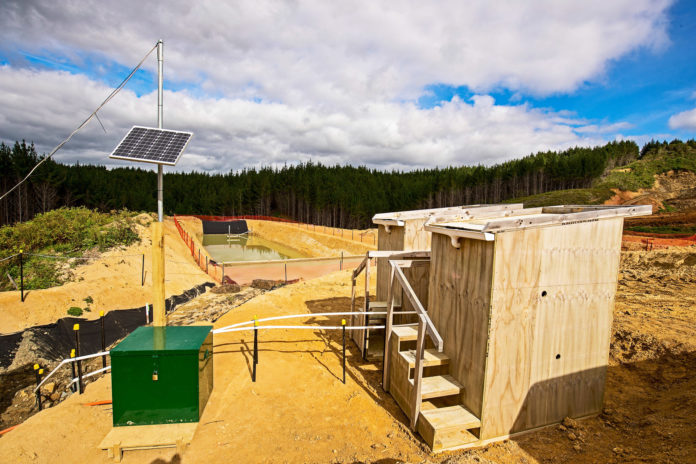
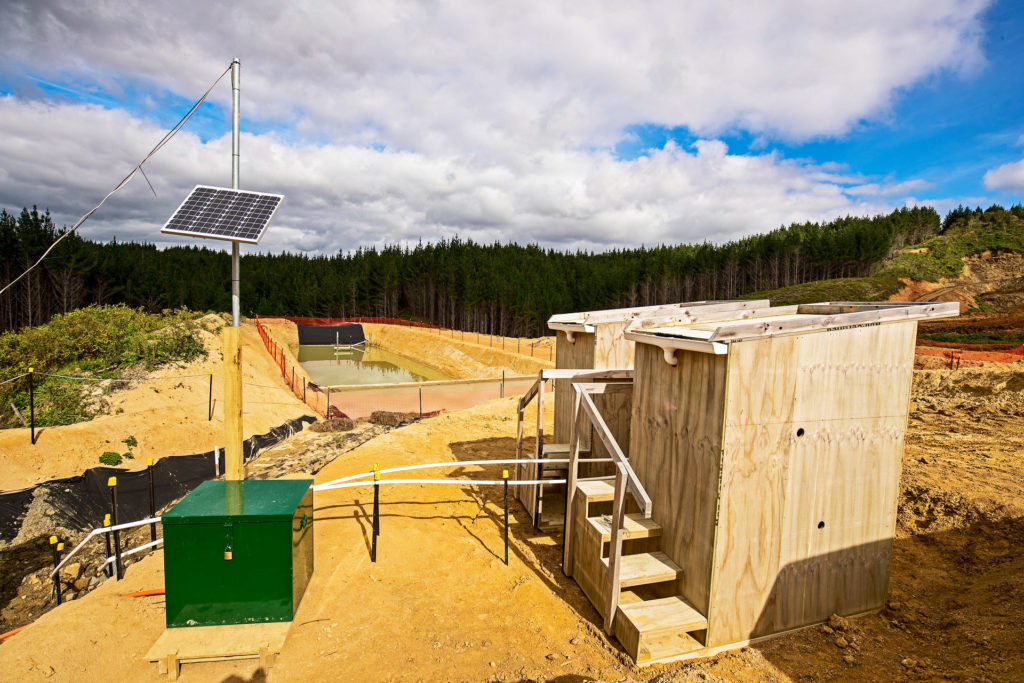
Sediment Pond with two floc sheds and automated water sampler.
It is clear from predictive models and field experience that the majority of sediments are lost in the wettest months at the height of typical full speed construction activity. In Minnesota, about 70% of all erosion that can occur happens in the months of June, July and August. Winter months may provide around 5% of sediment release, with spring and fall about equally divided for the remainder.
Although the percentage of sediment release is lower, erosion prevention or sediment yield models do not account for the energy released when snow melts rapidly. While some moisture from rain/snow fall might be abstracted into the soil profile and remain in place, almost five months of rainfall accumulations may be released in two weeks. The volume and rate of discharge can mimic a 100-year storm event.
No two snow melt event years are the same nor can it easily be predicted before it occurs, so all soils not actively worked should be kept in a perpetual stabilized conditions, concurrent with the work.
The EPA Construction General Permit (CGP) and southern states with delegated National Pollutant Discharge Elimination System (NPDES) authority are typically silent for stabilization requirements and snow cover, but surprisingly northern states are also commonly silent for stabilization of exposed soils under frozen winter conditions. While it is reasonable to assume that frozen soils will not erode and common best management practices (BMPs) are not feasible under such conditions, the gap in understanding and requirements misses the point.
Due to shortened construction created by the onset of the winter season, or public costs associated with delays from winter, construction that includes grading and structures now continues every month. While there may be less open soil grading due to costs of working frozen and icy soils, it still occurs. Due to many factors, cold climate construction is here to stay. Design must remain compliant to all seasons.
NPDES CGP regulations amended by the Minnesota state delegated authority (MPCA) to fit state conditions does not recognize frozen soil conditions as a reason to stop concurrent stabilization practices or as a reason to not stabilize all exposed soils in a timely manner. For routine exposed soils (not special or impaired), 14 days is the maximum delay for stabilization events of soils not actively worked. Note the definition of 14 days includes the words “stabilized immediately,” starting the day when work stops and must be completed within 14 days.
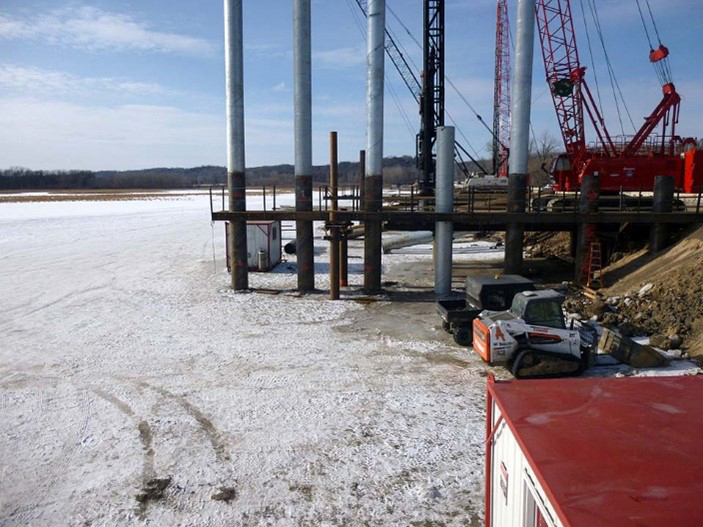
Ice road used for winter access protects wetlands during pile installation and beam placement.
Prevent Erosion at Planning Stage Preservation of green space through design offers the best winter erosion prevention for the least cost. Incomplete and inaccurate Stormwater Pollution Prevention Plans (SWPPPs) do not generate the least cost bids. In my opinion, the owner’s plan must reflect at least one means and method program that delivers all public and natural environmental commitments as described within the contract language. The actual low bid submitted by the contractor must be the least cost bid capable of delivering the commitments and contract. This may mean that work in winter may be the least cost option. Winter work is also beneficial in areas with endangered or sensitive wildlife or for projects to restore wetlands or re-meander streams. Phased design and contract implementation can also utilize frozen ground conditions, such as ice roads, haul roads and wetland access, to avoid impact on the environment. Time of year is an erosion prevention BMP that also reduces costs by reducing timber pads and other soft soil crossing technologies.
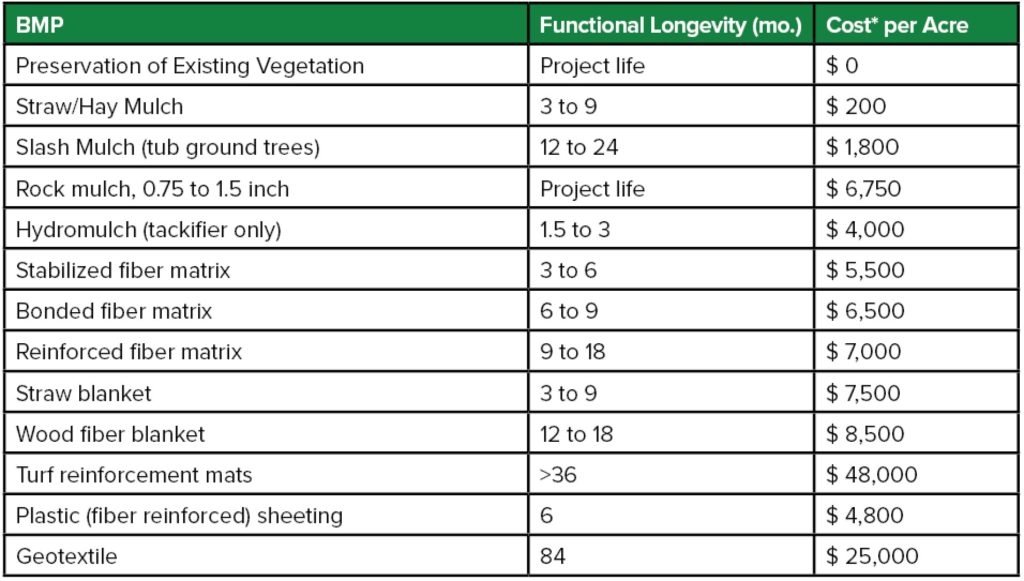
All BMP must be designed with functional longevity, or effective service life, considerations. It makes no economic and implementation sense if the erosion prevention BMP selection, while lower cost, does not last long enough to perform as intended. BMPs that do not last through the winter and spring runoff do not reflect proper design, nor reflect the true cost of a BMP if it must be reinstalled or supplemented again.
Table 1 provides guidance for functional longevity of each type of erosion prevention BMPs. Functional longevity is based on my engineering judgment and field experienced in Minnesota, as there are no ASTM test methods available. A significant functional longevity decline and loss of expected performance occurs when 10% of the material has been compromised. Typically, the contactor is not required (forced) to supplement or replace the erosion prevention BMP until the BMP has lost 25% of material integrity. Note that vegetation does not grow in winter to replace the functional loss of organic mulch materials. Different states will have clear differences in weather and decomposition rates of organic and synthetic materials used for temporary erosion prevention.
Erosion Prevention BMPs
Table 1. Functional Longevity of Erosion Prevention BMPs used for Temporary Soil Stabilization During Construction Activities.
*Costs have been calculated on a per acre basis for comparison from annual bid units of installed prices submitted by contractors and project owner engineer’s estimates. Note that unit prices submitted by contractors do not necessarily reflect reality in a low bid system nor do they follow defined application rates.
Snow Mulching
Snow mulching is the process of applying an agricultural grain straw or forage hay over the snow, which is the lowest cost of any winter BMP for erosion prevention. Application in winter allows access on nearly all soil types and typically steeper slopes than recommended other times of year—3:1 and flatter.
The winter design rate is 80% of normal soil coverage, with normal defined as 90% soil cover and estimated for payment as two tons per acre. The mulch must be applied at a lower rate than normal to allow light penetration that differentially warms the mulch to melt and freeze into the snow pack. Timing of mulch application by the contractor is allowed to sometimes extend beyond 14 days to coincide with a predicted snow event as this forms what I call a “mulch sandwich layer.” Mulch moves vertically downward within the snow pack as the snow melts and is heavy enough when saturated to remain in place over wet spring and mucky soils and continues to protect soils during spring rain events. Application on frozen ground without snow cover typically requires an additional application of water or hydromulch to freeze bond in place to prevent wind loss.
Winter Hydromulching
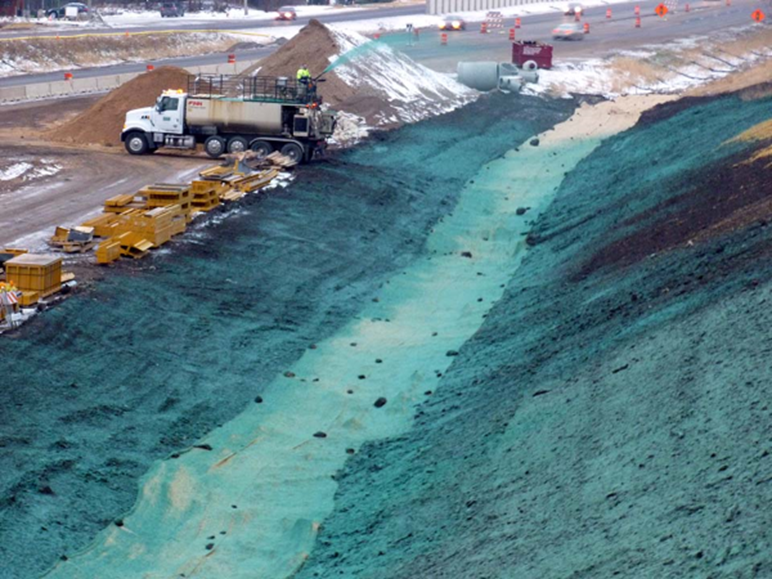
Any hydraulic mulch that is applied over wet or frozen ground must have a chemical makeup that accounts for proper curing and bonding to soil during these conditions. There is only one suitable hydraulically applied mulch over frozen or wet ground that is approved by Minnesota Department of Transportation (MnDOT). The industry-defined highest end product works if applied on frozen, but not snow-covered, soil. If applied on snow, no soil bonding occurs, and creates a nuisance runoff condition that now includes all the chemicals and organic fibers in the original product.
Design defined application rate as per manufacture for slope length and steepness, but not less than 3,500 pounds per acre. If snow is present, the contractor is required to first remove snow, which is hauled to sediment traps for melt control, prior to application. Hydromulch applications are common in winter and are tightly scheduled and risk managed to account for predicted storm events. Hydromulch coverage winter option provides the greatest range of soil lengths and steepness benefits at the greatest functional longevity best value until the soils are again dry enough to be workable.
Winter Rolled Erosion Prevention Products
Rolled erosion prevention product (REPP) go by many names that include blankets and mats. MnDOT uses REPP to define any erosion prevention system that comes in a roll, including straw through polymer concrete. REPPs work best when properly anchored to soil, but there is no limitation that prevents installation in any winter condition including blizzards, but perhaps not snow squalls and mega-events, except depth of snow cover. In general, all temporary applications of REPPs must have snow depths less than 2 inches, with removal of snow excess by any suitable method. Anchoring methods change with the REPP category by winter months and soil type. Typically a washer on a nail is used in winter because U-pins normally used cannot penetrate frozen soil. Designers continue to specify winter blanket using the same factors for any ‘normal’ time of year. While the material application details remain the same, a special provision is necessary to describe the change in anchoring method for winter. Additional anchoring methods include freezing in place with water or hydromulch overtopping.
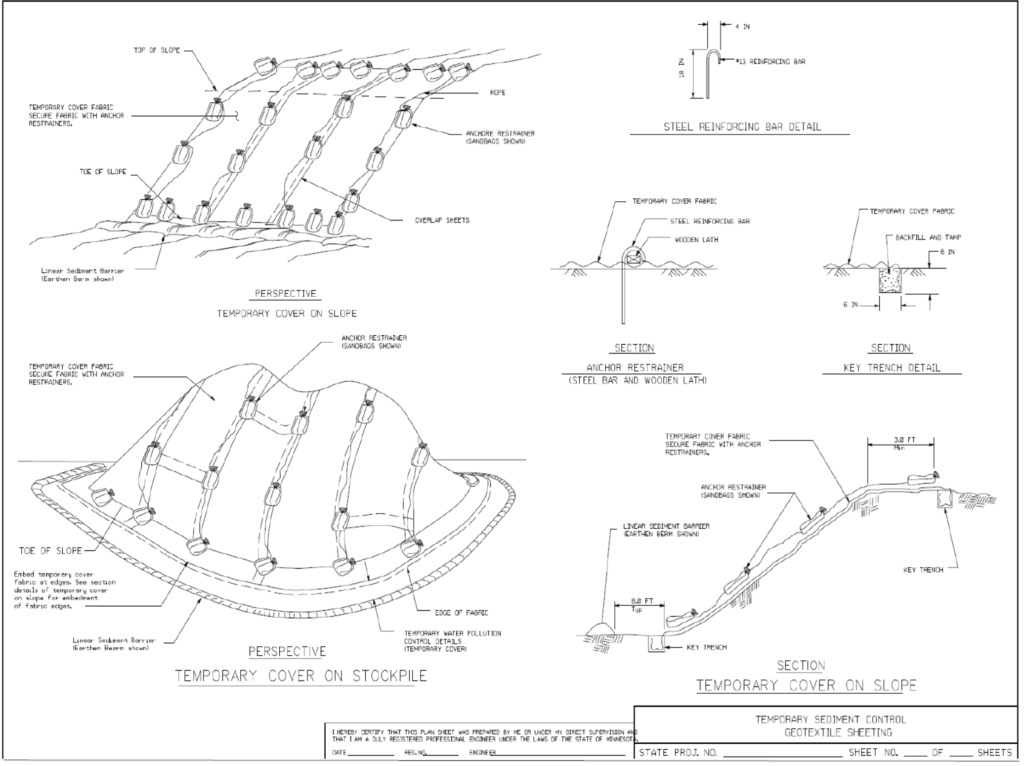
Plastic and geotextile exposed soil covers represent the highest level of REPP performance. The anchoring is much more robust with head trenches and sand bags attached to ropes. The best implementation detail comes from California Department of Transportation but has been modified to reflect a regular MnDOT detail sheet (see Figure 1).
Winter Rock
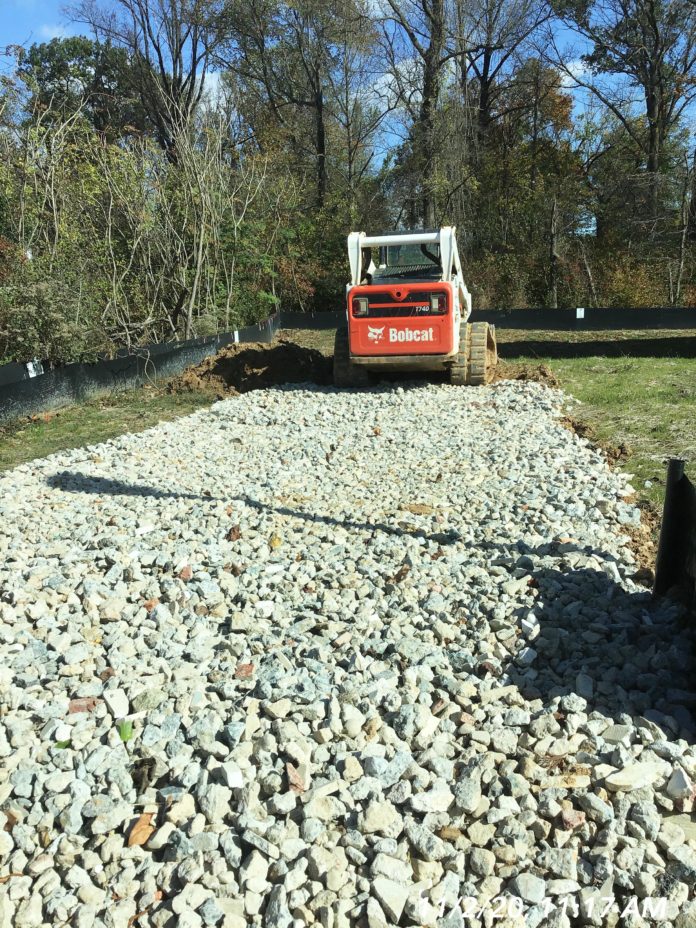
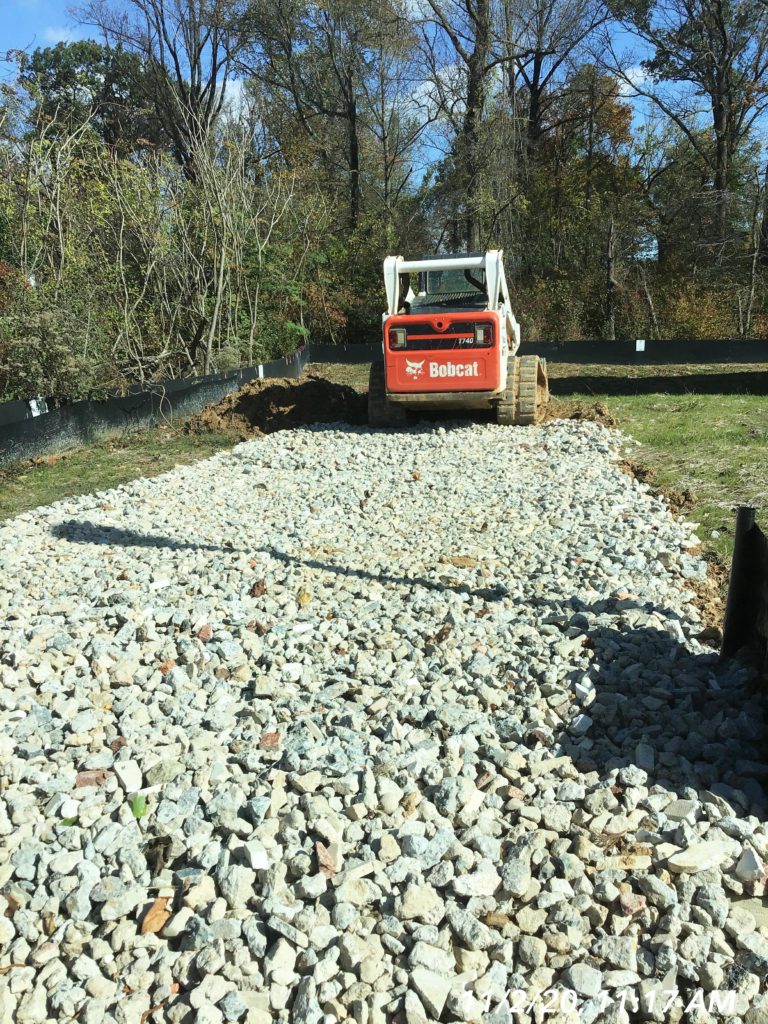
There are no limits to the imagination for stabilizing and protection exposed soils, regardless of weather or time of year. While rock aggregate can also be used for creating sediment control perimeter and check features, it also makes excellent winter stabilization erosion prevention.Rock can be configured to stabilize openings in perimeter sediment controls and stabilize ditches. If the rock is used for exits, a geotextile liner must be used to prevent soil pumping when soils thaw. Otherwise, rock placed by any means for exposed soil stabilization is acceptable.
Design thickness is two to four inches, where the depth of placed rock aggregates is a function of average diameter size that may range from 3/8-inch pea gravel to 3-inch crushed ballast. In general, depth is 1.5x of aggregate diameter, but not less than 1-inch thickness. Assume 1 cubic yard will cover 18 square yards at a 2-inch depth. The best way to determine cost is to convert the cubic yards into tons for the area to be covered. Paying for aggregate and placement by the ton eliminates debate about placed depth of rock that is pushed into ice, mud and snow.
Figure 1. Example detail sheet showing proper installation of reinforced plastic or geotextile soil covers.
Dormant Seeding
While technically not a winter stabilization practice, nearly all native and non-native temporary seed mixtures typically specified by state agencies can be dormant seeded. Some temporary seed mixture components like oats do not tolerate cold and wet soil conditions and easily decompose before ever breaking dormancy for germination. Because most temporary seed mixtures are relatively inexpensive, I recommend seeding along with winter stabilization measures that are composed of organic materials. Do not fertilize over frozen soils or on top of snow. The resulting nutrient rich runoff is unacceptable to any water of the state. If it is determined by later inspections that the resulting seedlings look yellow, light green or stunted, a foliar (liquid) application can be made using a hydroseeder type machine.
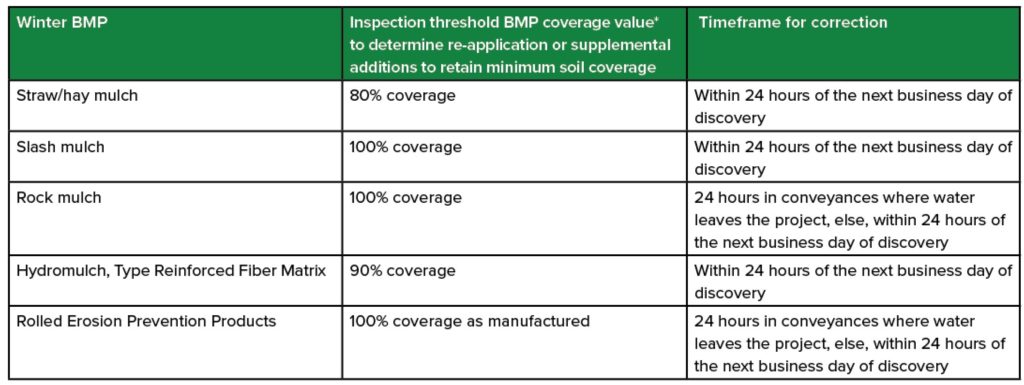
Routine Inspections Required All installed erosion prevention BMPs must be routinely inspected for effectiveness and integrity or when runoff resumes. All noted deficiencies must be corrected within defined timeframes. In Minnesota, all corrective actions must occur within 24 hours of the next business day of discovery. The following table lists criteria for determining when corrective actions or rework schedule are required.
Table 2. Corrective actions for installed erosion prevention measures.
*Visual inspection determines when coverage is less than the minimum listed. A 100% value means the installed BMP must be kept at 100% to be considered in a proper functional condition for permit and contract compliance.
Conclusion Permit compliance is year-round activity. The EPA CGP is a general permit that attempts to list required conditions for all authorized and delegated states, recognizing that local and regional conditions will not equally apply everywhere. It does not take into account deleterious changes in climate variations that exacerbate ability to keep BMPs in a functional condition. Cold climate states with cold climate experienced contractors must design, select, install, maintain and continually adapt to change with winter appropriate erosion prevention measures. While work in winter is slower and typically more expensive than work performed in the warm months, nothing is impossible when everyone works together. This starts with great design and clear expectations.
About the Author Dwayne Stenlund, M.S., CPESC, is the coordinator for the Natural Resource Program in the Office of Environmental Stewardship, Erosion Control and Stormwater Management Engineering Unit for the Minnesota Department of Transportation.
Resources An example PDF reference document for winter stabilization BMPs can be found at: Stenlund, Dwayne, 2015. https://fairmont.org/wp-content/uploads/2018/03/WinterGuidanceMnDOT.pdf. Minnesota Department of Transportation, Office of Environmental Stewardship, Saint Paul, Minnesota.
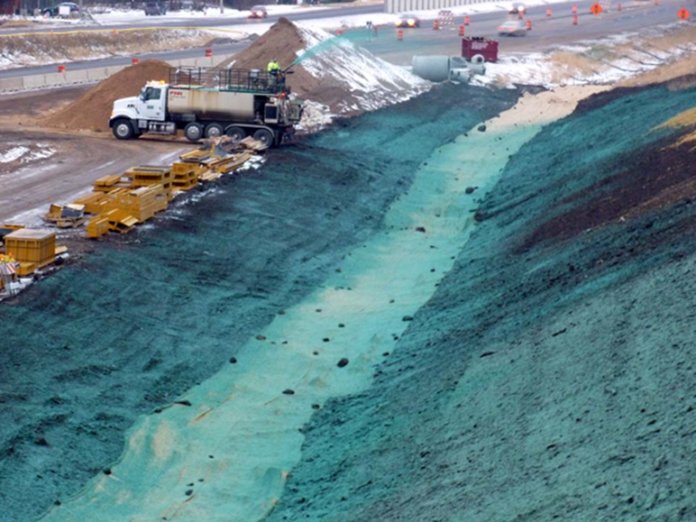
Reinforced Fiber Matrix (RFM) hydromulch product applied over frozen soils. Note that a rolled erosion prevention product (wood fiber blanket) was first installed in the wetted perimeter of the conveyance system. Anchoring of blanket was enhanced by overtopping of RFM that also glues the blanket to the soil when ideal staple anchoring is not feasible.
By Michael A. Perez, Ph.D., CPESC, Auburn University
The IECA Standards and Practices (S&P) Committee has developed new performance-based standards for the design, installation and maintenance of sediment control practices. The S&P Committee has adopted a process in the design of standards that includes a thorough review of existing guidance and literature prior to the development of new guidance as needed. The review process includes the development of a synthesis based on existing designer guidance from federal agencies (FHWA, NRCS, EPA, etc.) and various state highway and environmental agencies. In addition, research reports and peer-reviewed journals are reviewed to incorporate research findings into guidance development. After the development of the synthesis, gaps in existing guidance are identified. The committee develops new guidance based on existing literature, professional knowledge and experience of the subject matter.
Design standards are intended to incorporate the best available technology and knowledge into an engineering-based approach. This includes the use of hydrologic design parameters such as flow rates and storage volumes. In addition to developing new standards, design guides and literature reviews are being developed for each sediment control practice evaluated. The design guides assist practitioners in implementing the standard by providing a discussion, formulas and a step-by-step approach to implementing the standard.
In January, the committee presented a webinar, entitled “A Performance-Based Design and Installation Standard for Silt Fence Sediment Barriers.” This webinar provided an overview of the silt fence standard that is intended to guide designers on the purpose, design, material selection, installation and maintenance of a silt fence when used as a temporary sediment control barrier for sheet flow applications to minimize sediment transport from a disturbed area susceptible to erosion. The standard uses a design storm approach to adequately size and place silt fence in three different installation configurations. In March, a webinar on the sediment basin standard was presented. The webinar, “Performance-Based Design & Installation Standard for Sediment Basins,” provided details on the development of the standard and included details on the design approach.
Visit the IECA eHub (ehub.ieca.org) to download the silt fence and sediment basin standards or view the recorded webinars. The committee values feedback and suggestions, which can be submitted through the eHub portal. Be on the lookout for an inlet protection standard, to be released later this year.
About the Expert Michael Perez, PhD, CPESC, is an assistant professor in Auburn University’s Department of Civil Engineering.
By J. Blake Whitman, Ph.D., PE, CPESC; Michael A. Perez, Ph.D., CPESC; Jaime C. Schussler MS.; Lan Liu, Ph.D., LEED GA, EI
Editor’s Note: This article is an excerpted version of the IECA 2021 Technical Paper of the Year. IECA members can read the full paper at www.ieca.org/resourcelibrary.
Introduction Wattles are used on construction sites all over the world to manage stormwater and help reduce sediment discharge. Several research studies have focused on identifying performance metrices, such as sediment retention, when installed as a ditch check, inlet protection practice and perimeter control. A common goal among many of these studies was the development of alternative installation strategies that improve performance. While each of these studies provide valuable insight regarding wattle performance as a function of installation methodology, little information has been presented evaluating the hydraulic performance variations (i.e., subcritical flow characteristics) between wattle fill media. In 2016, Donald et al.1 developed a normalized evaluation methodology for evaluating ditch check performance based on flow characteristics; however, the methodology was contingent on several factors (e.g., channel slope, quantity of upstream cross-sections in which measurement are taken, and spacing between each cross-section) remaining consistent between tests. This research study aimed to address these limitations by presenting a normalized methodology that comprehensively evaluates the hydraulic performance of wattles using a state-of-the-art flume.
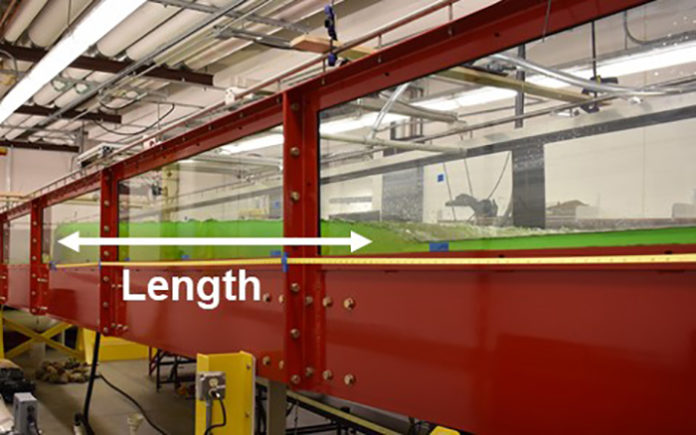
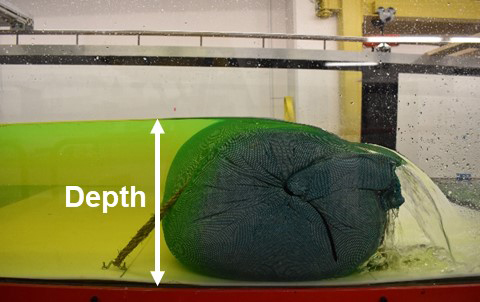
Methodology This study used upstream subcritical flow length and impoundment depth (Figure 1) data collected in the Larry Buss Hydrology Lab Flume located at Iowa State University to quantify performance. A series of flume experiments were performed to evaluate eight wattle types that included different media fill material (e.g., excelsior, straw, coir, wood chips, synthetic and miscanthus), containment mesh (e.g., open netting and woven socking) and media density. For each wattle type, three replicable test series were performed to identify inconsistencies, if any, between datasets. Each series of tests were performed by introducing clean flow (with fluorescent dye) at four incremental flow rates (0.007, 0.021, 0.035 and 0.057 m3/s) across three channel slopes (3.50, 4.25, and 5.00%) resulting in a total of 36 tests per wattle type.2
Each wattle tested was evaluated against the control test (i.e., impervious barrier installed in lieu of a wattle) that maximized upstream subcritical flow length and minimized channelized flow velocity. High performing wattles are those that are able to reduce shear forces acting on the channel bed by increasing the subcritical flow length, or length of flow marked by high impoundment depth and low velocity. These conditions not only reduce channel erosion but are also the most advantageous in promoting settling of suspended solids. The criteria used for evaluation were (a) impoundment depth ratio, (b) subcritical length ratio, (c) independent wattle performance as a function of slope and flow rate using analysis of variance (ANOVA) and (d) statistical relevance between various matrix media materials, slopes and flow rates. The testing regime was aimed at investigating the performance of wattle fill materials across a variety of flow rates and slopes.
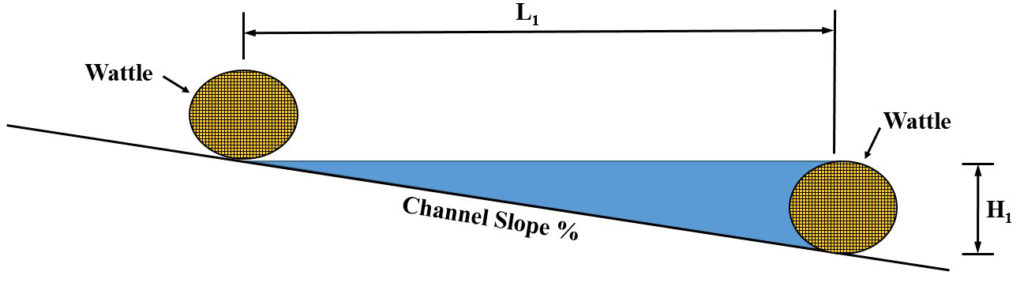
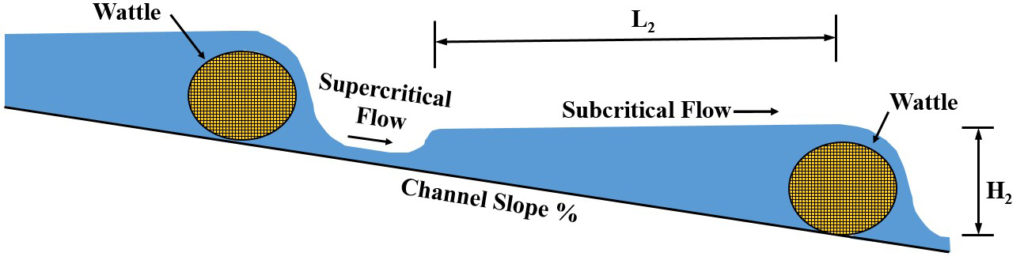
Ratio Analysis Impoundment depth and subcritical length ratios were determined by comparing measured maximum impoundment depth (H2) and subcritical length (L2) values to theoretical depth (H1) and length (L1) values calculated based on wattle installation height and channel slope (Figure 2). Theoretical depth and length values are typically calculated during the design of a SWPPP to identify spacing distances for wattles installed in channelized flows. The developed ratios help normalize the relationship of measured value to theoretical value and allows comparisons to be made between wattles.
ANOVA Analysis Two-way ANOVAs were conducted on ratio results determined for each manufactured wattle to identify if a significant performance variation occurred over the range of flow rates and slopes implemented during testing or if performance remained statically unchanged. This analysis identified how effective a particular wattle performed over a wide range of treatment scenarios.
Regression Analysis Statistical relevance between wattle fill media was achieved by developing a multiple linear regression model. Wattle media material, slope and flow rate for each individual test were coded into independent binary variables that took values of 1 or 0, depending on whether or not a particular test included a specific media material, slope, or flow rate. Dependent variables were coded as average water depth (y) to specific energy (E) ratios.
Findings Ratio analysis results suggest that four wattle classifications (e.g., Class 1, 2, 3 and 4) can be identified, with Class 1 being the least effective and Class 4 being the most effective at reducing supercritical flow lengths. Each class is defined by a percent difference range for depth and length ratios. Based on this classification system developed, excelsior fiber wattles fall into Class 1. Data suggest wheat straw wattles fall into Class 2 and that coconut coir, wood chips and synthetic fiber wattles fall into Class 3. The key difference between Class 2 and Class 3 wattles is the wattle’s ability to increase impoundment length while minimizing changes to impoundment depth. Class 4 wattles top out the classification system and indicate subcritical flows created by wattles are approaching optimum depth and length ratios. Miscanthus wattles were the only practices tested that fell into this classification.
The null hypotheses for the ANOVA analysis were: 1) the means of observations grouped by slope are the same, 2) the means of observations grouped by flow rate are the same and 3) there is no interaction between slope and flow rate. A significance level of 0.05 was used to determine significance. P-values less than 0.05 indicate the null hypothesis is rejected and that at least one performance ratio is significantly affected by slope or flow rate. In total, eight ANOVA tests were performed to evaluate each wattle type independently. Results from the tests suggest that: slope does not significantly impact performance ratios, flow rate does not impact performance ratios of synthetic and miscanthus wattles but does significantly impact excelsior, straw, coconut coir, and wood chip wattles, and the effects of flow rate, on performance ratios, is not dependent on slope. These findings ultimately suggest that synthetic and miscanthus wattles would be the most effective practices to install in field applications with inconsistent slope topography, while also being subjected to a wide range of flow rates.
For the regression model, the impervious weir (control) tested on a 3.50% slope and subjected to a flow rate of 0.007 m3/s was considered the base condition, against which each performance evaluation was compared. Based on the statistical significance calculated by the model, the following conclusions were drawn: 1) each media material reduced the y/E ratio, as defined by Donald et al.1, relative to the impervious weir, which was expected in the analysis, 2) coefficients for excelsior, wheat straw, synthetic fiber, wood chips and coconut coir filled wattles are statistically significant at a 95% confidence level, thus indicating significant reductions in performance compared to the impervious weir, 3) the coefficient for miscanthus fiber is not statistically significant, thus indicating negligible reductions in performance when compared to the impervious weir and 4) miscanthus fiber had the least impact on performance reduction. When comparing each of the measured performances to the impervious weir base condition, it is evident that each media material tested, as well as increasing slope, facilitates reductions in hydraulic performance.
Conclusions Currently, there is a lack of scientifically backed data that analyzes the hydraulic performance of erosion and sediment control practices using normalized methodologies. Performance capabilities readily accessible within industry are typically published by product manufacturers and are based on ASTM standard testing methodologies,3 which can often be misleading and difficult to compare directly. This research effort sought to develop an innovative evaluation process based on hydraulic performance characteristics measured within a hydraulic flume. This study has set the stage for developing new and innovative methodologies for quantifying sediment barrier performance based on parameters previous unconsidered during evaluation processes. Using the methodologies presented herein, as well as the existing body of knowledge, groundbreaking advancements in the field of erosion and sediment control testing will certainly emerge.
About the Experts J. Blake Whitman, Ph.D., PE, CPESC is an assistant professor in the School of Concrete and Construction Management at Middle Tennessee State University. His research efforts focus on improving the performance of construction site erosion and sediment control technologies.
Michael A. Perez, Ph.D., CPESC is an assistant professor in the Department of Civil and Environmental Engineering at Auburn University. His research efforts focus on improving construction and post-construction stormwater practices, methods and technologies.
Jaime Schussler, MS is a graduate research assistant pursuing a Ph.D. in Civil Engineering at Auburn University. Her research focuses on improving treatment efficiencies of in-channel sediment basins used on highway construction projects. Lan Liu, Ph.D. LEED GA, EI is a former Auburn University graduate research assistant. Her research focused on the development and assessment of active and passive treatment methods for construction site sediment basins and the efficiency of sediment removal.
Acknowledgements This paper is based on a study sponsored by the Iowa Department of Transportation. The authors gratefully acknowledge this financial support. The findings, opinions and conclusions expressed in this paper are those of the authors and do not necessarily reflect the view of the sponsor.
References 1) Donald, W.N., Zech, W.C., Fang, X., and Perez, M.A. (2016). “Hydraulic method to evaluate the performance of ditch check practices and products.” J. Hydro Eng., 21(11). Doi: 10.1061/(ASCE)HE.1943-5584.0001311.
2) Schussler, J.C., Perez, M.A., Cetin, B., and Whitman, J.B. (2020). “Field Monitoring of Erosion and Sediment Control Practices and Development of Additional Iowa DOT Design Manual Guidance.” InTrans Project 18-654, Final Report. Access on Jan. 20, 2021. https://intrans.iastate.edu/research/completed/field-monitoring-of-erosion-and-sediment-control-practices-and-development-of-additional-iowa-dot-design-manual-guidance.
3) ASTM Standard D7351 (2019). Standard Test Method for Determination of Sediment Retention Device (SRD) Effectiveness in Sheet Flow Applications. ASTM International, West Conshohocken, PA.
Figure 1. Flume testing: (a: above) subcritical flow length measured from the upstream face of the wattle to the hydraulic jump and (b: below) impoundment depth measured at the upstream face of the wattle.Figure 2. Wattle flow characteristics: (a: above) theoretical impoundment depth and length used during SWPPP design and (b: below) measured impoundment depth and length.
In the 1970’s, there was a children’s animated program called Schoolhouse Rock.1 The program covered a variety of topics to help children understand the world. One episode focused on how a bill becomes a law. It describes how a bill begins with an idea, gets sponsored by a member of Congress who brings the bill to Capitol Hill, goes to committee where it is debated ad infinitum and then goes to Congress for vote. If the vote is positive, it goes to the President where it finally becomes a law.
If this video had a follow up, it might play like this: The law goes to the federal level where the decision is made to implement it or send it to the states for implementation. Then the states decide if they want responsibility or if it should go to the counties, and they decide who will eventually implement it. The reality is that the gap between policy and practice can be a long and complex road fraught with delays, impediments, miscommunication and unfunded mandates. The process of implementation of MS4 requirements for pollution control would be a good example for the follow-up video.
Case Study: Construction Runoff Minimum Control Measure The actionable guidance for adding construction runoff as one of six minimum control measures came about around the year 2010. This guidance was established to provide consistency throughout the country to implement the goals of the EPA’s Phase II MS4 National Pollutant Discharge and Elimination System (NPDES) standards and practices. The actionable addition of these mandates was influenced by late 20th century development that contributed unprecedented pollution to ever-dwindling American waterways. The building boom was complemented by population growth that increased home density in semi-urban regions of the country. Whenever there was an economic downturn, such as in 2008, many empty lots or active construction sites were abandoned. These sites of unfinished development provided another increase in non-point source pollutants as exposed soils were vulnerable to erosion. The policy goal was “to reduce the discharge of pollutants from [the] MS4 to the maximum extent practicable, to protect water quality and to satisfy the appropriate water quality requirements of the Clean Water Act.” The solution was to implement stabilization strategies, and the rule of thumb was to ensure stabilization prior to any significant anticipated rainfall or within 14 days of any construction job delayed or ending.
In the state of Illinois in 2006, policy implementation was left to the counties. Counties with stormwater management agencies tended to be better at ensuring the policy was implemented by hosting educational seminars with education credits for consultants and engineers. Lake County, Illinois established a program for inspection protocol and enforcement that served as a model for other counties. This effort required implementation on new projects only, and the expense was transferred to the contractors (developers) and then the homeowners. Initially, there was a lot of resistance at the contractor level because it often added thousands of dollars to the final costs for materials and labor that they felt would hinder their ability to be competitive when bidding for jobs. Product standards and enforcement methods also had to be worked out. Needless to say, it was several years before the policy was implemented successfully and was fully enforceable.
Gaps in the Policy “Supply Chain” As evidenced by the challenges faced in Illinois, the gap between policy and implementation can be extensive. The Illinois example is only one in a country with 50 states that implement policy in 50 different ways. Differences in state and local approaches mean the gap between policy development and implementation in the field can be a few months or even several years.
For instance, with respect to state-level issuance of MS4 permits motivated by EPA’s Phase II standards, there was a gap of issuance by more than 14 years, with Maryland in April of 2003 and Massachusetts as late as July of 2017.2 Delays in implementation can be attributed to local policy update timelines and the ongoing battle between states’ rights and federal rights. Clean water gets trapped in the middle of political battles and is sometimes attached to bills with other unrelated issues. Each state has different standards for translating policy points to formal legal documentation like state code books, contractors and other stormwater management practitioners, and scores of federal, state, county and municipal government agencies. For example, in Maryland, there is an Army Corps of Engineers office for the region, but construction permits are first processed by the State Department of the Environment and then passed on to the Corps if necessary.
An erosion and sediment control plan is reviewed by a variety of agencies, and it is recommended that there be regular inspections after significant rain, but there is no clear chain of command for enforcement or for violations, except when the project is high profile. In Illinois, the Army Corps is directly involved from the beginning of construction projects that impact wetlands or disturb more than one acre of land. In most counties, there are designated erosion control inspectors required for all construction to report erosion control violations weekly or after every one-half inch of rainfall. These disparities in permit regulation and permit enforcement mean delays and incongruities in pollutant standards.
Finding a Solution So how do we fix these problems that stem from legal, political and organizational complexities? One way the EPA encourages improvement of the waterways is through the Section 319 grant program and the associated development of watershed plans that identify targets for implementing best management practices. The grant program encourages and funds grassroots efforts, recognizing that the local population has a vested interest in protecting the water they use and live nearby.
These programs are successful because they require a wide range of stakeholders to be involved, including citizen scientists, village leaders, engineers and state agency regulators. This interaction makes the federal mandates tangible to the people and ensures they are the most active in caring for that water. In short, the program delegates, educates and funds leadership for clean water. Enthusiastic champions at the local level can be influential in ways that consultants, engineers, regulators and policy makers cannot. A well-informed citizenry is the biggest asset a country can have. When it comes to clean water, we cannot afford to wait years for policy implementation. Encouraging the involvement of citizens in protecting our water should be a recommended action for every permit, every watershed, every policy and every grant proposal. With the assistance of our stakeholders, we can ensure that when a bill, which already follows a lengthy process to become a law, makes it all the way, it will also be implemented in a timely manner.
About the Expert Nancy Schumm, PWS, CPMSM, CPESC, is an award-winning author of two books on natural areas and plant history and three books on regional history. She has lectured and presented on historic topics since 1997 and been featured in magazines, newspapers, television and radio shows. After 30 years in Illinois, Schumm now manages the Water Resources, Environmental Department at PRIME AE Group, Inc. in Baltimore, Maryland.
References 1) Schoolhouse Rock still plays on Disney Plus and was originally broadcast on ABC in 1973.
2) Compendium of MS4 Permitting Approaches. Environmental Protection Agency, Office of Wastewater Management Water Permits Division. November 2016. https://www.epa.gov/sites/production/files/2017-01/documents/part1-epa_compendium_of_ms4_general_permit_requirements_508.pdf, page Ibid page15.
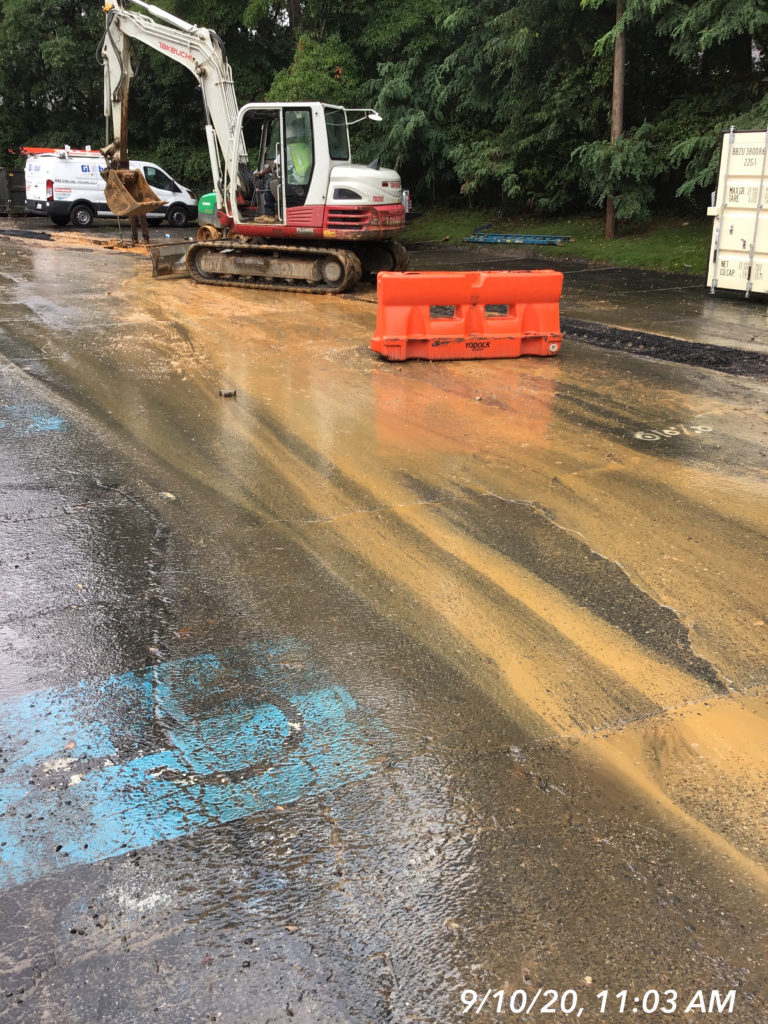
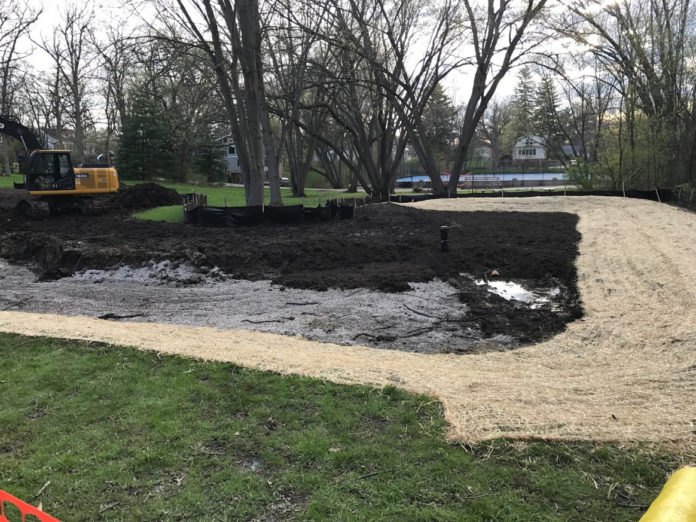
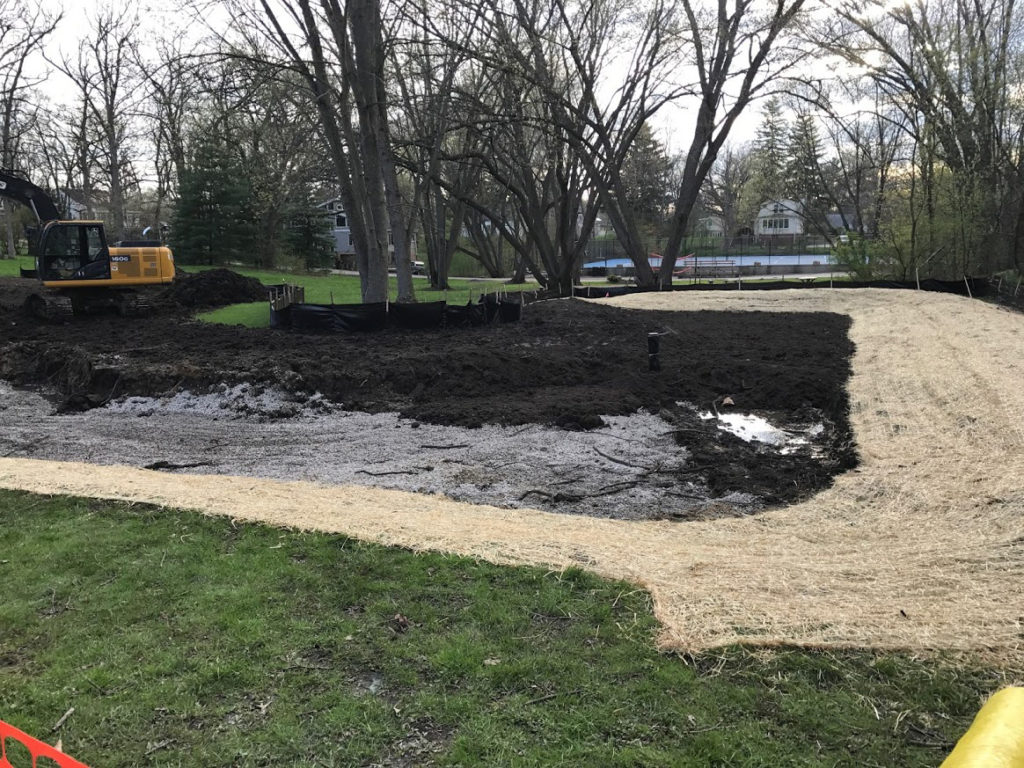
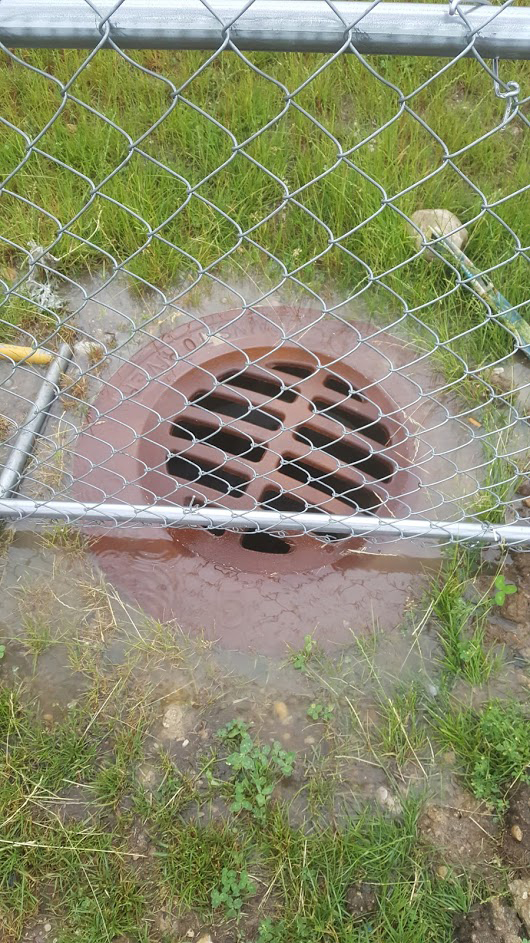
Stabilized soils on a raingarden project.Runoff from unstable soils ponding around catchbasin.