
Home Blog Page 10

Turbidity Monitoring to Measure Effectiveness of BMPs and Treatment Systems

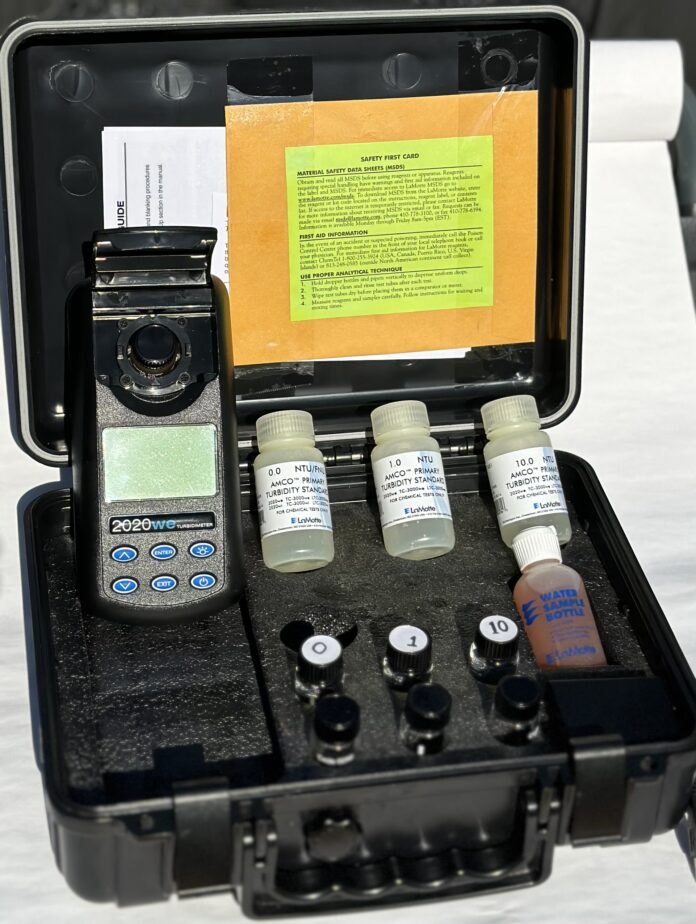
Figure 1. LaMotte 2020WE Nephelometer. Photo credit: Hal Lunsford

There is a fair amount of uncertainty in our industry regarding proper sampling techniques for construction sites that require turbidity monitoring. This uncertainty comes from a lack of knowledge that can leave those that are required to handle this task confused or unaware of the proper methods.

Due to this lack of understanding, surface water monitoring for turbidity is one of the most overlooked field tools for construction stormwater management. Today, we find most people sample turbidity only for compliance reasons. Our regulatory rules require construction sites not to cause or contribute to a surface water quality violation, and the degree that this violation might occur differs from state to state. It is important to protect water from pollution since less than 3.5% of the water on our planet is fresh or drinkable water to begin with. The remaining 96.5% of the water on our planet is either saline (salty) or polluted.1

Many of us have conducted stormwater inspections and learned how to monitor construction site discharges coming from stormwater runoff and dewatering discharges. Unfortunately, too often we are focused on the construction project deadline and not on the pollution our sites create. Water quality monitoring is often done incorrectly or never done at all and without that we are left not understanding why our Best Management Practices (BMPs) should be installed certain ways, and we do not fully grasp the effects erosion from our site might be having off site.

Water quality, especially turbidity measurement, should be used as an erosion control field tool. It can be a useful tool for us to measure the overall effectiveness of our erosion and sediment control BMPs, including our treatment systems, and not just following a permit condition.

Turbidity is defined as a measure of the amount of light that is scattered and/or absorbed by suspended material in water commonly expressed in nephelometric turbidity units (NTUs).2 Turbidity is measured by electronically detecting and quantifying the scattering of light in water typically using an electronic nephelometer for easy and fast turbidity measuring (Figure 1). The meter used must be approved by a regulatory body, such as the USEPA Regulatory Method 180.1 in the United States or ISO 7027 internationally.

Requirements on nephelometers for other countries will vary based on the country’s particular regulations of water quality standards and methods for measuring turbidity. It is important to always calibrate the nephelometer using the recommended manufacturer’s calibration that is based on standards referenced from the U.S. EPA Regulatory Method 180.1 or internationally, the ISO 7027 before using the nephelometer. These calibrations must use a known turbidity standard 0, 1, and 10 NTU Formazin solutions to calibrate the field nephelometer. These standards will typically come with your nephelometer and these standards will require that the solutions have not expired. The calibration should be performed according to the manufacturer’s specifications, and the readings should be recorded in either a logbook for that nephelometer or on the inspection form.

Turbidity was the adopted water quality standard because it is a much simpler method to collect data than with the much slower method of total suspended solids (TSS), which is done in a laboratory test. This method requires filtering and drying a sample to determine a weight, which can then be converted to a concentration. Turbidity and TSS can be caused by detachment of soil particles from clays or silty soil with TSS being the actual measure of pollution in mg/L and turbidity being the indicator of this in NTU. Your jurisdiction may require TSS but allow you to correlate TSS using turbidity. An increase in turbidity or suspended solids can be an indicator of erosion problems shown to negatively affect aquatic health by:

  • Clogging fish gills or the filter-feeding systems of other aquatic animals.
  • Hindering visibility, making it difficult for predators to find prey.
  • Decreasing light penetration into water and thereby the ability of submerged aquatic plants to photosynthesize, reducing biomass and growth rates of aquatic plants.
  • Reducing fish resistance to disease.
  • Altering egg and larval development.3

In 2018, a case study was researched by Kansas State University, titled “Soil Surface Roughness and Turbidity Measurements in Erosion Testing.” This study had shown that turbidity measurements can also provide a secondary measurement of erosion and can help us determine the volume of soil eroded. So, turbidity measurement is a useful field tool in erosion control to help us determine the effectiveness of our BMPs.4

Turbidity can be measured in one of two ways: visually or instrumental. In the past, the Secchi disk (Figure 2), which does not require battery power or calibration, was used to monitor clarity or turbidity. A Secchi disk can be built using easy-to-find materials.5 A Secchi disk is one of several visual methods. This black and white round disk is lowered into the water until it cannot be seen any longer for the first measurement. Then it is raised until seen again for the final measurement. The average of these two measurements is the calculated clarity. The equation to calculate measurements: Secchi depth = (M1 + M2) ÷ 2. The disadvantages of a Secchi disk are that it will not work in a flowing current and is a much slower method to use than nephelometers.
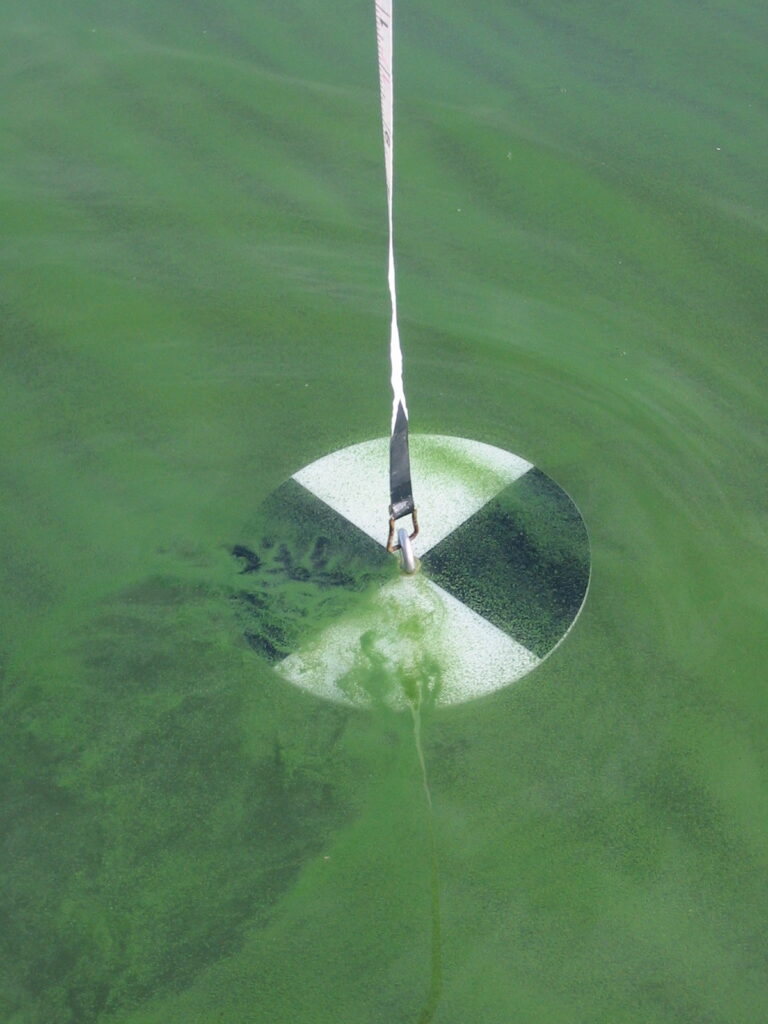
Figure 2. Using a Secchi disk to measure transparency during algal bloom on Lake Waco. Credit: U.S. Geological Survey

Collecting Samples

Safety first always applies to collecting field water sampling. Your safety plan should always include safety boots, skin protection from the sun and insects. You should always be “situationally aware” of dangers in and around water, which include swift or deep waters, dangerous or poisonous animals, and today, even transient humans. In dangerous water conditions use a sampling pole or water sampler supplied with a Niskin bottle, or Van Dorn sampler.

Collection of samples should always be in this order:

  1. Prior to start of project if possible.
  2. Background or upstream sample taken after start of project to serve as baseline.
  3. At point or points of discharge from site.
  4. Downstream of the construction activities.

The depth to collect samples should be at the middle column and not on the top or bottom of the waterbody. In deep or swift water use a sampling pole with a Niskin bottle or Van Dorn sampler. Put the sample in a clean glassware bottle with no apparent scratches or smudges on the surface. Keep your fingers off the glassware, clean off the surface smudges using a Kimwipe and not your shirt tail. This will ensure that no light scattering will occur due to any foreign residue on the outside of the vile which could increase the turbidity reading. Insert the sample into the nephelometer following the manufacturer’s instructions for operation and within seconds, your results will be displayed in NTUs. Take the resulting NTU value and subtract it from the background sample NTU value to get the net NTU value for turbidity at the discharge point. Finally, document the net values on field data sheets.

Hopefully, this value will be below the threshold of the Surface Water Standard for turbidity. This regulatory value will vary from state to state as well as from country to country.

In conclusion, turbidity should always be used as an erosion field tool showing whether your BMPs and treatment systems are performing effectively as well as to maintain compliance with your permit.  

References

  1. USGS, by Water Science School, How Much Water is There on Earth? November 13, 2019. https://www.usgs.gov/special-topics/water-science-school/science/how-much-water-there-earth
  2. International Erosion Control Association. Design Standards Glossary. https://ieca-standards.knowledgeowl.com/help/glossary#t.
  3. United States Environmental Protection Agency. Turbidity – Parameter Factsheet. July 2021. https://www.epa.gov/awma/turbidity-parameter-factsheet.
  4. Soil Surface Roughness and Turbidity Measurements in Erosion Testing, DOI:10.1061/9780784481585.049, Conference: IFCEE: 2018, by Tri V. Tran, Stacey Tucker-Kulesza, and Michelle Bernhardt, June 2018. https://www.researchgate.net/publication/325609979_Soil_Surface_Roughness_and_Turbidity_measurements_in_Erosion_Testing.
  5. Cary Institute of Ecosystem Studies. Measuring lake health: Secchi disk hot-to. www.caryinstitute.org/news-insights/guide/measuring-lake-health-secchi-disk-how. Video: https://www.youtube.com/watch?v=lr66G09PuKg.

About the Expert

Hal Lunsford, MPA, is a 46-year veteran environmentalist and an active member in the U.S. Green Building Council and the International Erosion Control Association (IECA) Southeastern Chapter. He chairs the Erosion and Sediment Control Education Track Committee for IECA. He is the state representative for Florida in the Southeastern Chapter of IECA and an actively qualified Florida Stormwater Erosion and Sediment Control Inspector and a private-sector instructor for the State of Florida Department of Environmental Protection in their FSESCI Program. He holds a bachelor’s degree in earth and atmospheric sciences and a master’s in public administration from the University of West Florida.
Measuring the Climate Impact of Wetland Restorations

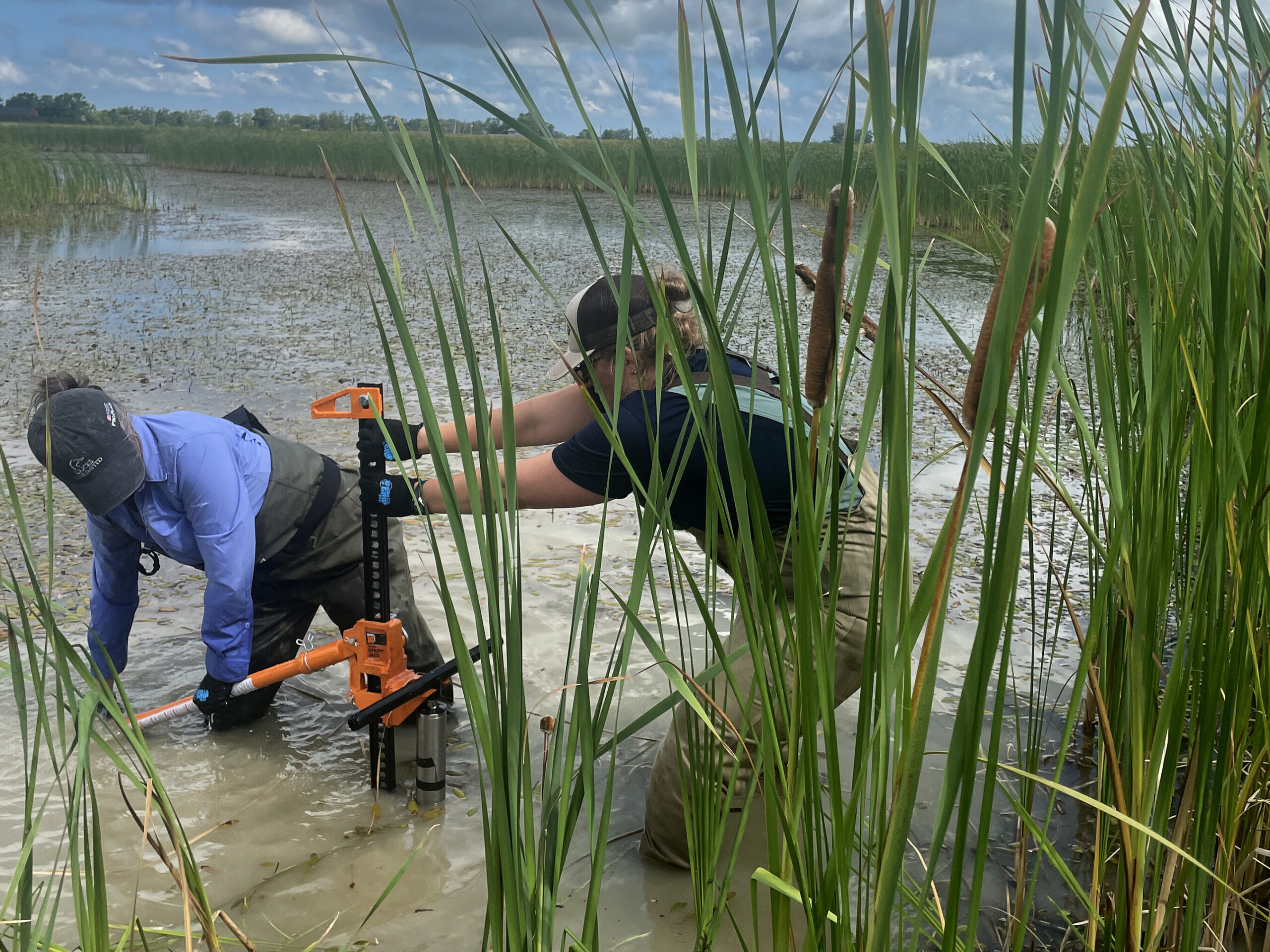
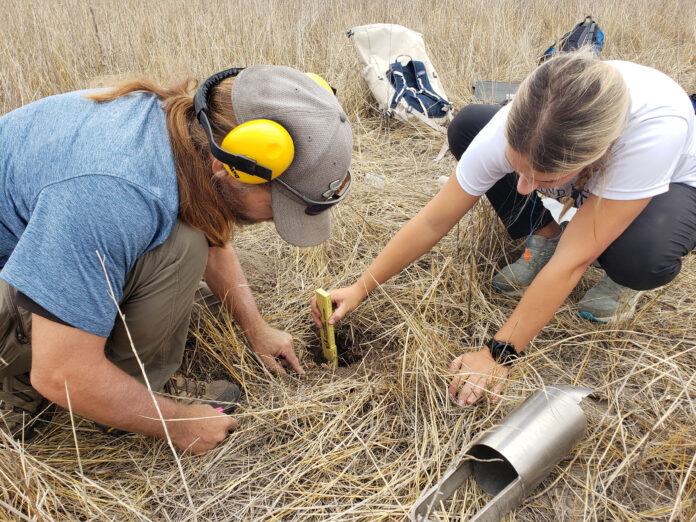
Figure 1. Technicians Kevin Casula and Karolena Popyk measure the depth of a soil core hole in a Kansas playa wetland.

Improving our landscape and land management practices to protect against climate change impacts requires an exhaustive list of ingredients: partnerships, dollars, public policy and landowner willingness.

The one thing connecting all those needs is sound data.

The U.S. Department of Agriculture (USDA) launched a research effort in 2021 to study how ecosystems restored under the Conservation Reserve Program (CRP) contribute to climate mitigation by measuring and modeling soil and vegetation carbon stocks and greenhouse gas fluxes. Ducks Unlimited is leading a multi-institution effort focused on wetlands that will conclude in 2026.

Restored wetlands are increasingly being studied as a natural solution for climate change mitigation and adaptation. This study, funded by a $3.2 million USDA grant, aims to quantify that solution. “There’s a big impetus to better document the lifecycle of a wetland and how that contributes to climate mitigation and climate adaptation,” said Ellen Herbert, Ph.D., Ducks Unlimited senior scientist.
Researchers will spend the next few years coring holes in wetlands at hundreds of sites across the Midwest and Great Plains to monitor soil health and carbon. Partners include the U.S. Geological Survey, University of Missouri, University of Texas, Kenyon College, Clemson University, United Tribes Technical College, Pennsylvania State University, USDA Agricultural Research Service and Farm Service Agency.

The Need

On a global scale, wetland drainage alters greenhouse gas cycles and associated climatic conditions. While only covering 4% to 6% of the earth’s land area, wetlands account for 20% to 30% of total terrestrial carbon storage in soils. However, wetlands are also responsible for 30% of global methane emissions.1 The relationship between storing carbon and releasing methane has not been studied fully and recent research2–4 indicates it depends in part on surrounding land use, wetland hydrology and wetland size.

Across the agricultural U.S. Midwest and Great Plains, 40% to 90% of historic wetlands have been drained for agricultural production since 1780.5,6 This is also the region where more than 80% of the wetland restorations through CRP are delivered.

CRP was first signed into law in 1985. The voluntary program contracts with agricultural producers so that environmentally sensitive agricultural land is not farmed or ranched but is instead devoted to conservation benefits. CRP protects more than 20 million acres (8.1 million ha) of American topsoil from erosion and is designed to safeguard the nation’s natural resources.

Despite restored wetlands’ ability to sequester soil organic carbon approximately five times faster7 than restored grasslands, there has been relatively little focus on the climate benefits of restoration of the millions of drained wetlands embedded in the agricultural landscapes of the U.S.

The study team will measure and model the potential for climate mitigation through wetland restoration under CRP.

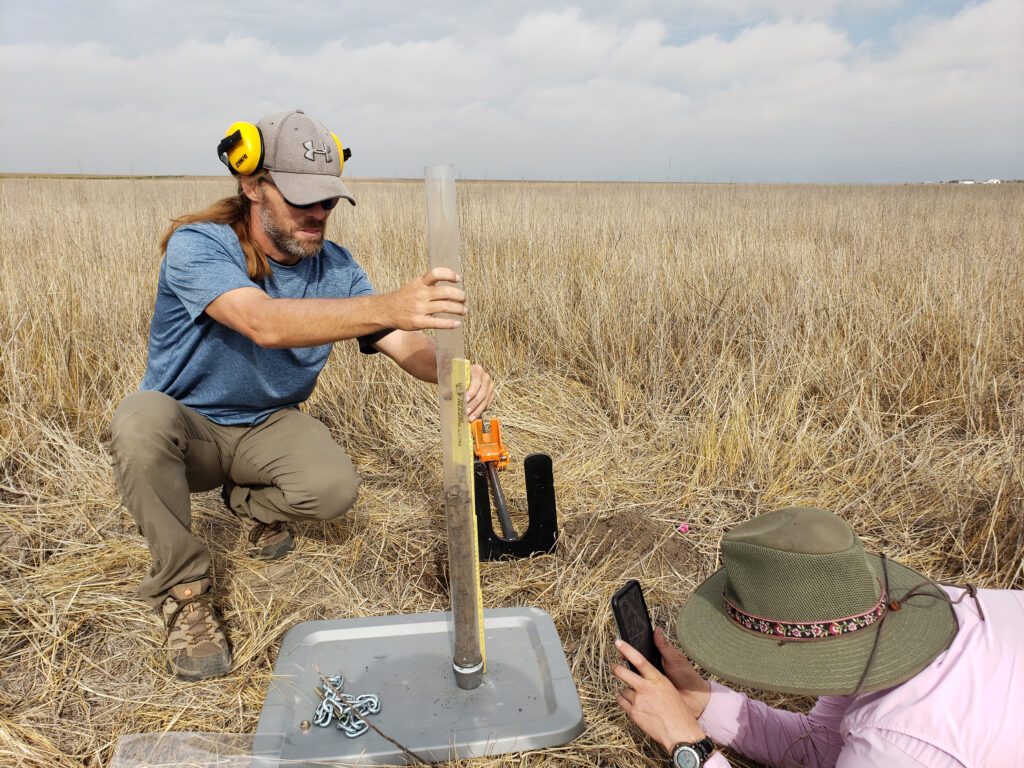
Figure 2. University of Texas at Austin graduate student Megan Podolinsky photographs a soil core taken by Kevin Casula.

The Method

This first step in developing reliable soil organic carbon rates and greenhouse gas emission estimates based on robust models is high quality, high quantity and targeted observations, which are currently unavailable for restored wetlands, including the CRP.

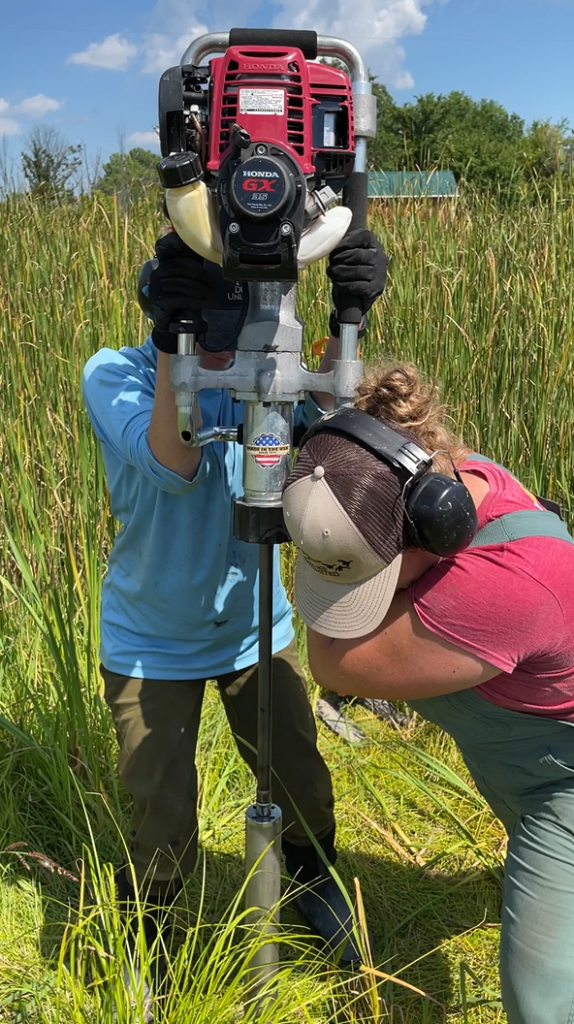
The five-year program is now in its second field season of collecting data. Field crews are descending on more than 80 CRP wetland restoration sites across 15 states to take core samples, vegetation samples and record site descriptors (Figures 1–4). Greenhouse gas sampling will occur three times through the course of the growing season within multiple chambers along transects at each site. Researchers will develop geospatial datasets of key drivers of carbon cycling including biomass, nutrient loading and surrounding land use. The data will then be calibrated to model the wetlands, concentrating on the soil carbon stocks and rates of soil carbon accumulation and the flux rates of greenhouse gasses including carbon dioxide, methane and nitrous oxide. Additional data on flooding and wetland vegetation that will help scale data beyond sampling sites though empirical and process-based models.

“We will model scenarios that account for changes in soil carbon concentration and mass and greenhouse gas emissions that take place when wetlands are drained and cropped or restored, and also examine how surrounding land use, in particular perennial cover versus row-crop agriculture, impacts climate change factors,” Herbert said.

Figure 3. Ellen Herbert and Sara Burns (Ducks Unlimited) use a jack to remove a soil core.

What’s Next?

The goal is to quantify the impact of restored wetlands on soil carbon accumulation, soil carbon storage, greenhouse gas emissions (methane and nitrous oxide) in addition to drivers of carbon cycling like hydroperiod, biomass and surrounding land use. This data may be used to evaluate restoration success, provide recommendations on improving wetland restoration outcomes and communicate benefits of wetland restoration programs like CRP.

“CRP is economically important to producers and provides recreational opportunities, but we’re looking at it for broader societal impacts,” Herbert said.

Beyond educating policymakers, municipal leaders and private sector organizations, the study will provide answers to landowners cooperating in the CRP. The study will enable CRP enrollees to know what their participation is achieving and will help the USDA promote the program.

Ducks Unlimited Canada is involved in a similar study that will offer similar data across a broader landscape. Both projects will guide landscape conservation on a national scale.

Finally, the study creates a foundation to develop future conservation and carbon cycling experts by offering valuable learning opportunities for the undergraduate and graduate students conducting research. Herbert explained, “It’s a unique experience, as these students get to interface with the farmers and producers on the ground, offering a realistic view of science and what conservation really involves.”  

Figure 4. Ellen Herbert and Sara Burns (Ducks Unlimited) collect a soil core in an Ohio wetland with a power post driver.

References

  1. Mitsch WJ, Gosselink, JG. Wetlands, 5th ed. Hoboken, Wiley. 2015.
  2. Bansal S. et al. Large increases in methane emissions expected from North America’s largest wetland complex. Science. Adv. 9, eade1112(2023).DOI:10.1126/sciadv.ade1112.
  3. Tangen BA, Bansal S. Prairie wetlands as sources or sinks of nitrous oxide: effects of land use and hydrology. Agricultural and Forest Meteorology, 2022.
  4. Bansal S, Tangen BA, Gleason RA, et al. Land management strategies influence soil organic carbon stocks of prairie potholes of North America Wetland Carbon and Environmental Management, 2021.
  5. Dahl TE. Wetlands Losses in the United States 1780s to 1980s. U.S. Department of the Interior, Fish and Wildlife Service, Washington, D.C. 1990. P. 13.
  6. Dahl TE. Status and trends of prairie wetlands in the United States 1997 to 2009. U.S. Department of the Interior; Fish and Wildlife Service, Ecological Services, Washington, D.C. 2014.
  7. Euliss Jr. NH, Gleason RA, Olness A, et al. North American prairie wetlands are important nonforested land-based carbon storage sites. Sci. Total Environ. 2006.361: 179–188.

About the Experts

Chris Sebastian is the communications director at Ducks Unlimited. He leads a national team responsible for educating stakeholders about the multitude of benefits wetlands conservation provides for people and wildlife.

Ellen Herbert, Ph.D. is a senior scientist at Ducks Unlimited’s National Headquarters. Herbert works with cross-disciplinary teams of biologists, hydrologists, engineers, and ecologists to evaluate the outcomes of habitat restoration and conservation work across the continent.

Communication: THE Best Management Practice

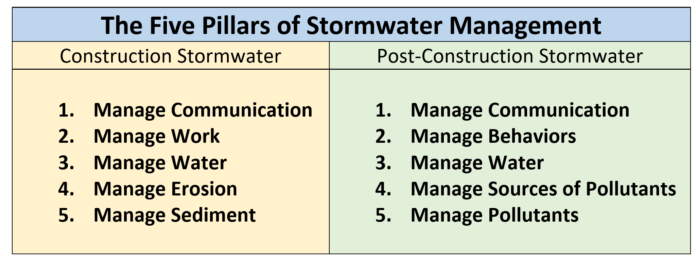
Figure 1. The Five Pillars of Stormwater Management in order of priority and effectiveness.

Saying, “I’m sorry” is the same as saying, “I apologize” … Except at a funeral.
— Demetri Martin.

Comedian Demitri Martin is highlighting the fact that our words matter. In fact, our words — the ones we choose, and how we say them, can significantly influence the effectiveness of our stormwater management efforts.

We have plenty of words at our disposal, many of which convey confidence, mastery and even perfection. Words like erosion CONTROL, sediment CONTROL, BEST management practice, MAXIMUM extent PRACTICABLE (a word we can’t even correctly pronounce some days).

Having lots of words, and even using those words correctly does not equal effective stormwater management or water quality protection. Most stormwater-related issues can be tracked back to a single practice that we haven’t quite mastered yet — communication.

We all know our work is much more challenging than the certainty and absoluteness that our terminology may imply. We know that most stormwater management variables are, in fact, beyond our control. We don’t control when it rains or how hard or how much. We don’t control the environment or amount of space we must work in, and we typically don’t control our budgets.

As challenging as these variables may seem, the most difficult aspect of stormwater management involves people — another critical element you don’t get to control. You don’t control your contractors, your neighbors, your employees or your coworkers.

Only a few things are under your control. In addition to setting your values, goals for excellence and vision for how you will be perceived as a professional, you choose how you influence others and how you communicate.

Let’s assume you have decided to be a stormwater professional whose effectiveness is reflected in the projects and programs you serve. As a professional, your lack of control can be overcome by your influence. Leadership author, Dr. John Maxwell says, “Leadership is influence — nothing more, nothing less.” We know that effective influence requires effective communication — your words, your tone, your actions, your example and your empathy.

There is often a tendency to focus on the symptoms of potential and actual stormwater issues — the pollutant. Managing pollutants, primarily sediment in construction settings, is relatively easy to conceptualize in a technical sense. It’s harder to pull off in the real world. Especially if the sources, causes and behaviors associated with pollution are not also being addressed.

The Five Pillars of Stormwater Management (Figure 1) is a concept and framework for stormwater management that emphasizes the practice of communication to influence and lead others. The Five Pillars approach was developed initially for managing construction stormwater but has since been adapted for municipal applications.

In most environments there is no end-of-pipe solution that can withstand the magnitude of pollutant loading when the pillars listed above them have not first been addressed, including communication.

Communication is the key pillar. It is THE best management practice. Communication often becomes mandatory once all the other pillars fail, and it becomes clear that no one is truly in control of the runoff, project or program. It makes good sense (and cents) to start with communication and to return to it as often as necessary.

Managing communication requires written or verbal interaction and operational systems and behaviors to effectively convey regulatory, contractual and programmatic requirements and policies.

Specific construction-related communications measures and practices are:

  • Policy, procedures and documentation.
    • Contract documents.
    • Design and construction guidance.
    • Design review coordination.
  • Construction stormwater permit coverage.
    • Stormwater permit application and notices.
    • Stormwater pollution prevention plan.
  • Compliance verification and reporting.
    • Stormwater commitment tracking.
    • Environmental inspections.
    • Environmental oversight inspections.
  • Environmental commitment awareness.
    • Environmental submittals.
    • Preconstruction meetings.
    • Environmental training and credentialing.

Effective communication happens when an intended message is received by the intended audience. The qualifier “intended” is extremely important. There is responsibility on both the sender and receiver achieve effective communication.

Stormwater professionals often see themselves in the role of message sender, and in many cases they are. However, most could benefit from a greater awareness of when listening might be beneficial or required. Better yet, an intentional default to the listener role could help the entire profession as we attempt to truly understand the perspectives of those we serve and lead.

When speaking, our job is to talk in a manner that we can be understood. This includes actively working to understand the desires, interests and limitations of our audience — listening before we speak. If we are truly effective, the behavior of our listener will change in some way, not as the result of manipulation, but as the result of recognized demonstrated empathy and respect and an obvious desire for collaboration.

It is also important to remember that communication is a two-way process. When receiving a text or email, confirm that the message was received and ask questions to clarify information or to let the sender know you understand. When speaking, and in written communications, restate the idea, instructions or questions back to the other person to ensure that you both interpret the message in the same way.

The information and the language a stormwater professional uses should be adapted to the audience, and we want to talk with as many different audiences as possible. These audiences and opportunities to communicate our vision include:

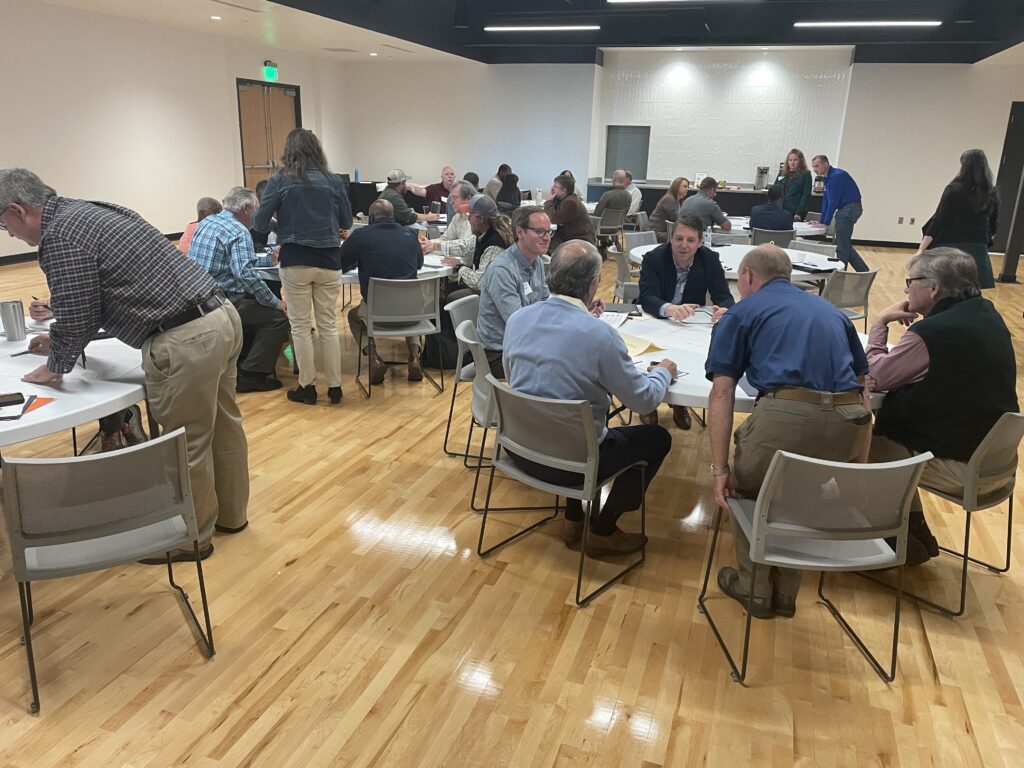
  • Municipal leaders in formal meetings and workshops (Figure 2).
  • Community outreach groups in project visits and updates (Figure 3).
  • Contractors at preconstruction meetings (Figure 4).
  • On-site contractors and inspection staff at “tailgate talks” (Figure 5).

Effective communication also requires consistency in delivering simplified, actionable messaging based on principles of effective stormwater management. Author and pastor Andy Stanley emphasized the importance of making your vision, or message, memorable and portable so people can carry it with them when you’re not there. The Five Pillars approach is a catchy summary of a complex concept. A few other stormwater-related examples of memorable and portable messages are provided below.

  • “Green, gray or purple — it’s all infrastructure.” Conveys the hope that one day we will simply apply the most effective practices for stormwater management, without having to distinguish between nature-based and built stormwater infrastructure.
  • “Water is dumb. We get to tell it where to go and how fast to get there.” A recognition that we have the ability to alter the direction, peak discharge, velocity and volume of runoff — in both positive and negative ways.
  • “Clean water in, clean water out.” A reminder to construct enclosed conveyances, culverts and cross drains as a first order of work so that flow-through waters are separated and protected from construction site runoff.
  • “Green is good.” A mantra used to encourage vegetation preservation and establishment on construction sites.
  • “You don’t have to care about the environment. You just have to act like you do.” Conveys an expectation of environmental stewardship to employees and contractors.
  • “We can’t hope to influence people that we aren’t willing to hang out with.” A direction to commune and communicate with others to effectively lead them.

Some of us serve in traditional leadership roles. Others are working in positions where we don’t feel like we have a voice. Regardless of our title, we all have a circle of influence, and we all have a responsibility to lead from where we sit. We simply cannot do that without effectively communicating. Communication, after all, is THE best management practice.  

About the Expert

Barry Fagan, PE/PLS, ENV SP, CPESC, CPMSM, is an owner and vice president of Fagan Consulting LLC.

The Power of One. The Power of YOU.

As we turn the corner that gets us closer to year-end, hard to believe I know, it’s time to take a good look at YOU!

Ask yourself, “Do I like what I see?” It is one of the most important, difficult and valuable questions we can ask ourselves. It is a difficult question because we must be objective for it to be a valuable and rewarding exercise and experience. We spend a lot of time, money and resources evaluating, educating, coaching, supporting and growing our customers, team members and partners, but how much energy and resources do we expend on ourselves?

I hope all of you like what you see, but many of you may not and instead see that change is needed. Regardless of what we see, it is important to reward ourselves but also know that we can always improve and get better.

But better at what? That’s up to you, and there is only one “you.” You hold the power within, and maybe with a little bit of help and insight from your coach, mentor, family, friends and teammates you can identify where you need to improve. What do you need to help you improve your knowledge, grow your skills and satisfy your curiosities to make you successful.

Do you need to increase knowledge and understanding in the areas of finance and cash flow, recruiting, training and rewarding your customers, using technology and social media, mastering a new piece of equipment, enhancing your speaking skills, presenting your ideas or understanding how AI fits into your key processes? How will this new knowledge enhance your business model so you truly are unique? Will these pursuits satisfy your greatest curiosities that help you excel at being you? If so, what are the best channels, people, books, programs, events, schools, tools, podcasts, social media and publications to learn and leverage these learning opportunities?

Ask yourself, “Do I like what I see?”

I’ve said and written this hundreds of times — there’s nothing comfortable about a comfort zone and in fact, it is downright dangerous. A comfort zone means that you’re not changing, not stretching, not growing and not moving forward. It means you’re moving backward and slowly decaying. No, that is not a sensational or dramatic statement, it’s a friendly warning and heads-up since decay means to deteriorate and erode. I can’t think of a faster path to professional and personal decay than staying in your comfort zone with no learning, no change, no growth or no forward movement. How arduous, taxing, painful, difficult and dehumanizing it would be to feel the ruts of sameness and mediocrity built below your very own foundation.

You have the power within “you” to not only prevent professional and personal decay but to create and build your own unique prescription, formula and path to flourish and grow. So, relax and sit or lay down and take an objective and curious look at “you” without any noise or interference from the outside and give yourself the time, space and resources you need for yourself.

What’s going to make you want to write, share and re-read your autobiography? What’s going to make you say the best vacation you ever took was your personal journey designing, building and walking down your personal pathway? That is the power of the one and only YOU!


About the Expert
Judith M. Guido is the chairwoman and founder of Guido & Associates, a business management consulting firm in the erosion control and green industry. Guido can be reached at 818.800.0135 or judy@guidoassoc.com.

Streams in Transition

Examples of the stream in the earlier developed watershed showing recent bank erosion (A) and gravel bar deposition (B). Photo credit U.S. Geological Survey.

Humans have attempted to “tame” streams through channelization and bank hardening for centuries. More recently, a better understanding of stream processes and ecosystem services has led to efforts to return them to a more natural state when possible. Two recent studies have taken very different approaches to gain further insights into stream dynamics as affected by potential or actual interventions.

In one study, a large model stream was constructed under laboratory conditions and the effects of sediment inputs and different stream-widening strategies on stream morphology.1 A model stream was established on a 4-meter-by-32-meter platform with a 1% slope. A trapezoidal channel was established with one bank non-erodible while the other bank had a 22-meter section that was erodible and also represented a potential flood plain. Based on a reference stream, flows were scaled to represent either 1.5 (bed-forming) or 30 (unsteady flood) return periods. Sediment was injected at rates representing 100, 80, 60 and 20% of stream capacity, determined based on outlet sediment delivery. Several variables were also tested, including a deflection device on the stable bank to initiate erosion on the erodible bank, and two cuts in the erodible bank also intended to initiate erosion. A little bank erosion occurred at the two lower sediment loading rates, but the channel widened considerably at the higher sediment loading rates. Channel widening to generate sediment and prevent the high shear, single thread channel that low sediment flow promotes was the objective, but the deflection device had little effect on bank erosion. However, two jagged cuts in the bank did initiate the erosion process. This “dynamic river widening” process was expected to take years to decades to stabilize. The authors recognized that having sediment supply at the stream transport capacity may not be desirable for a number of reasons but suggest that stabilizing a stream will require consideration of the potential sediment availability in the system.

Another approach to studying stream dynamics is to obtain measurements of their properties over time, which was what Williams et al. did.2 They evaluated 17 years of annual stream cross-section measurements from four headwater streams in a portion of Montgomery County, Maryland, USA, in the Chesapeake Bay watershed. The stream watersheds included one that was 86% forested with little disturbance, one that was primarily agricultural with some suburban development in the later years and two that went from 4% to either greater than 30% or 45% impervious cover during the measurement period. The developed watersheds had either 144 or 274 stormwater practices per square kilometer by the end. The types of stormwater practices were somewhat different in the two developed watersheds but included tree boxes, recharge chambers, infiltration trenches, underground detention, sand filters and dry basins. All runoff from impervious surfaces in these watersheds went through a stormwater practice. The forested stream was surprisingly dynamic, with increases in bankfull width, channel area and channel deepening, but the authors considered it near “quasi-equilibrium.” The agricultural stream was in a widening and aggradation phase primarily. The stream with the less recent development was primarily in the incision phase (Type II) and the one with more recent development in widening and aggradation phases (Types III and IV). The authors suggested that the stormwater practices in the earlier developed watershed may be more effective than those in the more recent developments, but variations within each watershed could have been a factor. There was more sand during earlier development compared to the more recent construction activity, which this reviewer suggests could have been from improved sediment basin designs.  

References:

  1. Rachelly, C., D. F. Vetsch, R. M. Boes, and V. Weitbrecht. 2022. Sediment supply control on morphodynamic processes in gravel-bed river widenings. Earth Surface Processes and Landforms, 47(15), 3415–3434. https://doi.org/10.1002/esp.5460.
  2. Williams, B. M., K. G. Hopkins, M. J. Metes, D. K. Jones, S. Gordon, and W. Hamilton. 2022. Tracking geomorphic changes after suburban development with a high density of green stormwater infrastructure practices in Montgomery County, Maryland. Geomorphology 414 (2022) 108399. https://doi.org/10.1016/j.geomorph.2022.108399.

About the Expert
Rich McLaughlin, Ph.D., received a B.S. in natural resource management at Virginia Tech and studied soils and soil chemistry at Purdue University for his master’s degree and doctoral degree. He has retired after 30 years as a professor and extension specialist in the Crop and Soil Sciences Department at North Carolina State University, specializing in erosion, sediment and turbidity control. He remains involved with the department as professor emeritus.

Transforming Urban Industrial Land to Vibrant Public Access and Habitat

Figure 3. New habitat attracts fish as well as other wildlife, include osprey.

The new Duwamish River People’s Park and Shoreline Habitat, a 14-acre (5.6-ha) public space and habitat site with over 3,000 linear feet (914 m) of shoreline habitat, is the largest habitat restoration project in a generation on Seattle’s only river. The Port of Seattle, which owns and operates maritime facilities and the Seattle-Tacoma International Airport, is committed to becoming the greenest port in North America. Central to that goal is the restoration of 40 acres (16.2 ha) of habitat in Green-Duwamish watershed and Elliott Bay. The Duwamish River People’s Park achieves 35% of this goal and serves as a key habitat site in a highly urbanized watershed.

While this project began with dual goals to clean up a contaminated terminal and restore habitat, the community called for the Port to do more, specifically to create green space and provide a connection to the Duwamish River. Indigenous people lived in this region and used the river since time immemorial. Over the last century, industrialization dramatically reshaped the river and made it central to local manufacturing, transportation, logistics and other industries. It took over two decades of planning, permitting and cleanup work, over $25 million and more than 10 partners before it became both a public-use park and the largest fish and wildlife habitat restoration project constructed in the Duwamish River in a generation.  

The Port of Seattle first acquired the Terminal 117 Property in 1999, after decades of industrial use. From 1937 to the early 1990s the site was operated by Duwamish Manufacturing Company and Malarkey Asphalt Company, whose operations left contaminated soil and sediment. In 2003, the Environmental Protection Agency designated the site an “Early Action Area” within the Lower Duwamish Waterway Superfund site due to its potential risk to people or wildlife nearby after polychlorinated biphenyls (PCBs) were found on the site. By 2022, approximately 55,000 tons of industrial and fill soils and sediments were removed
from site.

Figure 1. Excavation of site.

While an important area for industrial activities, this same stretch of river is an active fishing zone for Indigenous peoples. Every year during the salmon migration season, Muckleshoot and Suquamish Tribal fishers harvest returning Chinook, coho, pink, chum and steelhead salmon as they practice their treaty fishing rights along the river. This location, at approximately river mile 4.1 in the present waterway, is in the center of a former oxbow of the approximately 17-mile-long (27.4-ha-long) Duwamish River — a critically important location in an estuary that has lost more than 99% of all native aquatic and shoreline habitat and natural resources values. The restored habitat represents a 40% increase in critically important salmon habitat along the Lower Duwamish River.

The Duwamish River People’s Park represents more than 20 years collaborative work among South Park, Georgetown, and Duwamish Valley residents, the Port of Seattle, City of Seattle, King County, the Muckleshoot Indian Tribe and the Suquamish Tribe, and state and federal agencies.

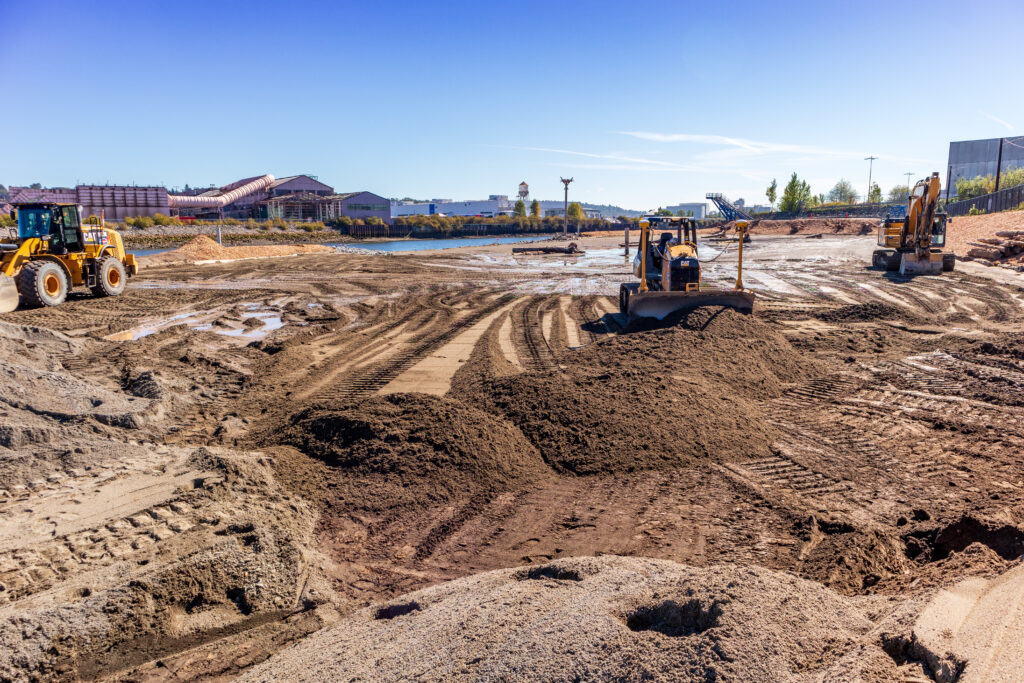
To create the habitat, the site elevation was excavated approximately 14 vertical feet (4.3 m) — working down from contemporary street level to the historic estuary level of Duwamish River and re-exposing vital estuarine aquatic area (Figure 1). The goal of the habitat project was to create high-value fish and wildlife habitat, including improved shoreline and creation of off-channel marsh, that is important for salmon and other fish species. The project is anticipated to provide significant estuarine and aquatic services that are currently scarce in the Lower Duwamish Waterway. Almost 20,000 native marsh plants (six species) and almost 20,000 native riparian trees and shrubs (21 species) were installed (check out the newly planted marsh basin filling as the tide rises at www.youtube.com/watch?v=XF67L8e_18c).

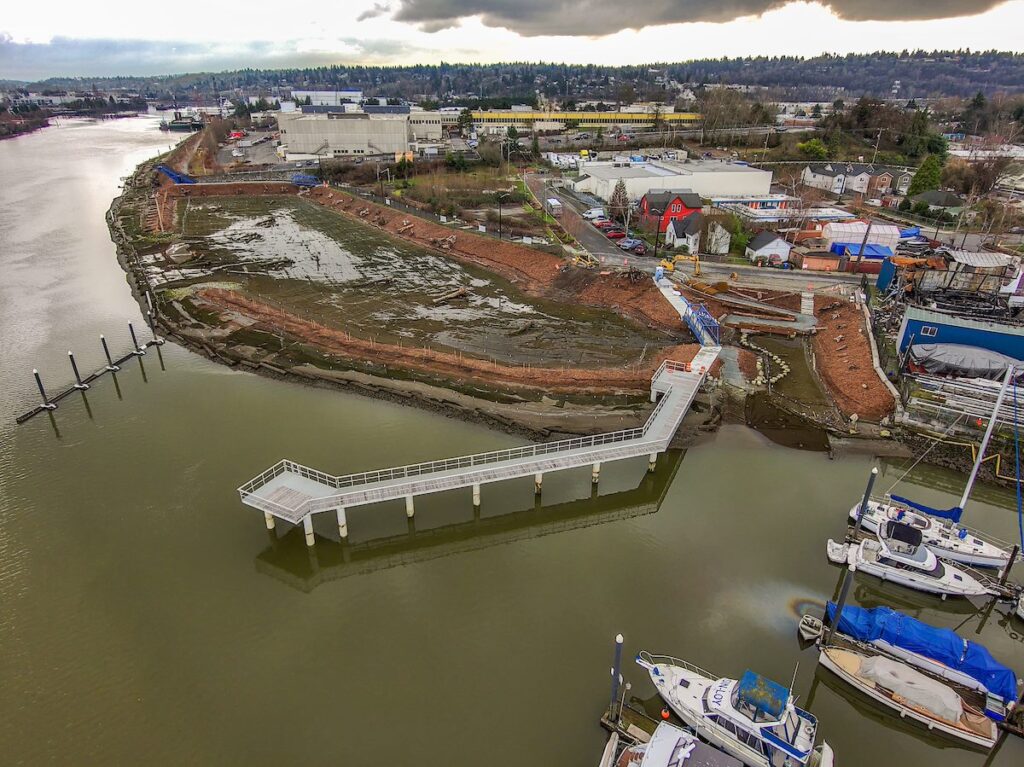
The Duwamish River People’s Park and Shoreline habitat (DRPP), combining public access and restoration of important habitat, integrated citizen and agency input, demonstrates the project partners’ long-term commitment to natural resource and public use improvements. Based on community feedback in 2013–2014, the habitat site added public amenities desired by the local Duwamish Valley community to the site design. The site now includes a viewpoint pier, accessible pathways/trails, seating, environmental interpretation signage, public art and a hand-carry boat launch (Figure 2).

Figure 2. Amenities such as a viewpoint pier were added to site at community’s request.

The DRPP integrates re-purposed and recycled materials into public access and habitat elements of the site, including salvaged watershed large wood, passenger gangways for viewpoints, re-purposed local bridge metal decking and recycled former marine cargo dock concrete piling for stairs. The resulting project is one of the largest habitat restoration projects along the Duwamish River and is the product of years of creative planning and careful design elements.

An important element of the project is 14 acres (5.6 ha) of newly restored estuarine habitat along nearly half a mile of shoreline (0.8 km). The site will enhance critical habitat for fish and wildlife species (Figure 3) and benefit the surrounding Duwamish Valley communities by creating river access, greenspace and recreational opportunities.

The Port of Seattle’s long journey to clean up an old industrial site led to the largest habitat transformation on the Duwamish River in a generation. The project establishes the Port’s first “habitat credit bank” that enables third parties to invest in habitat projects as mitigation credits to comply with the Clean Water Act and the Endangered Species Act and Natural Resource Damages credits that are associated with the Lower Duwamish Superfund site. Revenue generated by the Port will fund additional habitat restoration projects in the Green-Duwamish Watershed and Elliott Bay. In addition, the site will serve as a learning lab for young environmentalists seeking skills training and hands-on experience with careers in habitat restoration and marine wildlife conservation.

While the DRPP is the Port’s largest habitat restoration project to date, it is one in a diverse portfolio to develop sustainable shorelines in and around Seattle. The Port of Seattle is committed to steward the region’s public resources and manages shoreline and habitat areas in a way that benefits the environment, community, and economy. 

About the Experts

Kathleen Hurley is a senior environmental program manager in the Maritime Environment and Sustainability department at the Port of Seattle. She manages fish and wildlife habitat sites and other environmental assets and works with a dedicated team supporting the blue economy through development of the Port’s first Ocean Acidification Action Plan, the Urban Kelp Project and the Smith Cove kelp, eelgrass and oyster enhancement project.

Mallory Hauser is the sustainability communications manager for the Port of Seattle’s Maritime department and Seattle-Tacoma International Airport. She develops campaigns and content to share environmental conditions, metrics and successes to local, national and global audiences in areas of climate action, alternative energy, air quality, habitat restoration, sediment remediation, water quality, stormwater management and waste management.

Came for the Job. Stayed for the Passion and Culture.

Dibble and friends at University of Michigan football game.

Adam Dibble, vice president of environmental solutions for Profile Products and recipient of the 2023 IECA Sustained Contributor award, did not know that careers in the erosion control industry even existed when he finished college — especially for a business major with an interest in sports marketing. After several positions that allowed him to hone his marketing skills while working for Nike, the national office of his college fraternity, Sigma Pi, and for the Institute of Real Estate Management, he joined the team at Profile.


“I started as a marketing manager in the sports field division, which was perfect with my sports background,” said Dibble, who played multiple sports in high school and received a tennis scholarship to attend Ferris State. “When an opportunity opened up in our erosion control division, which is now known as environmental solutions, I gravitated to it as a way to continue my professional development.”

At the time, Dibble saw the job as a good career move to a rapidly growing part of the business. In addition to expanding his opportunities and allowing him to learn more about the industry, he discovered a greater interest in protecting the environment. “I’ve always been passionate about marketing and business, but I discovered that working in an area that improves the environment is equally exciting,” said Dibble. “Whether it is constructing a dog park, improving a local waterway or creating venues at the Sochi Olympics, the fact that we are working with products that protect the environment and ensure clean water, creates a great deal of satisfaction in the work.”

Dibble worked his way up in the company and quickly moved from his marketing manager position into senior positions leading the marketing, inside sales, business development and Biotic Soil Media program. Profile Products supports professional development, so as his responsibilities broadened, he sought additional, industry-specific education. In 2014 he became a Certified Erosion Sediment and Storm Water Inspector (CESSWI), and in 2018, he became a Certified Professional in Erosion and Sediment Control (CPESC).

Dibble and fellow IECA board member, Jonathan Koepke.

“I realized early on in my career that because I did not study environmental science I was at a knowledge disadvantage when creating marketing strategies,” said Dibble. “My mentor, Marc Theisen, suggested certification in relevant areas to give me real-world knowledge that would add credibility to my marketing programs.”

One of the pleasantly surprising aspects of learning more about the erosion control industry at a deeper level, was the realization that he had contributions to make beyond his role at Profile. “Originally, I pursued certifications for what I could get out of the education, but I learned how much I could bring to the industry and give back,” said Dibble. “Because I came into the industry with a different perspective, I have no biases and can ask questions that challenge the status quo.” Those questions can lead to improved processes, products and solutions, he added.

Dibble joined IECA in 2009 and served on several committees before election to the board of directors. He served as the 2019–2021 IECA Region One Board President.

During his term as president, efforts to reunite IECA culminated to create one international organization rather than a segmented association comprised of Region One and the Australasia area.

“It made sense to operate as one international association because we have a lot to learn from each other,” said Dibble. “One of the original reasons to split the organization was related to costs of travel for meetings and conferences, but now technology allows us to offer online experiences to overcome the expense of travel when it is an issue.”

As the youngest person to serve as president of IECA, Dibble is focused on attracting a wide range of ages into the industry and the association. “We want young professionals in our industry, but we were prohibiting them from gaining professional and leadership experience because of the years of membership requirements for service on the board of directors,” he said. “I understand the intent of the previous requirement that a professional had to have five years of experience in the industry before serving, but our decision to change to three years of experience opens leadership opportunities to more people.”

Attracting young professionals is easier when leadership is comprised of a range of years of experience, said Dibble. While it might be easier for someone at the beginning of their career to relate to someone in their 30s and 40s, it is also beneficial to interact with professionals who have led the industry through changes over the past decades, he added. “Mentoring and educating other members of all ages is an excellent way to give back to the industry.”

The pace of change in the industry is challenging, said Dibble. In addition to efforts to mitigate risks to wildlife and continued concerns of microplastics with rolled erosion control products, there has also been a change in the perception of soil lost via erosion. “Soil loss from erosion used be treated as passive pollution, but now is being recognized as a precious resource and critical for successful vegetation. Increased use of soil testing and technologies like biotic soil have changed the focus from merely replacing lost soil to customizing the soil to ensure growth of vegetation to minimize erosion,” he said. “Technology has also improved erosion control products to have less of an effect on the environment and allowing customized solutions for each project.”

On a personal note, when Dibble is not at work for Profile Products, IECA or the many other organizations in which he is involved, he can be found traveling or enjoying a variety of sports — snowmobiling, boating (on his boat “The Kids”) or golfing. He enjoys these activities with his wife Stephanie and three St. Bernards, which are ages 9, 7 and 1.5 years old. He is also an avid University of Michigan fan and a Detroit Lions season ticket holder.

While his career is in an industry that he knew nothing about in college, Dibble sums up his decision to work in the erosion control industry by saying, “I moved into environmental solutions for more career opportunities but stayed for my passion
for the environment and the culture I found.”  

Adam Dibble with wife, Stephanie.

Fast Facts: Adam Dibble
Years in erosion control: 14
Academic: B.S. in management and marketing from Ferris State University.
Professional certifications: CESSWI and CPESC
Volunteer/leadership: Chair of the CPESC Committee, VP Great Lakes Chapter of IECA
Awards and Recognitions: IECA Sustained Contributor (2023), IECA 4 Under 40 professional (2020), 2018 Sigma Pi Fraternity Young Professional Achievement Award, IECA Outstanding Professional (2017) and Stormwater Solutions Rising Star (2016).

Mimicking Natural Process to Deliver Energy Dissipation and Sustainable Mangrove Nurseries

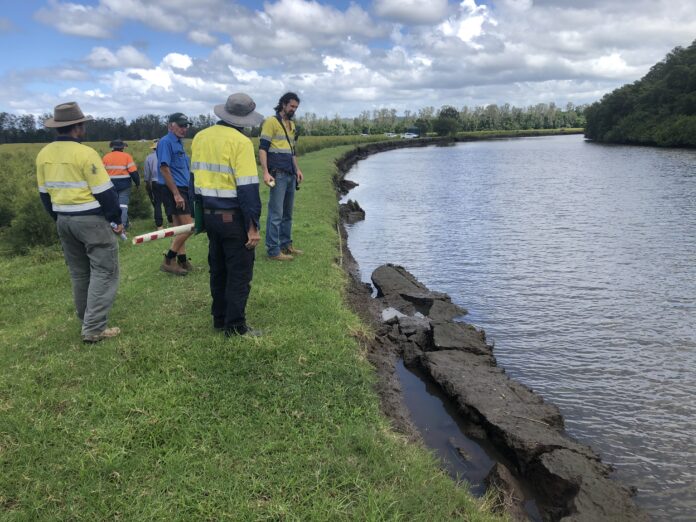
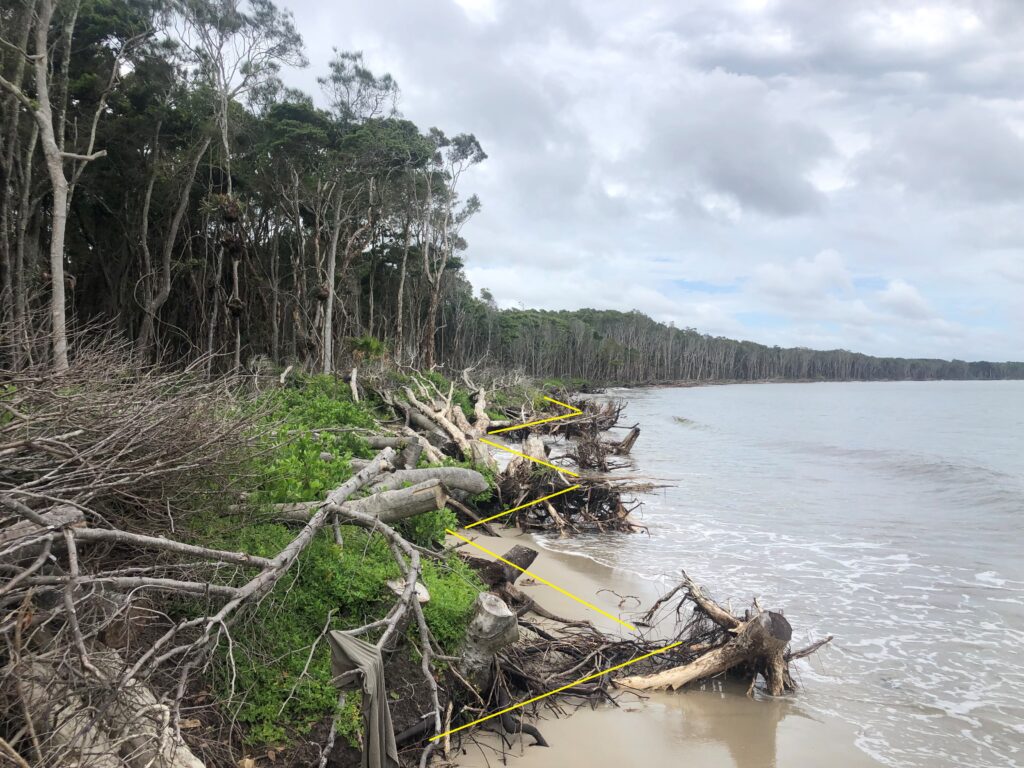
Figure 1. Corrugated log fillet site before works showing massive bank failure.

A four-year project within Emigrant Creek, a sub-catchment of the Richmond River, showcases best practice stabilization with a goal of mitigating diffuse pollutants such as sediment and nutrients in the Richmond River Catchment in northeastern New South Wales, Australia. North Coast Local Land Services has designed and commissioned 3 km (1.86 miles) of riverbank erosion control projects using novel approaches aimed at mimicking natural recovery processes and habitat types. This has included the use of snag hotels, reef balls and corrugated log fillets to promote river stability and recovery.

The Marine Estate Management Strategy Project, funded by NSW Department of Primary Industries–Fisheries, also undertakes dirt road remediation and revegetation works to complement its river works program. Overall, 3,000 wet tonnes (3,300 US tons) of sediment have been prevented from impacting downstream marine estate habitats while protecting highly valuable agricultural land since the project commenced.

The works have also proven their resilience after recently surviving two significant flood events, approximately 20 months post construction including surcharges estimated to be 1 in 1,000-year flooding events.

Regular monitoring has highlighted that corrugated log fillets perform exceptionally well, with over 600,000 mangrove propagules naturally established at a project site in Teven within the first 18 months and over 430 m3 (15,200 feet3) of suspended sediment captured from upstream farms since construction in July 2020.

Figure 2. Natural recovery process and woody debris alignment.
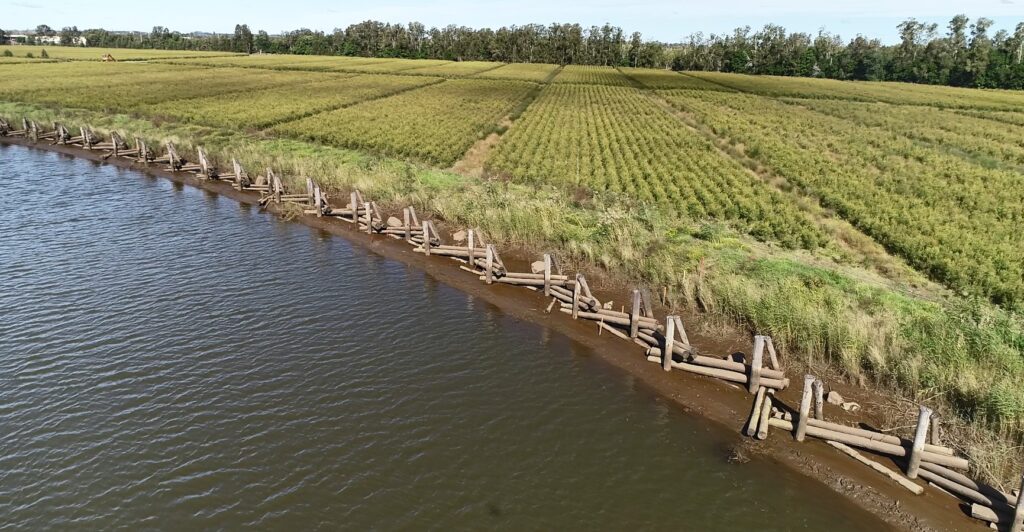
Figure 3. View of corrugated log fillet design showing minimal footprint.

Flagship Case Study: Corrugated Log Fillets — Tea Tree Farm, Teven.

In early 2020, North Coast LLS began the design process to remediate a high-profile riverbank slumping site that exhibited a rate of erosion averaging 300 mm (11.8 inches) per flood event along 800 m (2,627 feet) of estuarine river corridor (Figure 1).

The site was located adjacent to a tea tree farm west of Ballina in the middle to upper Emigrant Creek Estuary, approximately 11 km (6.8 miles) from the confluence with Richmond River. North Coast LLS led a multi-disciplinary collaboration to have the site endorsed by key state and local government stakeholders and partner with Southern Cross University to undertake periodic monitoring.

Erosional processes were identified as meander migration, helical flows along an outside bend, fragile bank material residing on a steep angle of repose and recreational boat wash combining with a lack of vegetation to undermine bank stability.

The eroding reach, and the near-pristine mangrove-dominated opposite bank, were surveyed to identify preferred mangrove recruitment heights, species complexity, thalweg position and channel symmetry. Field assessments also assisted in identifying natural estuarine recovery processes. It was noted that if the ground elevation was suitable, a façade of mature mangroves and/or woody debris would promote the slack water habitat required to encourage mangrove propagules to establish (Figure 2).

This gave the team some real guidance towards a viable natural solution that would exceed the benefits of conventional methods such as rock fillets.

North Coast LLS then developed a concept design of a mangrove embayment area mimicking these natural recovery processes and forest settings and engaged the NSW Soil Conservation Service to administer the construction process. The concept design called for the excavation of the bank to an appropriate bed level that would promote mangrove recruitment (mean sea level), while fully utilizing the excavated material to recreate a bank shape stable enough to withstand flooding events.

A corrugated log fillet was then incorporated into the design to trap mangrove seeds and protect the nursery and newly formed bank from wave action (Figure 3). Objectives of the structure included:

  • Deflect both wind and boat wash with the serrated or corrugated shape.
  • Woody debris would be sustainably sourced timber and act as habitat.
  • Create additional interstitial gap habitat complexity with micro-habitats in the form of rock pockets.
  • Recruit mangrove seeds within the embayment area at multiple tidal heights.
  • Promote significant carbon capture opportunity.
  • Increase instream roughness to promote deposition of suspended sediment and nutrients.
  • Tidal flux would buffer acid sulphate soils until adequate ground cover was achieved.

Corrugated log fillets primarily aimed to deflect boat wash but also provided the opportunity for surcharging flows from floods to be directed away from the bank edge. Roughness is a key geomorphic feature that has been lost in Australian rivers following European settlement. Historical snag removal to aid navigation and vegetation lost due to poor land management practices promotes ongoing issues for river management across NSW.

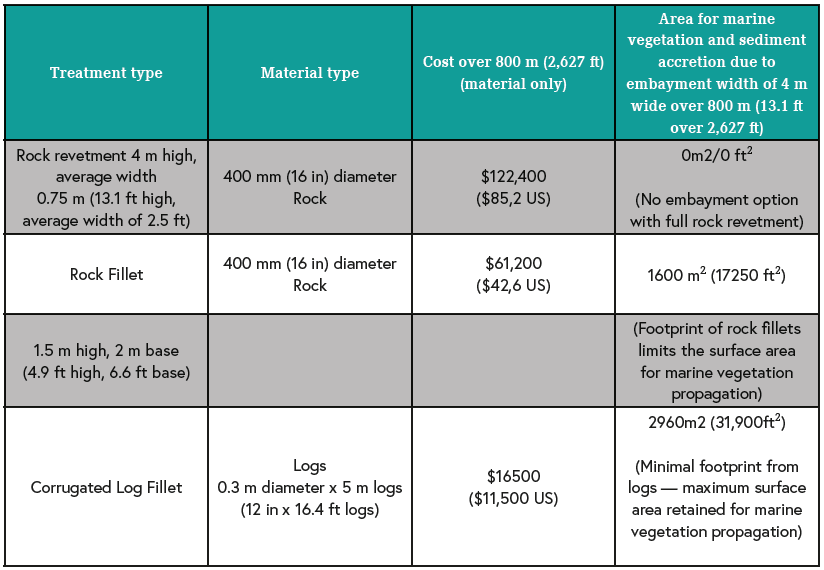
The project also sought to actively minimise the legacy traits associated with conventional rock works. There were notable benefits to this approach including reduced costs (Table 1).

The structure is designed to promote mangrove forest formation and maturity in the same period as the life span of its material type (native hardwoods), with the idea that once the structure decays in 20 years, a mangrove forest has formed as a living sentinel to provide ongoing bank stability, wave suppression and habitat complexity (Figure 4).

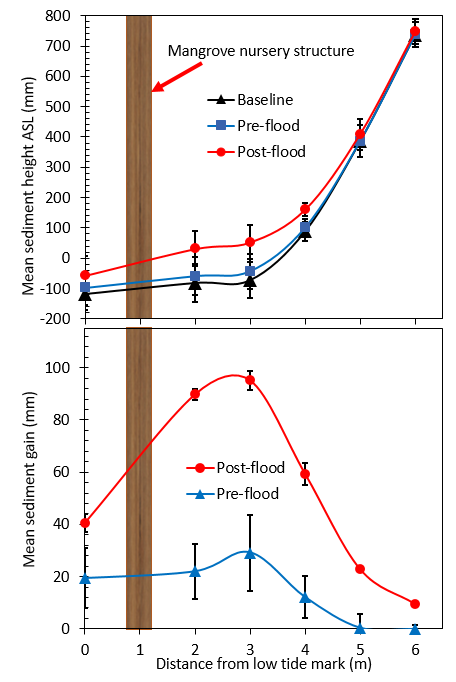
Quantifiable benefits include preventing the continued loss of bank material, estimated at 360 cu m3 (12700 ft3) or 612 tonnes (675 US tons) per flood event, onto downstream seagrass habitats. Data capture to date indicates a mean sediment accumulation rate within the embayment area of about 3.5 mm (0.14 inches) per month prior to floods (February 2022) and about 12.0 mm (0.47 inches) per month post-flood. Overall, the structure sequestered 430 m3 (15,200 ft3) or 733 tonnes (808 US tons) of suspended sediment in 24 months of sampling (Graph 1).

Table 1. Key material comparison analysis for 800 m (2,627 ft) of bank stabilization cost and habitat availability.
Graph 1. Mean sediment height pre and post flood and mean sediment gain pre and post flood.

Although the flood period in early 2022 significantly impacted mangrove recruitment — over 90% of juveniles — the remaining 10% of the mangrove vegetation is more than sufficient to form healthy forest coverage (Graph 2). The 10% that did survive are most likely mangrove seeds that recruited into the structure in August 2020 (immediately following completion of works in July) as they had the height and strength to withstand multiple flood surcharges. This suggests that the preferred timing to finish works should coincide with known mangrove seed “drops” (July–August) to maximize recruitment potential as soon as possible. It also highlights the efficacy of corrugated log fillets to promote propagation and survival of juvenile mangroves (up 121 per m3 (10.76 ft2) prior to floods and 11 per m2 (10.76 ft2) post flood) with mature mangrove forests generally exhibiting no more than 1 tree per 4 m2 (43.06 ft2).

The site will also be analyzed at Year 4 to understand Blue Carbon, nutrient and heavy metals capture. The potential for the design to demonstrate significant sediment capture and Blue Carbon storage while attenuating floods and fertilizer runoff from upstream farms represents a more holistic approach to modern riverine management. 

Graph 2. Mangroves per 25cm2 pre and post flood (above) and Mean Mangrove Height pre and post flood.

About the expert

Shaun Morris, M NRM, AdvDipAEM, PostGrad RR&M, CEnvP, is a senior land services officer in the Natural Assets Protection Team, North Coast LLS (NSW Government) and has accumulated over 24 years of experience developing his on-ground works portfolio across a range of freshwater and marine riverine settings.

About the Project

The Marine Estate Management Strategy (2018–2028) is funded by the NSW Government and aims to maximize the benefits the NSW community derives from coastal and marine habitats while enhancing the health of the Marine Estate. For more information visit www.lls.nsw.gov.au/MEMS.

Figure 4. Time series of corrugated log fillet from end of construction in July 2020 to February 2022.

Traits of Successful Environmental Compliance Programs

Regardless of the size of the developer or any other kind of company or governmental entity that has an environmental compliance program, the success of the program depends on support from upper management, knowledgeable staff and proper planning.
An environmental compliance program is a set of procedures and practices a company uses to maintain compliance with applicable environmental laws and regulations. Support from upper management is crucial because the culture of an organization comes from the top down. Knowledgeable staff for the job ensures that someone is available to help navigate the local, regional and federal regulations so that the project’s compliance program can succeed. Proper planning plays a significant role in the success of a compliance program to allow the best use of resources available for the project.

Support from upper management is pivotal in the success of an environmental compliance program. Generally, an organization’s culture reflects the values of the management team, so if the management team values compliance, the rest of the team will follow. This starts with the top tier of the company’s leadership as they will build a team that is well equipped to have a successful environmental compliance program.

Often you can spot environmental compliance programs that are not effective because the responsible party involved with the project either explicitly states their intentions to do no more than what is required or implies through their actions that complying with the regulations are less important than project costs or timelines. In many states, there are additional requirements from the county or city in which the project is located. Simply meeting the city requirements does not always mean that county, state and federal requirements are met.

A supportive upper management team is also aware of what equipment and other resources the team needs. The management team understands the need for and benefit of proper training and having qualified personnel implement the compliance program. Management provides for the appropriate project budget to stay in compliance with federal, state and city/county requirements.

The best staff for the job are personnel who hold certifications, have experience or are willing to learn. An experienced compliance program manager understands what is needed for the execution of the project while maintaining compliance with environmental regulations. This individual can either be an employee or a contracted consultant. If the individual is inexperienced, but is someone with a willingness to learn, the program can still be successful. Those individuals proactively research local and regional regulations to see what applies to the project. They also are able to easily determine when to reach out to their network and call in more experienced personnel.

Proper Planning Critical

An important trait of successful environmental compliance programs is proper planning that results in a project with an adequate budget to implement preventative measures and the capacity to handle changing conditions. Most importantly, planning enables the effective use of time and money to resolve whatever issues the project may encounter.

If the project does not have adequate funding budgeted for environmental compliance, the managers of the project won’t be able to adequately cover the necessary requirements. Project management should account for installation of best management practices (BMP), maintenance, removal, ongoing monitoring, continuous training and appropriate staff or consultants.

Proactive planning to identify and implement preventative measures, such as stabilizing inactive areas of soil or disturbed soil regularly, allows for the anticipation of weather events to minimize erosion. If sites do not have the proper preventative measures in place, this can cause slope failures that may impact infrastructure. These types of failures result in an added cost to expenses for repairs and thus an increase to the project’s budget. Preventative measures also allow for installation of necessary sediment controls, which not only prevents the need for repairs but also minimizes sediment discharge potential.

Contingency plans are important for situations when unexpected events occur, such as frack out from boring activities to a drainage way or an unforeseen storm event prior to site stabilization. When these unanticipated events happen, a properly prepared site project team knows how to deal with those events. A team that does not know how to deal with unanticipated events can cause increased project costs and ineffective solutions to be implemented. For example, an unqualified individual may stack BMPs on top of each other instead of going back to the designer to request a more effective or appropriate solution in the event of continual BMP failures.

Looking at the bigger picture is always important when planning for environmental compliance. This allows a team to discuss what steps are needed to obtain, maintain and close required environmental permits from the start of the project so if expensive items are not already planned into the budget, time is allowed to determine alternative solutions or to find a way to increase or reallocate budget for those items. This early planning also allows time for the project team to consult with experts in those fields prior to last-minute design changes and implementations. This can save on the overall cost of a project.

While there are many factors that go into having a successful environmental compliance program, supportive management, knowledgeable personnel and proper planning can all greatly impact the effectiveness of the environmental compliance program. If the management team does not see value in environmental compliance, staff are unaware of requirements and/or a program has not planned properly to comply with regulations, the program will fail. It is important to have all these components working as a team at a minimum to have a successful environmental compliance program.  

About the Expert

Sarah M. Haggard, CPESC, QSD, QSP is President of Deluge Consulting, Inc. Sarah has been in the erosion and sediment control industry since 2005 and has provided environmental compliance assistance for various types of industrial facilities and construction projects including renewable energy, residential, commercial and petroleum.

Erosion Control Blanket for Slope Stabilization

Figure 1. Removing wattles in order to fix slope.

The Oregon Department of Transportation (ODOT) FFO-US20 PME Phase 3 project located in Eddyville, Oregon was one of many phases of the 5.5 miles (8.8 km) rural stretch of US Highway 20 that improved the existing, dangerous two-lane highway by constructing a new four-lane divided highway. The project area receives more than 100 inches (2,540 mm) of rainfall annually and laid entirely within the drainage area of the Yaquina River. Because of these unique site features and due to past environmental impacts during the design-build phase in 2006, achieving environmental compliance was of the utmost importance. Phase 3 comprised of two seasons where approximately 2.5 million cubic yards (1.9 m3) of earth and rock were excavated and placed to construct the new roadway section.

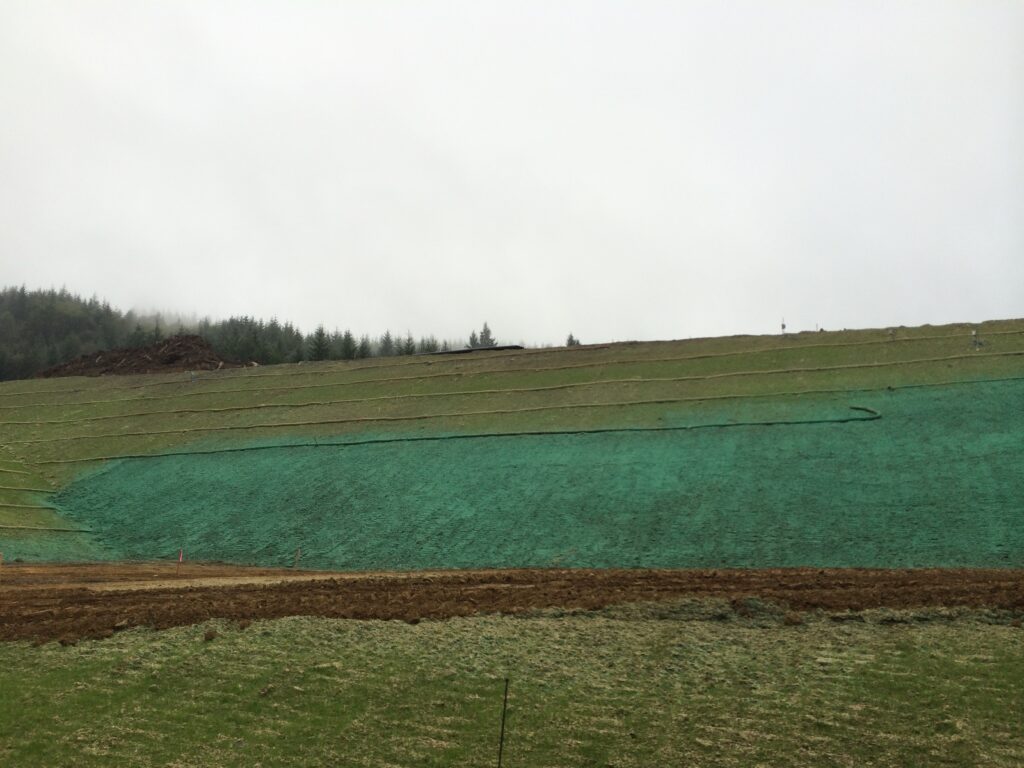
The original slope stabilization plan for the fill slopes after each season included straw wattles used as slope interrupters, a flexible growth medium for surface mulching and an erosion control seed mix in order to stabilize the slopes. During the 2014 Phase 3 season one winter, many of the straw wattles that were trenched into newly placed fill slopes did not perform as well as was intended. The seed mix was effective in some areas, but not in others. The root system of the seed mix did not have enough time to establish and extend deep enough into the soil to prevent surficial failures on the steeper slopes.

Figure 2. After all wattles removed the slope was track walked and re-seeded.

Data

Throughout several winter storms, numerous surficial slope failures in many areas on the project occurred after permanent slope stabilization measures were installed. These types of failures are shallow and usually parallel to the slope face with a depth of 4 feet (1.2 m) or less. The failures seen on the project were not due to poor management of water on top of the fill slopes but were failures starting in the middle of the slope, many originating at wattle locations. Many shallow slope failures occur when the rainfall intensity is larger than the soil infiltration rate, and the rainfall lasts long enough to saturate the slope up to a certain depth, which leads to the buildup of pore water pressure. Given the frequency of rain events in Eddyville, the project received a continuous wetting of the slope, which saturated the wattles. There was no evidence of increased sediment build up blocking flowthrough. Once fully saturated, water pooled behind them, exceeding the infiltration rate of the soil and creating shallow surficial slope failures.

BMP Installation

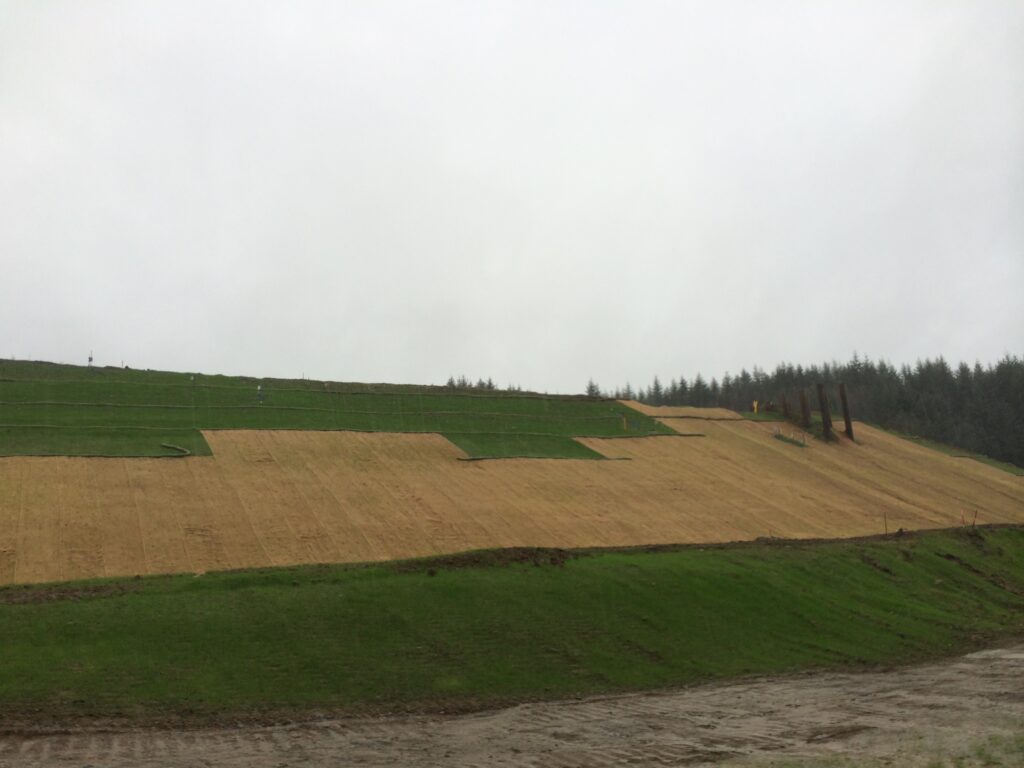
Once a shallow failure occurred, ODOT and the contractor agreed that installing erosion control blanket (ECB) C32 BD (100% biodegradable double net and 100% coconut fiber), over the affected area would serve as a better BMP for slope stabilization. This method has shown to work very well on other projects, keeping the slope from eroding any further and preventing additional failures. To further prevent erosion and runoff, the wattles were removed (Figure 1), sediment buildup was cleared, rills were fixed, the slope was track walked and re-seeded (Figure 2) and ECB was installed over the affected area (Figure 3).

Figure 3. Laborers installing erosion control blanket where wattles have now been removed.

Season Two Constructability

During the second construction season of Phase 3 it was decided to replace wattles with ECB where embankments were built with primarily native non-durable rock. During season one of the Phase 3 construction season, embankments built with this material were very difficult to track walk before installing wattles. Attempting to track walk on top of these rock slopes caused dozers to slip or spin their tracks, which damaged the surface of the slope. Another challenge with installing wattles on non-durable rock slopes is the actual installation itself. Straw wattles are often specified to be trenched into the slope, potentially causing other issues associated with wattles performance. Trenches need to be perfectly straight and the entire wattle row needs to be at the same elevation. To do this, laborers use hand tools to dig a small trench and install the wattles. Digging these trenches on the surface of a slope built out of compacted non-durable rock is close to impossible. We saw a few isolated examples of this exact scenario in 2014, and the results were not good. Laborers struggled to dig the trenches, and the trenches that they were able to dig did not follow ground contours because they had to route trenches around larger rock fragments that they were unable to trench through.

Discussion

Over the two construction seasons of Phase 3, approximately 2.5 million cubic yards (1.9 cubic meters) of material was excavated and placed. The first season provided a great understanding about which BMPs worked best for slope stabilization on the new fills and which did not. Although wattles are proven to reduce the velocity and spread the flow of rill and sheet runoff, they were not the most effective erosion control BMP for the extreme slopes on this specific project.

Moving forward with that knowledge, the slope stabilization plan for the second season was changed. Straw wattles on the fill slopes were omitted and ECB C32 BD was used in conjunction with the flexible growth medium and seed (Figure 4). The growth medium, seed and matting was a great combination for erosion protection. The hydraulic erosion control product required no cure time to be effective. This was a great benefit for the project because it was constantly wet.

Once the second season of construction was complete and permanent slope stabilization BMPs installed, it was evident that many of the difficulties described within this article with straw wattle installation were eliminated. The slopes did not have to be track walked, and the ECB only needed to be trenched into the ground at the very top of the slope. One of the primary concerns with ECB is obtaining constant, continual contact with the slope. If the ECB is installed on a smooth engineered slope with staples every 2 feet on center, there should not be issues maintaining continual ground contact. Even with the uneven surface on the slopes built with native non-durable rock, the ECB was installed with fairly good contact with the soil and still functioned very well. Environmental compliance was achieved throughout Phase 3, due largely in part to the revised slope stabilization plan.  

Figure 4. Slope stabilization was completed with wattle removal, re-seeding and erosion control blanket installation.

About the Expert

Tiffany Nibler, MPH, CPESC, has specialized in environmental compliance in the construction industry throughout the Western United States for over 12 years. She currently manages the environmental sector for Scarsella Brothers Inc., a heavy civil construction company working with federal, state and local municipalities, ports and railroads as well as commercial developers and engineers,

MOST POPULAR