

Studies show that compost amendments are a useful tool in controlling erosion in postconstruction soils
ESTABLISHING PERMANENT VEGETATION COVER on postconstruction soils can be challenging because construction activity compacts soils and removes topsoil, leaving low-porosity subsoils with limited infiltration that are prone to runoff and erosion. These conditions restrict root growth and slow the establishment of vegetation while increasing sediment loss.
Compost amendments are commonly used to improve soil conditions and promote rapid vegetation establishment to aid stormwater infiltration and reduce erosion. Two recent studies examine compost performance in postconstruction soils in the field, demonstrating the benefits and trade-offs of compost-based best management practices (BMPs) for erosion control.
Compost Incorporation and Vegetation Establishment
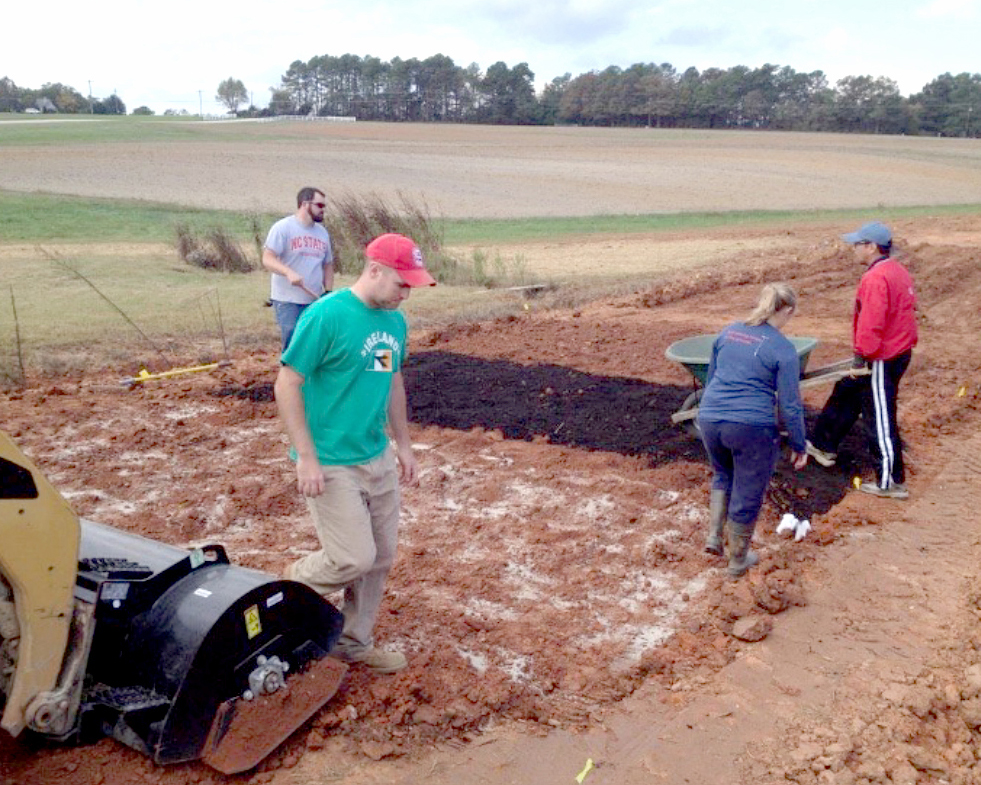
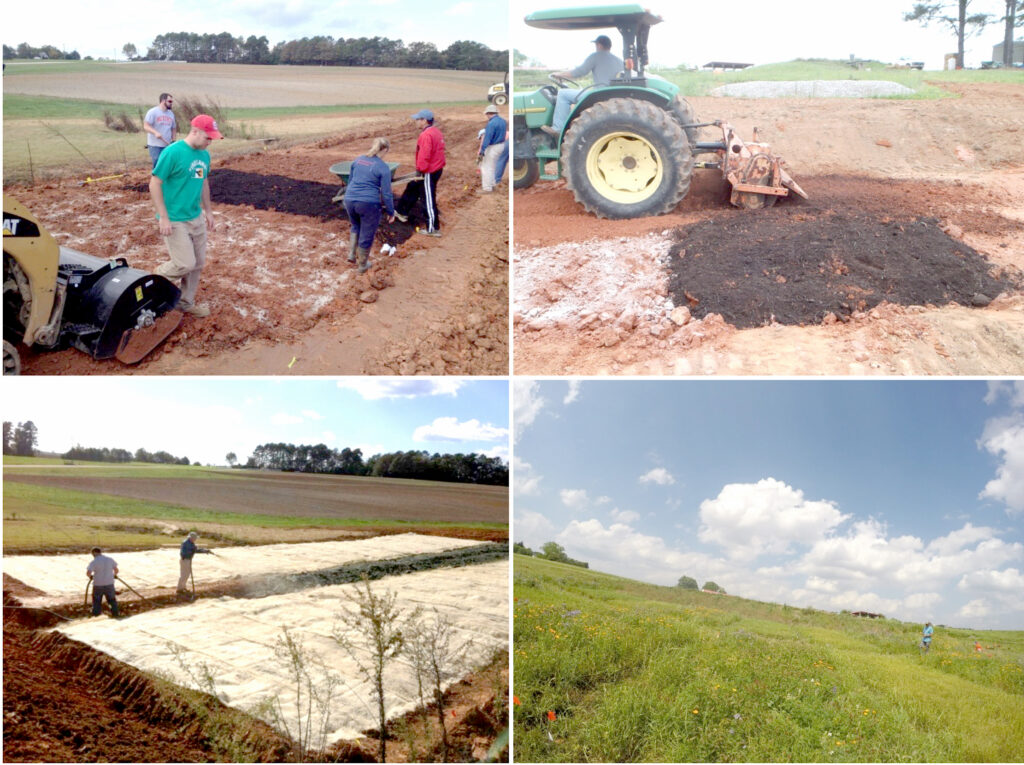
A field study in Raleigh, North Carolina, evaluated the effects of compost incorporation and vegetation type on stormwater infiltration and vegetation establishment in post-construction soils.1 Compost was applied to 15 m2 (160 ft2) field plots at 30% volume and tilled to 15 cm (6 in.) deep (Fig. 1).
The vegetation mixes, measured by seed weight, included a grass mix (50% tall fescue, 40% Bermuda grass, and 10% centipede grass), a pollinator wildflower mix (30% California poppy, 30% sulfur cosmos, 10% lance leaf coreopsis, and 30% Indian blanket flower), and a grass-wildflower mix (60% grass mix and 40% wildflower mix).
The field plots were monitored over a two-year period. Incorporating compost reduced soil bulk density and soil strength, which in turn produced infiltration rates two to three times higher than those measured in the untreated control plots.
Vegetation growth responded quickly to the incorporation of compost, meeting the 70% erosion control cover threshold within the first four months after seeding and about one month sooner than plots without compost. Grass-wildflower mixes provided rapid cover establishment, reaching the 70% threshold one month sooner than grasses and wildflowers alone. Plots with incorporated compost also maintained higher root mass density in the upper soil profile, indicating sustained improvements in soil structure and infiltration.
These findings suggest that incorporating compost is a beneficial soil restoration practice, offering benefits for vegetation establishment. Incorporating compost into postconstruction soils improves the structure of compacted soils, supporting infiltration, root development, and long-term stabilization.
Hydrologic and Water Quality Performance of Compost Blankets
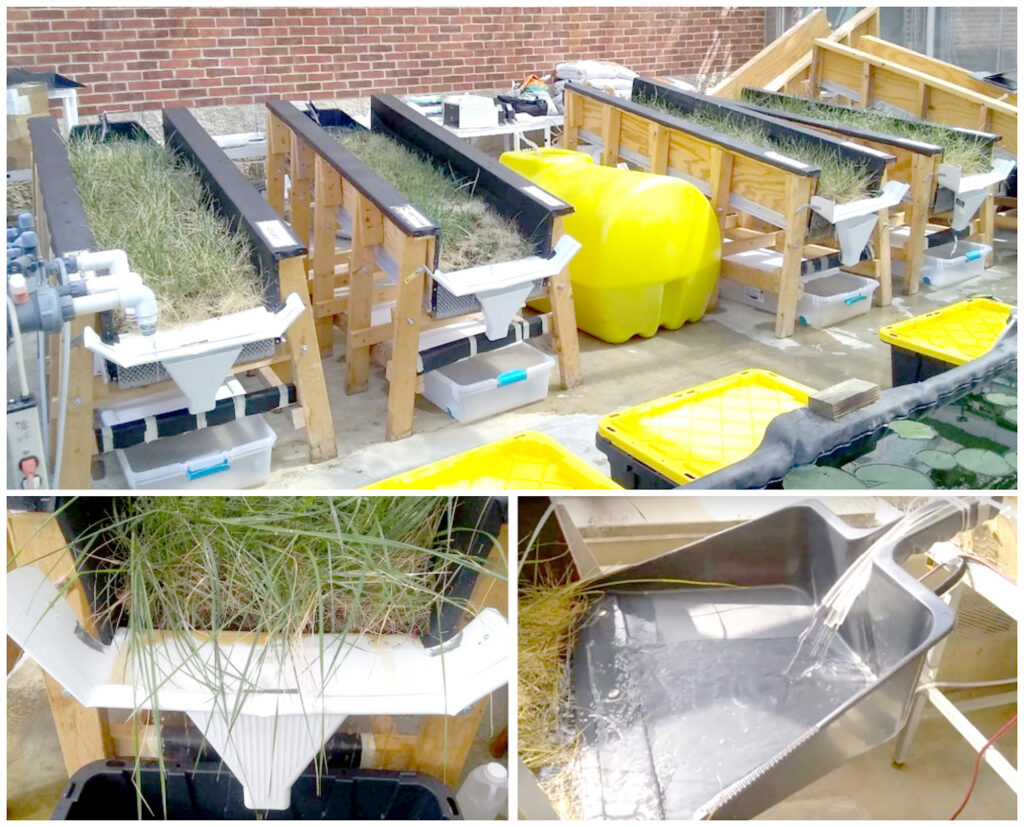
The second study—a multiyear field and greenhouse study in Howard County, Maryland—examined how vegetated compost blankets (VCBs) influence runoff hydrology and water quality.2,3 In the field, 7.6 cm (3 in.) VCBs were applied over vegetated filter strips adjacent to the edge-of-pavement along a highway (Fig. 2). One VCB was 92 m2 (990 ft2), and the other was 183 m2 (1,970 ft2). VCBs slowed surface flows and increased residence time, allowing for partial runoff infiltration and storage.2 Under controlled greenhouse conditions, the thicker VCB retained up to 70% to 80% of incoming runoff volumes. Under field conditions, VCBs retained 45% to 55% of inflow volumes. Long-term field monitoring showed more variable hydrologic performance that was strongly influenced by storm size, slope, and flow patterns; larger storms created preferential flow paths and bypass of VCBs.
VCBs were effective at reducing total suspended solids in runoff, with 25% to 30% removal under field conditions and up to 80% removal under controlled greenhouse conditions relative to inflow concentrations.3 The authors suggested that the lower field performance was primarily due to differences in hydraulic conditions, including storm variability, uneven flow distribution, and partial bypass of the compost blanket.
Sediment removal improved with longer flow paths through the VCBs. Particulate-bound copper and zinc were mostly removed along with sediment. However, VCB performance showed mixed results for dissolved metals. In some cases, dissolved copper concentrations increased in runoff, likely due to the copper content of the compost itself rather than incoming runoff. Greenhouse experiments also showed dissolved metal export when particulate removal was high, indicating that the behavior of the dissolved metals was influenced by the chemistry and depth of compost.
These results indicate that compost blankets can be effective at intercepting particle-bound pollutants but may not always retain dissolved constituents. This highlights an important distinction in VCB function: Compost blankets can act as filtration and settling systems for particulates, but their influence on dissolved pollutants depends on compost materials and the underlying soils.
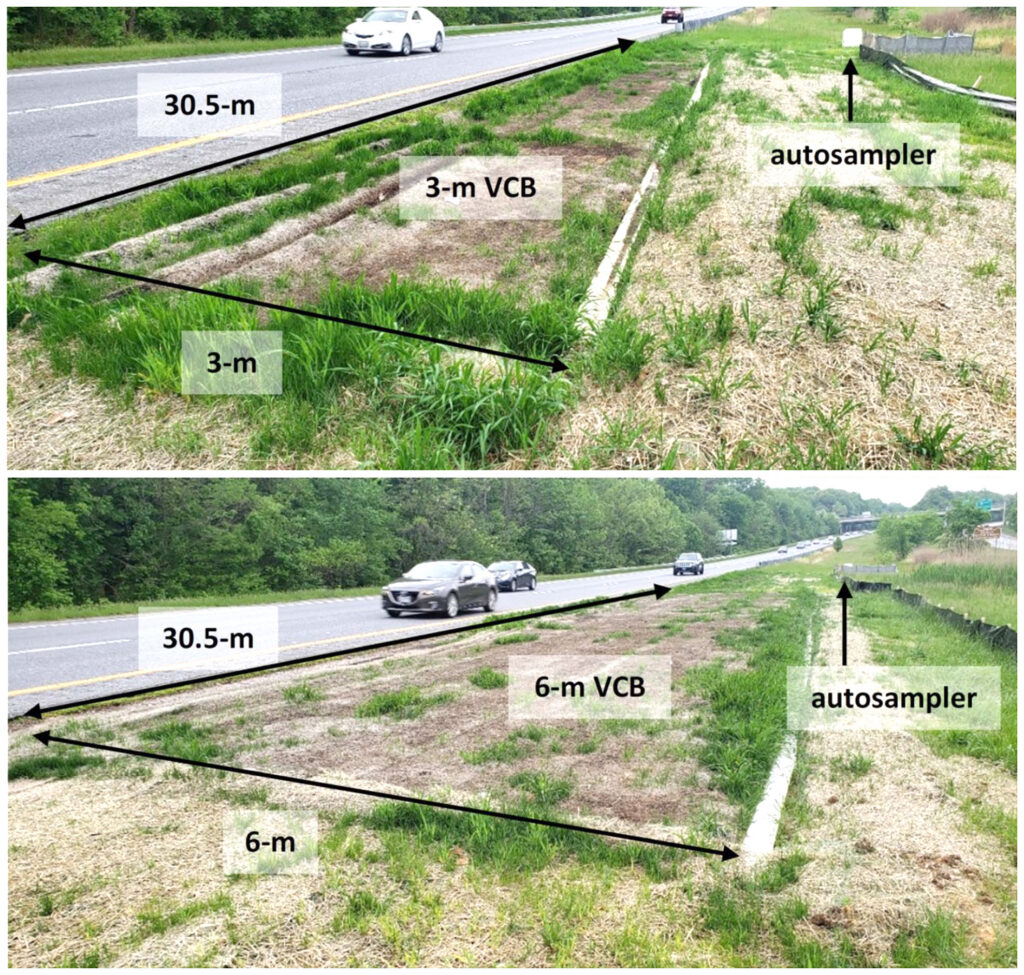
183 m2 (1,970 ft2).
Implications for Erosion and Sediment Control
These studies show that compost-based BMPs are effective, but they may not necessarily be interchangeable. Compost incorporation improves soil structure by reducing compaction and increasing infiltration, supporting vegetation establishment and long-term stabilization. Compost blankets function primarily as surface treatments, intercepting sediment and particulate-bound pollutants.
For erosion and sediment control practices, the study results suggest the following:
Compost incorporation methods are best suited for areas where long-term soil function, infiltration, and vegetation establishment and performance are priorities.
Compost blankets provide effective, immediate erosion control and particulate removal, particularly where surface flow dominates.
Compost source material should be evaluated where runoff is hydrologically connected to sensitive downstream waters.
Rather than asking whether compost works, these studies point to a more practical question: Which compost application method best matches the site conditions and performance goals? When designed with slope, hydrology, and downstream sensitivity in mind, compost-based BMPs remain a powerful tool in the erosion control toolbox.
About the Expert
Erin Rivers, Ph.D., is an assistant professor of Crop and Soil Sciences who has expertise in stormwater management construction and postconstruction situations in the West Coast, Midwest/Rocky Mountain, and East Coast regions.
References
1. Islam, M. M., McLaughlin, R. A., Austin, R., Kranz, C. N. & Heitman, J. L. Compost incorporation and wildflowers introduction for stormwater infiltration and erosion-control vegetation cover establishment in post-construction landscapes. Journal of Environmental Management 369, 122324 (2024).
2. Forgione, E. R., Felton, G.K., Aydilek, A.H., and Davis, A.P. Hydrologic performance of vegetated compost blankets for highway stormwater management. Journal of Sustainable Water in Built Environments 10, 04024002 (2024).
3. Forgione, E. R., Felton, G. K., Aydilek, A. H. & Davis, A. P. Water quality performance of vegetated compost blankets for highway stormwater management: Particulate matter and trace metals. Science of the Total Environment 964, 178394 (2025).