
Riparian or urban, buffers offer a natural way to protect soil and water
AS LAND STEWARDS, HOW we manage waterway edges is crucial to a healthy watershed. Whether a waterway is in the heart of a rural farm or the center of a bustling city, establishing riparian or urban buffers is an essential strategy for protecting natural resources. Buffers act as a “living bridge” between developed land and water, making them useful investments for farmers and urban planners alike.
A buffer is a strip of trees, shrubs, and/or grasses planted along the edge of a waterway. Riparian buffers are located in agricultural or rural areas and protect water from crop-, fertilizer-, and livestock-related runoff. Urban buffers, commonly located in towns and cities, help decrease stormwater runoff from impervious surfaces such as roads, parking lots, and rooftops.
How Buffers Protect Water
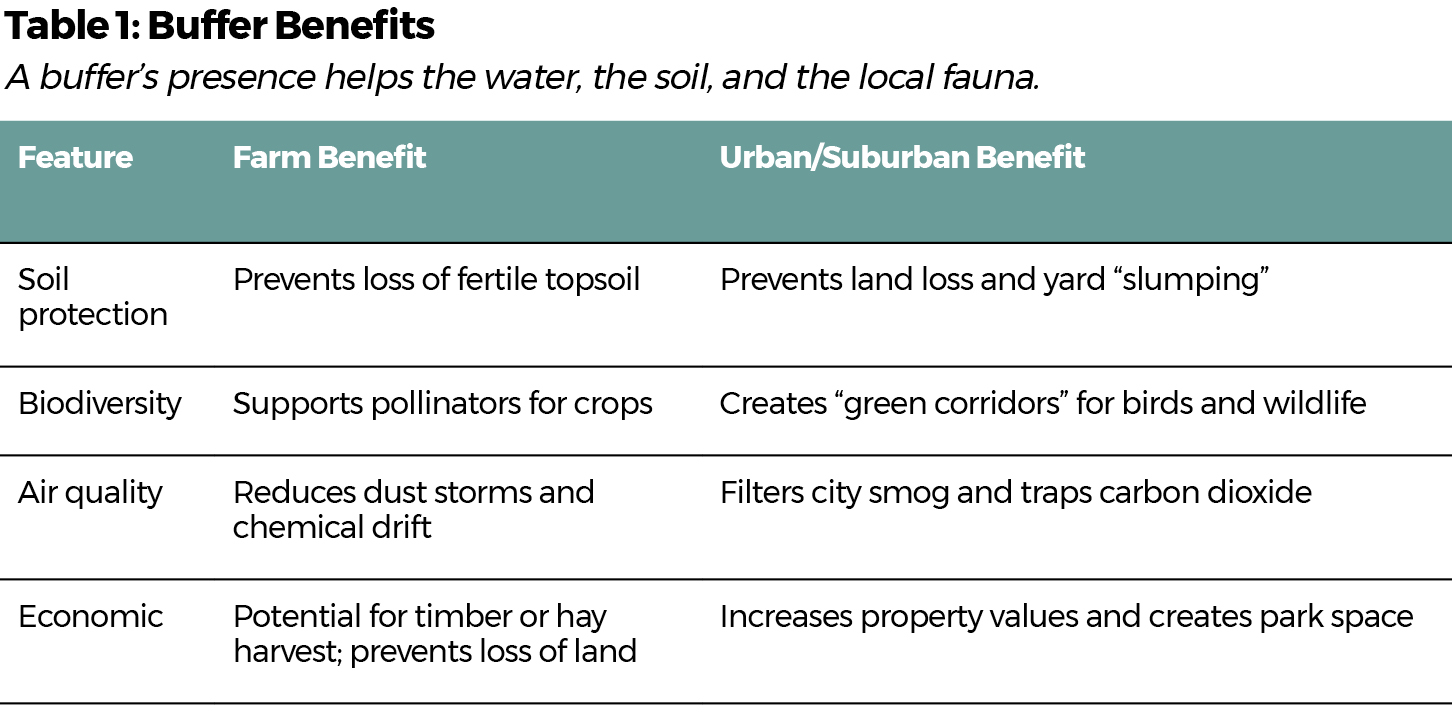
While riparian and urban buffers exist in different environments, their intent is the same: to perform as a protective shield and natural filter for aquatic ecosystems. Vegetated buffers perform the following critical functions to keep water clean and habitats safe:
- Filtering runoff. In rural areas, vegetative buffers trap fertilizers and pesticides. In urban areas, vegetative buffers capture constituents in stormwater runoff, including but not limited to motor oil, heavy metals, road salt, and other toxins.
- Stabilizing streambanks. Deep vegetative root systems hold soil in place to prevent erosion. Establishment keeps valuable farmland topsoil from leaving an agricultural area. In an urban setting, established vegetation protects urban infrastructure such as bridges and pipes.
- Flood mitigation. Vegetative buffers act like a sponge, especially in urban areas. They slow high-velocity flash floods caused by rainwater runoff from highly paved and impervious areas.
- Temperature regulation. Tree canopies along waterways provide shade that help water temperatures stay regulated. Temperature regulation is crucial for the survival of sensitive species such as trout and salmon.
Various plant species offer different capabilities for water quality control. Traditional grasses slow runoff and filter pollutants but often provide the least amount of erosion protection to streambanks. Shrubs and trees offer shade, stability, and erosion protection. If you want to establish an effective vegetative buffer, source plant species that grow well in your climate, require limited maintenance for establishment, and provide habitat for wildlife. Try to avoid non-native or invasive species. n
About the Expert
Ally Hecht is an information education specialist for the St. Charles County (Missouri) Soil and Water Conservation District.