

Controlling wind and water erosion can involve temporary measures, establishing permanent vegetation or managing the existing vegetation. A recent study in China tested five options for short-term erosion control on stockpiled soil.1 The erosion control methods included sod or seeded grass in full coverage or only in a strip at the bottom of the slope, as well as artificial turf in complete coverage. Tests were conducted in a flume, measuring 3.00 m by 2.00 m by 0.45 m (length by width by depth; 9.8 feet by 6.6 feet by 1.5 feet), filled with a sandy loam fill soil and tilted to a 30-degree slope. Test conditions included Zoysia sod with full coverage or only the bottom 75 cm (2.5 feet), seedling mondograss
(Ophiopogon japonica; 10 cm [4 inch] height) at 100 plants m2 (9 plants feet2) with full
coverage or only the bottom 75 cm (2.5 feet), or artificial turf (1.5 cm [0.6 inch] height) with full coverage. Simulated rainfall was applied at a rate of 1.45 mm/min-1 (3.5 inch/hour-1), which represented natural events recorded in the area. Each rain event lasted for 45 minutes after runoff initiation, with samples being taken periodically during the event as well as flow measurements. Compared to bare soil, sodding delayed runoff more than the other covers, but all delayed it substantially. The strips delayed runoff by 35% to 50% of full coverage. Erosion rates were reduced by 88% to 99%, with seedlings the least effective and sod the most. The sod strip was almost as effective as full sodding, and the seedling strip was 83% as effective as full coverage. While all three full coverage treatments significantly reduced total soil loss, the seedling cover was not as effective as sod or artificial turf.
Changes in vegetation in arid and semiarid regions have been documented globally and are attributed to climate change, invasive species and grazing management. These areas can be major sources of sand and dust storms that affect wide areas downwind. The effects of different types of vegetation on wind erosion rates were recently quantified on the Chihuahuan Desert in New Mexico, United States, over five years.2 The four vegetation types included:
- historic grasses (black grama)
- shrub-invaded (black grama, honey mesquite)
- shrubland (honey mesquite, some bunchgrass)
- grassy shrubland (honey mesquite and bunchgrass).
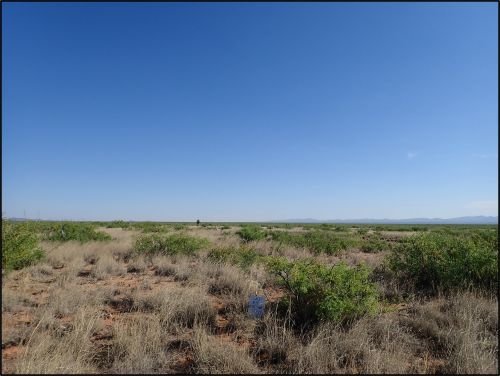
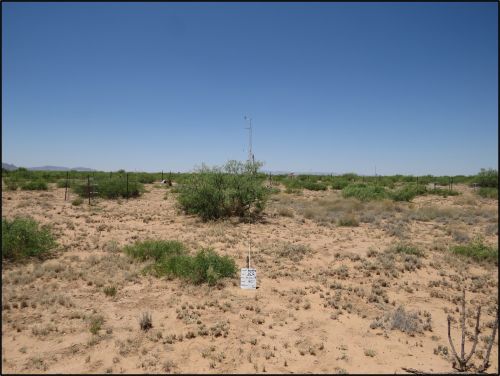
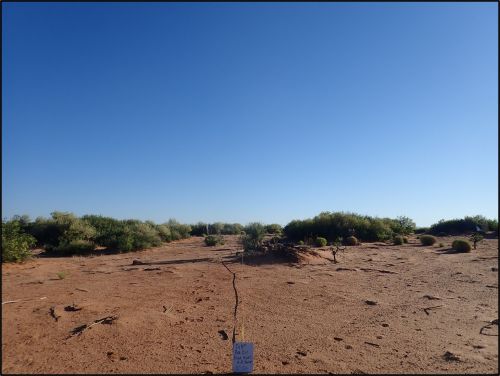
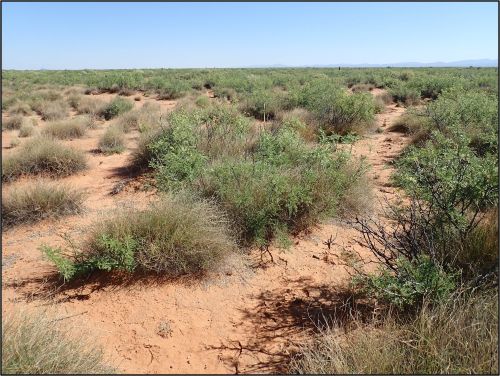
Erosion was clearly evident in the latter two states (Figure 1). Plots of 100 by 100 m (328 by 328 feet) were established for each vegetation type, and the vegetation cover was determined annually by line transect. Sediment transport was determined from sediment sampler towers on each plot, capturing sediment at four heights up to 0.85 m (2.8 feet). The historic grassland had vegetative cover of 35% to 80% and bare soil of 18% to 40%, compared to the shrubland having 19% to 25% vegetative cover and up to 66% bare soil. These values appear to be representative of data collected elsewhere in the area. The mass flux of sediment increased tenfold between the historical grass cover and the shrub-invaded and another tenfold in the shrubland, while the shrub-invaded area had wind erosion similar to the historical grass area. The implications for site management (grazing control) are discussed. The authors suggest the need to maintain a minimum of 20% grass cover to minimize risks of wind erosion, further site degradation and sandstorms and dust storms. Relatively small changes in grass cover can result in substantial increases in wind erosion, rapid loss of the remaining grass and changes in the ecological state and function of an area.
References
- Jian P, Li J, Wang W, et al. 2025. Study on the Effectiveness of Temporary Vegetation Measures on the Regulation of Runoff, Sediment Yield, and Hydraulic Characteristics on the Spoil Heaps. Land 14:951. doi.org/10.3390/land14050951.
- Webb NP, Wheeler B, Edwards BL, et al. 2025. Magnitude Shifts in Aeolian Sediment Transport Associated with Degradation and Restoration Thresholds in Drylands. Journal of Geophysical Research: Biogeosciences, 130:e2024JG008581. doi.org/10.1029/2024JG008581.
About the Expert
• Rich McLaughlin, Ph.D., received a B.S. in natural resource management at Virginia Tech and studied soils and soil chemistry at Purdue University for his master’s degree and doctoral degree. He has retired after 30 years as a professor and extension specialist in the Crop and Soil Sciences Department at North Carolina State University, specializing in erosion, sediment and turbidity control. He remains involved with the Department as professor emeritus.