
Recommended practices to minimize erosion and capture sediment on construction sites
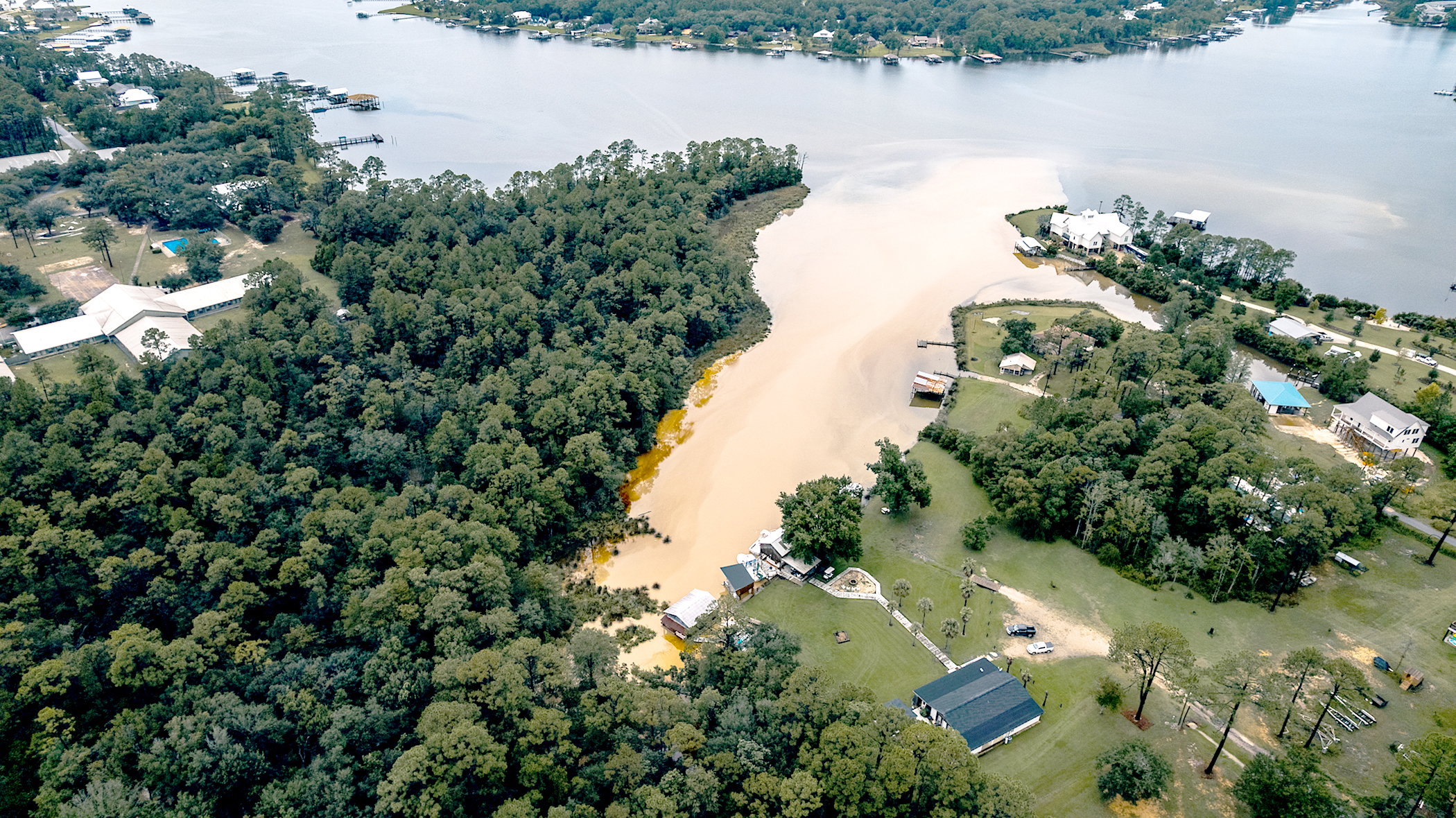
PRETTY MUCH EVERYTHING CONTRACTORS do to minimize erosion and capture sediment on a construction site in Alabama is done to protect the receiving water downstream—in many cases, a small stream or creek. Why is it so important to protect these streams?
Sediment degrades aquatic habitats, and turbidity restricts light and aquatic plant growth. This disrupts the food chain and impairs fish and aquatic insect populations. Suspended sediment reduces visibility and affects fishes’ ability to feed and breathe, making the habitat favor pollution-tolerant species such as carp and suckers over sportfish such as bass and bream.
Finally, sediment carries pathogens, nutrients, and toxic materials such as heavy metals and chemicals into waterways. Such pollutants affect drinking water and surface water quality, contributing to higher water treatment costs, fish consumption advisories, and oxygen-depleted (anoxic) zones. These are commonly known as “dead zones” in the Gulf of Mexico.
Minimizing erosion on a construction site must follow a few simple principles:
- Minimize bare soil areas and the time bare soils are exposed;
- Slow runoff water so that soil particles are not detached and transported offsite;
- Vegetate at every opportunity; and
- Keep the clean water that enters a construction site clean.
Crews can install practices that capture sediment by:
- Slowing or “ponding” runoff to allow coarser soil particles to settle;
- Allowing time for smaller suspended soil particles to settle;
- Using flocculants to bind sediments and limit turbidity; and
- Using barriers and other common sediment control practices.
While most of our erosion and sediment control practices protect the stream downslope of a project, there are some that have more immediate effects.
Temporary Stream Crossings
Many construction sites (especially linear projects) have streams that traverse a project, and it is important to keep their water clean by avoiding the introduction of sediment or turbid runoff. To prevent construction equipment from crossing a stream bed or damaging the stream channel and banks, use a temporary stream crossing.
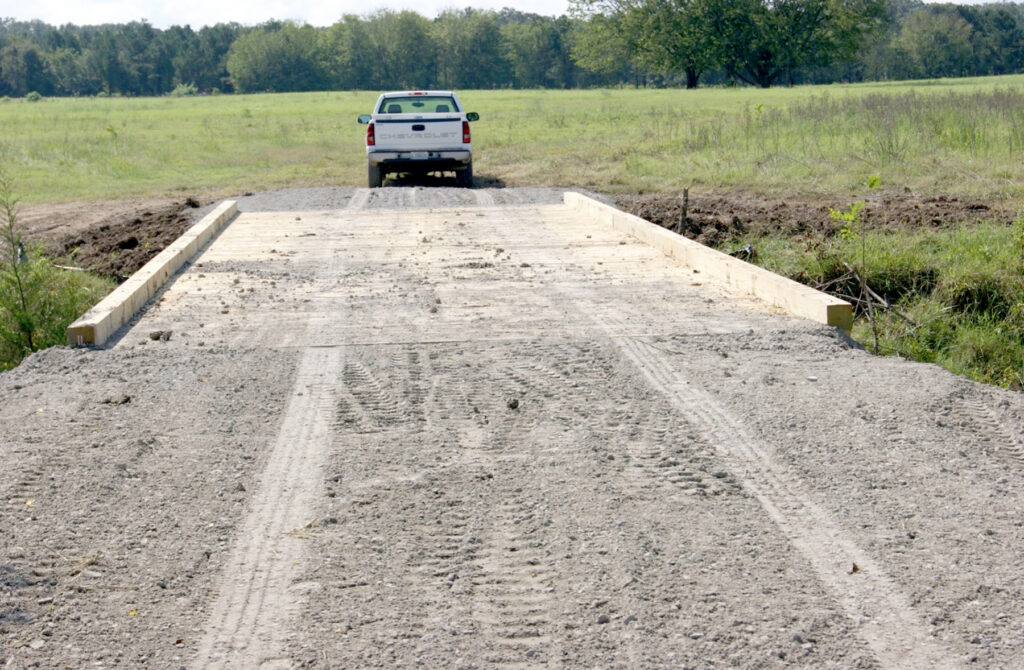
Temporary bridges are often the best alternative; they can be used to allow construction equipment to cross with minimal effect on the aquatic environment (Fig. 2). The opening under the bridge should be designed to convey the runoff from at least a two-year, 24-hour storm if no other parameters are specified.

concentrated flow area.
Stream Diversion Channels
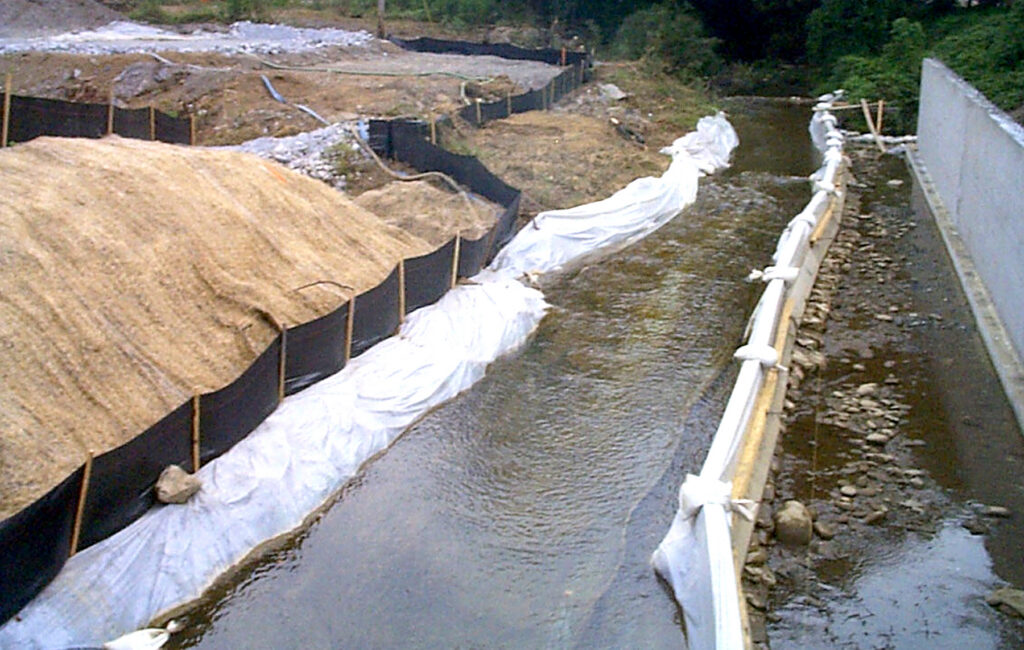
Streams that cross projects may also be contained within a large culvert or bridge as part of a construction project. A stream diversion channel can be used to bypass the stream through the project while construction is underway (Fig. 3). It is important for the stream diversion channel to be sized properly to safely pass the bank-full capacity of the existing stream.
To minimize detrimental effects to the environment and the aquatic community, a stream diversion channel should be installed quickly and carefully, maintained well, and removed as soon as possible after the construction area is stabilized. Plan and install a stream diversion channel in a manner and timeframe—dry season—that minimizes impact to fisheries and the aquatic environment. Specify a sequence of construction in the contract work.
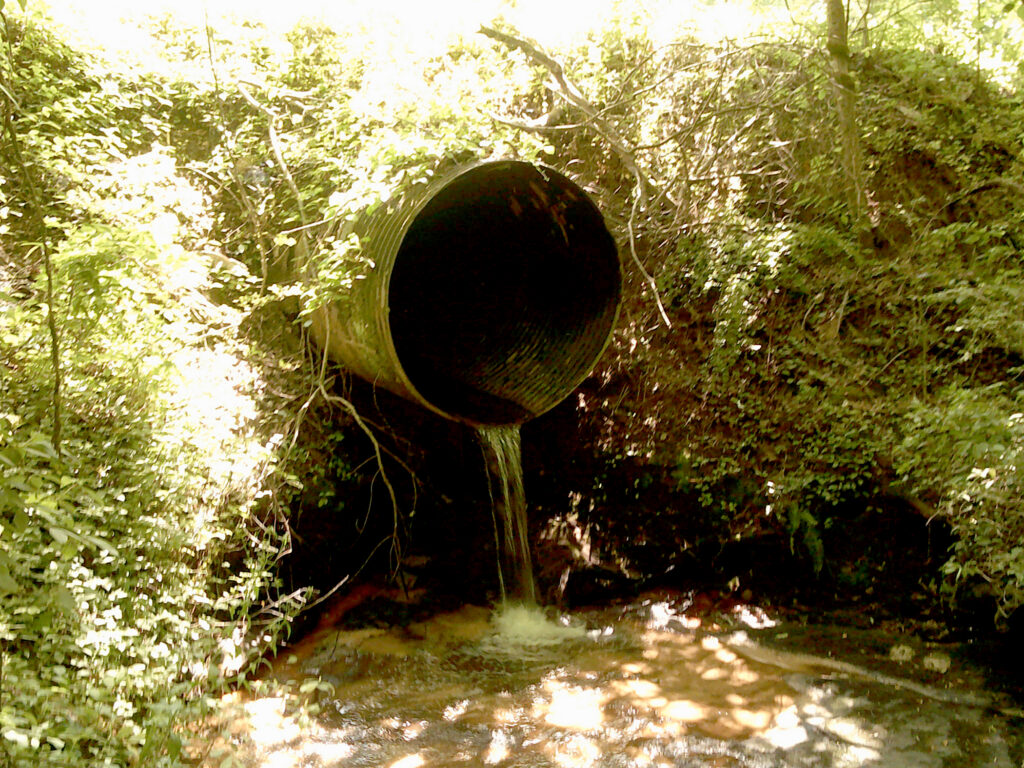
When culvert installation is part of a project, remember that there might be aquatic organisms that need to travel drainageways even in intermittent streams. If your culvert outlet has a minimal overfall, small aquatic animals could be blocked from the migratory paths needed to sustain their lifecycles (Fig. 4). Consider using larger culverts that are placed to avoid overfalls, bottomless culverts that allow for the stream bottom to cross under the roadway, or even a small bridge.
Stream Bank Protection
Stream banks inside a project or downstream of a project often become unstable and need attention to keep mass erosion from occurring. Stream bank protection may be vegetative, structural, or a combination of the two. Consult a design professional to design a stable stream bank and stream.
In my experience, the toe or bottom of the stream bank must be stabilized for the entire bank to be stable. When the toe of the slope gets undermined due to erosion, the stream bank will usually fail.
Buffer Zones
Finally, think about the buffer or riparian zone area next to the stream and concentrated flow areas. Vegetated buffers provide stream bank stability, reduce scour erosion, reduce storm runoff velocities, remove some sediment from stormwater, and provide flood storage. Protecting, enhancing, and maintaining these areas provides a buffer between landscape changes and the living waters.
Concentrated flow areas in the landscape can be anything from a roadside ditch to a river. The land adjacent to the concentrated flow areas needs vegetative cover; riparian areas provide the last line of defense against nonpoint source pollution from entering stream waters.
There is no justification for spraying roadside ditches and stream banks with herbicides—or worse, diesel fuel—to kill vegetation (Fig. 5). Make it a central point in your daily routine to help others understand the importance of the natural “living filter” vegetation provides around concentrated flow areas.
It isn’t difficult to protect streams from the erosion and sediment that might leave a construction site—put forth the effort and remember that you can’t just do things “the way you’ve always done them.” You can instead choose a new or different strategy to accomplish the job and protect the environment.
Many of these concepts are captured in the “Erosion and Sediment Control Tips” section of the Alabama Soil and Water Conservation Committee’s blog. Scan the QR code to visit the site and learn more.

About the Expert
Perry L. Oakes, PE, is erosion and sediment control program coordinator for the Alabama Soil and Water Conservation Committee and the former state conservation engineer for the USDA–Natural Resources Conservation Service in Alabama.