
University Partner / Peer Reviewed
Rain barrel workshops attract hundreds
By Matt Wisenden
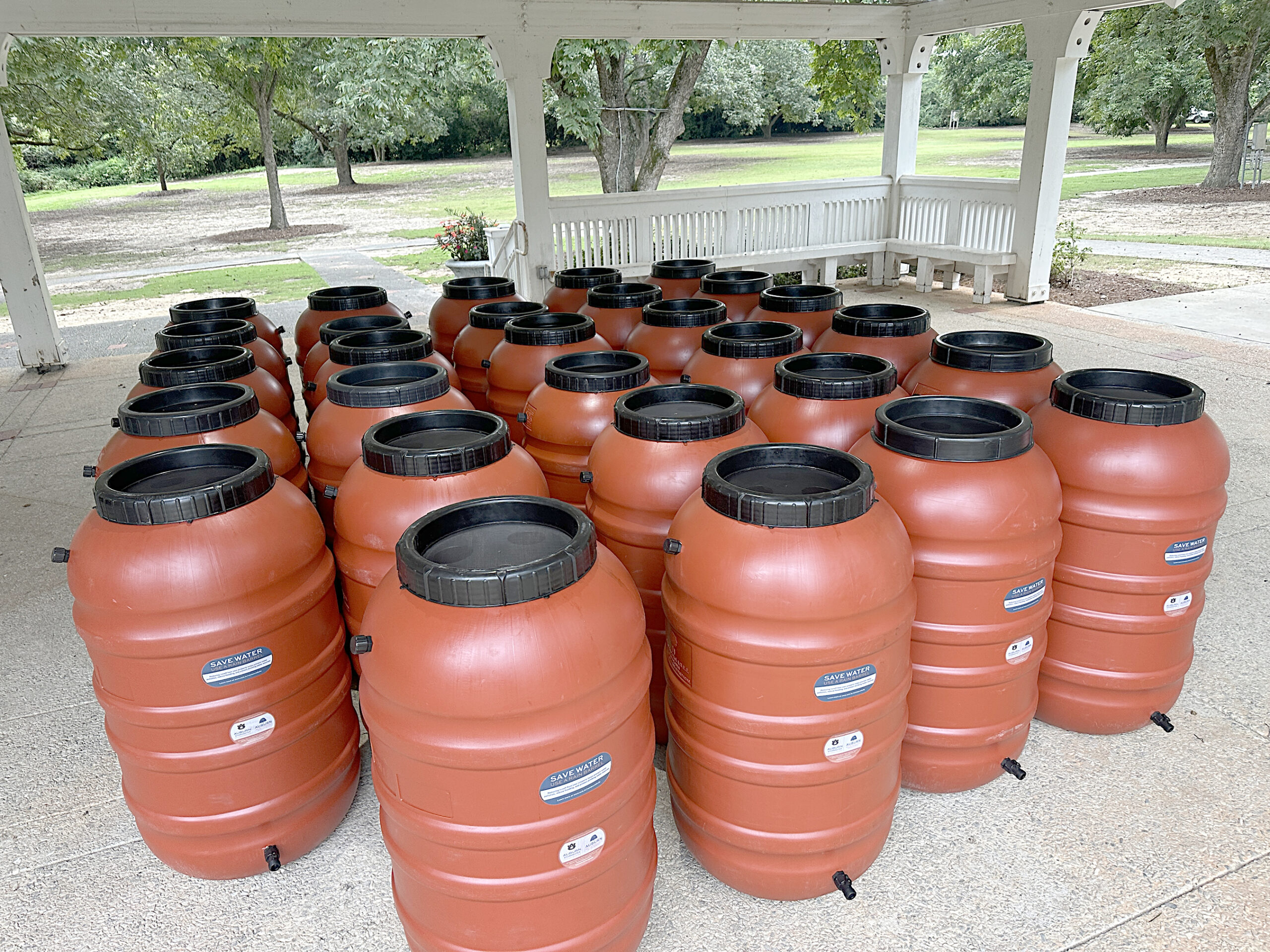
LAST SUMMER, THE AUBURN UNIVERSITY–Stormwater Research Facility (AU–SRF) and the City of Auburn, Alabama, partnered to host four free rain barrel workshops. Funded by a 319 grant from the Alabama Department of Environmental Management (ADEM) and sponsored by Home Depot, the workshops had more than 1,000 people register, far exceeding expectations and workshop capacity.
The workshops taught participants the basics of stormwater harvesting and provided them with the resources necessary to install and use a rain barrel at home. They also provided attendees with information about the advantages of reusing stormwater as a sustainable practice and established a framework for future collaborative projects between AU–SRF, ADEM, and the city.
The workshops were held from August through October at Kiesel Park, a 200-acre (81 ha) green space in Auburn. Kiesel Park is a popular city amenity, so many walk-in guests joined the free Saturday morning events, often filling the community center building to capacity. The city provided a complimentary breakfast and coffee, further incentivizing attendance.
Assets to the Community
The City of Auburn receives about 52 inches (132 cm) of precipitation annually. While this is a relatively high amount of rainfall compared to other places in the United States, some areas of the Mobile River Delta see over 65 inches (165 cm) of average annual precipitation, with the City of Mobile being the rainiest in the U.S. (Fig. 2). Along with an active water cycle, Alabama has the highest freshwater biodiversity in the US.1
Abundant water resources are an asset to the community. Additionally, Auburn University is the central economic and educational hub of the city, and it plays a significant role in water research and education. The university is also a nucleus of the community’s sense of identity, increasing the overlap between water resource conservation and Auburn University. There is no single reason for the high interest in the rain barrel workshops, but Auburn University’s emphasis on water resource education likely contributed to high interest and attendance. Factors such as the financial practicalities of rainwater harvesting and local news coverage played significant roles, as well.
The workshops explained how rain barrels can play an economic, environmental, and societal role in a community. Rain barrels allow residents to save money on utility bills by using recycled water for nonpotable uses, such as irrigating lawns and gardens, mixing pesticides and herbicides, watering small livestock, or preparing for drought season, while reducing the strain on municipal water supply and treatment systems. They slow stormwater runoff and allow for controlled water application, reducing erosion and minimizing contact with urban contaminants.
The workshops proved to be an ideal place for people to gather, share ideas, and strengthen community bonds over a mutual interest in water resources. In planning the workshops, AU–SRF demonstrated its aptitude for completing large-scale projects quickly, helping plant the seeds for future collaboration between AU–SRF, the City of Auburn, and ADEM. Seeing the high demand, AU–SRF and the city hope to hold similar workshops in the future, as well as other free workshops intended to reduce target pollutants in impaired watersheds.
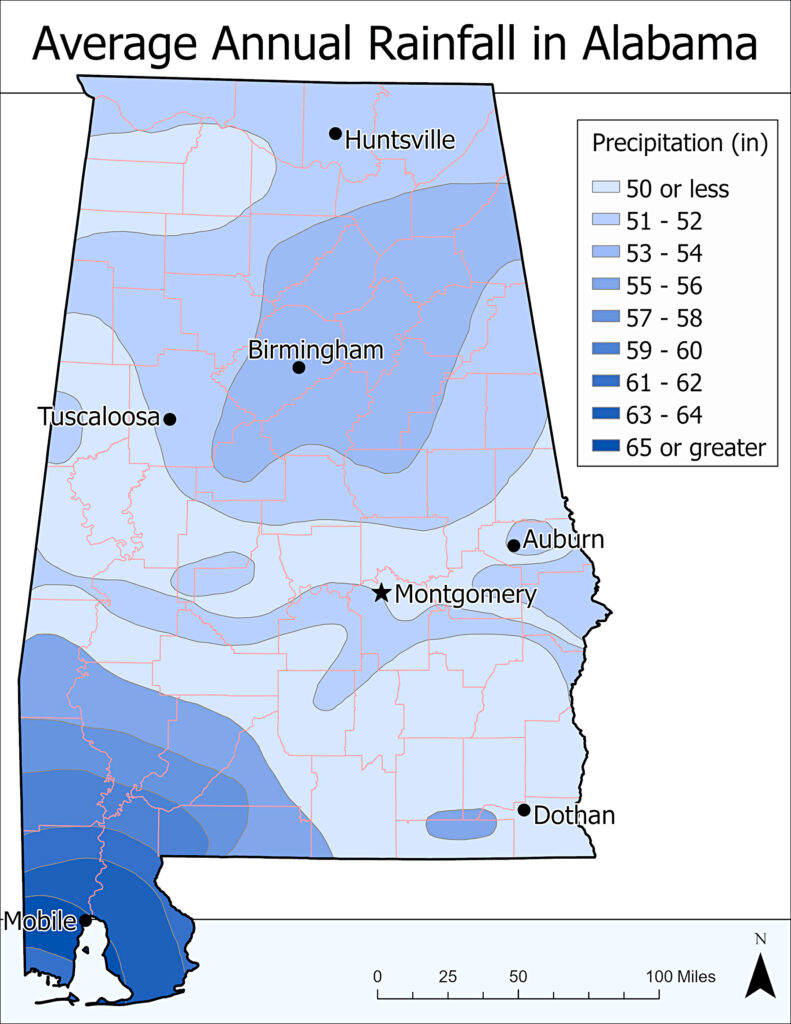
Illustration: Matt Wisenden
Exceeding Expectations
The project was not without its hurdles. Advertising, barrel acquisition, worker recruitment, location reservation, and other logistical fine-tuning were restricted to a two-month window. Participants were recruited through local market events and social media posts.
Based on early figures, the workshops were expected to have a total turnout of only 45 attendees in three sessions—15 people each. But after a local television station ran a story on the project, more than 500 people registered late in planning, and another 400 registered in the two weeks that followed—in spite of the fact that the workshops would be competing with back-to-school events and Auburn University home football games.
The partners added more workshops to the schedule and increased the capacity for each from 15 to 40. Four were scheduled with 160 total registered participants. With registration required to access a free rain barrel, AU–SRF eventually gave away 115 during the initial round of workshops, and walk-in learners filled the rest of the seats. Home Depot generously provided the barrels at a discounted rate.
Despite these challenges and a short turnaround time, the workshops seemed to be a big success, surpassing expectations in community interest and impact alike. The overwhelming response from the city of Auburn’s residents highlighted an incredible public desire to engage in sustainable practices and reinforced the importance of accessible environmental education. We aren’t sure how many people adopted the workshop materials at home, but many reached out to express how helpful the workshops were to building confidence with at-home rainwater collection systems.
Better still, AU–SRF and the City of Auburn showed how cross-sector collaboration can foster environmental stewardship at the local level. Looking ahead, AU–SRF, the City of Auburn, and ADEM plan to provide free virtual rain barrel workshops to residents statewide and pursue other collaborative projects that support watershed health, strengthen community connections, and promote a culture of sustainability in Auburn, Alabama, and beyond. Other communities may not be such fertile ground for rainwater solutions, but we will try to adapt outreach and recruitment to meet community needs, size, and culture.
About the Expert
Matt Wisenden is outreach manager for the Auburn University–Stormwater Research Facility. He holds a B.A. in Public Relations
and an M.S. in Geoscience from Western Kentucky University.
References
- Lydeard C., Mayden RL. 1995. A Diverse and Endangered Aquatic Ecosystem of the Southeast United States. Conservation Biology, 800–805