
Home Blog Page 15

Modeling Post-Wildfire Debris Flow Erosion for Hazard Assessment

DCIM\100MEDIA\DJI_0016.JPG

By Thad Wasklewicz, Ph.D; Richard Guthrie, Ph.D; Paul Eickenberg, PE; Benjamin Kramka, PE

Post-wildfire secondary hazards (debris floods and flows) play a prominent role in sediment transport along hillslopes, channels and alluvial fans.1 Wildfires have increased2,3 in conjunction with more frequent, intense rainfall4 where the rainfall is a key factor in secondary hazards.5 While awareness of debris flow initiation has increased, a need persists to predict debris flow pathways, runout and inundation. This information is essential to understanding and managing the potential hazard to human life, infrastructure, and property. Landslide modeling6,7 was used to estimate sediment volume, runout, and probability of occurrence to examine a recent debris flow at Black Hollow Road near Rustic, Colorado, USA. The results highlight the potential for taking a more proactive approach to landslide hazard assessment and mitigation.

Study Site

The Black Hollow drainage basin is 6.67 mi2 (17.28 km2) with a perennial stream and mean slope of 32% (Figure 1). The maximum basin elevation is 11,400 ft (3,475 m), and minimum basin elevation is 9,691 ft (2954 m). The basin receives mean annual precipitation of 20.15 in (51.18 cm). Stored colluvium and alluvium, >3.37 ft (>1 m) deep, are consistent throughout drainage.
The area was burned in the 2020 Cameron Peak Fire, which consumed 208,913 acres (84,544 hectares). The fire reduced or eliminated canopy and ground cover and altered the soil structure.8
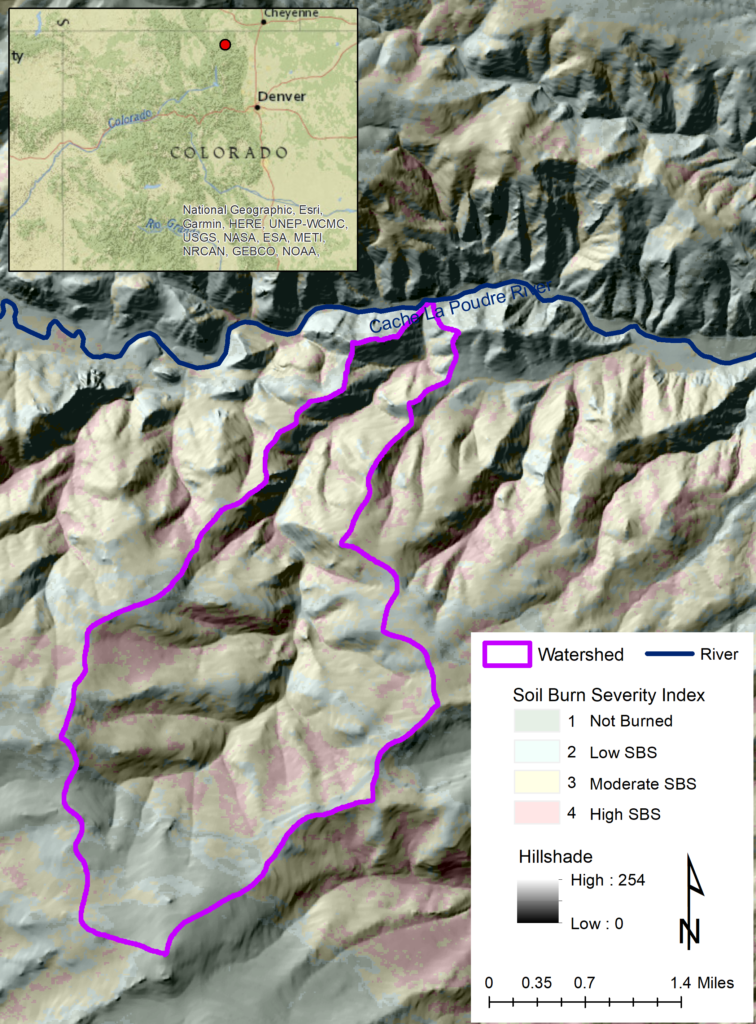
Figure 1: Map of Study Area.

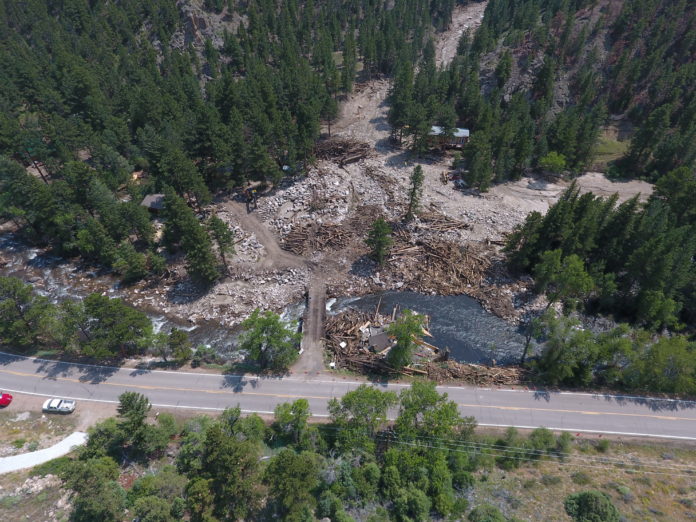
Hydrophobicity was highly inconsistent across the Cameron Peak Fire and was estimated to be 55% across half the burned area.8 The Black Hollow debris flow occurred on 20 July 2021, taking four lives, and destroying five homes, after an intense rainstorm occurred within the burned watershed (Figure 2). The peak 15 minute rainfall intensity was 37 mm/hr (0.36 inches in 15 min) as recorded from the nearby Washout Gulch rain gage.9 This equates to an approximate 1-year recurrence interval rainstorm according to NOAA Atlas 14.

Methods

A 10 m digital elevation model (DEM), which was the best available resolution for this area, was downloaded and imported into the modeling software. A user-defined initiation zone (30 m x 30 m) was established for the current project based on Burned Area Emergency Response (BAER) soil burn severity (SBS) map, slope and evidence of past debris flows (Figure 1). Initiation points were established in steep, first-order channels where high to moderate SBS were dominant.10,11,12

Our model consisted of parameters defined by simulations based on our observations from multiple sources of information and our past experiences (Table 1).
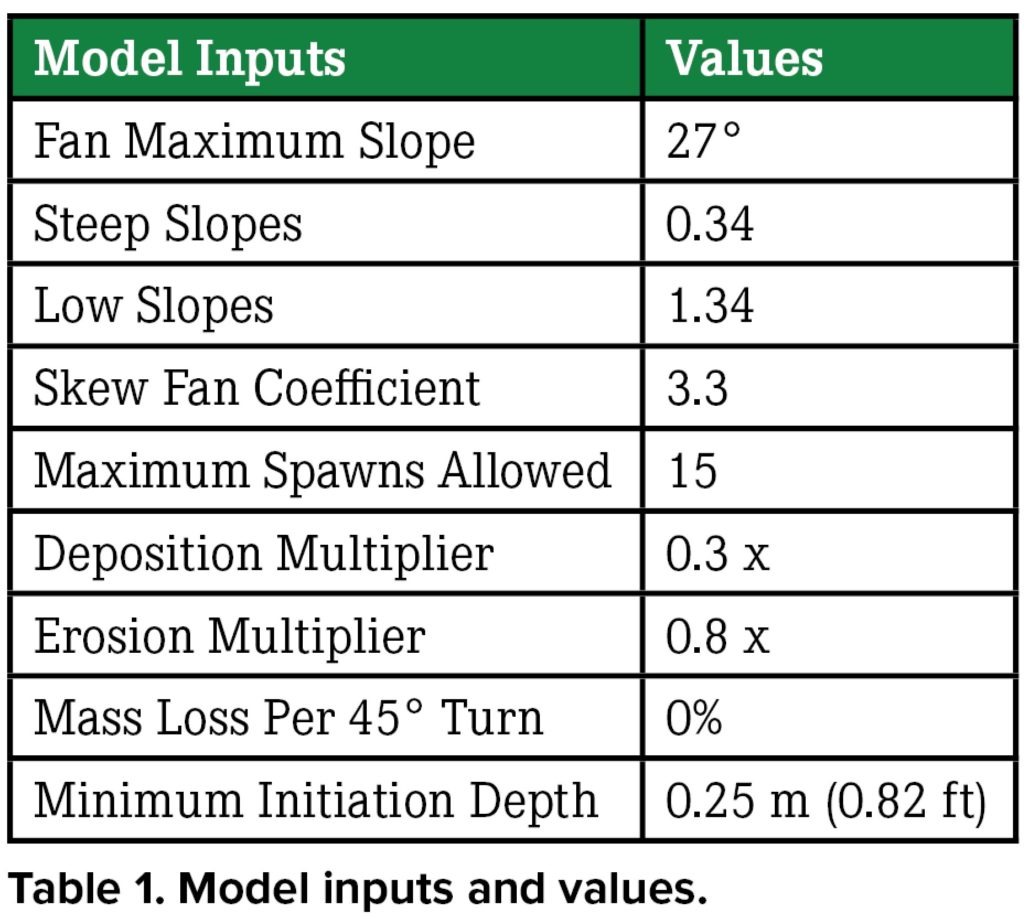
The debris flow data were produced from two separate simulations. First, 500 debris flow iterations were run to produce an average measure of depth, erosion, maximum depth and likelihood of occurrence per pixel occupied by the debris flows. Second, estimates of debris flow volumes, necessary for mitigation options, were measured using the same set of initiation points in 15 separate individual models runs.

Findings

Simulated debris flow runout traveled across the channel to the north bank of the Poudre River (Figures 2 and 3). Lower debris flow depths on the eastern side of the alluvial fan were consistent with field evidence (Figures 2 and 3). The debris flows also avulsed to the western side of the alluvial fan, a noted aspect of the debris flow at the site and a common occurrence in alluvial fans13 (Figures 2 and 3).

A maximum average depth of 2.7 ft (0.82 m in) from the 500 debris flow simulations was consistent with what was evident on the mid-fan and fan apex (Figure 3). The maximum depth evidenced from the 500 individual debris flows simulations averaged 3.6 ft (1.1 m), which would be consistent with depths found in the vicinity of the mid-fan to the toe of the alluvial fan. The average estimated volume of material brought to the fan was 44,372.5 yd3 (33,925.2 m3) but ranged from 32,066.5 yd3 (24,515.6 m3) to 57,659.5 yd3 (44,083.8 m3).
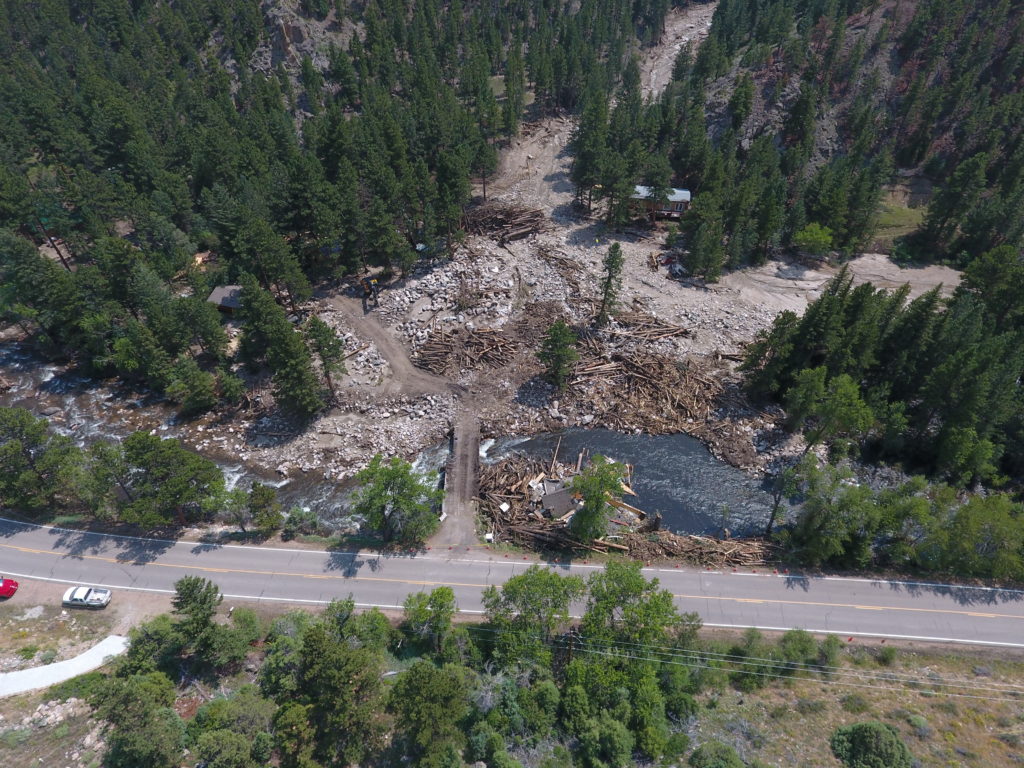
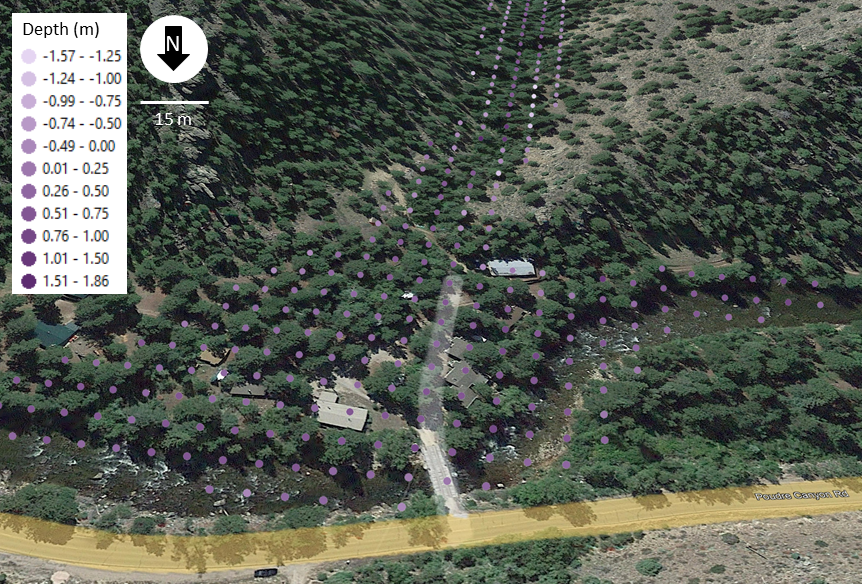
Figure 2: Look up the Black Hollow fan after debris flow. Photo courtesy of the Larimar County Office of Emergency Management.
Figure 3. Map of the modeled debris flow depths.

The likelihood of occurrence for the homes destroyed in the debris flow at Black Hollow were all more than 80%, except in one location where the probability of occurrence was 56% (Figure 4). The lower occurrence likely reflects a difference in the DEM compared to the actual elevation at the time of the debris flow or could be a change in elevation during the debris flow that could not be accounted for in our simulation.

The average flow depths at each of the residences would predict approximately 30% to 70% expected loss to a single-story timber frame home based on the widely used damage curves for wood structures.14 The maximum debris flow depths (as opposed to the average depths) occurring at the homes in the individual runs would have resulted in 82% to 100% expected loss to a single-story timber frame home and 50% to 100% expected loss to a two-story timber frame home.
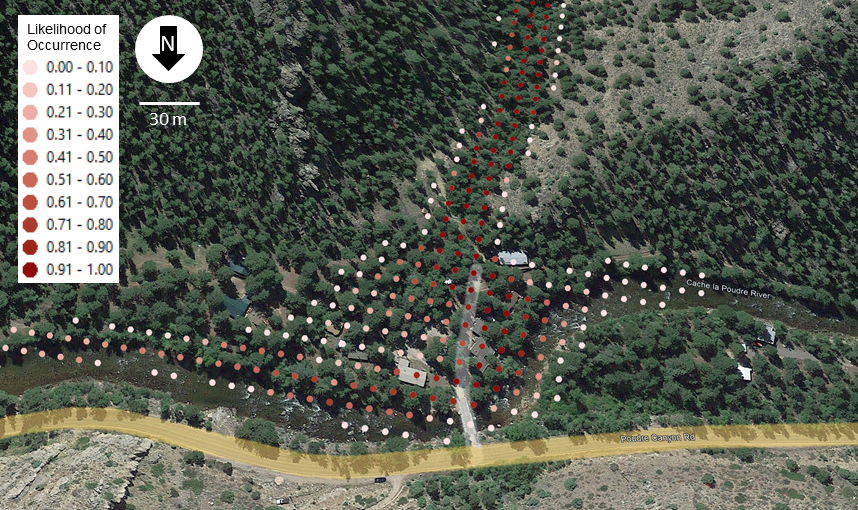
Figure 4. Map of the likelihood of occurrence from 500 modeled debris flows from the burned watershed.

Taking a Proactive Approach to Landslide Geohazards

The model results from Black Hollow credibly produced debris flows like the event that occurred on July 20, 2021. This landslide modeling approach can, and is intended to, be run as a proactive tool (rather than proven as a forensic tool) with comparable results and, indeed, has predicted the size and nature of debris flows that may yet occur in adjacent watersheds. The ability to use modeling and expert opinion to advance evidence-based management goals and make more informed decisions is a critical step in reducing the risks associated with these and other geohazards. The following steps are necessary to reduce the threat to lives and infrastructure from similar events based on the results presented here and our expert experience:

Identify susceptible hazard areas. This is now done frequently in Colorado where wildfires and high intensity storms (rainfall) are well understood to increase the probability of debris flow hazards. Susceptibility can be documented based on burn intensity and the monitoring of landslide triggering storms over the period of concern.

Model debris flow runout hazard. This is possible with the model employed for the Black Hollow Road site. Other methods such as geomorphic mapping and dating of debris flow deposits on occupied fans can also be deployed.

Effectively communicate model assessment findings to create the recognition and understanding of the hazard by residents and land managers. Ideally this would include some analysis of probability of occurrence.

Commitment to mitigation, monitoring, early warning, rezoning or buyout, as befits the situation; a plan to reduce the threat to lives most of all. The empirical model, used in this study, allows the land manager to better understand mitigation options that are necessary if other options are not considered.

Debris flow runout, volumes, burial depths and inundation extents are critical as there has been rapid expansion of development into the wildland urban interface. While planning expertise may not have been historically available, methods are now available to proactively estimate the threat posed by post-wildfire secondary hazards and assist in making informed decisions. Unfortunately, for communities affected by the Cameron Peak fire, the debris flow potential remains high for the next two or more years at this site and other locales within the Cameron Peak Fire. 

References

1) L. A. McGuire, J. W. Kean, D. M. Staley, F. K. Rengers and T. A. Wasklewicz, “Constraining the relative importance of raindrop- and flow-driven sediment transport mechanisms in postwildfire environments and implications for recovery time scales,” Journal of Geophysical Research – Earth Surfaces, vol. 121, no. 11, pp. 2211–2237, 2016.
2) L. Westerling, H. G. Hidalgo, D. R. Cayan and T. W. Swetnam, “Warming and earlier spring increase western US forest wildfire activity,” Science, vol. 313, no. 5789, pp. 940-943, 2006.
3) J. T. Abatzoglou, A. P. Williams and R. Barbero, “Global Emergence of Anthropogenic Climate Change in Fire Weather Indices,” Geophysical Research Letters, vol. 46, pp. 326–336, 2019.
4) G. Wang, D. Wang, K. E. Trenberth, A. Erfanian, M. Yu, M. G. Bosilovich and D. T. Parr, “The peak structure and future changes of the relationships between extreme precipitation and temperature,” Nature Climate Change, vol. 7, no. 4, pp. 268–274, 2017.
5) J. W. Kean and D. M. Staley, “Forecasting the Frequency and Magnitude of Postfire Debris Flows Across Southern California,” Earth’s Future, vol. 9, p. e2020EF001735, 2021.

6) R. H. Guthrie and A. Befus, “DebrisFlow Predictor: an agent-based runout program for shallow landslides,” Natural Hazards and Earth System Sciences, vol. 21, pp. 1029–1049, 2021.
7) L. Crescenzo, G. Pecoraro, M. Calvello and R. H. Guthrie, “A probablistic model for assessing debris flow propagation at regional scale: a case study in Campania region, Italy.,” in EGU General Assembly 2021: NH3.2 – Debris flows: Advances on mechanics, controlling factors, monitoring, modeling, and risk management, Vienna, Austria, 2021.
8) BAER, “Cameron Peak Fire Forest Service Burned Area Emergency Response Executive Summary Arapaho Roosevelt National Forest December 15, 2020,” US Forest Service, 2020.

9) J. W. Kean, “Initial spot check of USGS debris flow likelihood and volume models for the Cameron Peak burn area and the 20 July 2021 flow event,” USGS, Golden, CO, USA, 2021.
10) D. M. Staley, G. M. Smoczyk and R. R. Reeves, “Emergency Assessment of Post-fire Debris-flow Hazards for the 2013 Powerhouse Fire, Southern California,” U.S. Geological Survey Open-File Report 2013–1248, 2013.
11) D. M. Staley, J. A. Negri, J. W. Kean, J. L. Laber, A. C. Tillery and A. M. Youberg, “Prediction of spatially explicit rainfall intensity–duration thresholds for post-fire debris-flow generation in the western United States,” Geomorphology, vol. 278, pp. 149–162, 2017.

12) D. M. Staley, J. A. Negri, J. W. Kean, J. L. Laber, A. C. Tillery and A. M. Youberg, “Updated Logistic Regression Equations for the Calculation of Post-Fire Debris-Flow Likelihood in the Western.,” U.S. Geological Survey Open-File Report 2016-1106, 2016.
13) T. de Haas, A. L. Densmore, M. Stoffel, H. Suwa, F. Imaizumi, J. A. Ballesteros-Canovas and T. A. Wasklewicz, “Avulsions and the spatio-temporal evolution of debris-flow fans,” Earth-Science Reviews, vol. 177, pp. 53–75, 2018.

14) R. L. Ciurean, H. Y. Hussin, H. Y. van Westen, M. Jaboyedoff, P. Nicolet, L. Chen, S. Frigerio and T. Glade, “Multi-scale debris flow vulnerability assessment and direct loss estimation of buildings in the Eastern Italian Alps,” Natural Hazards, vol. 85, pp. 929–957, 2017.

About the Experts

Thad Wasklewicz, Ph.D., is a principal at Stantec Consulting Services leading the USA Geohazards program. His expertise centers on steep stream geomorphology, hillslope and bluff erosion, and alluvial fan dynamics.

Richard H. Guthrie, Ph.D., is vice president, director of Geohazards at Stantec Consulting Services. His expertise is in geohazards and risk assessment. His team solves slope, river and erosion problems related to engineering, construction and the natural environment.

Paul Eickenberg, PE, is an associate at Stantec Consulting Services. His work includes slope stability and hazard mitigation design. He has experience with dam inspections and repairs as well as flood wall design and installation.

Benjamin Kramka, PE, is a geological/geotechnical engineer at Stantec Consulting Services. His recent work has focused on geological engineering projects related to mineral resource development and mining projects, reclamation and water infrastructure development.
Inlet Protection Effectiveness – Fact or Fiction?

By Jerald S. Fifield, Ph.D., CISEC

Years of conducting inspections have shown me that inlet protection methods are ineffective in capturing suspended particles in runoff waters discharging from active construction sites. Small amounts of sediment deposits may occur with pervious barriers in front of “sump” inlets. However, barriers in front of “on-grade” inlet openings divert runoff waters to downstream locations and may not effectively capture sediment. Considerations for improving inlet protection methods must occur if effective reductions of sediment-laden discharges into storm drain systems are to happen.
Sediment and erosion control (S&EC) plans should include inlet protection measures, as specified by EPA1 in their 2022 ConstructionGeneral Permit (CGP).

2.2.10 Protect storm drain inlets.

a. Install inlet protection measures that remove sediment from discharges prior to entry into any storm drain inlet that carries stormwater from your site to a receiving water, provided you have authority to access the storm drain inlet. Inlet protection measures are not required for storm drain inlets that are conveyed to a sediment basin, sediment trap, or similarly effective control; and…
Regulatory agencies, designers and contractors must keep in mind that temporary inlet protection best management practices (BMPs) have minimal effectiveness in reducing sediment discharges. This is due to the inability of these BMPs to create operative conditions to maximize the capture of suspended particles in sediment-laden runoff waters. Optimum effectiveness only occurs when storm drain waters discharge into a professionally designed sediment basin/trap.

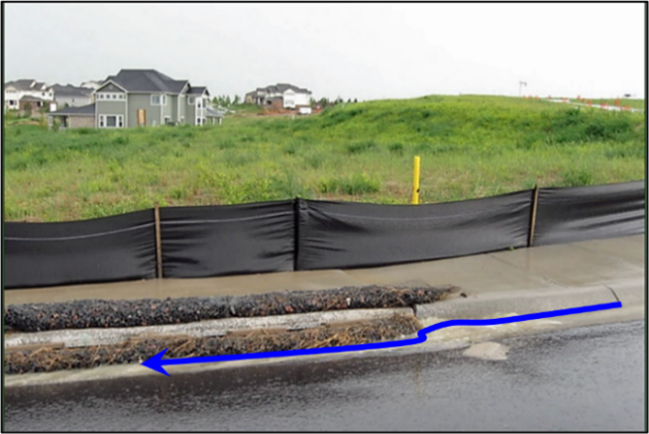
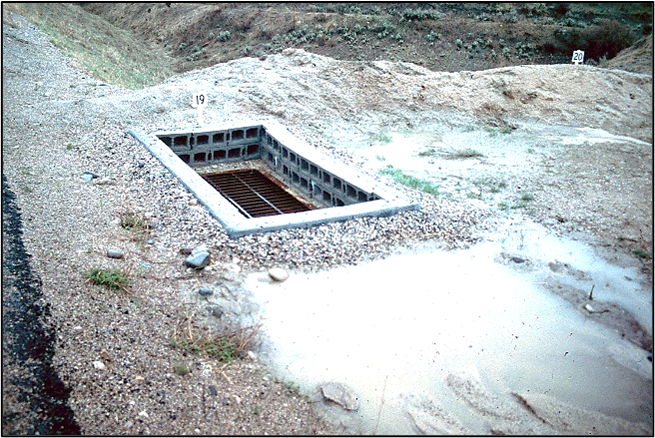
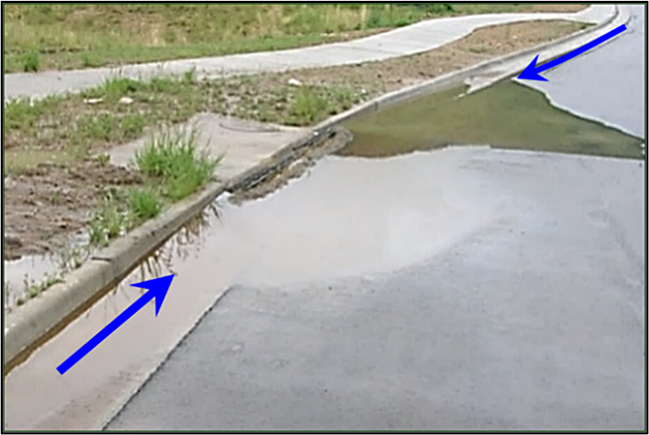
Figure 1. Barrier in front of a sump inlet with a containment pond.
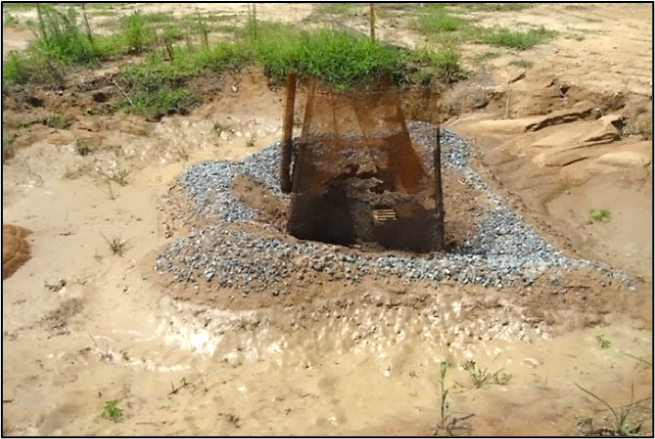
Figure 2. Barrier in front of an on-grade inlet that diverts runoff.

Inlet Protection Methods

The predominate construction site method for inlet protection is the installation of barriers that create containment ponds to reduce inflow velocities. These barriers must be pervious, cannot float and be able to withstand the impact of flood discharges.

Subdivisions and commercial developments typically have multiple storm drain inlets. Only where “sump” conditions exist can development of “meaningful” containment ponds occur (Figure 1). Installing barriers in front of “on-grade” inlet openings divert sediment-laden runoff waters, which prevent the development of “meaningful” containment ponds to capture suspended particles (Figure 2).

Drainage problems associated with curb inlets also apply to area drains. Effective area drain inlet protection also requires the development of containment ponds at “sump” locations (Figure 3). In addition, installing inlet protection BMPs around “on-grade” area drains divert runoff waters unless containment occurs by downstream berms (Figure 4).

Barriers and Containment Ponds

Development of containment ponds at “sump” inlets occur when flow rates through pervious barriers are less than inflow rates. When pervious barrier flow rates are equal to or greater than inflow rates, or failure of the barrier occurs, development of “meaningful” containment ponds may not happen.

It is difficult to determine a percentage of effectiveness for “sump” inlet protection measures since concentration of suspended particles within inflow discharge waters varies with different construction phases. However, completing a general assessment of what may happen to inlet protection measures is feasible.

Figure 3. Illustration of a rock barrier around a sump area drain.
Figure 4. Rock barrier around an on-grade barrier with downstream berm.

Assessing How Inlet Protection BMPs May Function

Evaluating the discharge zones of a sedigraph (Figure 5) allows for a “hypothetical” assessment of runoff waters entering a containment pond in front of “sump” curb or area drain inlet openings. Assuming the concentration of suspended particles within inflow waters remain constant and overflows of the barrier can happen, then:

• With Zone 1 discharges, deposition of larger diameter suspended particles (e.g., rocks, and sands) will take place within the containment pond until overflow conditions develop. Since the pond is not an effective sediment trap, most particles remain suspended in the runoff waters and discharge through the pervious barrier into the storm drain system.

• With Zone 2 discharges, increased volumes of sediment-laden waters flow through the containment pond and spill over the barrier. These flows have higher velocities that can remove deposits of small diameter sediments. The capture of larger diameter suspended particles (e.g., large sands and small rocks) may continue. However, most particles remain suspended within waters of the containment pond, which discharge through the pervious barrier and combine with sediment-laden overflow waters entering the storm drain system.

• With Zone 3 discharges, deposits of sediments increase within the containment pond as inflow velocities become smaller. It is within Zone 3 that large deposits of sediments will appear in front of pervious barriers. However, most sediments remain suspended and discharge through the pervious barrier into the storm drain system.

In summary, it appears “sump” inlet protection BMPs may have an extremely low effectiveness in capturing sediments from discharges prior to their entry into a storm drain system. Installing barriers in front of “on-grade” inlets will divert runoff waters, which also minimizes the capture of suspended particle from sediment-laden discharges.

Figure 5. How an inlet protection BMP might function in front of a sump inlet.2

Alternative Inlet Protection BMPs

Since most storm drain inlets within a development are located on streets having a grade, installing barriers in front of all curb inlets will not provide the effective capture of sediment from construction discharge waters. An alternative for “on-grade” inlet protection measures is to install pervious barriers within a development’s gutter flowline (Figure 6). These barriers must provide a tight seal with the asphalt/concrete, cannot float, and have a height that is about 25 mm (1.0 inch) lower than the top-of-curb.

Another inlet protection measure is installing inlet inserts (Figure 7) that capture suspended particles after flowing into an inlet opening. However, use of inlet inserts might violate EPA’s 2022 CGP requirements for inlet protection since they do not remove sediment from discharge waters “prior to entry” into storm drain inlets.

For either alternative, suspended particles in sediment-laden runoff waters will continue to enter the storm drain system. A third option that could address this problem is to professionally design, install and maintain a sediment basin/trap to accept construction site discharge waters entering a storm drain system. The 2022 CGP allows for this option. However, trash and debris control will be necessary for all inlet openings.

Figure 6. Curb and gutter inlet protection system.
Figure 7. Removal of an inlet insert designed to capture suspended particles.

Summary

Installing inlet protection measures at curb openings are not effective methods for capturing suspended particles from sediment-laden discharge waters. Installing pervious barriers in front of “sump” inlets may be capturing only tiny amounts of sediment suspended in discharge waters. Pervious barriers in front of “on-grade” inlet openings divert runoff waters, which minimizes their effectiveness to capture suspended particles in runoff.

Increased effectiveness of inlet protection for developments may occur using gutter flow line barriers and inlet inserts. The most effective method for capturing suspended particles out of sediment-laden runoff is to discharge storm drain waters into an effective sediment basin/trap. 

References

Environmental Protection Agency (EPA). National Pollutant Discharge Elimination System (NPDES) 2022 Issuance of General Permit for Stormwater Discharges from Construction Activities. In 01/24/2022 Federal Register, 87 FR 3522, Pages 3522–3532.
Fifield, Jerald S. 2011. Designing and Reviewing Effective Sediment and Erosion Control Plans. Forester Press. Santa Barbara, CA.

About the Expert

Jerald S. Fifield, Ph.D., CISEC, is actively involved with drainage, sediment and erosion control (S&EC), water rights and nonpoint pollution control. He develops S&EC plans, completes drainage analyses, provides inspection services and teaches about controlling sediment and erosion on construction sites. Jerry has authored professional papers, researched S&EC products and published S&EC manuals. He is also the founder of CISEC, Inc., which educates and certifies inspectors of sediment and erosion control.

Use MS4 Certification Requirements to Drive Education

By Thomas Schneider, CPESC

In this series, we have discussed the three groups that a Municipal Separate Storm Sewer System (MS4) needs to educate to have a successful stormwater compliance program —citizens, MS4 employees and the regulated community. Previous articles touched on different strategies needed to accomplish this—public education, focused in-house training and outreach and education. This article looks at the regulated community group and how the MS4 can create an education and outreach program with very little expenditure of MS4 resources.

Requiring a certification or license drives education. When a city, county or state (MS4) requires an electrician to be licensed or certified, the electrical contractor or individual seeks out the education to obtain the knowledge necessary to achieve the certification or license. When a certification is required there are many companies and organizations that will provide the education needed to obtain the certification or license. All the MS4 needs to do is require the certification and the education will be obtained with no out-of-pocket cost to the MS4.

It sounds simple, but there is a catch The more time and effort an MS4 expends to determine their needs and identify which certification(s) meet those needs, the better their results will be. There are many certifications available to select from. The MS4 that researches and selects the certification(s) that best fit their needs will realize some amazing results.

Let’s look at certificates, diplomas and certifications. A certificate usually indicates an individual attended a class. A diploma says an individual completed a curriculum with a satisfactory level of knowledge. A certification provides proof that the individual possesses a level of knowledge to be proficient in that discipline. In the legal profession for example, a law student receives a diploma from their law school but the state bar certifies that they possess enough knowledge to practice law.

To make a certification requirement work for the MS4, the MS4 must weed out the certifications that do not fit the MS4’s requirements. The MS4 should be inclusive, not exclusive, when setting up certification requirements. After identifying needs based on the MS4’s specific area and unique requirements, the MS4 can then develop the requirements for the certification. It is a mistake for an MS4 in one state to accept a certification based on another state’s regulations. A certification should address the MS4’s needs or most of the needs. However, the MS4 needs to make sure that a certification does not test for knowledge that conflicts with its requirements. When this happens the individual will need to be retrained on what the MS4 requires.

As in all industries, there are many certifications, with each having different knowledge requirements to pass the exam and be certified. There are some certifications that require a 4-hour online course with a simple test at the end of the educational session that results in the individual obtaining a certification. There are others that require a number of years working in the industry as well as passing a test to achieve the certification, and there are many types of certification requirements in between the two identified.

The upfront effort to select the best certification directly influences the education that is provided and the effectiveness of the certification requirement. If the exam is testing for rudimentary knowledge, the MS4 will achieve a regulated community with a rudimentary level of knowledge. Depending on the MS4, the certification requirement can be applied to all areas in stormwater construction, post-construction and multi-sector industrial sites.

Certifications can be a powerful tool in your MS4 stormwater management program. Certifications can save the MS4 money and get the regulated community on the same page as the MS4 in a short period of time when utilized correctly. Remember, this is not a new theory. Certifications and licenses have been proven to be effective in other departments within the MS4. For these reasons alone, an MS4 should give serious consideration to adding a certification requirement to the program.  

About the Expert

Thomas Schneider, CPESC, is vice president at Stormcon, LLC. He has 28 years of experience and extensive training in storm water regulations focusing on construction site erosion and sediment control. He works directly with local, state and federal agencies as well as working one-on-one with clients to develop and implement storm water programs that will fit their needs.

[Editor’s Note: While the MS4 permitting program is a United States-based program designed to control water pollution, strategies used to meet permit requirements can be applied to storm sewer systems in any location to support clean water efforts.]

Dale Hodges Park

DCIM\100MEDIA\DJI_0124.JPG

Improving Stormwater Treatment and Restoring Environment

By Matt Williams, AALA, OALA, CSLA

Dale Hodges Park is a transformative landscape along the Bow River in the City of Calgary, Alberta, Canada. The project began with the need to restore the environmental health of the area while addressing stormwater treatment opportunities for runoff from over 1,700 hectares (4,200 acres) of adjacent urban area.

Once a gravel quarry located within an existing 164 hectare (405 acre) river valley park, the site adds 40 hectares (100 acres) of integrated park land, stormwater treatment facilities and one of the largest public artworks in North America. Calgary’s leaders had the foresight to see this project as an opportunity to combine green stormwater management practices with park and arts amenities to create a unique experience for residents. The park concept follows the journey of stormwater through a series of experiences that emphasize the flow of water through the landscape. The project enables citizens to see how stormwater is managed and aims to inspire curiosity and a deeper understanding of how natural and manmade systems interact.

Actual construction began in late 2015, and the park opened to the public in June 2019. Total cost of the project was $26.8 million, with design and construction of the stormwater treatment system representing $19.4 million of the total. Funding was shared by the City of Calgary’s parks, water resources and public art departments.

The project was led by Watershed+, a city program that embeds artists within infrastructure projects. A multidisciplinary team comprised of landscape architects and park designers, civil engineers and stormwater wetland designers worked collaboratively with the artists from Watershed+ to fulfill the functional and artistic intentions of the project. The multidisciplinary approach allowed each discipline to build upon the team’s collective knowledge and creativity to achieve the outcomes demanded by the City of Calgary for this incredibly valuable and strategic park.

This project is unique in that the team embraced the requirement for stormwater treatment as an opportunity to explore and create new experiences for park users and a diverse range of upland, riparian and aquatic habitats. The focus was to show the movement of stormwater through the site and make its journey apparent at each treatment stage. This is accomplished through the formal design of the system and through interventions that allow for a visceral experience of the water’s movement.

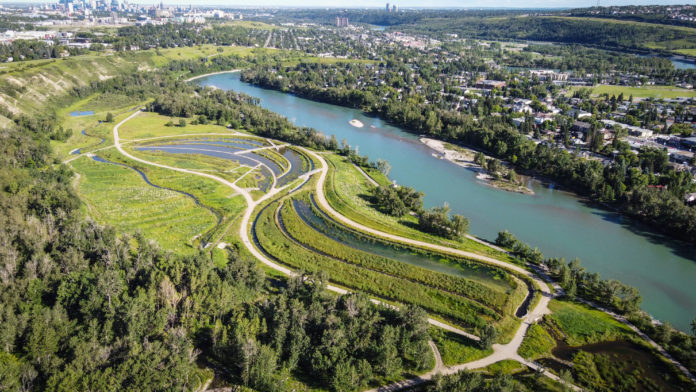
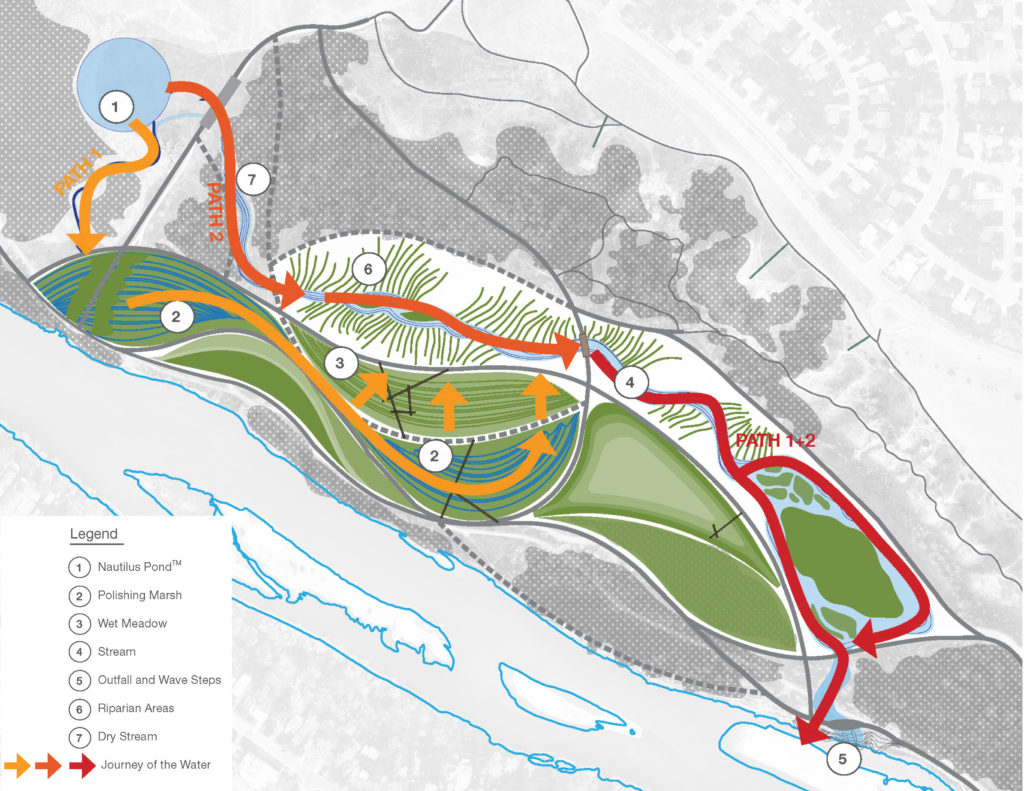
The stormwater story begins when the water emerges at the source walls, an energy dissipation structure that makes a spectacle of the velocity of the water as it enters the system. The water then goes through a high performance surface water treatment environment, an innovative circular clarifying pond that is the primary mechanism for removing the total suspended solids (TSS) from the stormwater before it enters the wetland treatment cells. From there, water cascades through built structures and streams into a series of polishing marshes, wet meadows, riparian areas and a 900m (3,000 ft) long restored stream. The built structures, streams and marshes were designed with the intention to bring the water to the surface and demonstrate the water’s movement and energy in that moment of the treatment cycle (Figures 1 and 2).

Figure 1. The journey of stormwater through the various components of the park. Water takes different paths based on flow levels.
Figure 2. Aerial view of the completed park showing boardwalks that allow visitors to enter the system.

In a typical year, this system is estimated to remove 85,000 kg (190,000 lbs) of TSS that would otherwise be discharged to the Bow River. The TSS is regularly removed from the surface water treatment pond, which is easily dewatered to allow equipment to remove the sediments and haul to an approved waste facility. As this is the first forebay of its kind to be constructed in Calgary, the maintenance regime will be developed through regular monitoring of the sediment accumulation. Based on the first few years, the sediment will likely need to be removed annually, which means the forebay is performing more efficiently than expected.

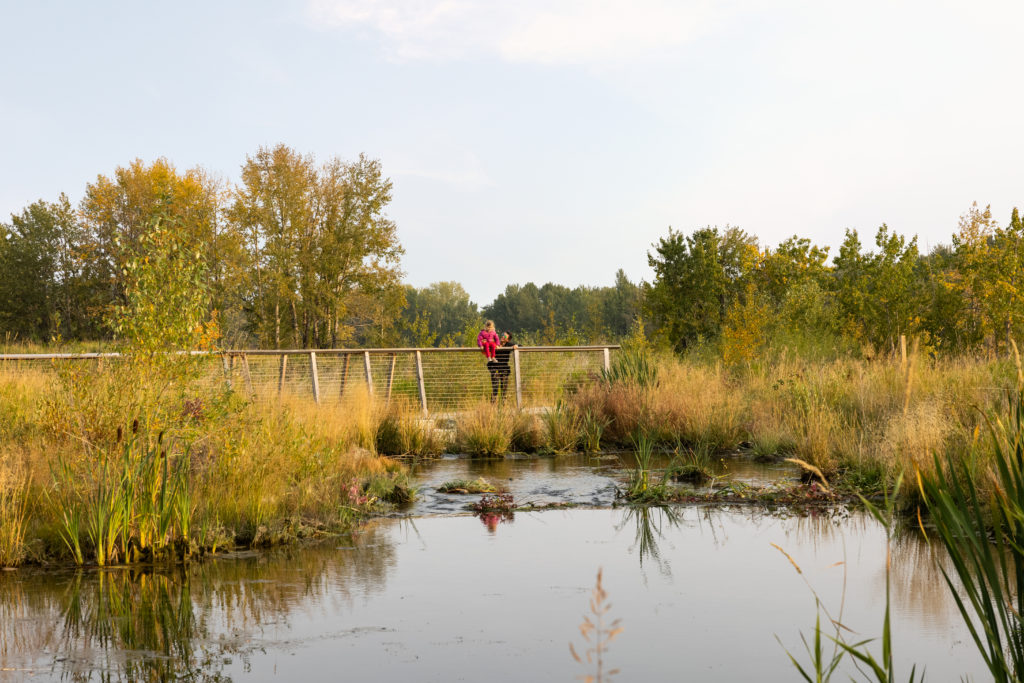
Riparian morphological forms inspired the design of the park, creating opportunities for water treatment and interpretation of the landscape patterns. The polishing marshes follow sweeping curves reminiscent of anabranches and river scrolls that evolve when a channel diverges and rejoins a river. A pathway along a scroll provides access to the water while elevated, crisscrossing boardwalks contrast the elegance of the natural patterns, evoking fallen floodplain trees strewn by the current (Figure 3). The emergent vegetation zones throughout the marshes provide additional filtration and critical waterfowl habitat. The outlet stream is a restored seasonal creek that mimics alluvial side channel formations and discharges to an important trout rearing habitat in the Bow River, serving as fish refuge during river flood conditions (Figure 4).

Figure 3. A series of boardwalks crossing through the stormwater treatment facility allows visitors to experience riparian vegetation and wildlife.
Figure 4. A bridge marks the point where cleansed water enters the Bow River. The outlet provides critical fish habitat.

The restoration of the abandoned quarry presented numerous challenges and opportunities for the project. Contamination, poor soils and invasive species were prevalent and required an enormous overhaul of the site’s basic substrate while preserving and enhancing existing forested and vegetated areas. Planting included nearly 50,000 woody and 40,000 emergent plants, and establishment was largely successful except for some emergent plants that were inundated above design levels for a period. This has created a unique open water condition in one cell that actually provides more diverse habitats.

Floating wetland technology was introduced in the first wetland treatment area. The innovative system floats wetland plants in a PVC “basket” to create additional habitat and filtration. Another amazing component of the project, that had significant influence on the project, was the restoration of a 900 m (3,000 ft) long seasonal creek that flowed through the land prior to mining operations.

The historic stream alignment was identified through research of historical aerial photographs and analysis of the site’s topography. The forest stream was integrated into the stormwater journey as one flow path for water exiting the surface water treatment pond. The mirror pool was installed at the head of the stream, letting water gently fall into its course through the forest and then out into the main park area where it flows through sculpted terrain inspired by riparian patterns that provides diverse upland habitat. Water from the park’s primary treatment cells then reconnect with the stream before the entire system enters the Bow River. The stream’s form and function became a launching point for design inspiration and restoration principles.

Implementation of the project has resulted in numerous positive impacts. The project’s robust public and stakeholder engagement process has led to widespread public praise of the finished park. Ecological systems in the park are now rich and diverse, visible in the prevalence of native vegetation and wildlife. As a new type of high-performance public space, the park achieves multiple infrastructure requirements through a beautiful open space, providing ecosystem services and enhancing the quality of everyday life. 

About the Expert

Matt Williams, AALA, OALA, CSLA, is a landscape architect and principal at O2 Planning & Design, based in Calgary, Alberta, Canada.
Project Note: The Dale Hodges Park project was a multi-disciplinary collaboration led by the City of Calgary and included artist practice Sans façon for Watershed+, O2 Planning & Design, Source2Source and AECOM.

Take A Good Hard Look at Yourself

View from back of man in suit looking at the mirror while being in shop

By Judith M. Guido

Most of us have heard the expression: sit back and take a good, hard look at yourself. Doing so can be a daunting and rewarding exercise. When extended to our organizations it can also be a daunting, eye-opening and valuable experience.

As I wrote in my last column, we have heard [ad nauseam] about supply chain, people and inflation challenges as a few of the primary reasons that so many companies and people are not performing optimally. Yet, many are doing incredibly well. Why? Because they have taken a good, hard look at themselves and have made changes because of what they have observed and heard.

Regardless of the reasons or drivers behind their change, successful teams and organizations know that in order to be leaders they must constantly reinvent themselves. Reinvention is not necessary because of outlier situations like a pandemic or global supply chain bottlenecks or movements like the great resignation, but because that is what is needed to be unique and distinct. Better yet, reinvention differentiates these leading organizations from the competition, which attracts the attention and business of new customers, talent, media and key stakeholders.

The market changes so quickly that in the blink of an eye there’s new competition from start-ups which come from outside the industry, along with strategic alliances, mergers and acquisitions and consolidations inside the industry. All of which drastically change the landscape and playing field on which you compete. If you are coming to the game [market] with the same old playbook, team and moves you might be in for a shocking surprise or shellacking.

For many reasons, it is getting more difficult to compete on innovative technology, pricing, services and products alone. Therefore, we need to take a good hard look at ourselves and dig deeper. Can you recall the last time you did this? We need to take a hard look at existing business models, and see how incorporating changing customer needs, trends and technologies into the mix will create superior business models that are difficult to duplicate. Then, we can fully leverage and optimize market opportunities and leave our competitors in the dust.

I know, easier said than done. Creating, designing and testing a unique business model will likely take more than one attempt before launching. It also takes patience and may require seeking help outside of your leadership team to gain objective feedback and insights.
You also want to look outside the boundaries and comfort zone of your industry for inspiration, ideas and business model patterns and trends of other successful companies. My colleague, Jeff Hoffman, co-founder of Priceline amongst other incredibly successful enterprises, calls it “info-sponging.”

Once built, tested and executed, a unique business model is an incredibly valuable tool and game-changer. Go ahead, take a good hard look at yourself, and then watch as incredible things begin happening. 

Judith M. Guido is the chairwoman and founder of Guido & Associates, a business management consulting firm in the erosion control and green industry. Guido can be reached at 818.800.0135 or judy@guidoassoc.com.

Controlling Construction Site Dust

By Rich McLaughlin, Ph.D.

Controlling “fugitive” dust on construction sites is often required as it is a major source of air pollution and a health hazard. The most common approach is to apply water periodically to create adhesion between soil particles, but this is often very short lived. In recent experiments on gravel roads, for instance, we found that water lost its effectiveness for dust control in less than an hour during the summer months. This review will focus on a number of approaches to dust control and different ways to improve dust management.

Natural Soybean Biomaterial

A relatively new treatment uses a combination of calcium chloride, urea and a urease enzyme source such as soybeans. When combined, calcium carbonate is precipitated and it cements the soil particles together. This system, called enzyme-induced carbonate precipitation (EICP), was compared to water and calcium chloride alone for dust and erosion control in a wind tunnel.1 Two sources of urease were tested—soybean and jackbean—to determine if there was any difference in the effectiveness of the enzyme. Both EICP systems performed as well or better than calcium chloride in controlling dust and were much more effective than water alone. Either mixing the EICP system into the soil or spraying on the surface appeared to be effective. The authors suggested using soybeans as the enzyme source as they are widely available.

Life Cycle Sustainability

In a related study, a life cycle sustainability analysis was done on three dust control strategies: water, magnesium chloride and EICP.2 This involved a variety of environmental impacts and costs, from the manufacture, application and longevity of treatment. Overall, the EICP had lower potential costs than water by more than $30,000 ac-1 with lower greenhouse gas emissions and water consumption. However, magnesium chloride had lower costs and environmental impacts, depending on how often it needed to be applied. One caveat was that potential issues with salinization from the magnesium chloride were not considered. In addition, magnesium chloride is only effective if humidity is above approximately 30% as it functions by attracting moisture from the air.

Decision-Making Models

Managing the dust also requires some decision-making, and two studies suggest how that can be accomplished. One approach was to model the potential dust generation under various conditions, including time of soil exposure, soil type and size of exposed area.3 The construction induced dust emission model (CIDEM) was applied to a rapidly developing area north of Toronto, Canada, using aerial images from 2012–2020. The amount of dust <10 um (PM10) generated was estimated over the years based on construction site activity. The need to apply dust control was determined based on the area exposed and the soil type, and the costs were estimated. For example, all 10 soil types with exposed areas <1 ha did not require dust control, but once the area reached 20 ha, six of the 10 soil types required dust control to be in compliance. The authors suggest this tool could be used to decide when dust control is needed.

In contrast, Kaluarachchi et al. (2021) discuss how to motivate construction site workers to manage dust.4 They used a survey of workers at all levels at two large construction sites to help confirm their hypotheses. Overall, they suggest that by providing information on potential environmental and health impacts of dust, the “personal norms” of the workers would help motivate them to control dust. The influence of the company culture appeared to be less important than the personal desire to avoid having negative impacts on people and the environment. However, they indicated that this may be the effect of a company culture “crowding out” the individual feeling of responsibility. That is, if the company has a strong policy to control dust, the individual will feel less of a moral responsibility for it. 

Fugitive dust creates a health and safety risk on construction sites.

References

1) Baziar, M. H., M. Sanaie, O. E. Amirabadi. 2021. Mitigation of dust emissions of silty sand induced by wind erosion using natural soybean biomaterial. International Journal of Civil Engineering 19:595–606. https:// DOI:10.1007/s40999-020-00587-4.

2) Raymond, A. J., A. Kendall, J. T. DeJong, E. Kavazanjian, M. A. Woolley, and K. K. Martin. 2021. Life cycle sustainability assessment of fugitive dust control methods. J. Constr. Eng. Manage. 147(3): 04020181. https://doi.org/10.1061/(ASCE)CO.1943-7862.0001993.

3) Clement, D., A. A. Aliabadi, and J. Mackey. 2021. Dust emissions management model for construction sites. J. Constr. Eng. Manage., 2021, 147(8): 04021092. https://doi.org/10.1061/(ASCE)CO.1943-7862.0002121.

4) Kaluarachchi, M., A. Waidyasekara, R. Rameezdeen, and N. Chileshe. 2021. Mitigating dust pollution from construction activities: a behavioural control perspective. Sustainability 13, 9005. https://doi.org/10.3390/su13169005.

About the Expert

Rich McLaughlin, Ph.D., received a B.S. in natural resource management at Virginia Tech and studied soils and soil chemistry at Purdue University for his master’s degree and doctoral degree. He is a professor and extension specialist in the Soil Science Department at North Carolina State University in Raleigh, North Carolina, specializing in erosion, sediment and turbidity control.

Tailor MS4 Education to Audience

Rain flowing into a storm water sewer system. Stormwater street drain during heavy rain.

By Thomas Schneider, CPESC

In the first article of this series, the importance of sampling to evaluate the progress of the MS4 program and to ensure the money you spend on education and outreach is used efficiently was discussed. Once sampling has helped identify the specific issue and location, it is important to accurately identify the target audience for education.

There are usually three groups that can be targeted for education within the MS4. The MS4’s cost to educate and ability to influence each of these groups is different. Recognizing this constraint will allow the MS4 to lower cost and provide a more effective education program.

1) Citizens

Citizens are the people that live within the MS4. The MS4 has little control over the education of this group but in most cases must bear the cost of educating this group. First, citizens need to be made aware of an issue. Once that is accomplished, the MS4 must create educational content that will teach the citizen why they need to do something about the problem. Once this is accomplished, the MS4 can then provide education about how to correct the problem. Without citizens’ buy-in, education efforts have little chance of creating change.

2) MS4 Employees

The MS4 has control over what education this group receives and must also bear the cost of the education. Buy-in is also important with this group, but the MS4 can require training and test to ensure comprehension. This group includes people who perform many different services within the MS4, which necessitates different content for each MS4 employee group. A one-size-fits-all approach is not the best way to educate employees. Parks department employees’ educational needs are different from the stormwater education needed by the water department employee. Parks department staff applies fertilizers and other chemicals to keep the parks beautiful, and water department staff repair breaks in water lines, which requires excavation and pumping so they can fix the broken pipe. Employees are a difficult group to educate due to the many services the MS4 provides to citizens. In addition to providing an overview of MS4 issues, effective employee training must include information relevant to each service group.

3) Regulated Community

This group is required, by the MS4, to obtain a permit from the MS4, a certificate of occupancy, a building permit, fire code inspection and more. This is the easiest and least expensive group to educate. Municipalities require electricians working within the MS4 to be licensed. Food service certifications are required for restaurant employees, irrigation contractors must be licensed or certified and attorneys must pass the bar prior to practicing law. All of the regulatory requirements demonstrate that they possess an adequate level of knowledge about the activity they wish to perform in the MS4.

The MS4 can require the regulated group to educate themselves about pollutants they might discharge into the MS4 and how to control them. There are too many types of services provided by these groups to the citizens of the MS4 and too many types of products manufactured. An MS4 might be able to create and provide training for each of these activities, but it requires an unnecessary expenditure of time and money. The MS4 can simply require the regulated entity to maintain a certified individual onsite. The MS4 can have an education and outreach program for this group but does not take on the expense or responsibility of the education.

The final article in this series will discuss the issues with selecting the correct certification for your MS4 and the differences between certificates and certifications.

About the Expert

Thomas Schneider CPESC, is vice president at Stormcon, LLC. He has 28 years of experience and extensive training in storm water regulations focusing on construction site erosion and sediment control. He works directly with local, state and federal agencies as well as working one-on-one with clients to develop and implement storm water programs that will fit their needs.

[Editor’s Note: This is the second in a series of three articles that discuss practical issues and solutions related to the Municipal Separate Storm Sewer System (MS4) permitting program. While MS4 is a United States-based program designed to control water pollution, strategies used to meet permit requirements can be applied to storm sewer system operators in any location to support clean water efforts.]

Project Preview: Trout Unlimited to Address Drought Resiliency

By Jesse Kruthaupt; Cary Denison; Lydia Bleifuss

Extreme drought in Colorado’s Gunnison River region has negatively impacted agricultural operations, wildlife populations and watershed health. In October 2021, the Natural Resource Conservation Service (NRCS) awarded over $822 thousand to support Trout Unlimited’s (TU) Gunnison River Drought Resiliency and Restoration project (Regional Conservation Partnership Program (RCPP), Alternative Funding Arrangement). Supporting project partners include U.S. Fish & Wildlife, National Fish and Wildlife Foundation, Colorado Water Conservation Board, Upper Gunnison River Water Conservancy District and Colorado Canyons Association. From spring of 2022 to 2027, TU will restore wetlands and riparian areas while improving irrigation water management on working ranches in three distinct tributaries to the Gunnison River.

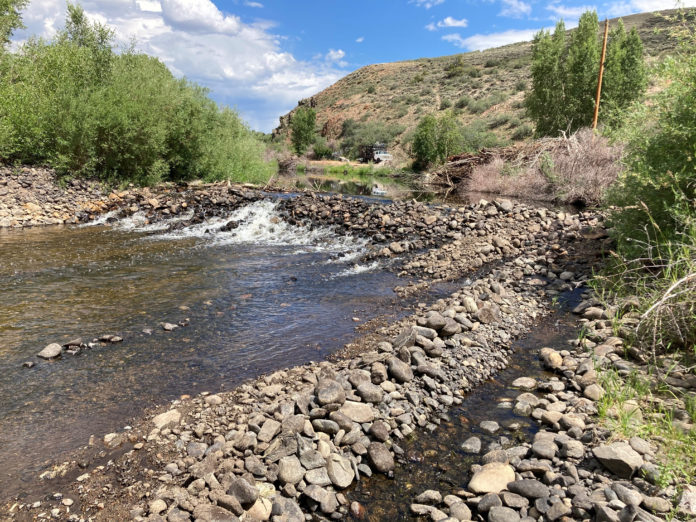
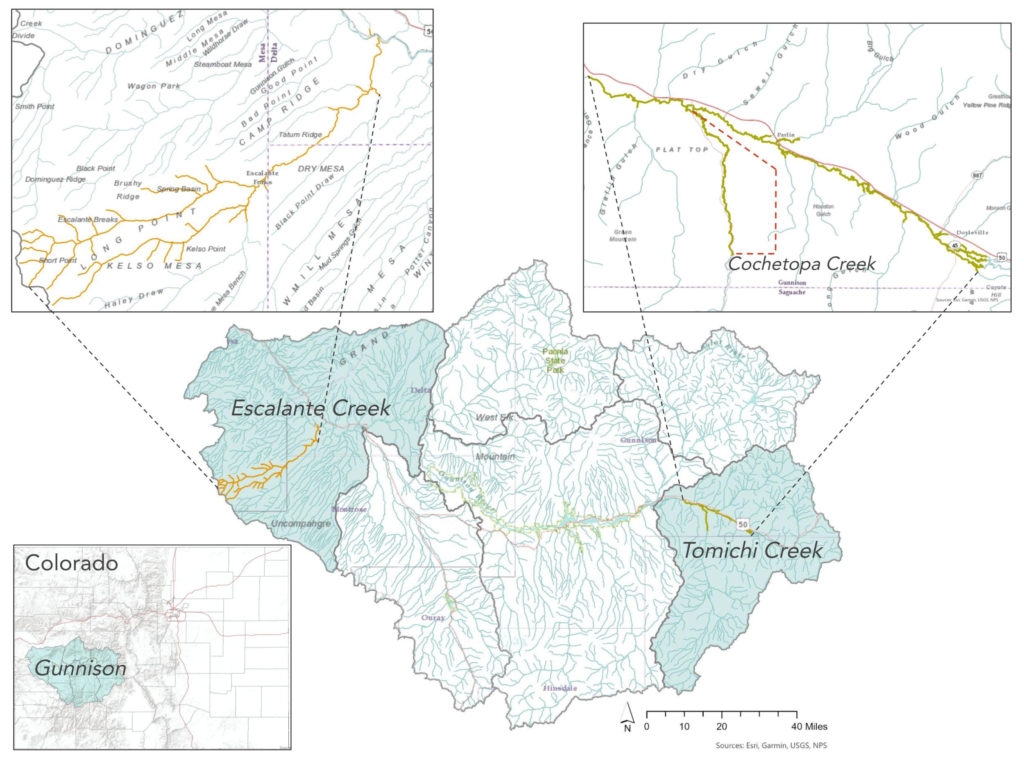
The primary goals of the project are to build drought resilience and address inadequate riparian habitat and water quality on at least five working ranches along Gunnison River tributaries, including Escalante, Tomichi and Cochetopa creeks. TU will utilize NRCS practices to provide ranch owners financial and technical assistance to update antiquated irrigation diversion and delivery infrastructure, improve irrigation water management, restore segments of degraded stream channel and riparian habitat, and where appropriate, utilize low-tech restoration technics to trap sediment and enhance floodplain connectivity for associated riparian wetlands. TU expects the employed practices will provide many positive impacts to these regions.

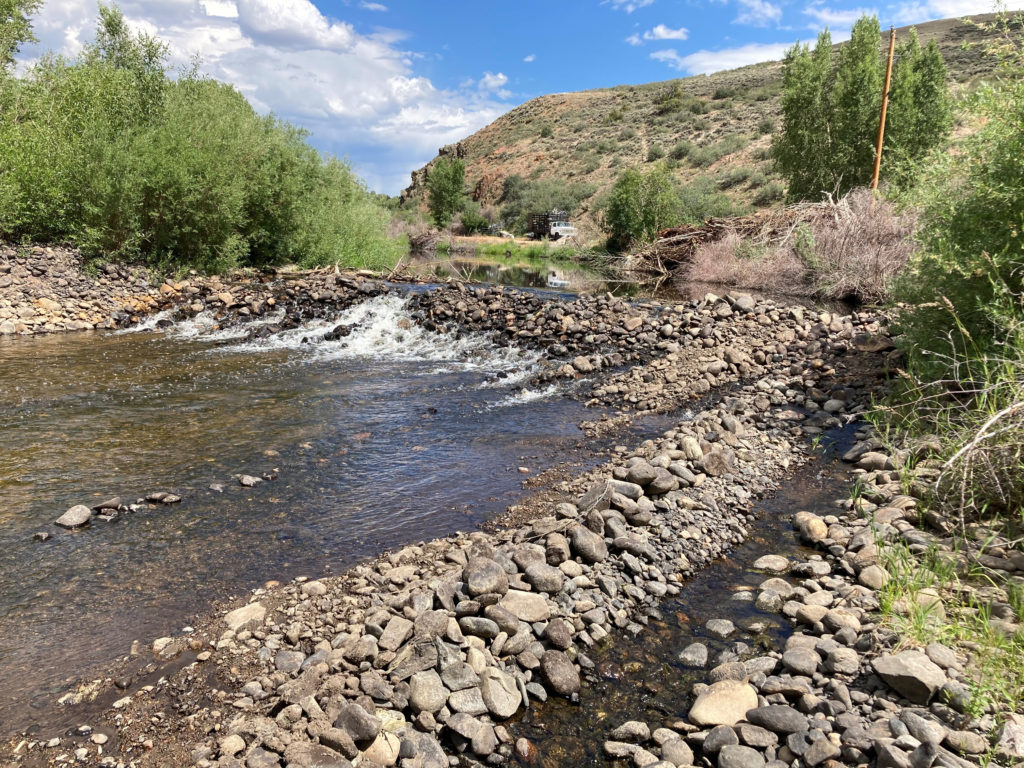
It is not uncommon for irrigators to push up bed material to effectively divert water into their ditch inlet during low flow periods. During run off the following spring this material is mobilized and transported to deposition areas forcing the channel laterally and intensifying bank erosion.

• Increasing base flows will reduce stream temperatures and support several fish species including native trout, wild trout, sucker and chub.

• Native riparian vegetation density and habitat that are relied upon by numerous bird species including the threatened Gunnison Sage Grouse and Yellow Billed Cuckoo will be increased.
Riparian and meadow areas will strengthen big game habitats.

• Beaver populations will be supported through process-based restoration techniques, namely the construction of instream structures known as beaver dam analogues, to raise groundwater tables and restore floodplain connections where feasible.

• Soil health should be improved through use of wet meadow restoration, irrigation water management and prescribed grazing methods.

• Water quality improvements from reducing sediment load and turbidity through bank stability and revegetation actions are likely to increase water temperatures and improve stream flows by increasing recharge of fluvial aquifers.

The practices implemented to reach these goals will be based on technical NRCS Conservation Practice Standards and used in concert with one another to increase their effectiveness and reach the desired outcomes.

Timing of this project is important as ranchers and farmers are keen to increase drought resiliency as they continue to struggle through more than 20 years of decreased precipitation and increasing temperatures. Aridification has already significantly impacted agricultural production and environmental qualities in the Gunnison while increasing tensions between competing water interests. Water scarcity caused by extended drought creates problems not only for individual ranch and farm operators, but also the environment, outdoor recreation and municipal and industrial sectors.

Project map for the Gunnison River Drought Resiliency and Restoration project, a Regional Conservation Partnership Program Alternative Funding Arrangement. Trout Unlimited will work with five ranch owners along the Escalante, Tomichi and Cochetopa creeks, which are tributaries of Gunnison River.

The infrastructure and habitat improvements will allow producers to adapt to the changing climate, while improving environmental attributes on working lands. By supporting agricultural producers’ abilities to remain resilient to the impacts of a changing climate, this project will protect the agricultural heritage and economy of the Gunnison Basin. Indirect and targeted outreach about this project will inform other western producers and water managers on drought resiliency practices.

Rafters, hikers, anglers and other downstream users will benefit from improved watershed health and wildlife habitat, ensuring economic viability of the recreation-based economy in the Gunnison Basin. By improving environmental qualities on private lands that interface with public lands and waters, the project will help to foster productive relationships between recreational interests and agricultural producers. The project will provide an example of scalable, collaborative conservation work that improves drought resiliency for agricultural producers and the environment. 

About the Experts

Jesse Kruthaupt is the Upper Gunnison Basin project specialist for Trout Unlimited.

Cary Denison is the Gunnison Basin project manager for Trout Unlimited.

Lydia Bleifuss is the regional farm bill associate for Trout Unlimited.

Trout Unlimited’s mission is to conserve, protect and restore the nation’s fisheries and watersheds. In the West, TU has over 600 active projects improving watershed health and water management.

Road Salts Remobilize Heavy Metals; Increase Environmental Harm

By Ann Ryan; Carsten Dierkes, Dr.-Ing

Designers and manufacturers who are developing the next stage of advanced stormwater treatment are considering the impact deicing salts have on heavy metals. By increasing the mobility of heavy metals in runoff, the use of deicing salts poses two problems: increased damage to the ecosystem and decreased efficacy of filters traditionally used to protect water quality.

The use of deicing salts to prevent ice formation on roadways, parking areas and walkways has increased exponentially since they were first used more than 80 years ago. Estimates put worldwide use of road salts at approximately 66.14 million tons (60 million m tons) a year.

Annual estimates for use of road salt in countries that experience heavy snowfalls include: United States with 24 million tons (21.77 m tons); Canada with 5 million tons (4.54 million m tons) and Germany with 1.8 million tons (1.63 million m tons). U.S. figures present a stark example of the growth of deicing salt use. About 164,000 tons (148,778 m tons) were applied to public roads in 1940. The rise to application in 2020 represents an increase of more than 14,500%. These volumes are only for public roadways and areas. Deicing salt use by private industry and landowners in many countries is estimated at a similar volume, or more.

Research on the environmental impact of deicing salts in stormwater has focused primarily on salination damage to soil, groundwater, bodies of water and infrastructure. “Freshwater salinization from numerous anthropogenic activities including weathering of buildings and concrete, the widespread use of deicers and fertilizers is an emerging global issue impacting safe drinking water, ecosystem health and biodiversity and infrastructure,” write Kaushal, Likens, et. al, in April 2021.1

Only in the last several years have environmental engineers and stormwater system designers begun to realize the degree to which heavy metals in stormwater runoff are also a significant source of pollution. When heavy metals accumulate in groundwater and waterways, they can cause severe, chronic damage to aquatic habitats and drinking water resources. “Even low concentration of heavy metals may inhibit the physiological metabolism of plants,” write Singh and Kalamdhad.2 “Uptake of heavy metals by plants and accumulation along the food chain,” they continue, “is a potential threat to animal and human health.”

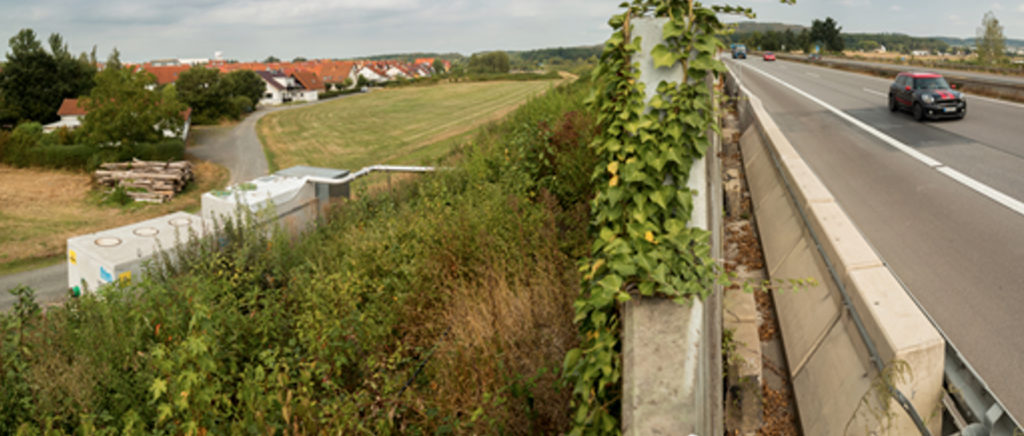
The field test setup was below a major highway near Giessen, Germany, and included a measuring container, sedimentation stage and filtration stage, with 18 filter cartridges installed in a concrete vault. Photo credit: HA Hessen Agentur GmbH – Jan Michael Hosan, 2016.

A specific element of deicing salts in runoff has even more recently been recognized as a subject to be studied and a challenge to be addressed: the remobilization of heavy metals in stormwater when deicing salts are applied. Essentially, when deicers are applied to nonporous surfaces, heavy metals are transported to waterways at accelerated rates. This increased mobility occurs with both chloride and and non-chloride deicers, so while non-chloride deicers may help with salination damage, it does not mitigate harm caused by heavy metals.

In research delivered to the Conference of European Directors of Roads (CEDR) in 2019, heavy metal in runoff was called out as an area of concern in terms of adverse impact on both soil and water. This research represents data gathered from Austria, Finland, Germany, Ireland, Norway, Sweden and the Netherlands and reports that in terms of road salt washing off road surfaces, particularly made of concrete or other impermeable materials: “The infiltration of runoff with high concentrations of salt will over time affect the infiltration capacity in the ditches, as the soil structure will be altered over time due to the above mentioned cation exchange between sodium and other cations in the soil, which could also include previously adsorbed heavy metals such as zinc and copper….”3

Because of the ion exchange process between sodium and calcium when stormwater runoff contains deicing salts, the use of salts reduces the permeability of soil. Therefore, the natural filtration action of soil is impeded and runoff does not move through the ground in the way necessary to efficiently control and “treat” runoff. This is avoided when filters installed in stormwater systems are manufactured of media that remove heavy metals.

Heavy Metals from Multiple Sources

Aside from deicing salts themselves, heavy metals are “shed” from numerous sources in traffic areas: asphalt, batteries, brake linings, electronics, engines, exhaust, fuel additives, lubricating oil, metal plating, petroleum products, tires and traffic devices. A study summarizing 1973–2015 data on heavy metals found in U.S. and European roadways identifies zinc, copper and lead as the major heavy metals found in city roadways, parking areas and highways outside metro areas (Huber, Hilbig, et al).4
To understand the toxicity of heavy metals and the ultimate environmental impact, it is crucial to understand metal speciation—the forms metals take as they are distributed and how they travel. Heavy metals such as zinc and copper are transported by stormwater runoff either attached to solids or dissolved. It is also important to understand that the problem occurs when heavy metals trapped in the soil or in stormwater treatment systems in summer months are released back into stormwater in winter months.

The filter media used in the field test were active coal, calcium carbonate and synthetic zeolite. Tests showed a total copper removal rate of 57% and total zinc removal rate of 61%.

Numerous filtration manufactured treatment devices (FMTDs) have been developed to capture pollutants in stormwater runoff prior to discharge into surface water or local groundwater. To know if an FMTD will work most effectively, sorption isotherms, sorption kinetics and the competitive behavior between metals must be considered.

One guide for a test to determine an FMTD’s efficacy is the standardized stormwater-filter deicing protocol developed by a leading European technical authority (DIBt in Germany). This protocol considers particulate metals as total suspended solids, dissolved copper, dissolved zinc and different deicing salts. It can be used as the base for an advanced filter protocol for heavy-snowfall regions.

While filters can greatly reduce the presence of heavy metals in runoff, deicing salts can reduce a filter’s effectiveness. Therefore, the type of filter media used impacts how effectively heavy metals are removed. The filters tested in both laboratory and field tests in Germany between 2009 and 2018 incorporated a variety of filter media to remove pollutants:

• Active coal for adsorption of hydrocarbons and herbicides.

• Calcium carbonate for precipitation of dissolved phosphorous.

• Synthetic zeolite for ion exchange of heavy metals.

In the laboratory test, dissolved copper was removed with an efficiency of 90.3% and dissolved zinc was removed with an efficiency of 85.5%. No remobilization of trapped metals was found.

Both laboratory and field tests—including filter-media removal mechanisms consisting of filtration, sorption and ion exchange—showed that the effluent water met the German standard for stormwater, which is a higher standard for heavy metals than for drinking water in Germany.

As awareness of the environmental problems created by use of deicing salts grows, municipalities, governing agencies and organizations are exploring alternatives. Everything from the timing, concentration and combination of traditional road salts is being considered and tested—as well as diluting the salts with alternatives such as beet byproducts.

Any effective, widespread alternative to deicing salts is years away. That leaves an urgent need both to address heavy metals moving through stormwater systems today and to develop protocols to test filters for heavy-metal retention when deicing salts are applied. Meanwhile, adding the step of stormwater filtration with proven efficacy in removing these pollutants would be a major step forward in mitigating predictable and preventable harm to groundwater, watersheds, waterways and freshwater bodies. 

No reduction of removal efficiency occurred during the field test. The clean effluent water shown here after filtration did not have a higher metal concentration, which means there was no leaching of the previously trapped metals.

About the Experts

Ann Ryan has written for international business and industry publications for more than 30 years. She has served as a communications consultant for numerous companies, including consulting on products and technology for Shawcor, a global company that manufactures and develops sustainable products and solutions that protect the environment, conserve resources and extend infrastructure asset life.
Carsten Dierkes, Dr-Ing, has studied, lectured and consulted on the transport behavior of heavy metals in road runoff during stormwater infiltration for more than 20 years. He is the managing director of H20, where he is investigating and developing innovative stormwater technologies, as well as a lecturer and presenter at universities and conferences.

For Further Reading

Schuler, Matthew & Rick Relyea. A Review of the Combined Threats of Road Salts and Heavy Metals to Freshwater Systems. BioScience, p. 327-336, Vol. 68, Issue 5, May 2018.

References

1) Kaushal, S; Likens, G; Mayer, P; et al. Freshwater Salinization Syndrome: Emerging Global Problem and Risk Management. Biogeochemistry, June 2021.

2) Singh, J; Kalamdhad, AS. Effects of Heavy Metals on Soil, Plants, Human Health and Aquatic Life. International Journal of Research in Chemistry and Environment, January 2011.

3) Muthanna, TM; Knegt, J; Bink, S; et al. CEDR Call 2016: Environmentally Sustainable Roads: Surface- and Groundwater Quality. Conférence Européenne des Directeurs des Routes (CEDR), May 2019.

4) Huber, M; Hilbig, H; Badenberg, SC.; et al. Heavy metal removal mechanisms of sorptive filter materials for road runoff treatment and remobilization under de-icing salt applications. Elsevier, June 2016.

Creating a Solid Foundation for Solar Project Success

By Aaron Mlynek, CPESC, CESSWI, CISEC, QSD/P; Joseph Ridley, CCIS, QSWPPP, CESCL

“Without a solid foundation, you will have trouble creating anything of value.” –Erika Oppenheimer

The rapid establishment of permanent vegetation in a uniform density is the foundation of a solar farm. Vegetation establishment, an often overlooked and undervalued process, will have adverse short and long-term effects on construction and the facility’s operation and maintenance function if not planned and implemented correctly by the general contractors.

Erosion, extended construction schedules, increased budgets, added scopes of work, state and federal interaction, warranty items and safety concerns are a few of the inherent risks to the project if the seeding process fails to meet the desired intentions. As established, perennial vegetation to a specific density is required in most cases to meet and terminate permitting associated with the National Pollutant Discharge Elimination System (NPDES) and the construction general permit. Contractors adapting to the specific conditions of solar farm construction misleadingly identify this step as reclamation, hence delaying this scope to the end of construction. This one misstep sets in motion an accumulative ripple of financial impacts.

As solar projects continue to increase in size and acreage expanding from roughly 0.25 GW in 2008 to almost 3GW in 2018, the industry has grown tenfold. Common industry size of new solar projects in 2021 currently exceeds 1,000 acres (405 hectares) or more per phase with earth disturbing activities aggressively scheduled to meet the increase in green energy demands and cash-on-delivery expectations of investors.

To meet this demand and requirement of stabilization, the use of larger seeding and farming equipment capable of tackling vast areas efficiently are quickly becoming the standard. Phasing in use of this equipment and using it to its full potential has a limited window of utilization—a window that cannot be reopened once its closed.

Solar photovoltaic (PV) projects that are out of seeding phase can present a unique industry challenge and a significant financial loss through the process of recovery. In the onset of PV installation, the solar infrastructure construction begins with foundation I-beam embedding, which is referred to in the industry as “pile driving.”

Seeding considerations for solar projects (Photo Courtesy of Westwood Professional Services, Inc).

The offset rows of I-beams prevent the use of large-scale equipment to seed vegetation and requires the use of less effective and low yielding methods of vegetation establishment. As installation progresses, access issues increase with additional obstacles such as torque tubes, racking and paneling and other simultaneous construction operations that restrict access.

The high erosion potential associated with lack of stabilization over vastly disturbed areas and ever-worsening ground conditions during construction results in overwhelmed best management practices (BMPs), civil works degradation, discharge events, loss of topsoil, delays in schedule and subsequent stormwater hardships.

When phased properly, seeding operations should follow directly behind final grading or land preparation to establish final stabilization prior to the installation of solar farm infrastructure.
Phasing, sequencing activities and seeding directly behind final grading and earth-disturbing activities is not only good practice, and in line with permit language, these techniques comprise a vital window of opportunity with detrimental repercussions if missed.

Planning and Phasing Considerations

During the preplanning phases consider the preconstruction land use. Phasing, BMPs and scheduling are critical to the success of the project. Three primary preconstruction land uses include:

1) Range land – Fully vegetated preconstruction.

2) Forestland – Fully vegetated preconstruction and fully disturbed areas prior to solar infrastructure construction.

3) Agricultural Land (row crop) – Fully disturbed preconstruction and must be seeded preconstruction.

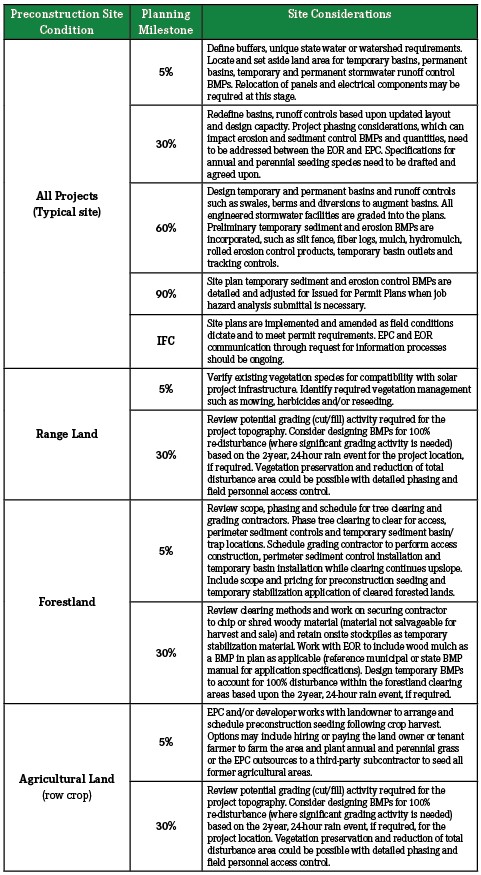
Each of the primary three preconstruction land uses require coordination with the developer, landowner and the engineering, procurement and construction contractor (EPC). After experience with numerous solar projects across many states, climates and topographical regions one main difference with solar project construction, as compared to other projects, has become apparent: additional preplanning involvement between the EPC and the engineer of record (EOR) is critical for project success. Typical engineering milestones include: 5%, 30%, 60%, 90% issued for permit and issued for construction (IFC). Depending upon the project the contractor may be required to account for material quantities and cost estimate at the 30% planning milestone. Typically, the 30% plans may not include all the temporary sediment and erosion control BMPs; therefore further discussions with the EOR are recommended. For purposes of this discussion, the bid process and quantity estimation are assumed at 60% plans. The table on the previous page summarizes considerations for the EPC and EOR to discuss for each planning milestone.

Account for Construction Schedule Impacts

The project erosion and sediment control plan and subsequently the EPC’s BMP budget must consider the local weather of the project area and construction duration. The EPC should consult with the EOR regarding known schedule milestones of the project and potential impacts to the phasing of BMP application. Important dates to include are start of construction, temporary seasonal shutdown or winterization, end date of grading and completion of construction. The project schedule and how the schedule correlates with average precipitation and temperatures will present unique challenges or advantages to maintaining existing vegetation, establishing seeding and need to rely on more robust temporary stabilization techniques, such as temporary stabilization with a low “C Factor” and BMPs with a long duration of erosion control effectiveness, when vegetation is not feasible. Furthermore, if a project start date is outside of the typical growing season for cool or warm season grasses or during winter, the need for multiple applications of seeding and stabilization BMPs will need to be addressed and included in the budget.

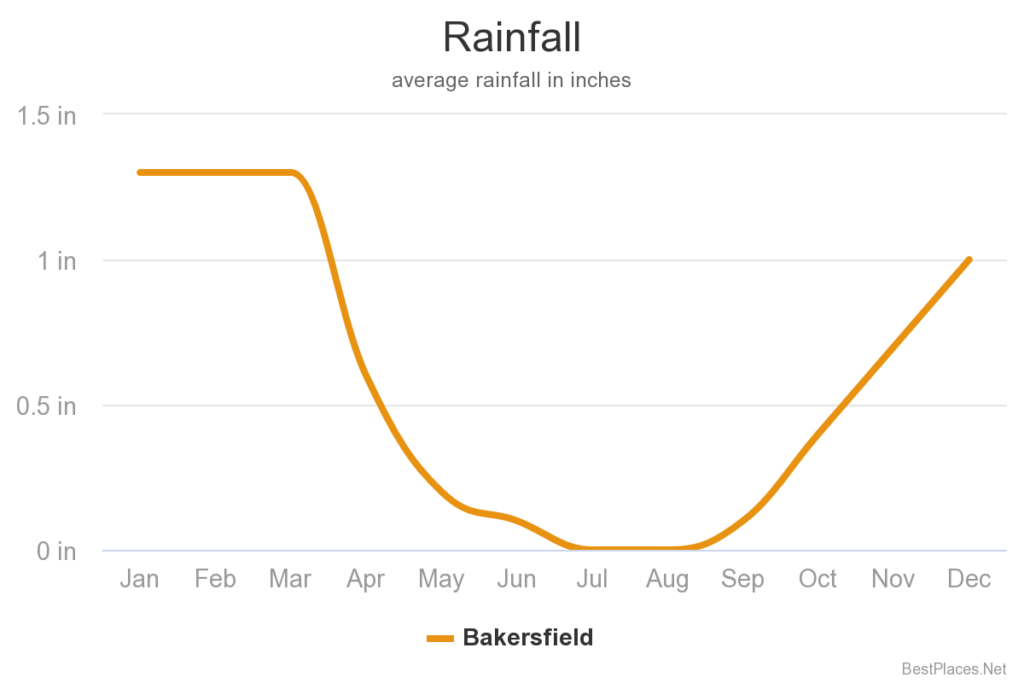
In some areas, such as Bakersfield in central California, starting a project during the rainy season presents challenges for temporary sediment and runoff control BMPs, but it also presents a seasonal advantage to establish vegetation for preconstruction seeding or for final stabilization of a site area for permit termination. If construction starts during a rainy season, the EPC should anticipate more BMP maintenance as well as additional sediment and runoff controls to maintain compliance.
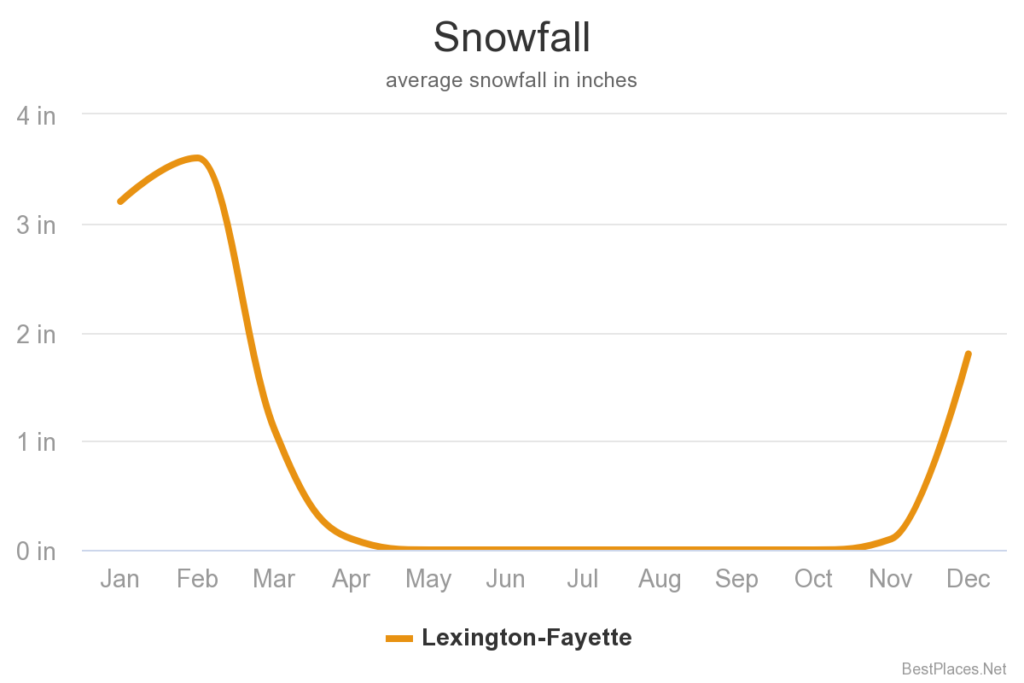
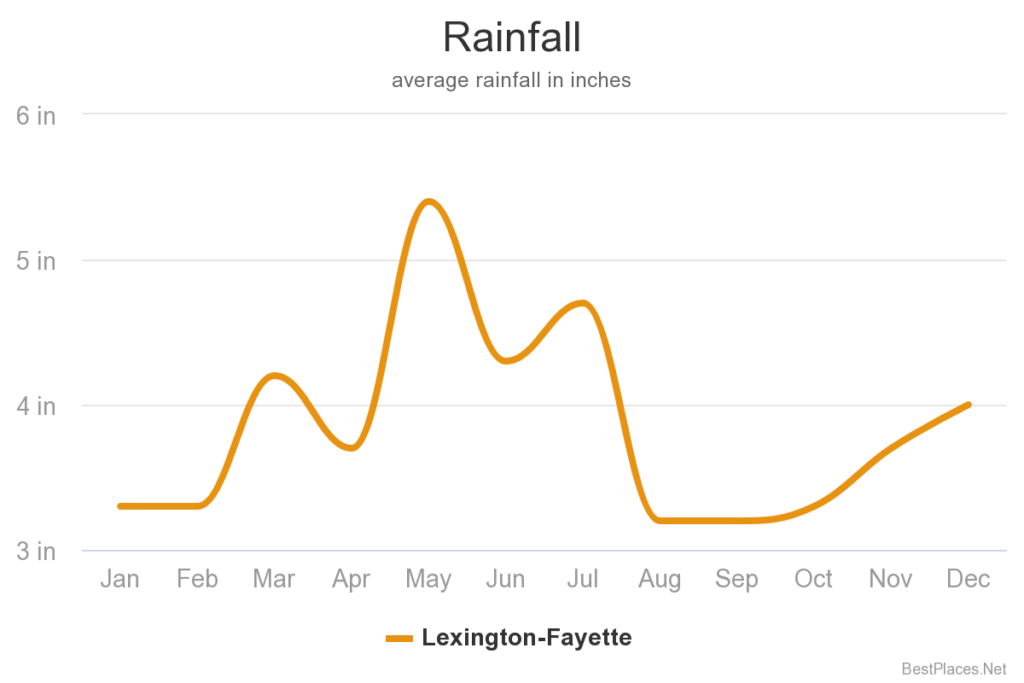
In other areas, such as Lexington, Kentucky, the rainfall is more evenly dispersed throughout the year. Seasonal temperatures changes could impact BMP applications and the potential for snow and freezing temperatures needs to be considered. Project activity spanning from fall into winter must account for fall temporary stabilization for all non-vegetated areas. The freeze/thaw cycle, snowmelt and rain runoff can result in significant rutting of exposed soils on solar sites. Soils disturbed from non-grading activities must also be stabilized prior to spring and dormant seeded to control runoff during spring rains and establish the vital vegetative cover for successful erosion control.

About the Experts

Aaron Mlynek, CPESC, CESSWI, CISEC, QSD/P has over 20 years of NPDES compliance experience. He has been part of wind and solar projects in approximately 35 different states. He currently manages NPDES/SWPPP compliance services at Westwood Professional Services, Inc. His primary focus is on corporate quality control and implementing industry standards for services, products and compliance for Westwood clients nationwide.

Joseph Ridley CCIS, QSWPPP, CESCL has over 16 years of experience in the renewable energy industry and currently focuses on risk minimization through effective erosion and sediment control planning and phasing for Westwood Professional Services. He specializes in environmental process, permitting, regulations and compliance. His past experience includes working for an Engineering, Procurement and Construction contractor as well as in consulting.

MOST POPULAR