Interdisciplinary sessions bridge gaps between knowledge and practice
REGULATIONS AND BEST MANAGEMENT practice (BMP) manuals aren’t enough to guarantee proper implementation of stormwater management. Siloed agencies, inconsistent understanding, and limited training opportunities create barriers that technical guidance alone can’t overcome. While professional associations and academia offer thorough technical training, that training often overlooks the practical, on-the-ground challenges field professionals face daily.
For the past decade, the Auburn University Water Resources Center (AU–WRC) has addressed these gaps by partnering with municipalities, nonprofits, and organizations across Alabama to deliver interdisciplinary, regionally tailored training programs. The trainings, covering topics from BMPs and stream restoration to low-impact development, are developed alongside local partners, not for them. A collaborative approach ensures that training content reflects regional priorities, local soil and climate conditions, and the specific challenges each community faces.
Why Interdisciplinary Trainings Work
Bringing together city engineers, contractors, consultants, regulators, and nonprofit leaders creates measurable benefits, including:
- Building long-term professional networks. Locally developed trainings address knowledge gaps, grow industry capacity, and create opportunities for experts and vendors to share field-tested experience.
- Breaking down silos. When stakeholders who work on the same projects in different roles get together, “us vs. them” mentalities dissolve. Familiarity builds collaboration, and people are more likely to reach out for clarifications during design or construction.
- Acknowledging geographic differences. Regional use cases give professionals the confidence to implement novel technologies and BMPs suited to local conditions.
- Distributing funding and planning responsibility. Cities, counties, nonprofits, and academic institutions often allocate funding for education. Pooling resources helps stretch local training funds.
- Fostering a cultural shift toward collaborative problem-solving. Executed effectively, trainings position all participants as partners, not adversaries, in watershed health and regulatory compliance.
Building a Planning Team
Successful trainings start with the right people at the planning table. They should include:
- City and county personnel. These contacts identify local needs, regulatory requirements, and political priorities. Connect with MS4 compliance, engineering, planning, and public works staff to understand the most pressing issues.
- Universities. Departments in civil and environmental engineering, biosystems, and natural resource planning provide technical expertise and neutral convening spaces. University extension networks and campus project sites can showcase living labs for green infrastructure and restored streams, while also offering continuing education credits.
- Contractors and builders. Field-based perspectives reveal constructability challenges, sequencing issues, costs,
and zoning barriers designers might
not encounter. - Consultants and designers. These professionals bridge regulatory codes, modeling requirements and BMP design realities, offering valuable case studies on local barriers and solutions.
- Inspectors and enforcement staff. A regulatory presence enables joint field inspections of exemplary and problematic installations plus collaborative development of inspection checklists and photo guides.
- Nonprofit and environmental organizations. Local organizations are well-connected to the community and ongoing projects. Including them in trainings extends an often-hidden view of how the BMP design process works and ways to plan more effectively with diverse partners.
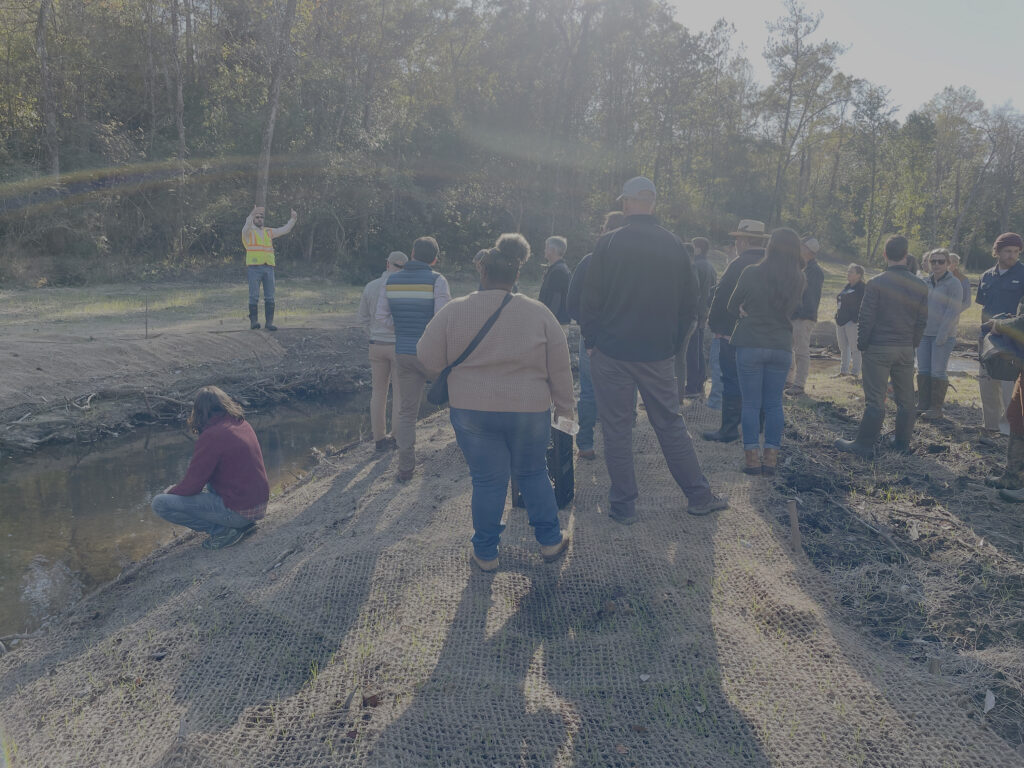
in action.
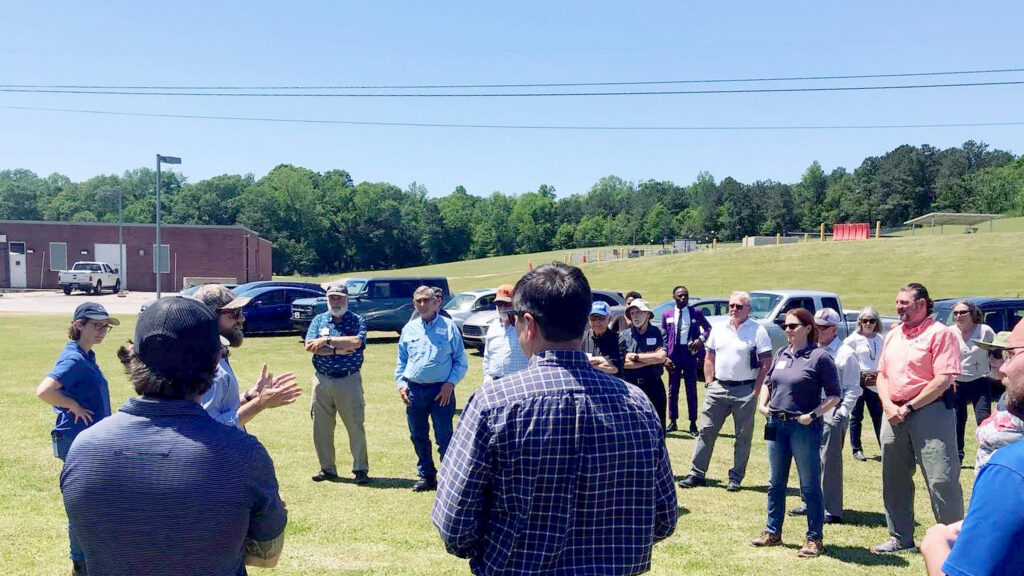
the H.C. Morgan Water Pollution Control Facility.
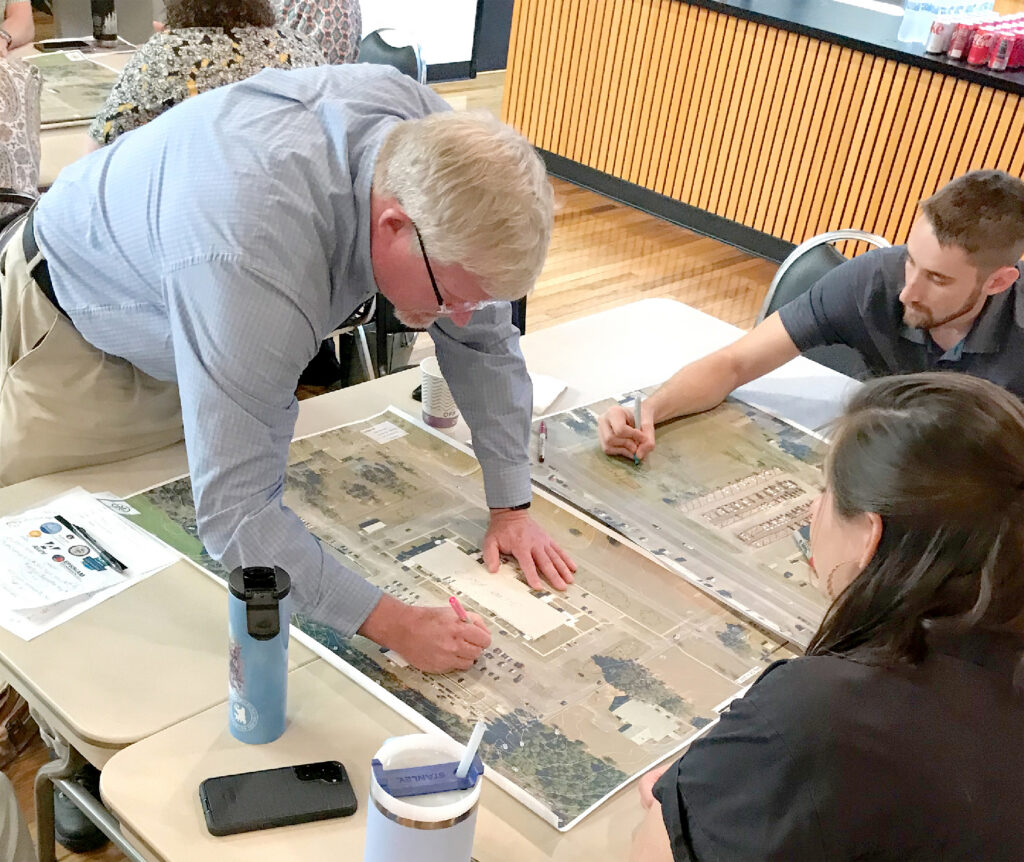
stormwater solutions on practice sites at the 2023 workshop.
Elements of a Successful Training
To ensure a successful training, form a core event-planning team at least four months out from the proposed event. Four months should be sufficient to allow members to determine a topic based on regionally identified needs, establish budgets and sponsorship parameters, assign partner roles, secure dates and venues, recruit speakers, finalize the agenda, launch registration, develop marketing materials, and hold regular check-ins leading up to the event.
Plan sessions collaboratively to set clear goals. Select topics and case studies that are local or regional and address current community priorities. Build discussion and networking time into the agenda. When feasible, include field tours or hands-on demonstrations; they require coordination but deliver measurable impact.
Real-World Examples
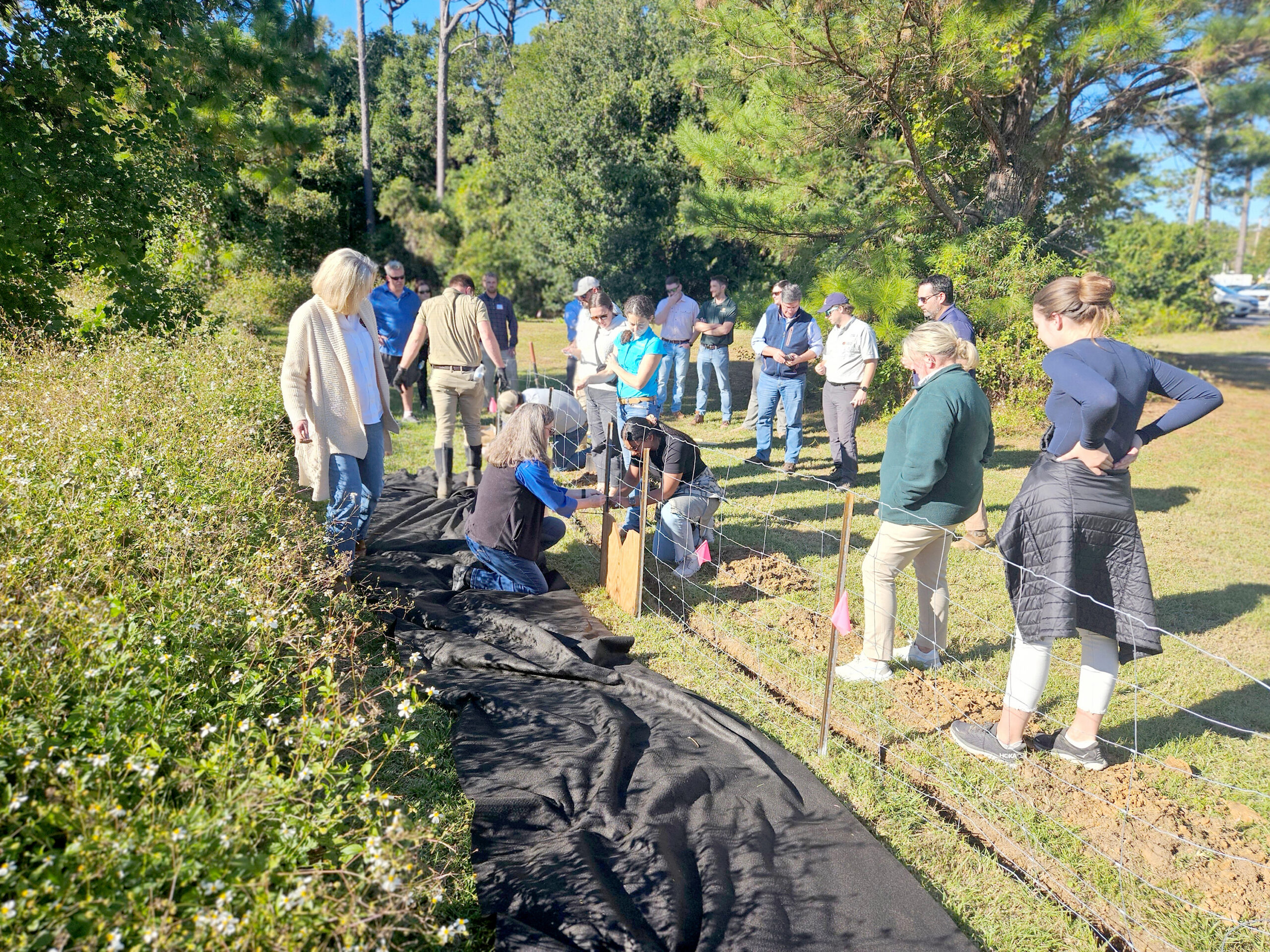
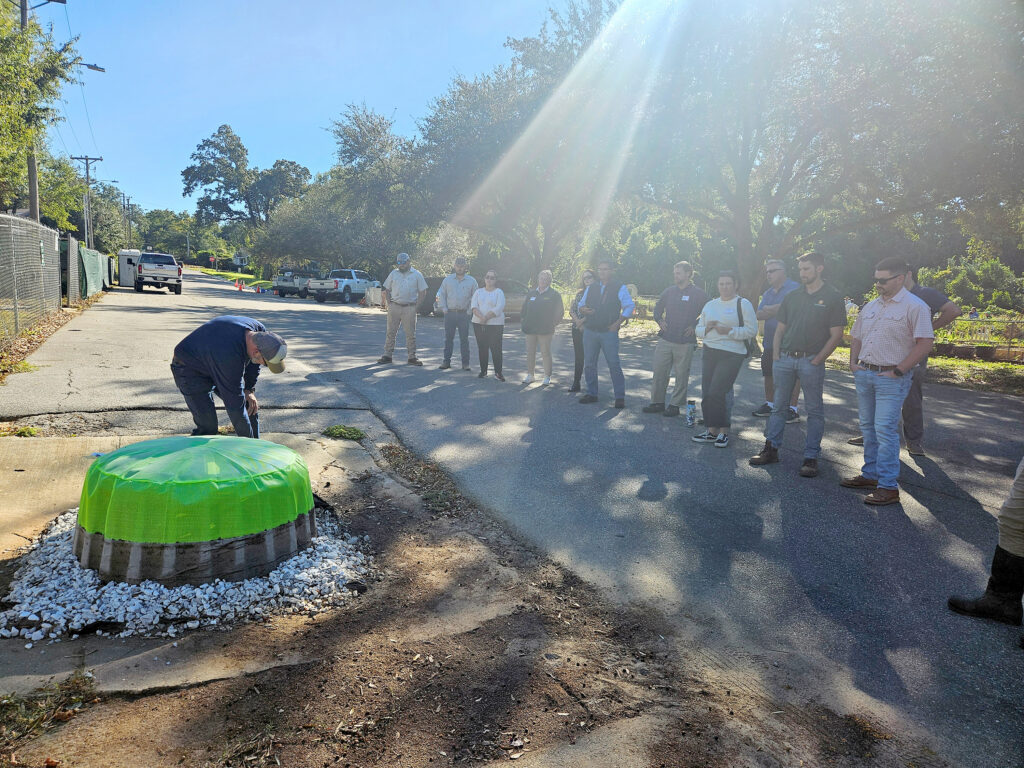
Erosion and sediment control (ESC). As development pressures mounted in Baldwin County, Alabama, local municipalities recognized a need for improved erosion and sediment control BMP implementation. The City of Fairhope, AU–WRC, the Mobile Bay National Estuary Program, Baldwin County, and the City of Daphne collaborated to deliver a hands-on workshop covering Alabama’s ESC design guidance, inspection requirements, and BMP options.
The event culminated in a field visit to an active construction site where participants observed inlet protection, silt fencing, deflocculation, and vegetation establishment demonstrations from the Auburn University Stormwater group and the Alabama Erosion and Sediment Control Partnership. More than 70 attendees, municipal staff, consultants, nonprofit representatives, and academics participated. Sponsorships and partner fund pooling kept costs low, and Auburn University offered continuing education units for participants.
Stream restoration technology. AU–WRC, the Mobile Bay National Estuary Program, and Baldwin County hosted a one-day workshop in Spanish Fort featuring case study presentations and site visits. Speakers discussed project initiation, design, and construction, sharing lessons learned from stream restoration projects across southern Alabama. Discussion covered restoration vegetation, contractor perspectives, assessment techniques, and hydrologic modeling. Sponsorships and grant subsidies kept the fees low, and Auburn University offered CEUs. Participants included municipal leaders, engineers, landscape architects, consultants, and environmental nonprofits.
Designing bioretention. On April 20, 2023, Auburn University hosted a workshop bringing together the Cities of Auburn and Opelika to showcase how municipalities design, install, and fund green infrastructure projects. Using a “learn with us” approach, the workshop featured case studies and a site visit to Auburn’s H.C. Morgan Water Pollution Control Facility.
Participants included municipal planners and engineers, environmental consultants, riverkeepers, master gardeners, and state agency representatives. The workshop was part of a larger National Fish and Wildlife Foundation Five Star Grant initiative, “Leveraging Infrastructure Funding to Promote Stewardship” in Auburn, Alabama, which involves AU–WRC, the AU Bee Laboratory, Lee County Girl Scouts, and Westervelt Ecological Resources.
Nature-based stormwater solutions. AU–WRC and the Mobile Bay National Estuary Program hosted a two-day workshop in which participants learned about green infrastructure from a project manager with the City of New Orleans, which has a mandate to integrate green infrastructure into new site designs to reduce flooding.
Practitioners; municipal staff; and representatives of local and regional government, nonprofits, and state agencies reviewed a range of case studies and project funding options before exploring two city-owned properties in Baldwin County to consider how nature-based stormwater solutions might be applied. On Day Two, participants worked in teams to develop integrated stormwater plans for each site. CEUs were offered, and cost-sharing kept the event affordable.
Participants illustrated their visions for nature-based stormwater solutions on practice sites at the 2023 workshop.
The Power of Presence
Effective erosion and sediment control doesn’t mean perfect BMPs on paper; it’s about having the right people in the same room, learning how to make practices work on the ground. When city engineers sit next to contractors, when regulators dialogue with developers, and when university researchers share their findings with field professionals, something shifts. Trust builds, solutions emerge, and watersheds benefit. Interdisciplinary trainings can do more than transfer technical knowledge; they can transform how communities approach water management.
About the Expert
Laura Cooley is an outreach project manager with the Auburn University–Water Resources Center and provides leadership on environmental planning, decision-making, and restoration initiatives involving multiple agencies. She facilitates trainings in green stormwater infrastructure and watershed planning.